Production case 01 · Quality control · September 2026
The Collar That Wouldn’t Snap Back
The polo looked fine on the inspection table. When the collar was stretched and released, it didn’t return to its original shape. Here’s what the team checked, what the factory changed, and why release waited for a second inspection.
- Garment
- Private-label moisture-management polo
- When it surfaced
- Pre-shipment inspection
- Release decision
- After correction and manual recheck
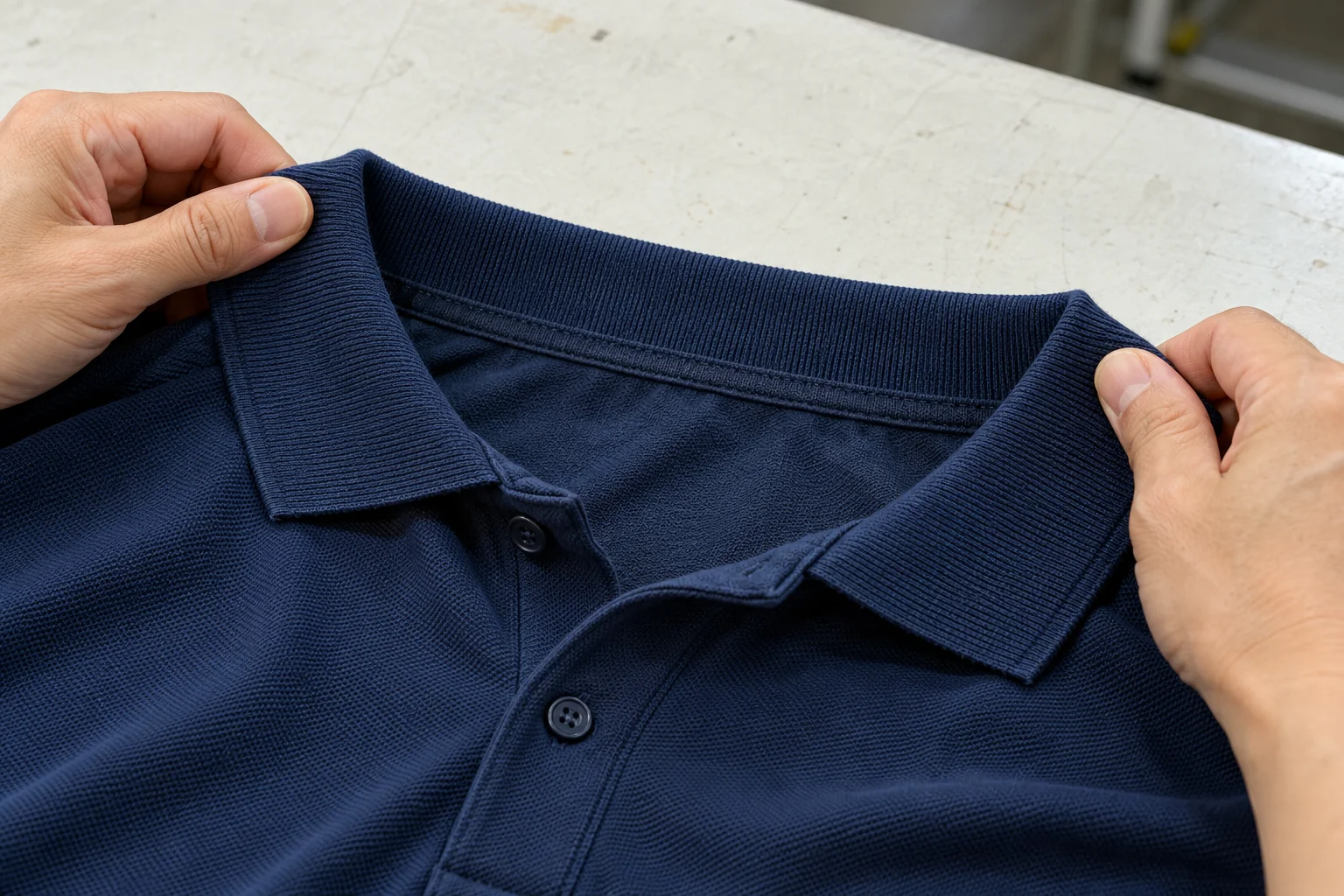
It passed the flat-table check. Then someone stretched the collar.
During a September 2026 pre-shipment inspection, NOVITA’s QC team was checking a private-label activewear polo order. The collar appeared acceptable while the shirt lay flat. But after the inspector stretched the neck opening and let go, the collar did not fully recover.
That was enough to stop a routine release decision. The concern was not how the polo looked in a product photo. It was how the collar behaved when handled, and whether the finished order should leave the factory in that condition.
The team referred the affected garments for correction. Shipment approval would come only after the same behavior had been checked again.
What the inspector actually checked
This was a manual stretch-and-release check, not an instrument-based elasticity or durability test. The inspector:
- Held the sides of the collar opening.
- Applied a steady outward stretch and released it.
- Observed whether the collar returned to its original shape.
Incomplete recovery was the finding. The full order was inspected, and the pieces showing this issue were identified for correction. That distinction matters: it does not mean every polo in the order had the defect.
The correction was specific. So was the recheck.
The factory adjusted the collar’s knit structure and knitting density. Those are the two construction changes recorded for this project. Both were changed, so the case cannot tell us which one made the greater difference on its own.
After corrective work, the team repeated the manual stretch-and-release check on the affected pieces. The corrected collars returned to shape. Only then was the order released, and the shipment remained on schedule.
| Stage | What was observed or changed | Next decision |
|---|---|---|
| First inspection | Collar did not fully recover after stretching. | Correct the affected pieces before release. |
| Factory correction | Knit structure and knitting density adjusted. | Return the corrected pieces to QC. |
| Manual recheck | Corrected collars returned to shape. | Release the order for shipment. |
There is an important limit to the outcome: passing this manual check before shipment is not evidence of long-term performance after repeated washing or wear. Those questions require separate evaluation.
What apparel buyers can take from this
Don’t stop at “the sample looks right”
Agree on the check, not just the appearance
If collar recovery is important, tell your manufacturer how it should be evaluated and what an acceptable result looks like. Our polo collar and placket checklist gives you a starting point for that discussion.
Ask what changed and what was rechecked
A correction report should identify the affected goods, the change made, and the observation used to clear them. A new sample photo by itself doesn’t answer those questions.
Match approval to the production stage
A development sample and a finished production order are not interchangeable evidence. Set relevant checks for both. The wider sequence is covered in our OEM/ODM process.
The practical lesson: the shipment decision depended on a repeatable observation after corrective work, not on the fact that corrective work had been carried out.