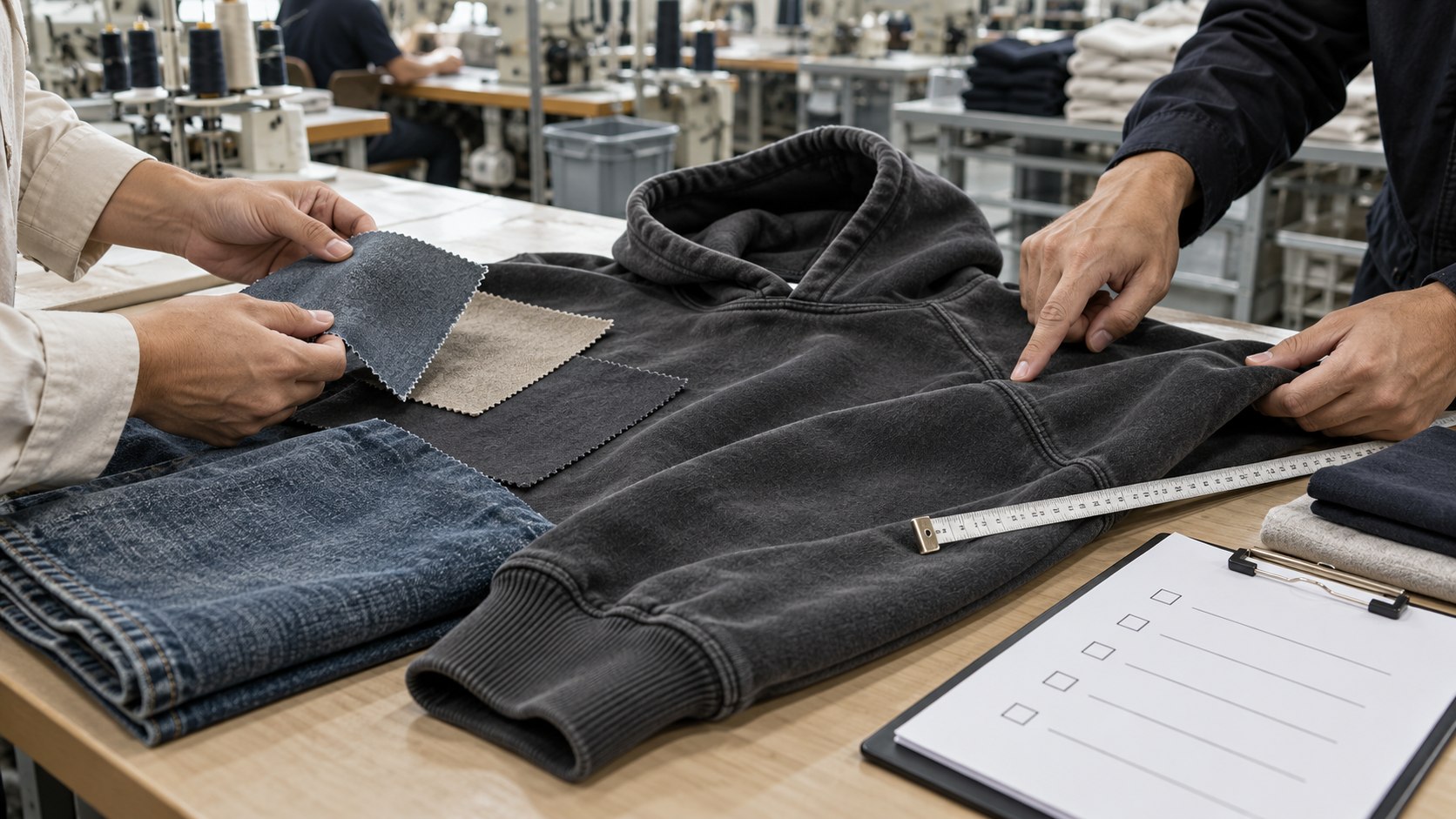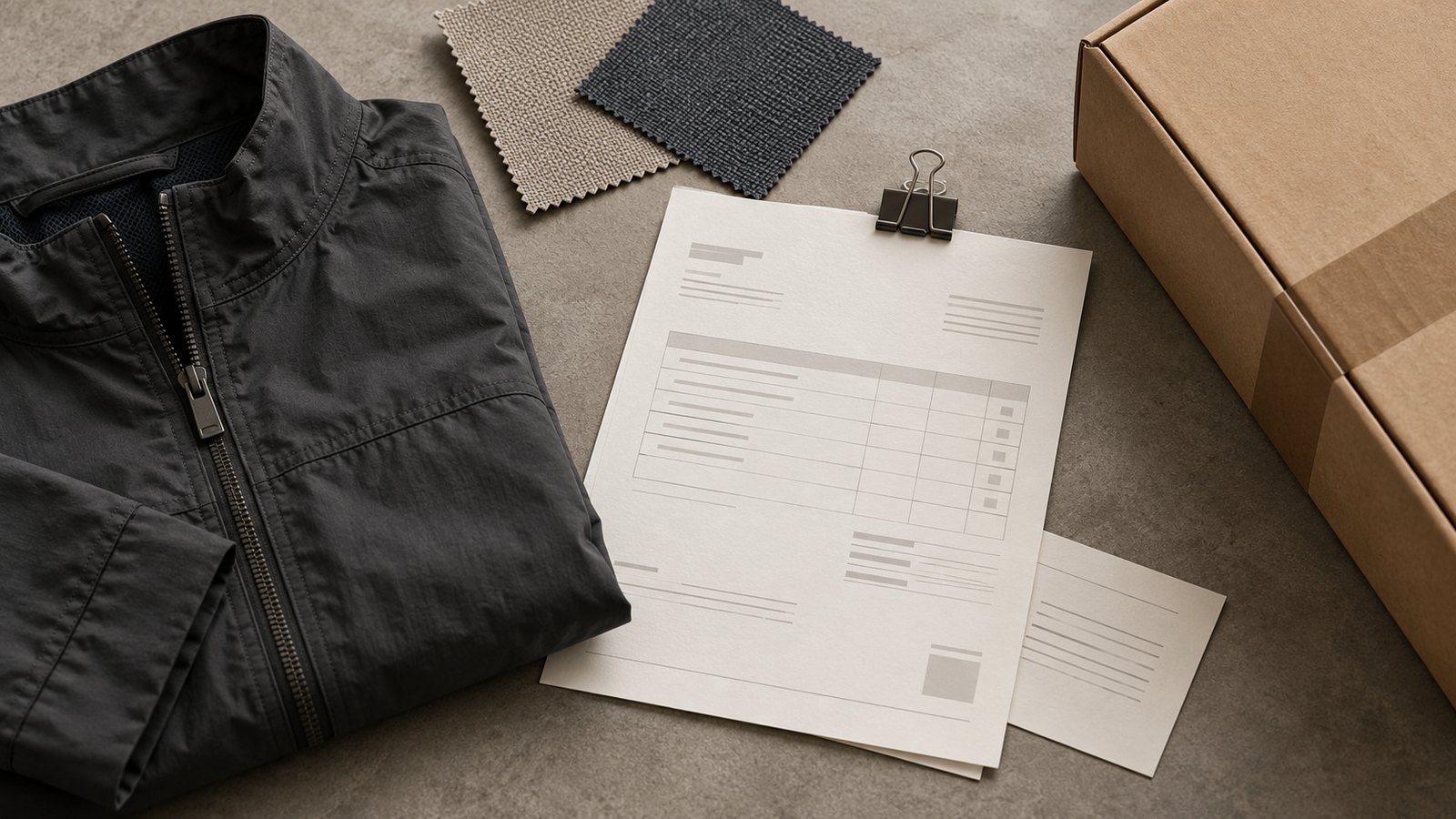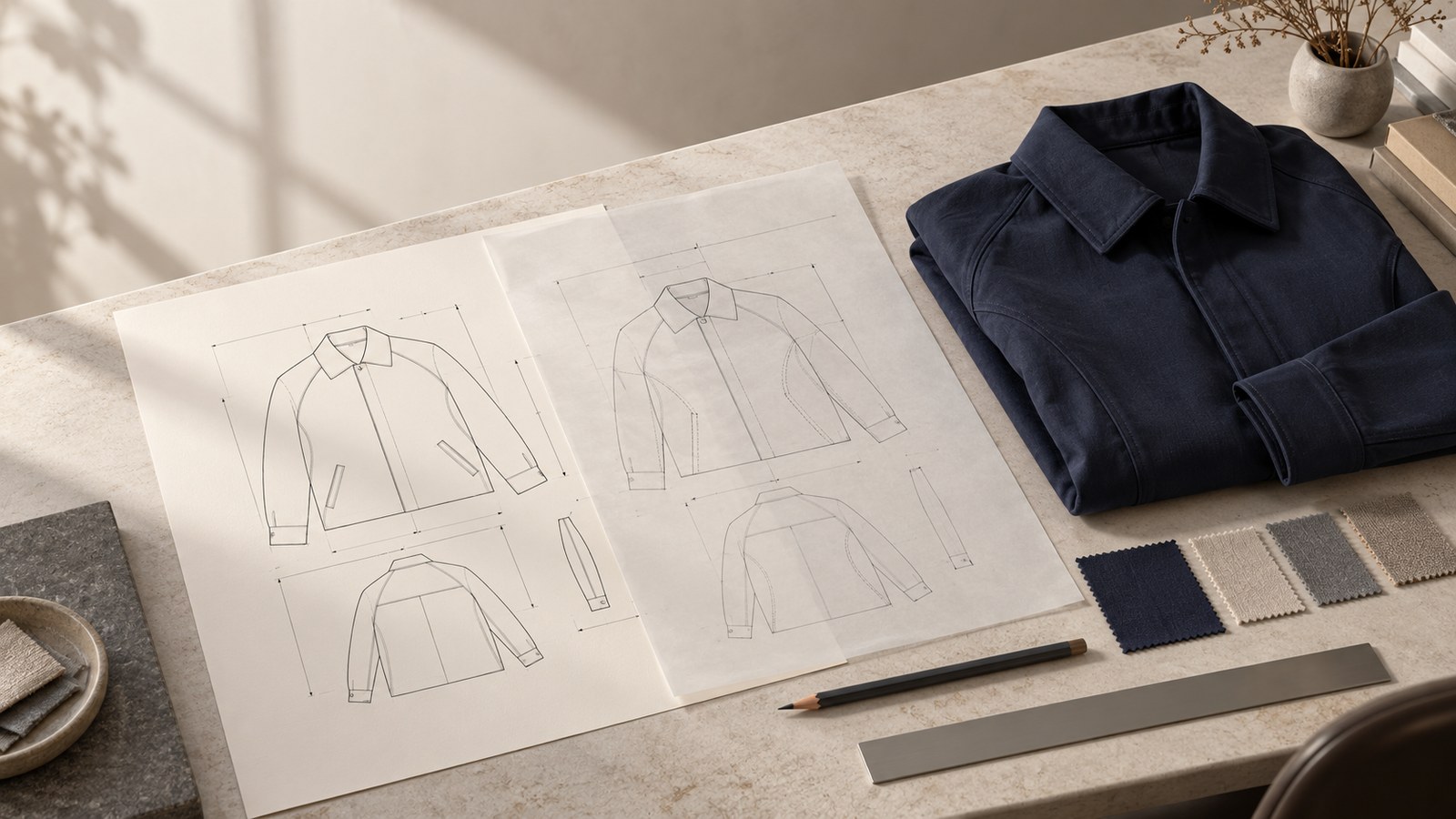
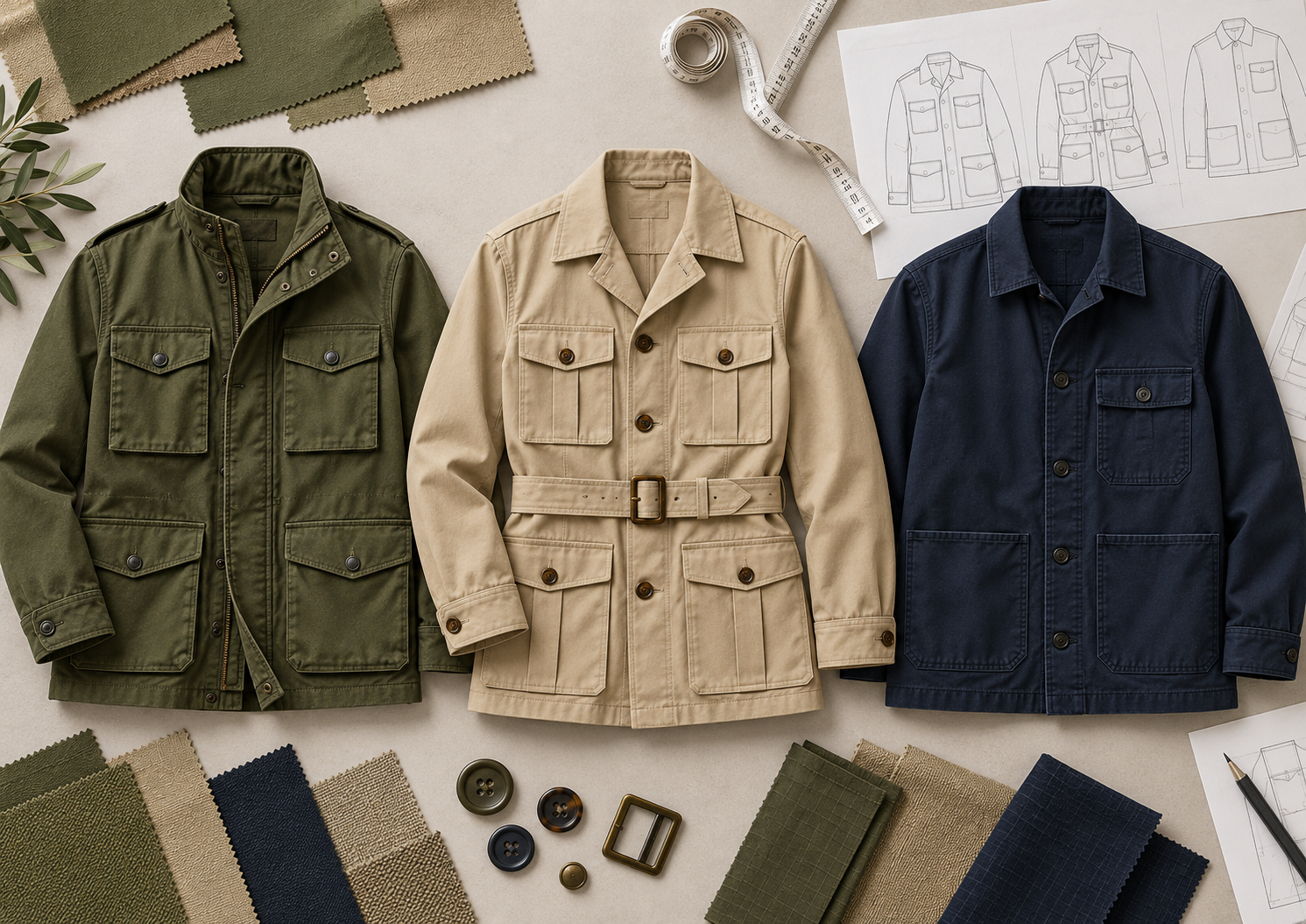
A buyer asking for a “utility jacket” can receive three different samples: a straight multi-pocket workwear jacket, a four-pocket field jacket with waist adjustment, or a belted safari-inspired style. All three can work as casual outerwear, but their patterns, pocket placements and trim specifications differ.
This guide compares those directions using NOVITA’s current utility jacket reference, its field-jacket counterpart and the belted version. The goal is to help a brand prepare an unambiguous sample brief before asking for a quotation.
Three utility jacket directions, one specification decision
The style name should identify a starting point, not replace a technical drawing. “Field jacket” commonly describes a four-pocket, military-inspired silhouette, while “utility jacket” is a wider retail category. A belt changes both the waist shape and the components that need approval.
| Reference direction | Visible design emphasis | Decisions to lock in the brief |
|---|---|---|
| Multi-pocket utility | Structured collar, patch and flap pockets, button front | Pocket dimensions and spacing, collar contrast, front closure |
| Field / M-65 inspired | Four flap pockets, zip beneath placket, adjustable waist | Waist drawcord, zipper and snap specification, pocket access |
| Belted utility / safari inspired | Matching waist belt, buckle, flap pockets, shaped waist | Belt length and width, buckle, belt loops, pocket positions when cinched |
These descriptions refer to NOVITA’s current product directions, not a promise that every jacket sold under the same name has those features. Use the approved reference garment and drawings to decide which features stay.
Choose the silhouette before choosing a shell fabric
Start by deciding how the jacket should hang when open and closed. A straight utility jacket puts visual emphasis on the collar and front pockets. A field jacket may have an internal waist drawcord; its shape changes when that cord is tightened. A belted jacket depends on the belt, loops and waist position working together.
Ask for front, side and back views of the sample in the intended wearing position. For the field style, photograph the waist relaxed and adjusted. For the belted style, record whether the belt is tied, buckled or removed. Check the hem and side seams after the waist is drawn in. A fit approved only with the belt hanging loose may look quite different when worn as intended.
Specify the intended layer underneath the jacket. A T-shirt, sweatshirt and thick knit change the ease needed across the chest and upper arm. No universal chest allowance or body length should be copied from another brand’s chart without a fit sample.
Make a pocket map instead of writing “four pockets”
Pocket count tells the supplier little about construction. A patch pocket sits on the garment surface; a flap may cover a separate pocket opening. Bellows, gussets and internal divisions change how the pocket projects from the front. If the pockets carry objects, opening size and closure position affect usability. If they are primarily visual, the balance of shape and spacing may matter more.
Put a numbered pocket map into the tech pack. For each pocket, record the opening width, finished height, distance from center front and hem, flap depth, fastener type and any reinforcement. Add one photo of the pocket open and one closed. Mark whether the left and right sides are mirrored or deliberately asymmetric.
Check the pocket map with the jacket worn. A pocket that looks balanced on a flat table may sit over the waist belt or bunch when the wearer sits. On a belted jacket, confirm whether the belt crosses a pocket opening. On a field jacket, confirm that the zipper, placket and flap closures can be operated without interfering with one another.
Specify fabric, lining and hardware as separate decisions
A photograph can show a structured woven-looking shell, but it cannot establish fiber content, fabric weight, coating or performance. NOVITA’s field jacket reference leaves those material details for the buyer’s specification and approved sample. That distinction prevents an attractive photograph from becoming an accidental performance claim.
Send the shell composition and target hand feel, or request swatches when these are not yet decided. State whether the jacket is lined, partially lined or unlined. If you want a washed finish, agree on a physical reference and assess the finished sample before confirming dimensions. Any claim about water resistance or durability needs a separately agreed test method and evidence.
Hardware deserves its own line items: front zipper type and finish, snaps or buttons, waist cord and stoppers, belt buckle, cuff adjustment, labels and decoration. A belt buckle substituted after sampling can change the look of the whole garment. Identify acceptable alternatives in writing instead of leaving the supplier to improvise.
Approve the jacket in the position customers will wear it
Use a short approval record that connects the photograph, the measurement and the decision. Record the sample version, date, material reference and outstanding comments. Mark each point as approved, change required or awaiting confirmation. Avoid signing off a full jacket when only its shell color has been approved. Our jacket sample approval checklist provides a practical format for these sign-off decisions.
| Approval item | What to inspect | Evidence to retain |
|---|---|---|
| Front balance | Placket straightness, collar position, pocket symmetry | Front photo with sample version |
| Waist shaping | Open, cinched and belted appearance where applicable | Side and front worn photos |
| Pocket use | Opening, flap closure, interference with belt | Numbered pocket close-ups |
| Trims | Zip operation, snap or button placement, buckle finish | Approved trim references |
| Measurements | Chest, shoulder, sleeve, body length and agreed pocket points | Measured sample against approved specification |
For the belt-led direction, the NOVITA belted utility reference identifies belt width, buckle and pocket proportions as separate development choices. This is a practical reason to approve the full worn sample rather than a fabric swatch alone.
Plan quantity and sampling around the actual design
NOVITA’s current utility, field and belted product pages state a typical custom minimum of 100 pieces per color, with mixed sizes allowed. They describe sample development of roughly 7–14 days and bulk production of 60 days after sample approval. These are planning references, not guaranteed dates for every fabric, hardware choice or order quantity.
A new buckle, specialty snap, lining or custom shell can affect availability and minimum purchases. Confirm the selected trims and fabric before treating the quotation or production schedule as final. If you want two utility silhouettes, price them as separate styles rather than assuming one combined MOQ.
A concise utility jacket brief to send a manufacturer
Start with a named reference style and three views. Attach a sketch showing the chosen waist treatment, pocket map and front closure. Add the shell and lining direction, hardware list, size chart, colors, quantities by style and color, branding positions and intended shipment window. Keep unknown details in a “confirm” column so the supplier knows which decisions are open.
If you need a wider view of outerwear types and custom jacket options, read the jacket manufacturing guide. For a specific field or belted design, send NOVITA your reference images and quantity breakdown so the team can review the actual construction and sampling scope.