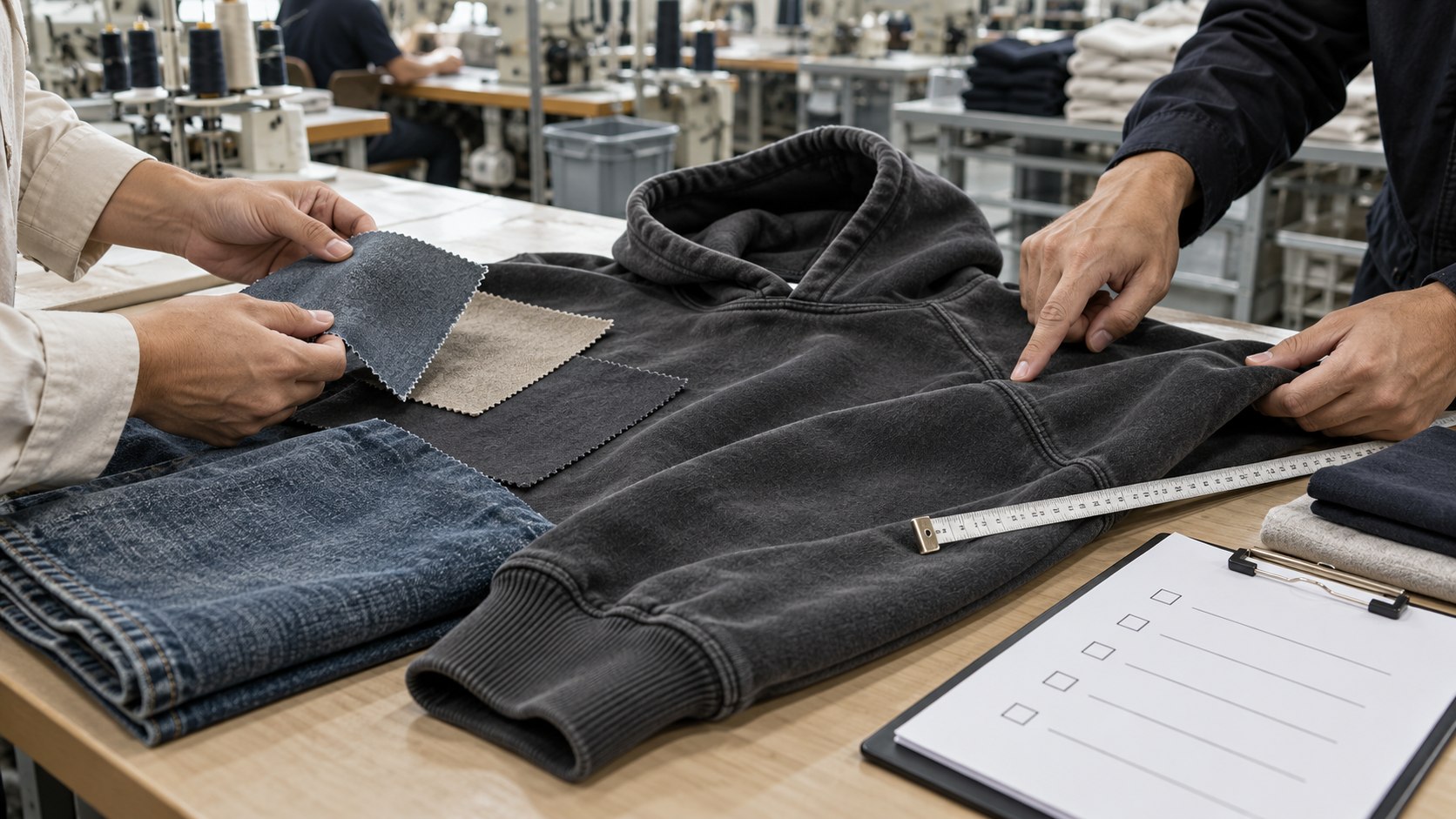
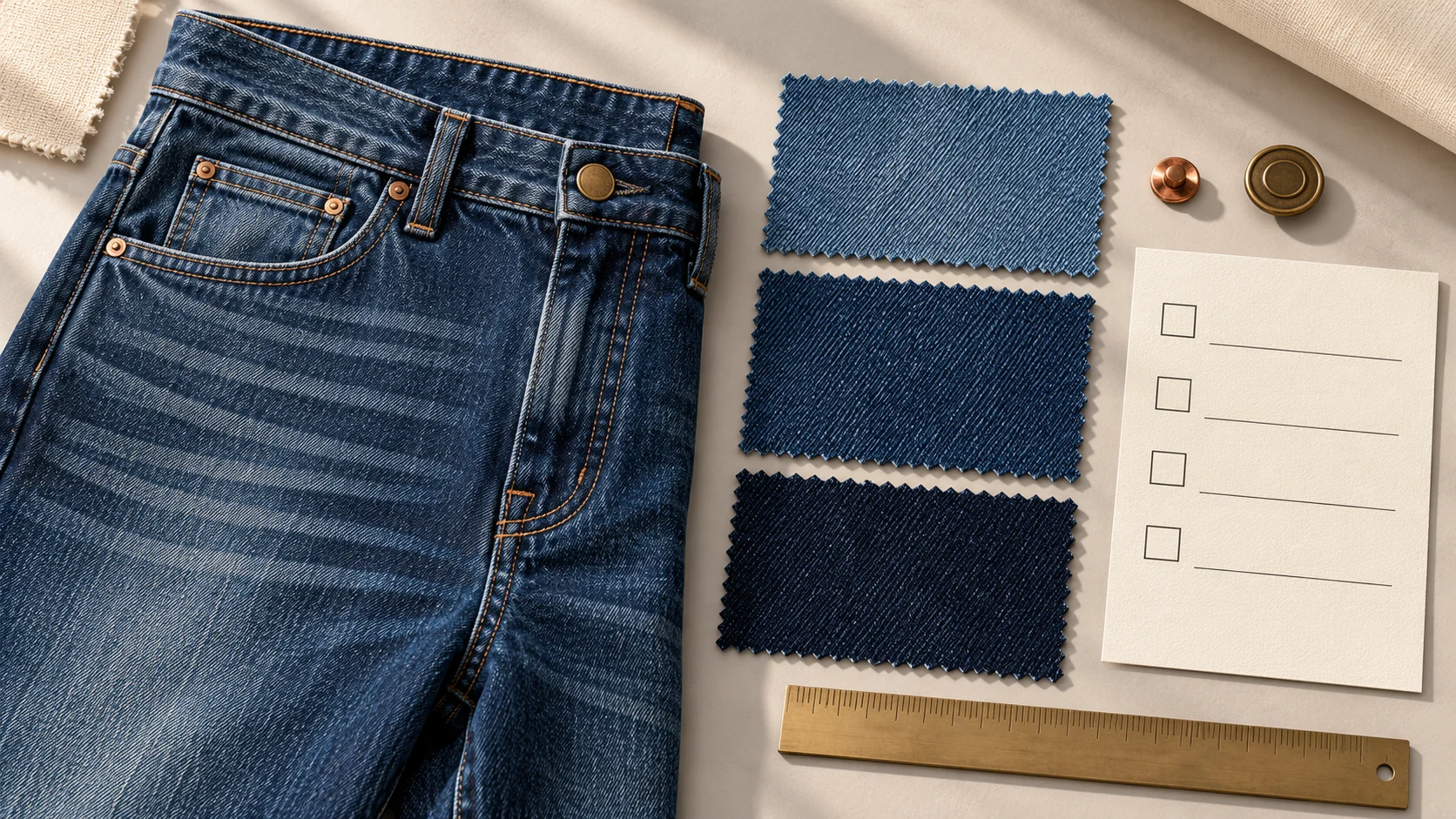
A denim wash sample can match a reference photograph and still be unsuitable for bulk production. The shade may look right while the inseam has shortened, the whisker placement has moved or the hardware finish has changed. Approving the appearance alone leaves the production team without a complete standard.
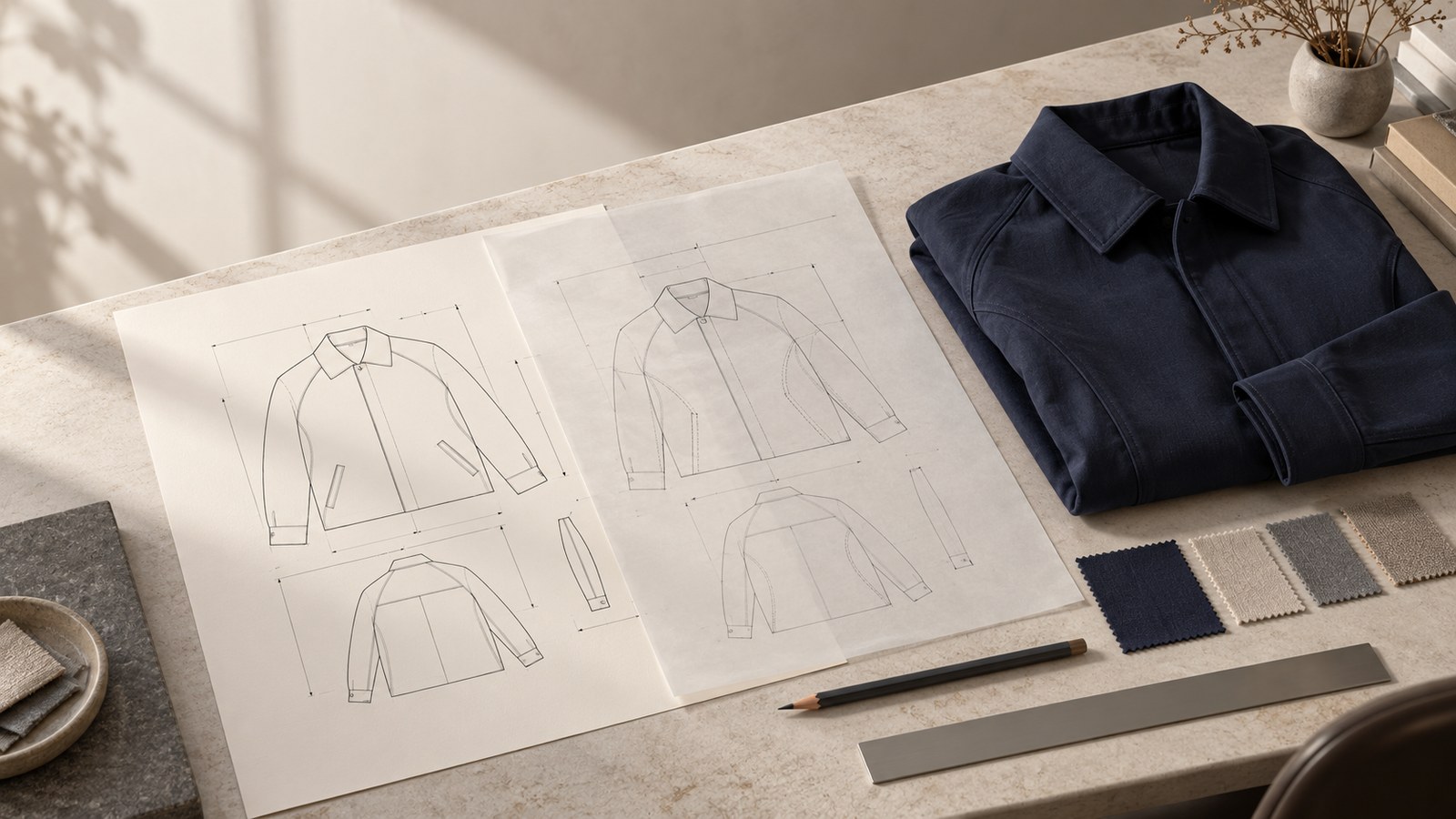
This checklist is for brands and sourcing teams approving custom jeans before a bulk wash. It separates the visual target, finished measurements, trims and testing evidence, then gives you a written release record.
What exactly does a denim wash sample approve?
A wash sample should establish the intended finished appearance on a defined garment and fabric. Record the base fabric, style, sample version, wash direction and finishing details. The approval must say which attributes are fixed and where a controlled range is acceptable.
Choose the wash method before writing the acceptance criteria. A rinse wash, enzyme wash and deliberately distressed finish do not produce the same kind of variation. NOVITA’s denim wash types guide explains the visual directions; this article covers the next decision: whether a submitted sample is ready to become a bulk reference.
Keep a physical approved garment or clearly identified retained sample where possible. Photos help document placement and appearance, but screen color and lighting can make a digital image unreliable as the sole shade standard.
Approve overall shade and local fading separately
Start with overall color depth and cast. Then inspect the high and low areas: front thighs, seat, knees, seams, pockets and hems. A sample can have the correct overall blue while the abrasion or contrast appears in the wrong place. For shade-group decisions before cutting, see our fabric shade approval guide.
If the product deliberately allows wash variation, agree on the acceptable light and dark boundaries and the conditions used for comparison. Do not invent a numerical color tolerance when the buyer has not defined one. A controlled shade range is often more useful than expecting every washed garment to be visually identical.
Localized effects need their own map. For whiskers, record placement relative to the front rise, pocket opening and leg. For grinding and distressing, identify the allowed location and extent. The whiskering on jeans guide explains the effect itself; here the task is to approve the position and intensity on the actual garment.
Measure the jeans after the intended wash
Fit approval made before washing may no longer describe the finished garment. Record measurements on the sample after it has been through the intended finishing route, using the agreed measurement method and tolerance for each point of measure.
| Point to check | What to compare | Evidence to retain |
|---|---|---|
| Waist and hip | Approved finished measurements and waistband shape | Measurement sheet with sample version |
| Front and back rise | Finished rise and garment balance | Actual values and fit photographs |
| Thigh and knee | Width at defined points; symmetry | Point-of-measure reference |
| Inseam and leg opening | Length, leg shape and any twist | Left/right measurements and front/back photos |
| Seams and pockets | Puckering, abrasion, stitching condition | Close-ups of affected locations |
Do not copy generic tolerance numbers from a competitor. The buyer and manufacturer should agree the tolerances appropriate to the garment, fabric and intended fit, then attach them to the approved specification.
Inspect buttons, rivets, labels and patches after finishing
Denim hardware and branding can change during washing. Review button and rivet appearance, zipper operation, pocket bags, thread color, labels and any back patch on the finished sample. A trim that looks correct before washing may discolor, abrade or behave differently afterward.
Record the trim reference and whether the observed effect is acceptable. If the wash treatment or hardware specification changes, assess whether another sample or test is required. The sign-off should describe the garment the factory will actually make, not a collection of separately approved components that have never been evaluated together.
Do not confuse a visual approval with a performance test
A pleasing wash does not establish colorfastness, dimensional stability or material strength. If the order requires rubbing colorfastness or other performance checks, agree on the method, test condition, acceptance criterion and who will provide the report. NOVITA’s dry and wet denim crocking guide covers color transfer as a separate testing question. See the garment washing and finishing overview for the wider processing context.
The article “The Second C: Intentional Color Loss” in AATCC Review describes a development workflow with retained duplicate sample wash panels and a designated representative signing and tagging an accepted panel. See the AATCC Review March/April 2025 article for an example of documented wash approvals. Use this published workflow as a reference when agreeing your own approval records; it is not a test report for your order.
Use one written denim wash approval record
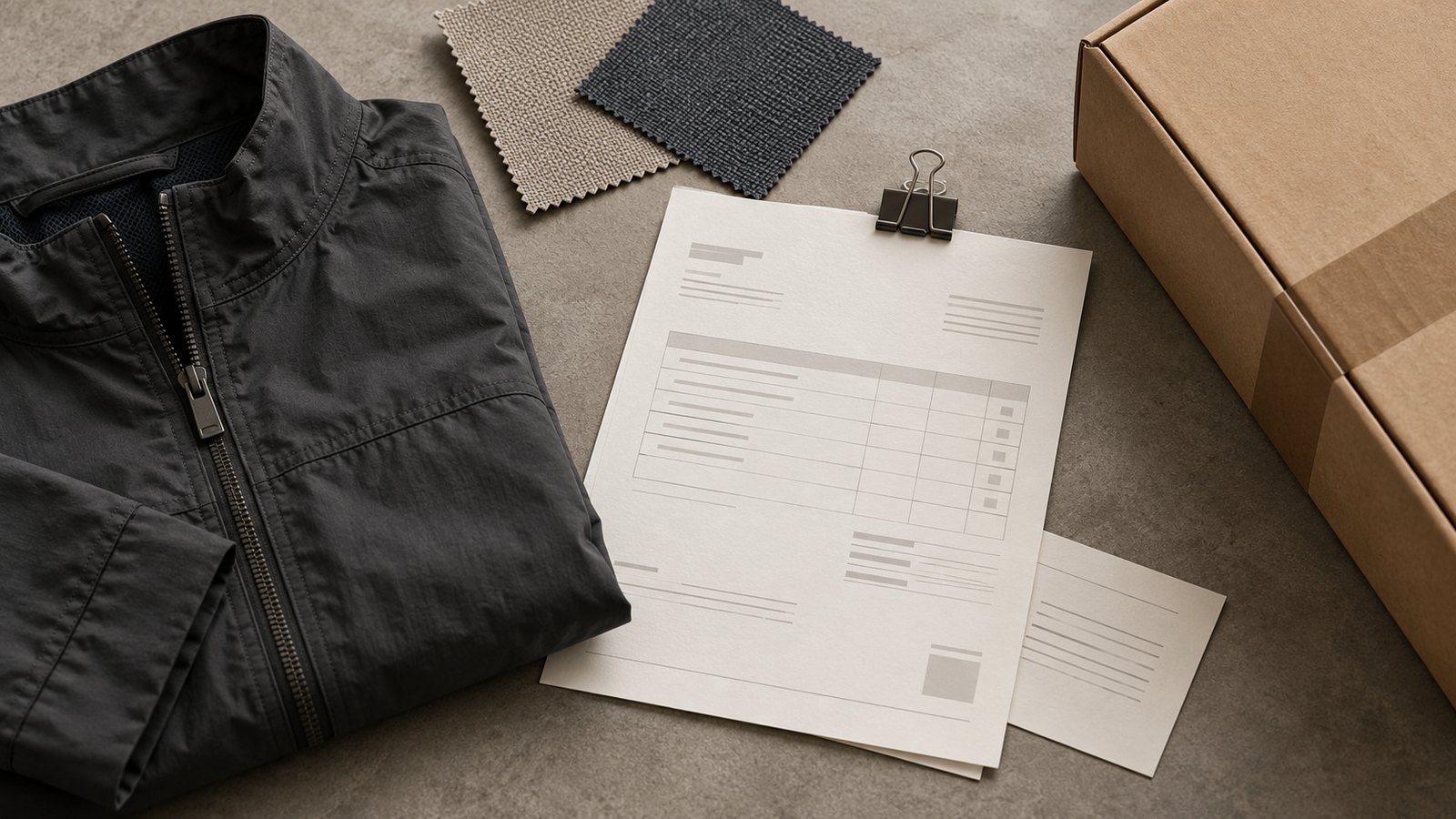
Put the decisions in one version-controlled record. This blank form is intended to be completed from actual samples and agreed specifications.
| Approval field | Buyer record | Decision |
|---|---|---|
| Style / sample ID / version | [Enter exact reference] | Confirm identity |
| Fabric lot / composition / weight | [Attach material reference] | Confirm material |
| Overall shade and approved range | [Identify physical standards] | Accept / revise |
| Whisker and abrasion placement | [Attach annotated photographs] | Accept / revise |
| Finished measurements | [Attach signed measurement sheet] | Accept / revise |
| Trims and branding after wash | [List hardware and label references] | Accept / revise |
| Required tests and reports | [Method, result, acceptance criterion] | Evidence received / pending |
| Approver / date / next action | [Name, date, sample location] | Release / resubmit / hold |
Never mark an unresolved test as “passed” merely because the garment looks acceptable. A release with open conditions should identify who owns each action and when the next decision will be made.
What changes require another wash review?
Recheck the affected approval when the base fabric or dye lot changes materially, the wash route is revised, trims are substituted, or the finished fit moves outside the agreed specification. If the team has approved a shade range, compare the new submission with that range rather than relying on memory.
A first bulk wash submission can be useful when the final production material behaves differently from the development sample. Ask the supplier to identify the lot and processing reference, then compare its appearance and measurements with the retained standard. Keep the decision with the order documents.
Send a usable wash brief for your custom jeans
For a NOVITA denim enquiry, provide the intended fit, fabric or reference garment, wash photographs, placement notes, quantity by style and color, and required sample and test approvals. Our custom denim jeans range lists wide-leg baggy, acid-splash, carpenter and patchwork directions. These need different approval notes: map fading on a baggy style, identify the accepted splash pattern on a bleach finish, and check adjacent panels on a patchwork design. The published program starts at 100 pieces per style and color with mixed sizes allowed. Confirm the actual material, wash feasibility and timing for the project.
Send NOVITA your denim wash reference and tech pack. Ask for a proposed sample review sequence and retain the approved version before bulk production begins.