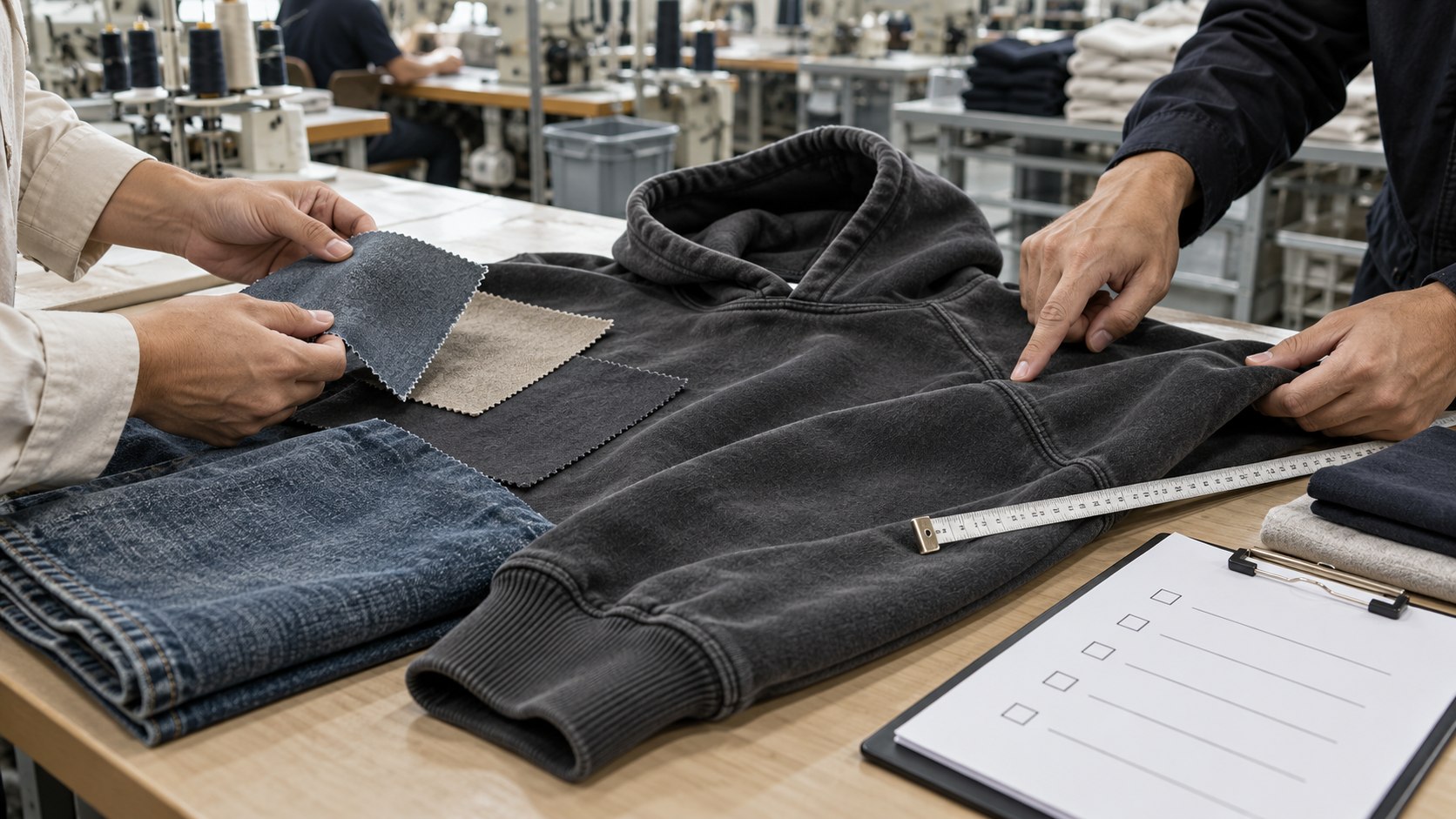
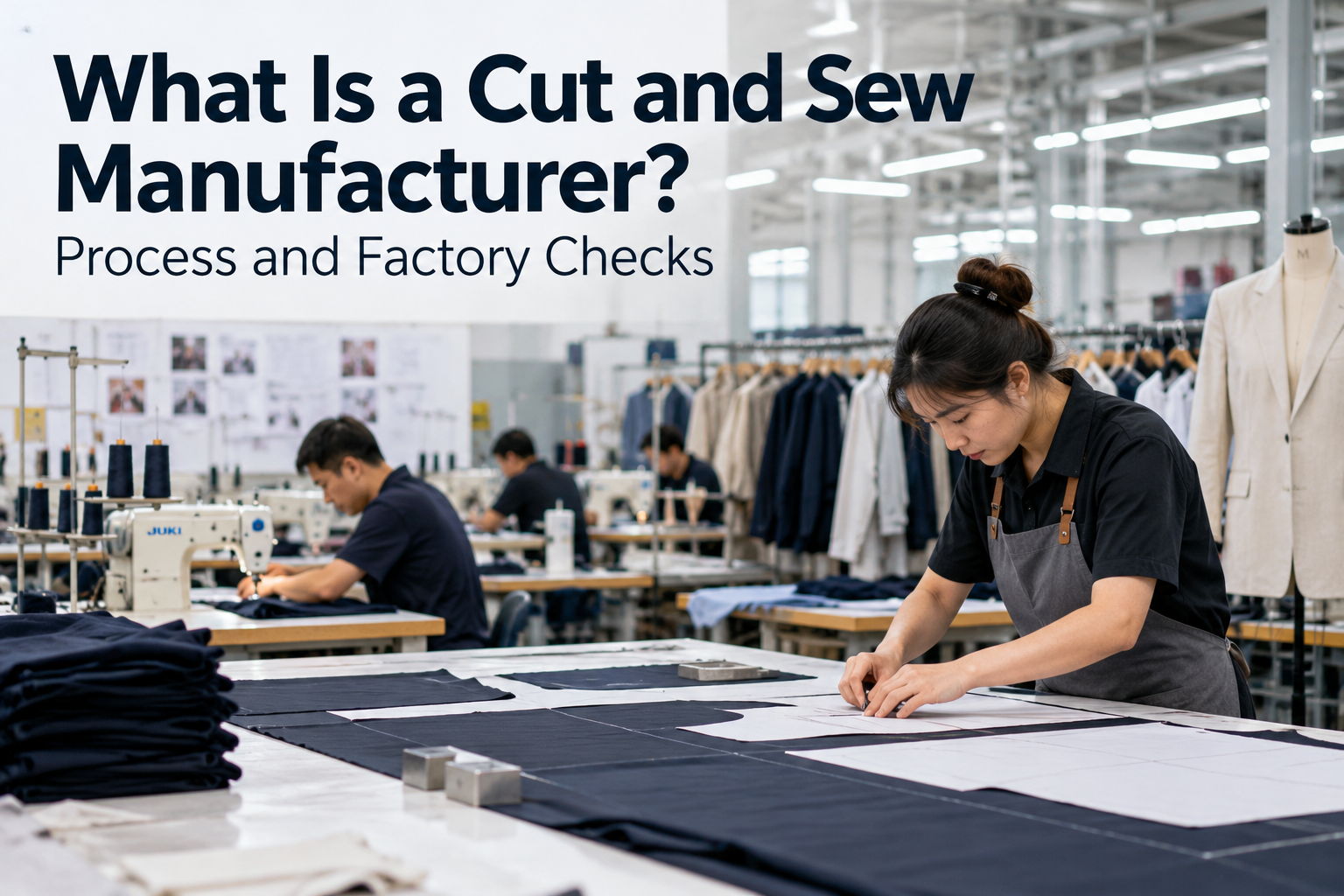
A cut and sew manufacturer cuts fabric into pattern pieces and sews them into garments. That is different from printing a logo on a ready-made blank. For a clothing buyer, the useful questions are who controls the pattern, who sources materials, who assembles the garment, and how the finished order is checked against the approved sample.
The U.S. Census Bureau’s NAICS 315250 classification covers cut-and-sew apparel manufacturing from purchased fabric and distinguishes it from contract cutting or sewing performed on materials owned by others (NAICS 315210). These are industry classifications, not proof that a supplier owns every machine or performs every operation in one building. Ask the factory to identify who controls cutting, sewing, finishing and inspection for your specific order.
Cut and Sew, Blank Decoration, CMT and Private Label
These phrases describe different parts of an apparel order. Cut and sew concerns garment construction. Blank decoration begins with an existing garment. CMT, meaning cut, make and trim, describes a division of responsibilities that must be agreed in a contract. Private label concerns the brand on the product, which may use an existing style or a newly developed garment.
| Production route | What changes | What the buyer must confirm |
|---|---|---|
| Decorated blank | Print, embroidery or labels on an existing garment | Which parts of the base fit and fabric are fixed? |
| Cut and sew | Fabric is cut and sewn to an approved pattern and construction | Who develops the pattern and approves the sample? |
| CMT arrangement | Agreed cutting, sewing and trim work | Who supplies fabric, trims, patterns and replacements? |
| Broader sourcing arrangement | Development, materials and production coordination as contracted | Which operations are internal, outsourced or separately priced? |
Do not assume a supplier offers labor-only CMT services simply because it advertises cut-and-sew production. NOVITA describes its own cooperation models in the OEM and ODM process; a specific quotation must still define responsibilities.
How a Cut and Sew Order Moves From Brief to Bulk
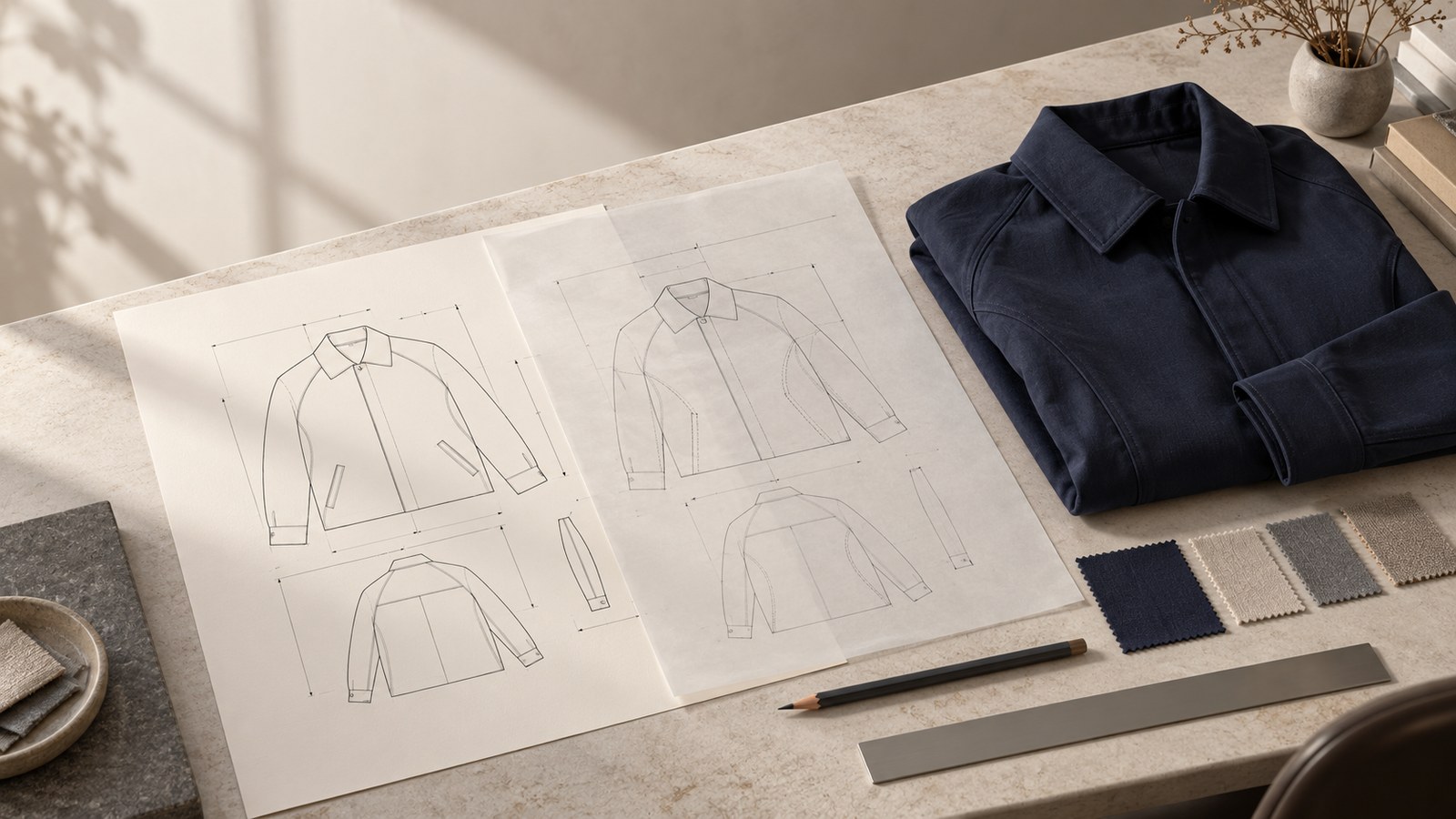
Start with a reference garment, technical drawing or design brief. The sample team needs a size specification, material direction, seam and trim details, and an explanation of which features are essential.
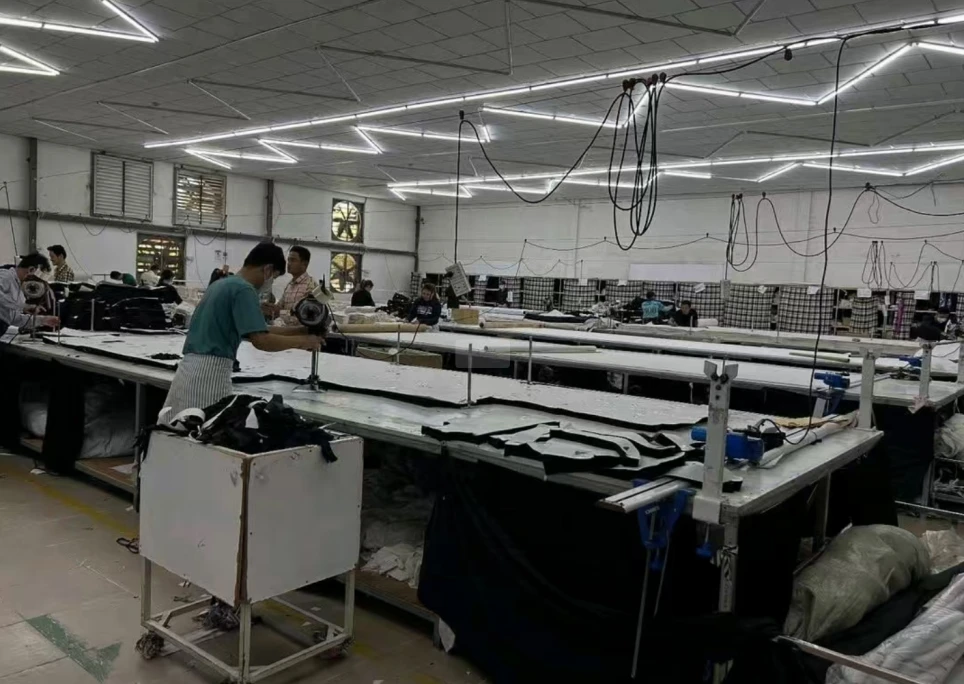
- Feasibility review: identify missing measurements, unavailable materials and any construction choices that need confirmation.
- Pattern and fabric approval: record the pattern version, fabric specification, color reference and proposed substitutions.
- Sample cutting and assembly: make a physical garment so fit, balance, construction and workmanship can be inspected.
- Buyer review: compare the sample with the reference and measurement chart; send numbered correction comments.
- Pre-production sign-off: confirm the approved garment, material, labels, decoration and packaging in one consistent set of documents.
- Bulk and shipment checks: inspect against the agreed standard and record any corrective action before dispatch.
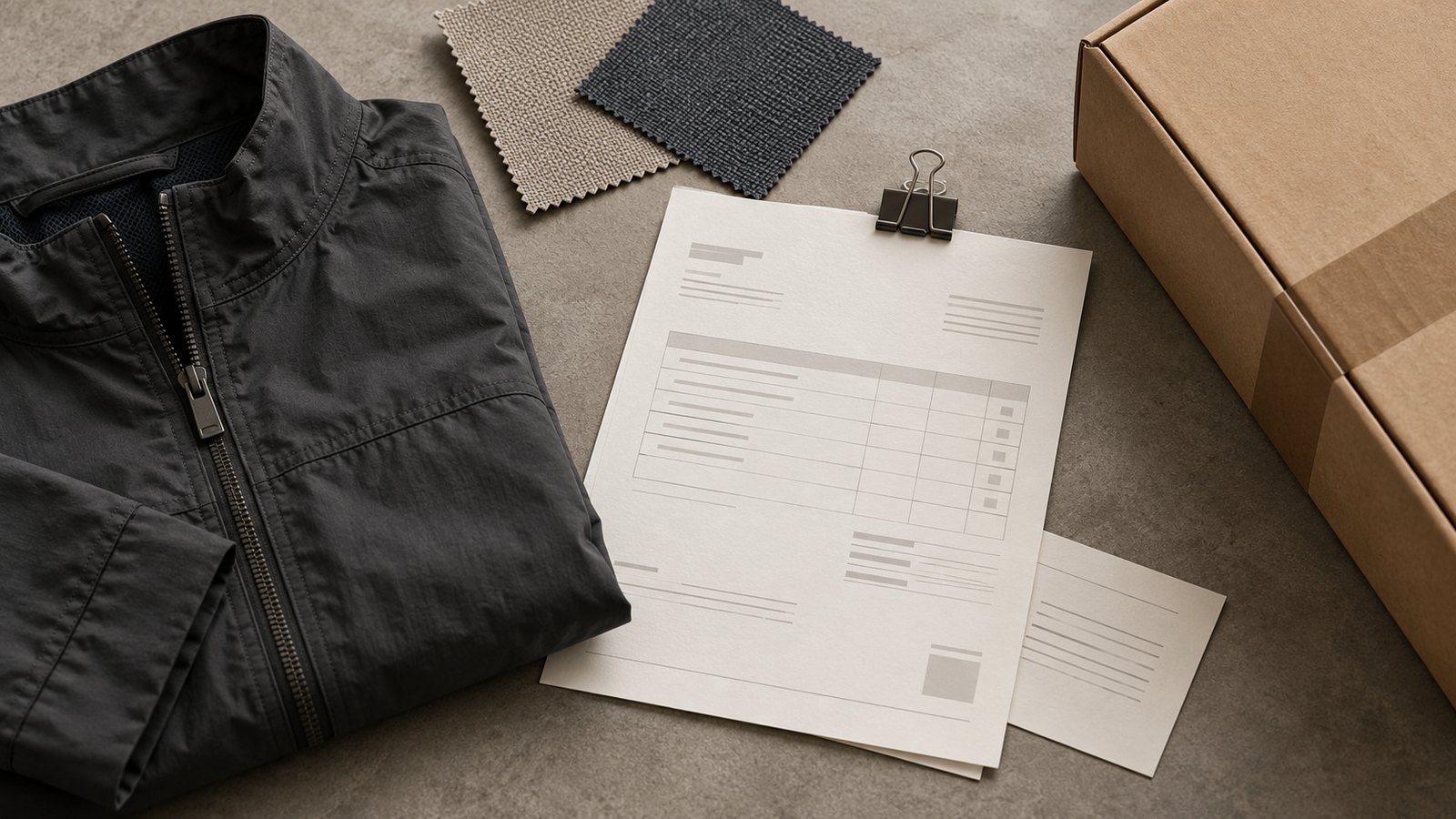
A simple approval email saying “looks good” is not enough for a repeatable bulk order. Keep the approved measurements, fabric reference, trim list and sample corrections under one version number. The clothing sample development guide explains why a first fit sample and a final production sample should not be treated as interchangeable.
Eight Checks Before Choosing a Cut and Sew Factory
Ask every shortlisted supplier for evidence relevant to your actual garment. A T-shirt supplier’s print portfolio does not establish competence in lined jackets or washed denim.
| Buyer check | Evidence to request |
|---|---|
| 1. Relevant garment experience | A comparable style and construction details, not just a logo portfolio |
| 2. Pattern control | Who develops, revises and approves the pattern and grading |
| 3. Fabric sourcing | Swatch, composition, weight, finish and substitution approval |
| 4. Construction details | Seam, pocket, collar, lining or closure specifications appropriate to the style |
| 5. Process ownership | Which operations are done internally and which involve specialist partners |
| 6. Sample revisions | A dated correction log and approval record |
| 7. Quality acceptance | Measurement tolerances, inspection scope and treatment of defects |
| 8. Commercial terms | MOQ basis, itemized quote, delivery schedule and shipping responsibility |
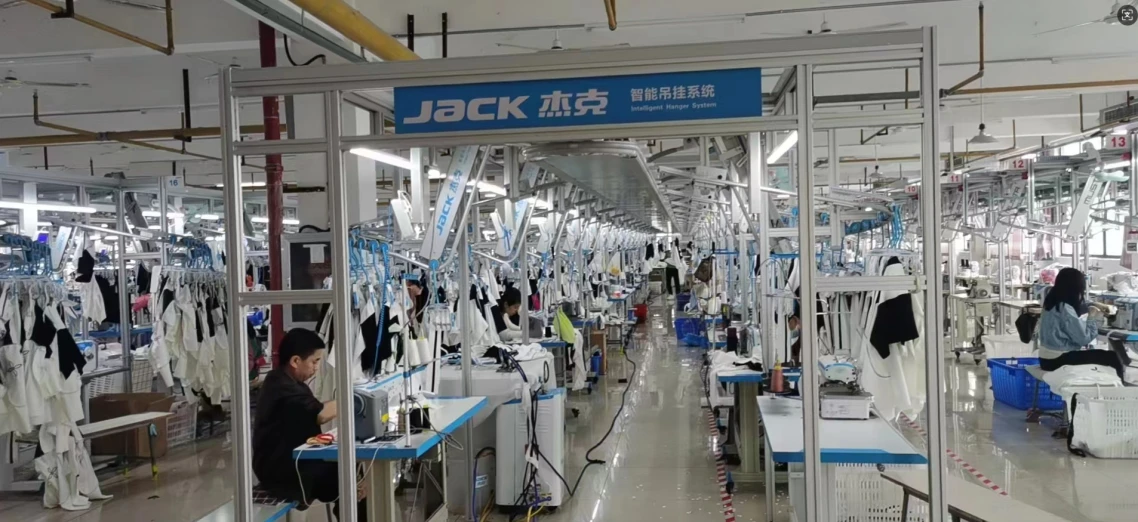
For a factory visit or video walkthrough, ask to see current work on a similar product. Check whether the sample and production documents use the same version. If a process is outsourced, ask who is responsible for its specification and acceptance. A factory address or photograph alone cannot settle those questions.
If social due diligence includes an amfori BSCI report, follow the BSCI report verification checklist to review the named site and the report’s scope.
What to Include in Your RFQ
Send the same brief to each shortlisted factory. State the garment type, target fit, fabric specification, size range, quantity per style and color, artwork, labels, packaging, destination and target delivery window. Identify which details are still open.
Ask the supplier to separate sample development, pattern work, material charges, garment production, decoration, packing and freight responsibilities. Two quotes are not comparable if one includes a new pattern and the other assumes an existing block. Keep the approved specification version with the quotation.
Our tech pack checklist gives buyers a practical way to organize those details before sampling.
MOQ, Sampling and Production Timing
MOQ is often determined by more than sewing capacity. Fabric minimums, dye lots, trims, color count and setup requirements can affect the practical order quantity. Confirm whether a minimum applies per style, per color or across the entire order. An accepted garment quantity does not automatically cover a custom label supplier’s minimum.
NOVITA’s published custom menswear starting point is generally 100 pieces per style per color, with mixed sizes allowed. Sampling is commonly around 7–15 days after requirements and materials are confirmed. Bulk production is generally around 60 days after sample approval, depending on the style, materials, quantity and schedule. These are planning baselines, not guarantees for every project. They do not imply that NOVITA offers labor-only CMT contracts.
Frequently Asked Questions
Does cut and sew always require a completely original pattern?
No. A factory may adapt an existing pattern. Ask which measurements and construction details will be changed, and who approves the final version.
Can I start from a photo?
A photo can begin a feasibility discussion. It cannot specify hidden construction, measurement tolerances or fabric performance. Those decisions need to be recorded before bulk production.
Is cut and sew the same as private label?
No. Cut and sew describes garment construction. Private label describes the brand under which the garment is sold. A private-label order may use an existing style or a custom cut-and-sew design.
How can I verify the factory’s work?
Ask who made the sample, which operations are handled by partners, how corrections are tracked and which approved documents control the bulk order. Request evidence for the specific garment category.
Next Step: Agree the Scope Before You Approve a Sample
Compare factories against the same brief and the eight checks above. Approve a physical sample and written specification before production. For a NOVITA menswear project, send your reference garment or tech pack, quantities by style and color, target fabric and destination through the project enquiry page. The team can confirm whether the requested manufacturing scope fits the available program.