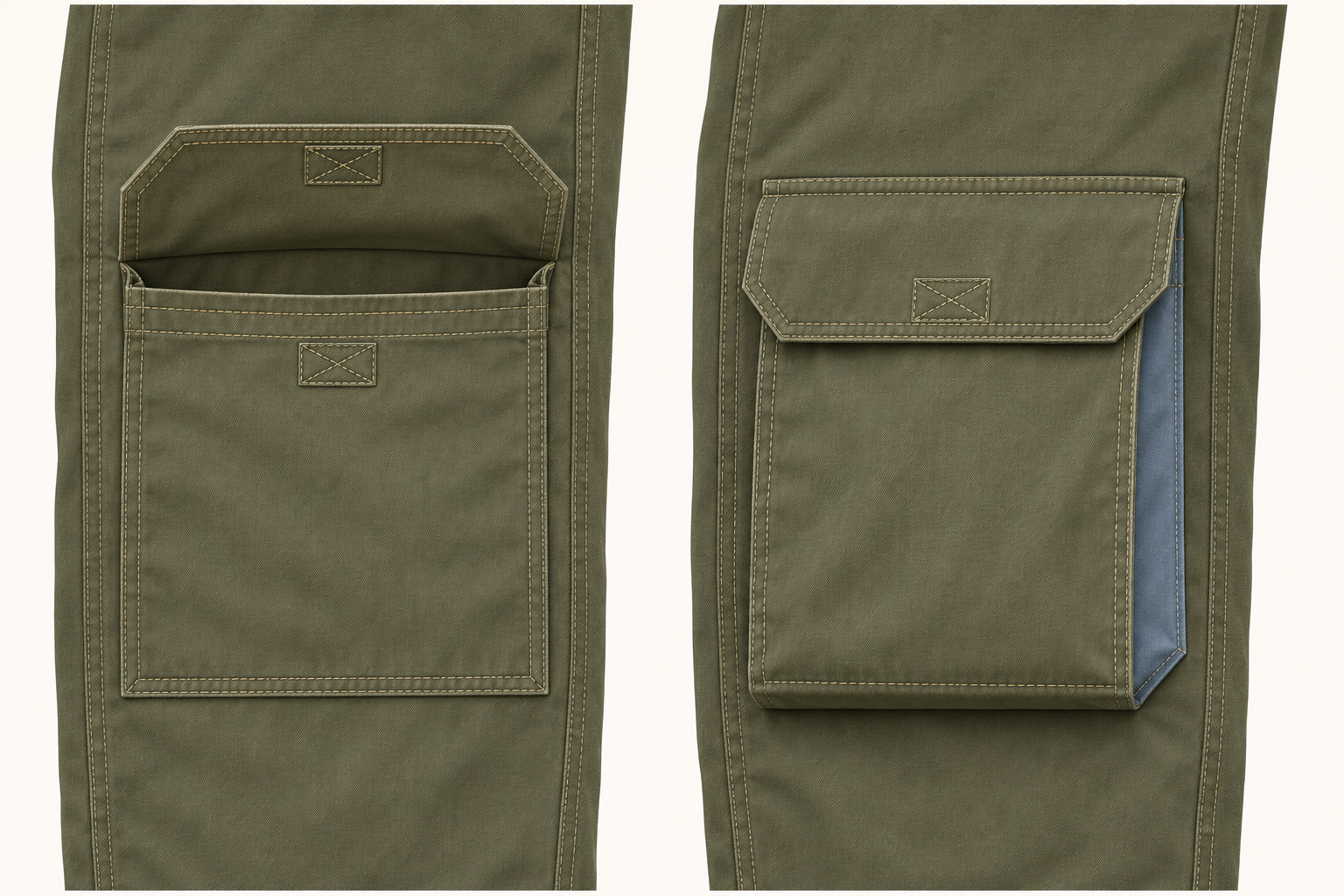
Specify a cargo pocket by its finished opening, usable depth, placement, expansion, and closure. A flat patch panel establishes the pocket footprint. A bellows gusset adds room when the pocket opens out, and a flap covers or secures the mouth depending on the closure. Mark the dimensions on the leg and check access on a worn sample. Plan the full quote around the other specs in the cargo pants RFQ guide.
Choose a pocket for the intended carry
Put the intended object in the brief. A paper face pattern can show the same outline for two pockets whose openings behave differently when sewn. A flat patch may suit a shallow pocket that should sit close to the thigh. For a bulky object, ask which edge of the bellows opens and what should hold the pocket flat when empty. Mark the flap and pocket body separately. A closure fixed to the flap needs a matching position on the pocket.
| Design feature | Put in the tech pack | Inspect on the sample |
|---|---|---|
| Flat patch | Outline, attachment edges, opening direction | Mouth shape, usable corners, empty profile |
| Bellows | Gusset position, fold, open state | Where it expands and whether it collapses cleanly |
| Flap | Overlap and closure centerline | Cover, reach, and alignment when the pocket is filled |
Give each dimension a clear starting point
Mark the intended finished location on a full front and side drawing. Use the top of the waistband and the specified side seam as repeatable reference points where the design permits. Identify the side, size, and state of the pocket. Draw a short arrow across the actual mouth, then mark usable depth down to the inside bottom seam. Ask for the outside pocket outline as a separate dimension if the design needs it.
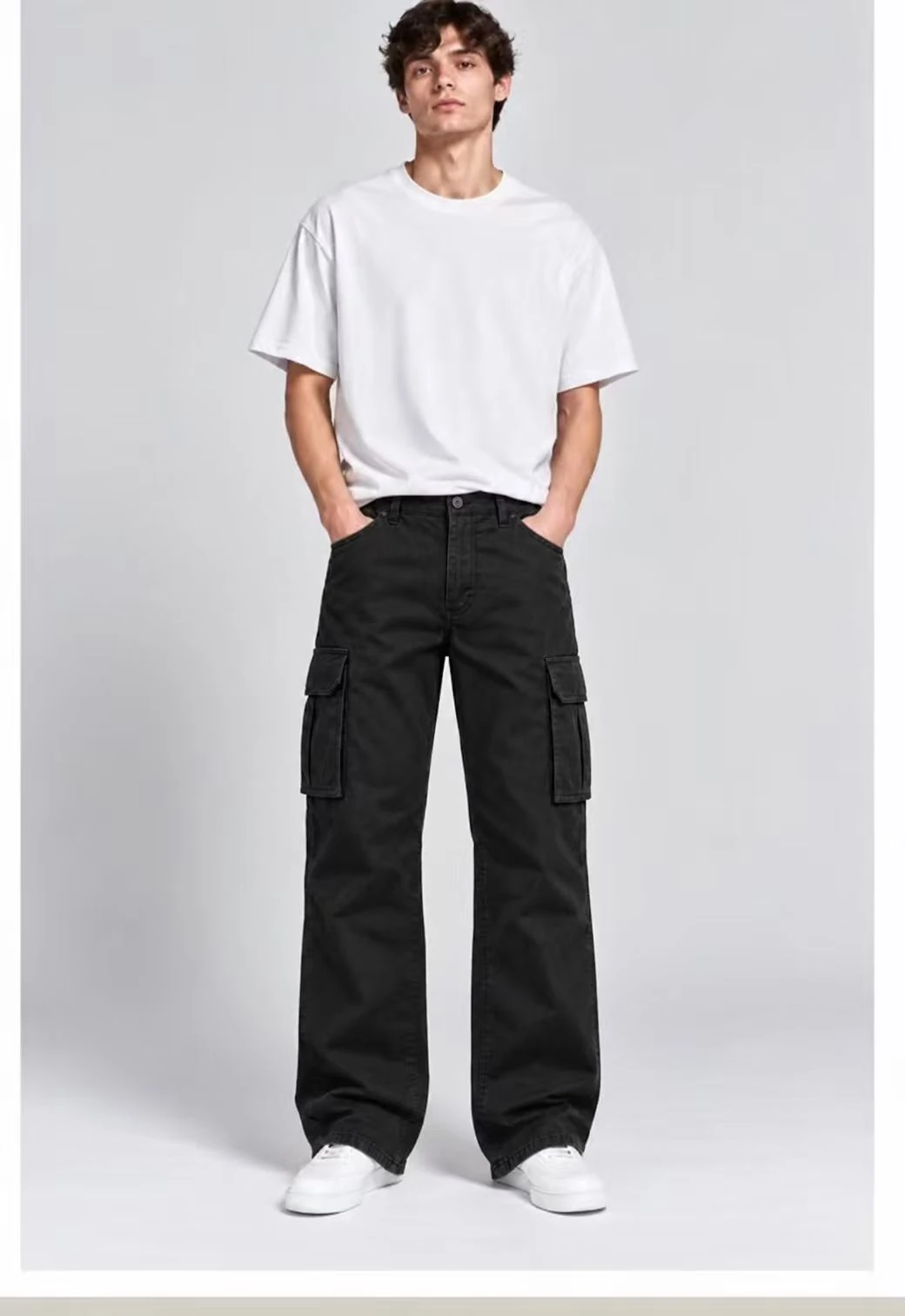
The straight-leg cargo reference uses flapped thigh pockets with separate position, opening, and depth checks. Carry those three fields into the cargo pants RFQ, along with a drawing that shows pocket orientation.
Compare pocket scale across the cargo pants range before fixing the pattern location.
Specify the sewn details where they matter
Magnify the mouth ends, gusset junction, flap attachment, and closure area on a detail view. State which connection you expect the sample to demonstrate and let the factory propose the appropriate seam and reinforcement for the selected fabric. Keep proposed stitch or reinforcement details separate from anything you have already approved. Coats’ technical reference outlines common seam types and how the application informs their selection. Use a point-of-measure convention where helpful. ISO 18890:2018 covers garment measurement points and methods, as of November 2026.
Allow for the seam, fold, and closure
The cut pocket blank includes edges that are folded or sewn into the trouser. Mark the cut outline and the finished mouth as different lines on the detail. Draw the face, the folded gusset and the inside pocket bottom so the pattern team can see where room is gained or lost. If several layers collect under the closure, review a sewn example in the intended cloth before settling where to attach it. A closure that aligns on a flat pattern can shift when the bellows opens out.
Use a small swatch with the proposed seam and pull it open the way the wearer will. An uneven turn or a bulky corner is easier to identify on that piece than in a flat CAD measurement. General workmanship guidance lists straight stitching, consistent edges and pocket symmetry as useful places to look. New Mexico State University clothing construction standards.
Approve empty and loaded states
Start with the empty pocket. Look for a level flap, a mouth that stays accessible, and a gusset that settles into the intended shape. Then insert the agreed object and check whether the wearer can open and close the flap while standing and sitting. Try the other pockets at the same time if the design puts openings close together. For a utility style, look at bent-knee access alongside seam position. The ripstop cargo reference asks buyers to check exactly that combination.
Record which sample carries the approval, the item used, and the changes still open. A photo of the empty pocket and a side view with the agreed load give the sample team two clearly different states to match.
Put the pocket drawing and opening measurements into the tech pack preparation checklist before you request a quote.
Send NOVITA the marked pocket detail with the base size, intended carry item and approved closure.