
In sweater development, a machine gauge describes needle spacing. A finished swatch gives you separate stitch counts and a surface you can handle. Ask for the machine gauge, yarn, knit structure, and finishing instructions together. Then count columns and rows on a defined area of the finished swatch and save it as the approval reference. Use the knitwear manufacturing guide to connect gauge and yarn choices to the sweater RFQ.
Separate the machine from the finished fabric
Machine gauge helps a supplier explain the proposed knitting setup. What the buyer sees depends on the selected yarn, structure, and finishing as well. For example, one yarn proposal may make an open-looking surface on the same machine as another proposal with a different hand. Keep the machine gauge in the technical record, then record the actual surface and two stitch directions on the swatch. CottonWorks describes the machinery choices used for knit fabrics.
Use the 5GG and 7GG styles as starting points
NOVITA’s 5GG color-block pullover provides a chunky, relaxed reference. Its 7GG intarsia crewneck is a separate cotton-blend motif style. If you like the character of one and the design of the other, ask for a swatch knitted with the proposed yarn and pattern. The two product references have different designs and do not establish the finished stitch counts of your order.
| What to record | What the buyer needs |
|---|---|
| Machine setup | Gauge, knitting route, sample reference |
| Yarn and stitch | Yarn ID, color, structure, motif if relevant |
| Finished swatch | Surface, swatch state, measurement area, wale and course counts |
| Decision | Signed reference, requested change and next swatch version |
Compare the proposed surface with actual garment silhouettes in the knitted tops assortment.
How to read 3GG, 5GG, 7GG, 12GG, and 14GG
On flat-bed machines, gauge commonly describes the nominal count of needles per inch across the needle bed. In one machine family, lower numbers generally mean spacing that can accommodate coarser yarn. A higher gauge fits more needles in the same width. Confirm the machine maker’s designation and the supplier’s proposed yarn before applying that comparison to a different machine. SHIMA SEIKI's flat-knitting glossary.
| Gauge labels | Start the discussion with | What confirms the choice |
|---|---|---|
| 3GG and 5GG | Coarser spacing, larger visible stitches as a possible design direction | Actual yarn, structure, finish and swatch hand |
| 7GG | A middle starting point when comparing those labels | Motif definition and density measured on the finished swatch |
| 12GG and 14GG | Finer spacing for a finer-looking surface or smaller motif detail | Needle setup, proposed yarn and swatch values from the supplier |
The category labels describe machine options across the industry. NOVITA’s 5GG and 7GG examples show two separate designs. A measured wale count on either one can change with the stitch, settings and finish. Put an identified fabric swatch beside the tech pack and record its two directions. The swatch answers how the selected construction looks and feels after finishing.
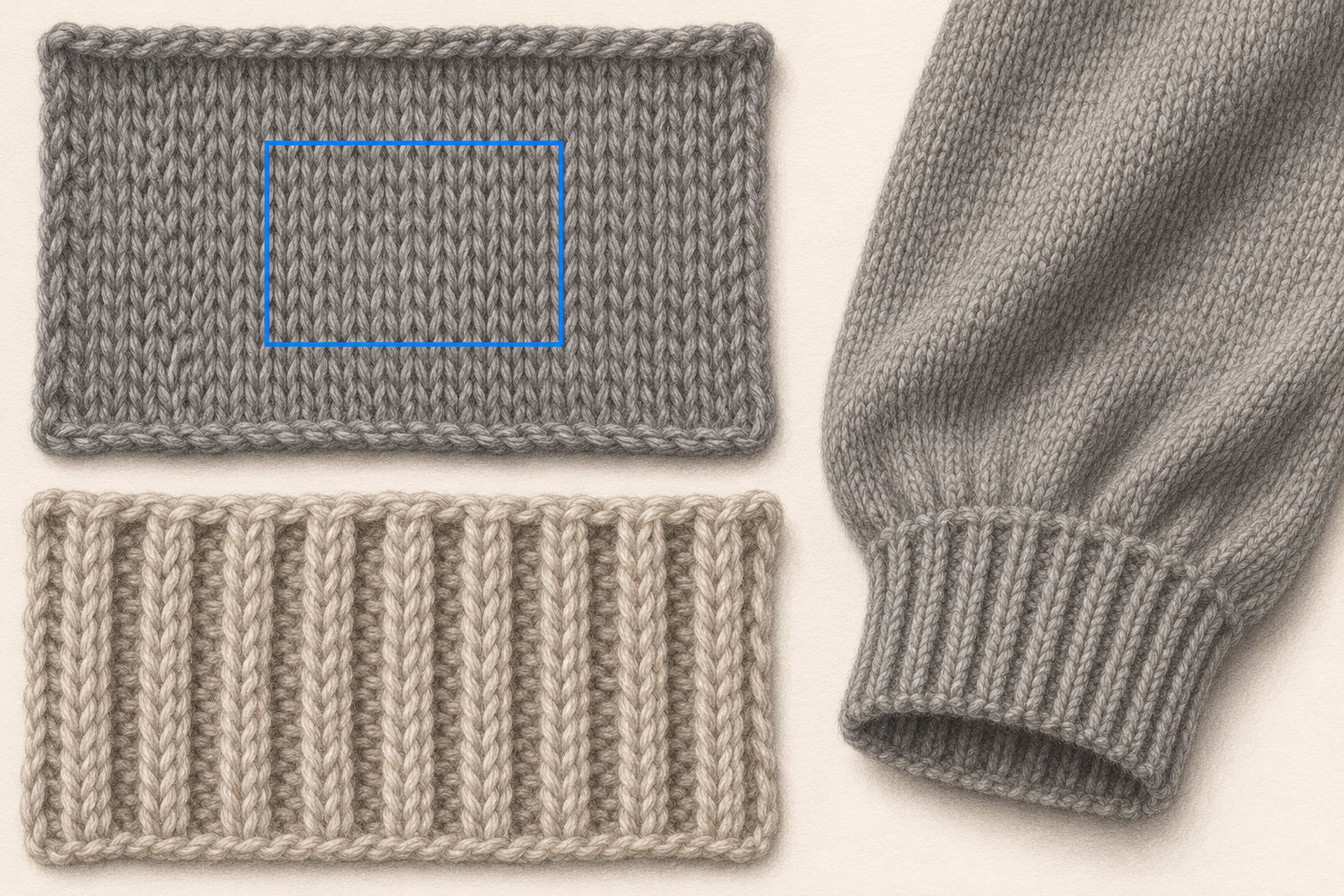
Mark the area and measure both directions
Use a defined central area where the structure represents the intended body fabric. Mark the area and state the unit and finishing stage. Record the columns (wales) and rows (courses) separately. Repeat the check on a relevant motif area or rib when those structures affect the approval. Clear photos of the face and back make it possible to find the same area later.
ASTM D8007-24 describes wale and course counts for weft knitted fabrics, as of November 2026. If the brief also requires dimensional-change testing, ISO 3759:2011 addresses preparation, marking, and measuring for that purpose, as of November 2026. Keep the chosen procedures, acceptance values, and sample conditions together in the file.
Approve a swatch that your supplier can reproduce
Include the swatch ID and version, photos, yarn and finish, and the observations you will check on the sewn sample. Ask for a body swatch and relevant trim sample when the body, collar or cuff use different constructions. Reopen the decision when a proposed substitution would change the approved appearance or feel.
Carry the approved items and open choices into the knitwear RFQ guide. The next reviewer should be able to see what was accepted and which measurements must be compared again.
Store the sweater swatch ID and finished stitch counts alongside the tech pack preparation checklist.
Send NOVITA your target sweater swatch with the proposed yarn and both stitch count directions.