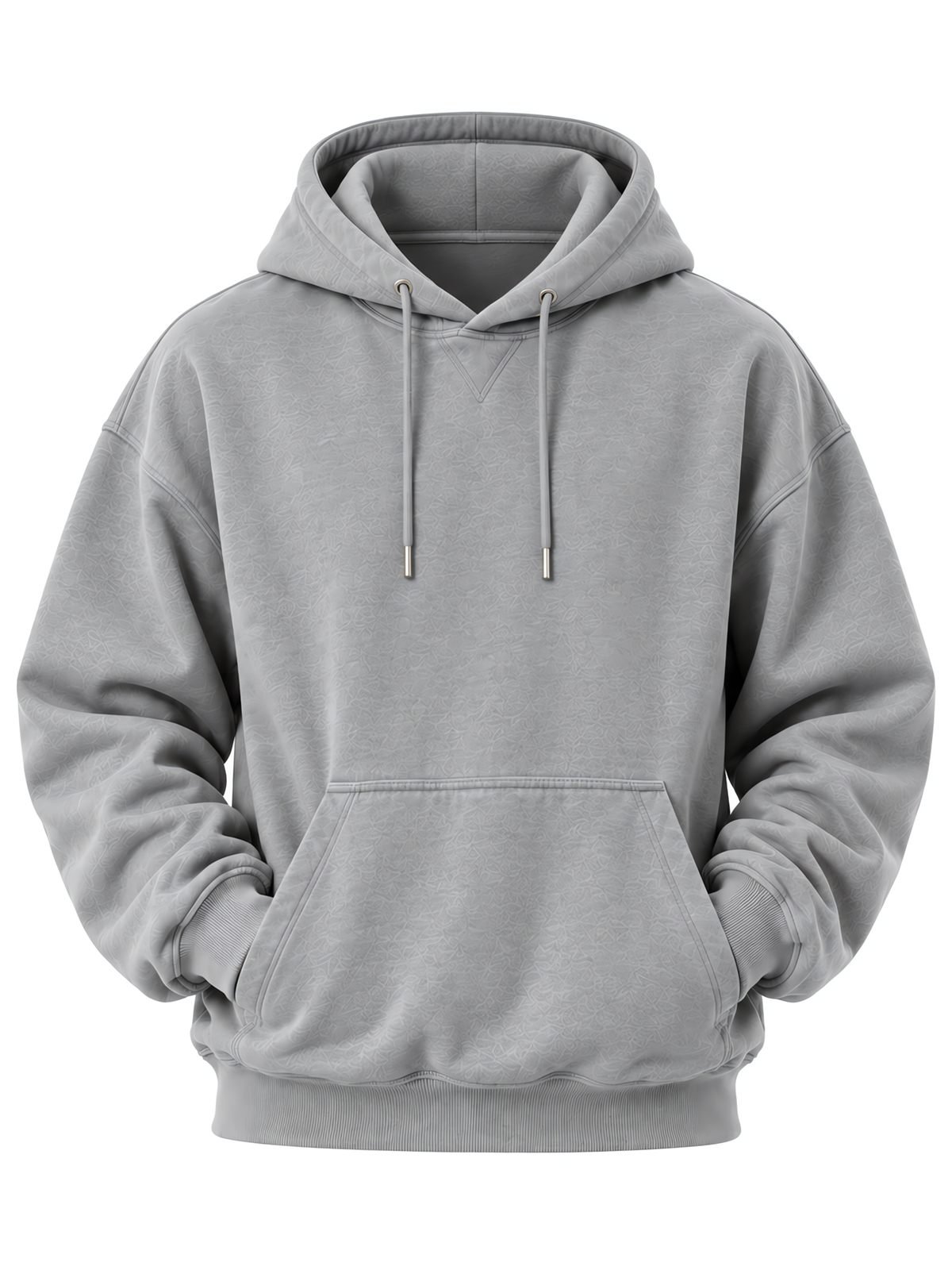
Loopback French terry has visible loops on the inside. Brushed sweatshirt fleece has a raised inner surface from napping. To choose for a hoodie, compare swatches with documented weights and finishes, then check the fabric at the cuff, hem, and hood seams. Agree on the care method and which changes you’ll accept. Start with the context in the hoodie manufacturing guide if you also need to choose a fit, trims or an approval route.
Identify the inside surface
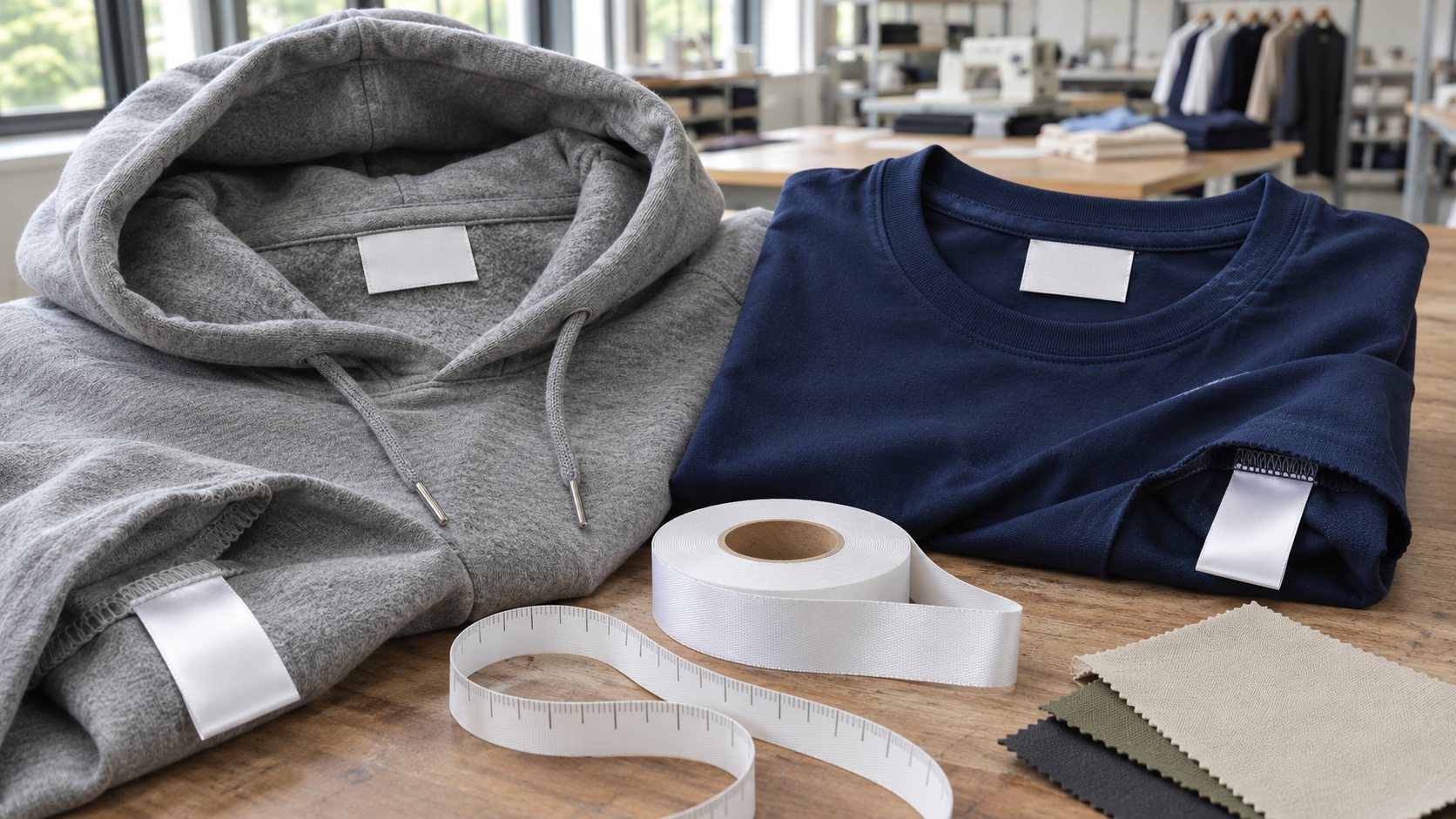
Turn the swatches over before comparing them. The technical back of loopback French terry shows loops. In brushed sweatshirt fleece, the back yarn is raised into a nap. Both terms require a fabric specification. For a purchasing conversation, photograph the face and the inside of each swatch under the same light and label the one you expect the supplier to match. CottonWorks explains how looped and napped surfaces are made.
Compare the swatches for the same hoodie
Keep the garment pattern, intended season and wearing layer the same when you can. Document composition, weight and finish before comparing hand, surface and bulk. If the swatches are different weights, include the difference in the decision. You may find that the body material and the rib need to be reviewed together to keep the intended edge behavior.
| What to compare | How to record it |
|---|---|
| Reverse texture | Photos with sample IDs, lighting and finish |
| Weight and bulk | Specified weight and observations at the same seam |
| Hand and drape | Two identified swatches or garments tried in the intended use |
| After care | Same agreed conditions, observed appearance and dimensional change |
The hoodie and sweatshirt assortment provides garment context for the fabric comparison.
Is French terry a type of fleece?
In sweatshirt fabric terminology, Cotton Incorporated describes a common French terry as un-napped two-end fleece. The characteristic loopback is its unraised inside surface. Brushed fleece has an inside surface that has been raised in finishing. Use the actual swatches when those names are used differently by suppliers. Ask each supplier to identify the yarn and finish in a quote.
A raised, loftier inner surface can hold still air and feel warmer when other construction and wearing conditions are comparable. A French terry choice can suit a lower-bulk hoodie where you want visible loops and an unbrushed hand. Warmth and airflow vary with yarn, stitch structure, weight, finish and the garment layers. Compare the actual samples under the same use conditions and specify the method if you need an air or thermal figure.
How do I tell them apart on the garment? Turn the garment to see the inside body surface. Loops and a short napped surface are easier to distinguish there than by the front photo. Compare the same layer on each hoodie. Check rib cuffs and hood lining separately if those areas use other fabrics.
Review the sewn sample
Both the NOVITA French terry hoodie and the brushed fleece hoodie use a kangaroo pocket and ribbed cuffs as reference details. Those are places to compare the fabric in a sewn garment because there are several layers. Check how the pocket edge sits, how the rib lies, and whether the hood edge keeps the intended shape.
As of November 2026, AATCC TM150 addresses garment dimensional change after home laundering, with limits on applicability for certain stretch fabrics. AATCC TM143 addresses specific aspects of post-laundering appearance. Record the project’s chosen methods, accepted appearance and tolerance before starting any verification.
Record the fabric approval before ordering
Approve a swatch and the sewn sample with their versions. If you choose to test pilling or other surface changes, specify method and acceptance criteria in the agreement. ASTM D4970/D4970M is a Martindale method for pilling and related surface changes, as of November 2026. The approval should list what needs a new yardage or sample check if the finish changes.
Questions buyers ask about hoodie fabrics
Can French terry be used for a summer hoodie? Evaluate the actual swatch with the intended fit and layer. The fabric name alone gives the inside structure, and the selected yarn, weight and finish still need checking.
Is heavier fabric always warmer? Compare the proposed material in the actual garment and intended conditions. Weight is one specification. Keep the inside surface, fit and wearing layers visible in the approval notes.
Enter the comparable swatch IDs and garment care notes with the tech pack preparation checklist.
Send NOVITA the two hoodie fabric references and state which checkpoints matter on the sample.