Minimum order quantity, or MOQ, is one of the first questions buyers ask when contacting a clothing manufacturer. But the useful answer is rarely one fixed number.
In apparel manufacturing, MOQ can change with the style, fabric, color, size breakdown, trims, decoration, packaging and production setup. A buyer who understands what drives the minimum can compare factories more accurately and avoid unrealistic quotations.
This guide explains how clothing manufacturer MOQ works, what can raise or lower it, and what information to prepare before requesting a production quote.
Key Takeaways
• MOQ is the smallest practical production run under a defined product setup.
• The minimum may apply by style, color, fabric or another production variable.
• Fabric minimums, trims, custom colors, decoration and packaging can change the workable quantity.
• Lower MOQ often means a higher unit cost because setup costs are spread across fewer garments.
• Compare MOQ together with sampling, production capacity, quality control and communication.
MOQ means minimum order quantity: the smallest production volume a manufacturer can accept for a defined product setup.
The important phrase is defined product setup. A factory may be able to produce a smaller run when stock fabric and standard trims are available, while custom-dyed fabric, special hardware or complex finishing can require a larger commitment.
For that reason, buyers should not compare suppliers only by a headline MOQ. Ask what the minimum applies to and what assumptions are included in the quotation.
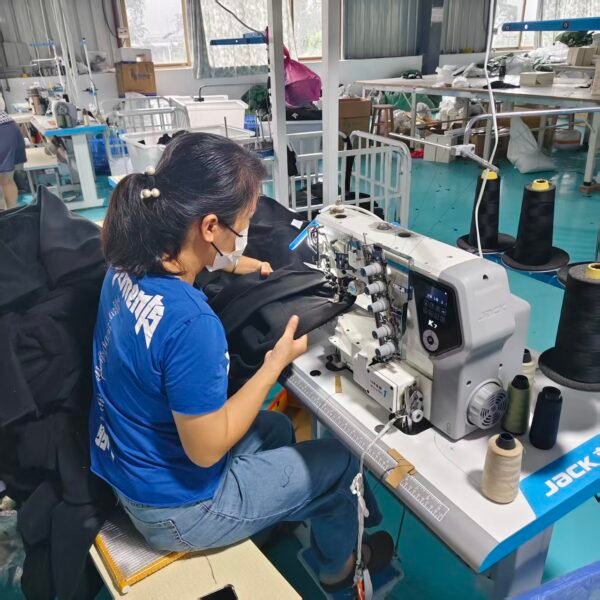
Clothing manufacturers set MOQs because every production run includes fixed work before and during manufacturing.
Pattern preparation, grading, marker planning, cutting setup, sewing-line allocation and quality-control preparation all require time even when the order is small.
Materials also create minimums of their own. Fabric mills, trim suppliers, label makers and packaging suppliers may each have purchase requirements that affect the final garment quantity.
Common MOQ drivers include fabric roll minimums, custom dyeing, labels and trims, embroidery or printing, custom packaging, line setup and product complexity.
There is no universal counting rule across every clothing factory.
Some manufacturers quote a minimum per style. Others may apply it per color, fabric, decoration method or production batch. Size assortments may be mixable within the run, but that depends on the product and factory setup.
Before accepting a quotation, ask whether the MOQ is per style or per color, whether sizes can be mixed, whether multiple colors can share the same fabric minimum, and whether trims or packaging have separate supplier minimums.
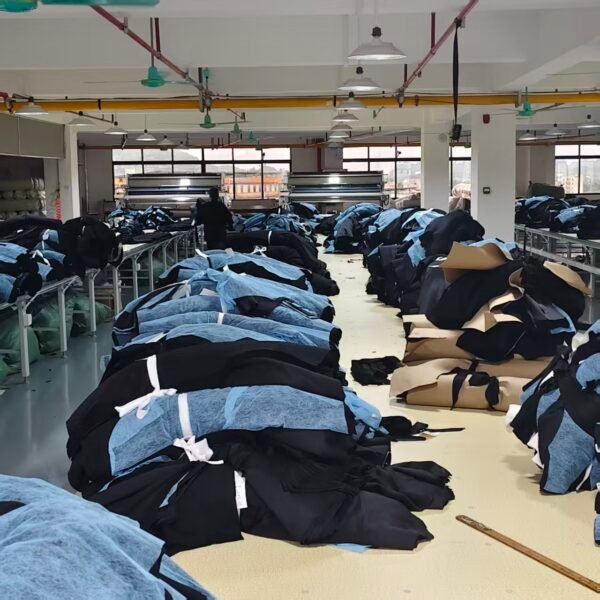
MOQ usually rises when a project requires more dedicated materials or production setup.
Custom fabric, custom colors, special trims, decoration, packaging and multiple colorways can all increase the workable minimum order quantity. Custom-dyed fabric may also be limited by the mill’s own minimum, while branded hardware or packaging can create separate supplier minimums.
NOVITA’s sample development usually takes 7–14 days after fabric, measurements and design details are confirmed.
Lower quantity does not remove the development and setup work required for the order. If pattern work, sample preparation, cutting setup, machine adjustment and quality-control preparation are spread across fewer garments, the cost allocated to each piece becomes higher. A reliable apparel manufacturer should still havequality control throughout the production process.
Important checkpoints include fabric and trim inspection, pre-production sample approval, inline inspection, during-production inspection and final inspection before shipment.
MOQ and production capacity answer different questions. MOQ tells you the smallest practical run a factory can accept for a defined product setup, while production capacity describes how much the manufacturer can produce within a period while maintaining its production and quality systems. For more detail, read our clothing manufacturer production capacity guide.
A complete quotation should consider fabric quality, construction details, trims, packaging, inspection requirements and shipping terms.
MOQ depends on fabric availability, custom colors, product complexity and branding requirements.
The smallest MOQ is not automatically the safest supplier choice. Use the broader checklist in our guide to choosing a reliable clothing manufacturer in China. Compare the complete manufacturing offer: product-category experience, sample development, fabric and trim sourcing, quality-control checkpoints, production capacity, communication, documentation and export support.
Positive signals include asking detailed questions before quoting, confirming specifications clearly, recording sample approvals, providing realistic timelines and sharing production updates.
For an accurate MOQ quote, send the factory your product category, reference images or tech pack, fabric requirements, colorways, size range, artwork or decoration details, labels, trims, packaging requirements, estimated quantity, delivery destination and target timing. The more specific the brief, the more useful the MOQ answer will be.
FAQs
MOQ should be evaluated together with fabric, color, trims, customization and production planning. For broader service questions, visit our full clothing manufacturing FAQ.
Stock styles can start from 50 pieces, while custom OEM orders generally start from 100 pieces per color. The final MOQ depends on the fabric, style, color and customization requirements.
MOQ can increase when a project requires custom fabric, custom dyeing, special trims, multiple colorways, complex decoration, branded packaging or additional production setup.
It depends on the product and production setup. Size assortments may sometimes be mixed, while color, fabric, trim or dyeing requirements can create separate minimums.
Development, material purchasing, cutting setup, machine adjustment and quality-control preparation still require time on a small order. When those fixed costs are spread across fewer garments, the unit cost usually increases.
Send your product category, reference images or tech pack, fabric requirements, colors, size range, artwork or decoration details, labels, trims, packaging requirements, estimated quantity, delivery destination and target timing.
Clothing manufacturer MOQ is not simply a number to negotiate down. It is the result of materials, product configuration, production setup and supplier economics.
The right partner should provide product expertise, reliable sampling, stable production capacity, quality control systems, clear communication and export experience.
NOVITA supports global fashion brands with OEM and ODM apparel manufacturing solutions, from fabric sourcing and product development to bulk production, inspection and shipment.
Post Tags :
Share :