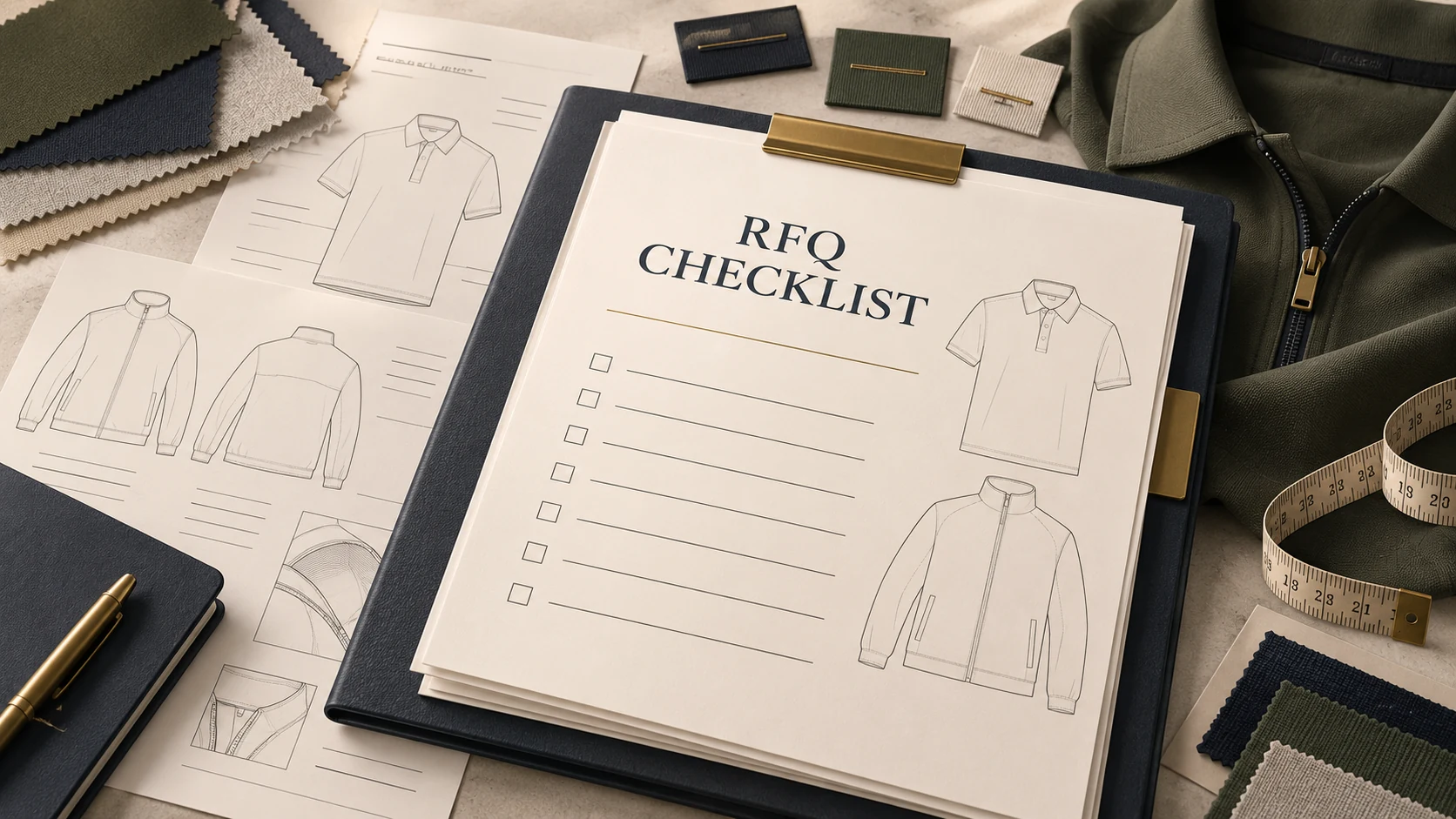
To request an accurate clothing manufacturing quote, send the garment specification, units by style and color, size breakdown, branding, packing and delivery requirements together. Mark each unresolved detail so the manufacturer can state what its price assumes.
An RFQ—a request for quotation—is the buyer’s brief. The quotation is the supplier’s response. A useful reply identifies the product and order being priced, the work included, separate charges and any decisions still open. This checklist helps you prepare that brief and check whether competing replies cover the same scope.
This RFQ checklist is for clothing brands, wholesalers and sourcing teams preparing a custom order. It helps you organize the request and read the reply; detailed pattern development, MOQ calculations and sample approval remain separate decisions. For the full flow, see the OEM and ODM manufacturing process.
Define the Order and the Quote Stage
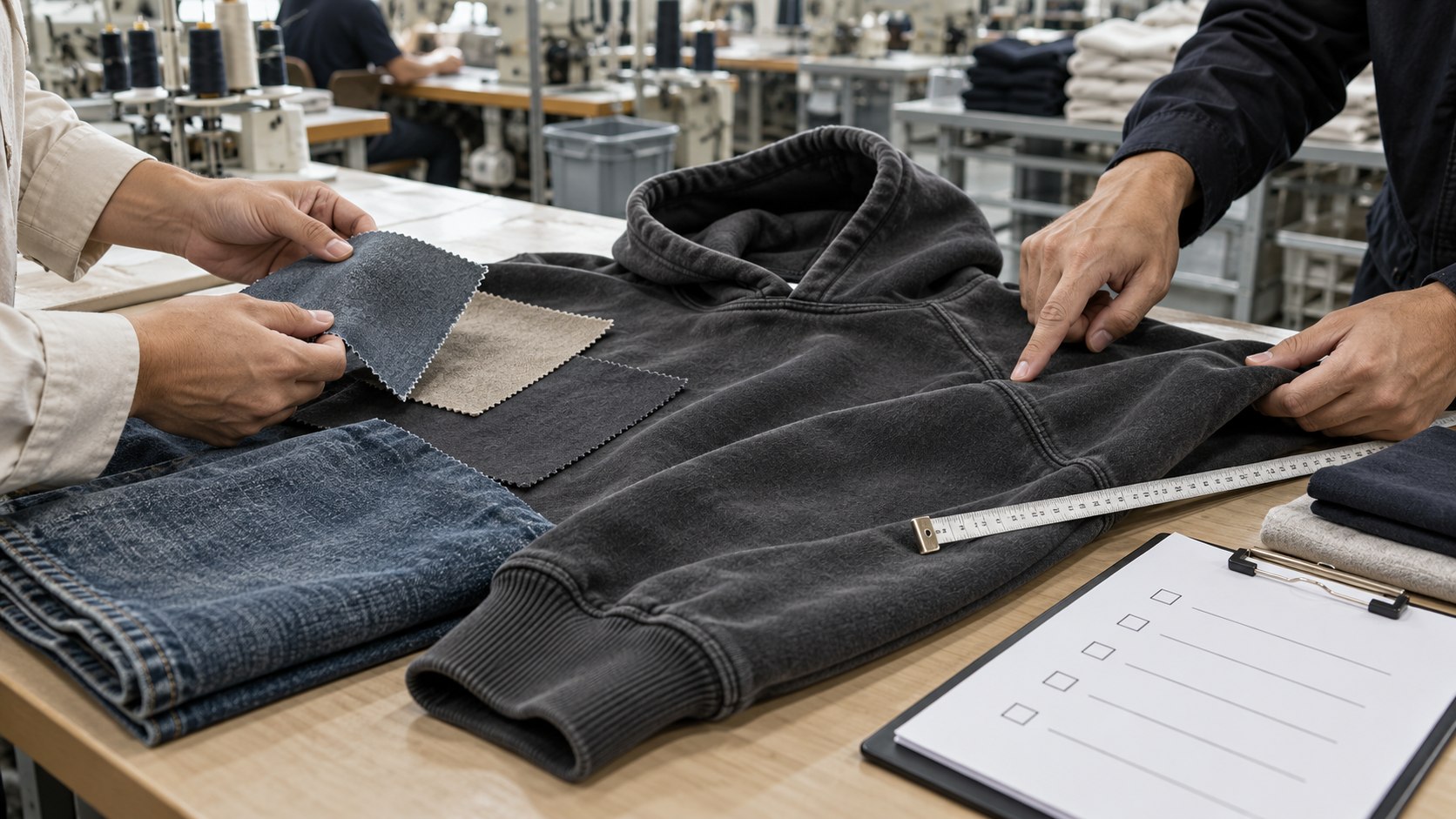
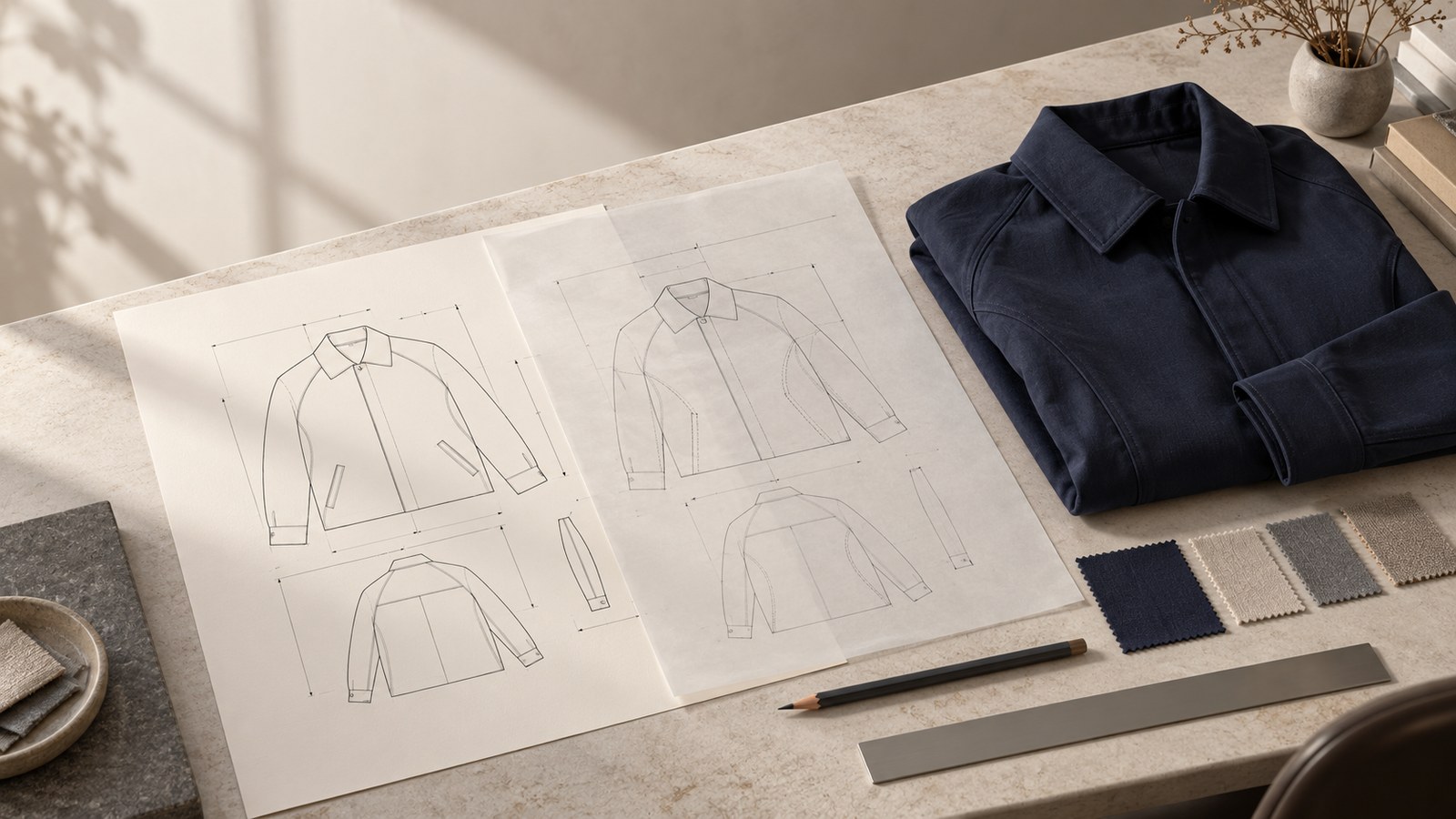
Use a style code and revision date on the request, drawings, measurement chart and artwork. State whether you want an initial development estimate or a quotation against confirmed specifications. A reference photo can begin a sourcing discussion, but it does not settle the fabric composition, garment measurements, hidden construction or packing.
Describe the production scope. Are you buying an available garment with agreed branding, adapting an existing design, or developing a new garment from your specification? Our private label supplier comparison explains why those routes can produce different quotations.
Attach only the current files. List them in the message, including the reference sample identifier where relevant. Mark earlier versions as superseded. If a physical reference still needs to be converted into measurements and construction instructions, use our reference-to-production specification guide before treating it as an approved standard.
RFQ Checklist: What to Send a Clothing Manufacturer
Complete one row for each requirement. “Supplier to propose” is a useful status when you need development input; an empty field gives the supplier no indication of what you intend. Keep the technical files attached to this order summary.
| RFQ field | Buyer input | If it is undecided |
|---|---|---|
| Product and reference | Category, style code, file revision, front/back views and detail references | Identify which construction details need development |
| Quantity | Units per style and color, then the size breakdown; distinguish order quantity from forecast | Request a stated scenario rather than an unspecified volume discount |
| Fabric | Knit/weave, fiber composition, target GSM, shade reference, finish and physical reference if available | Ask for a named proposed material; record what the price assumes |
| Fit and construction | Garment measurements, measuring method, tolerances, seams, collar, pockets, closures and lining where applicable | Mark missing measurements and construction as development work |
| Decoration | Artwork file, method, finished dimensions, positions and color references | Ask which method is proposed and what sample approval is needed |
| Labels and packing | Label/hangtag files, placement, packing format and variant/barcode requirements | Request component minimums and setup charges separately |
| Samples | Purpose, sizes, quantity, materials, branding and requested revision scope | Ask which provisional components will be used and how final ones will be approved |
| Quality requirements | Measurement tolerances, workmanship criteria and required inspection or test scope | Agree the method and acceptance basis before relying on a general “quality checked” statement |
| Timing | Sample deadline and required arrival date, with approval dates distinguished from dispatch | Ask for assumptions on material availability, approvals and transit |
| Commercial basis | Currency, delivery destination and requested trade term if known | Ask the supplier to identify the offered delivery scope, charges and exclusions |
Where the order uses sampling inspection, define the sample size, Ac/Re limits and failed-lot terms before approving the quote.
For a polo, the collar, placket and logo belong in the brief alongside the body fabric. For a jacket, specify the shell, body and sleeve lining, closures and any fill separately. Use actual NOVITA product references to identify the garment direction; a catalogue image is a starting point, not a complete technical specification.
Make Unknown Decisions and Alternatives Visible
Give each unsettled requirement an owner and an approval point. For example, label the fabric “supplier proposal required,” the artwork “buyer file pending,” and the packing “quote assumption to confirm.” The supplier should identify the option used in its estimate and explain what must be settled before that estimate becomes a production basis.
Illustrative polo decision: you have chosen a piqué appearance but have not selected the composition or weight. Request a proposed fabric specification and a sample review. If the supplier offers a second fabric, keep that option in a separate line with its own price assumptions. Do not compare it directly with another supplier’s confirmed cotton specification simply because both replies say “piqué.”
Illustrative jacket decision: the reference has a zip front, but its lining and puller are unknown. Request a base proposal and any alternatives separately. Identify which components need physical approval and whether their minimum purchases affect the order. These examples are decision exercises, not customer orders or evidence of a quoted price.
Use a Short Open-Decision Register
The following is an illustrative working record. Replace the entries with your own project decisions and keep it with the RFQ revision.
| Requirement | Status | Basis to quote | Next approval |
|---|---|---|---|
| Polo body fabric | Supplier proposal required | Name the proposed structure, composition and GSM; identify any alternative separately | Buyer reviews the proposed swatch and confirms the material |
| Chest logo | Buyer artwork pending | List the assumed method, dimensions and placement; state which charges remain provisional | Buyer supplies the final file and approves the physical decoration result |
| Jacket lining | Alternative requested | Price the base lining and alternative as separate options | Buyer selects the option and confirms it on the sample |
| Individual packing | Confirmed | Reference the agreed packing specification and variant data | Review the packing sample and data before bulk release |
A proposal is not an approval. Keep the selected option and its approval date in the record; when that choice changes the garment or its cost, ask for a revised quotation.
Keep forecasts separate from the quantity you can commit to. Ask how the MOQ is counted and whether custom fabric, labels or trims introduce separate minimum purchases. List those requirements even when the garment quantity itself is accepted.
Ask the Supplier to Return a Quotation You Can Review
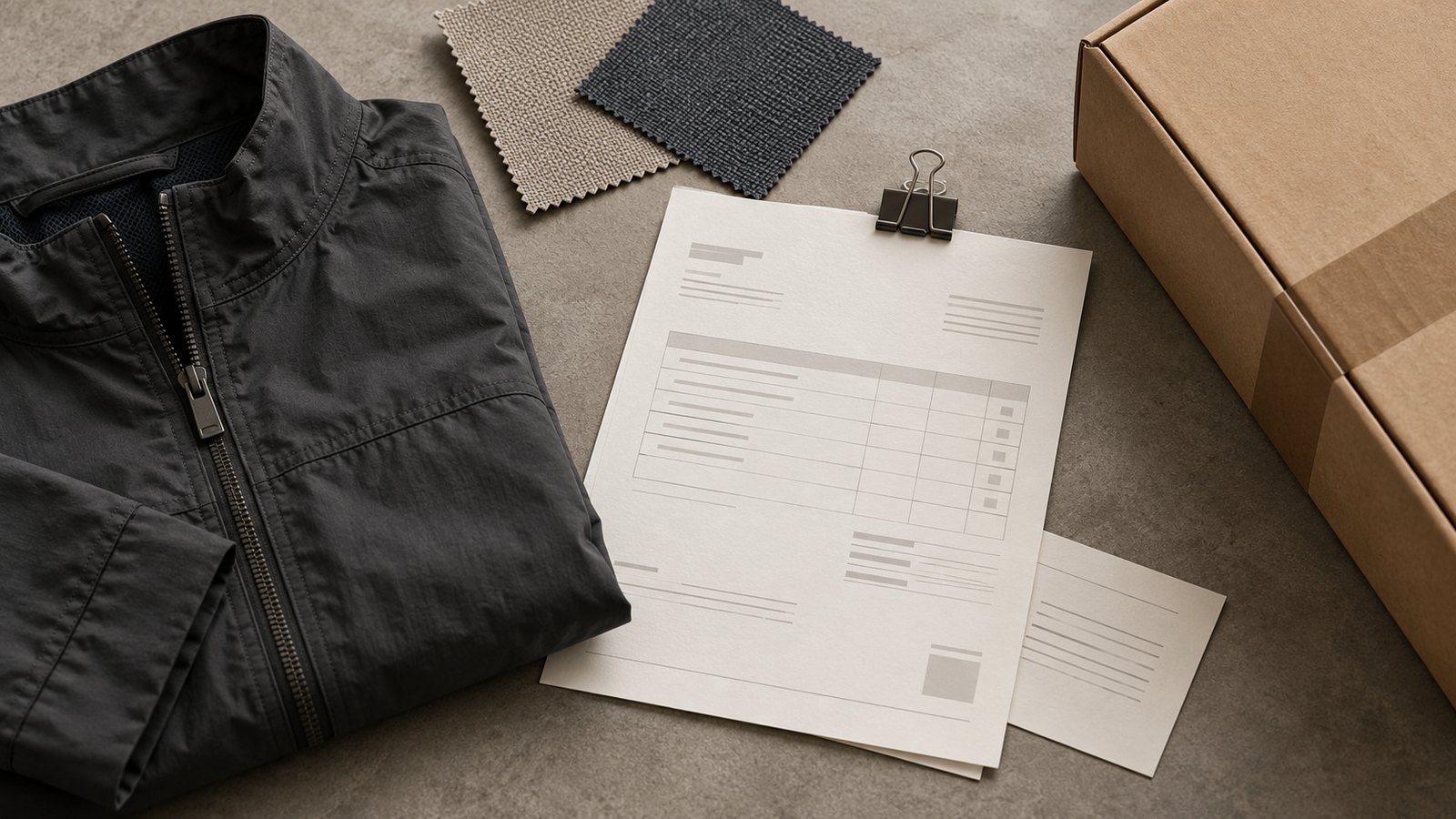
Ask for the quotation to identify your RFQ revision and the selected material and construction basis. A price tied to an old drawing or an unnamed substitute cannot be checked against your current brief.
- Garment scope: material specification, decoration, labels, packing and quantity basis; list substitutions and exclusions.
- Separate charges: sample development, revisions, artwork or setup, testing, inspection, courier and any minimum-purchase balance. Ask what is included and what would be charged again on a repeat order.
- Schedule: sample development and bulk production stages, their starting conditions, material availability and approval dependencies. Distinguish factory completion from the required arrival date.
- Commercial terms: currency, quotation validity, payment stages, contracting entity and the delivery responsibilities being priced.
- Open decisions: each assumption, the person who must resolve it, and whether the quotation needs revision when it changes.
If an Incoterms® rule is used, record the rule, its named port or place, and the edition. The ICC’s Incoterms® 2020 guidance explains this identification. A destination country alone is insufficient to describe the full quoted delivery scope; ask which freight and destination charges are included rather than assuming them.
Resolve the Difference Before Ranking the Prices
These hypothetical reply differences show what to ask next. They contain no quoted prices or customer data.
| Difference between replies | Why the comparison is incomplete | Buyer follow-up |
|---|---|---|
| One supplier includes labels; another says “branding extra” | The listed garment prices cover different components | Ask both to name and price the same label, hangtag and packing specification |
| One proposes a substitute fabric | The price may reflect a different garment | Keep the substitute as an alternative and request its exact specification and approval sample |
| One states a production lead time; another states an arrival date | The schedules measure different stages | Ask for approval conditions, factory completion, dispatch and the delivery scope separately |
| Sample revisions are included in only one reply | The development fees may buy different amounts of work | Confirm the included sample work, revision scope and charges for further changes |
Resolve these differences before negotiating the garment price. When a material, quantity or branding requirement changes, send a revised request and ask for a quotation tied to it. Sample approval should identify the final specification and any commercial changes; keep unresolved components visible until they are agreed.
Copy This Clothing Manufacturing RFQ
Replace the bracketed fields and delete requirements that do not apply. This is a blank buyer template, not a real quotation or customer case. Attach the technical files rather than putting essential construction details only in a chat message. If the technical file is still being assembled, work through the tech pack preparation checklist first, so the RFQ is not sent with unresolved fields.
Subject: RFQ — [style code / category] — [quantity] — revision [date]
Hello NOVITA team,
Please review the attached [tech pack / reference images / sample details] and quote the following project. We need [initial development estimate / quotation against confirmed specifications]. Please identify assumptions and missing information before treating the request as final.
- Product: [garment category and description]. Current files: [filenames and revision dates]. Changes from the reference: [list].
- Order breakdown: [style], [color/reference], [units]. Size ratio: [size and units]. Repeat-order forecast, if any: [clearly separate forecast].
- Material: [structure], [composition], [GSM], [finish/hand feel], [shade or swatch reference]. Status: [confirmed / supplier proposal required].
- Fit and construction: [measurement file, measuring method and tolerances]. Collar/lining/closure/pocket details: [attached specification or open questions].
- Decoration: [method], [artwork file], [finished dimensions], [positions] and [colors]. Please identify any method change you propose.
- Labels and packing: [files, components, placements, individual packing, barcode and carton requirements]. Please separate any setup or minimum-purchase charges.
- Quality: [workmanship criteria, measurements, inspection and test requirements]. Please identify what is included and what needs separate confirmation.
- Samples: [purpose, sizes and quantity]. Please state the sample fee, included work, revision scope, courier charges and provisional components.
- Timing: sample required by [date]; goods required to arrive by [date]. Destination: [country, city/port and delivery point]. Approval dependencies: [list].
- Commercial request: [currency and requested delivery scope]. If using an Incoterms® rule, state [rule, named place/port and edition]. Please confirm payment stages and quotation validity.
- Open decisions: [item, who resolves it and approval point]. Alternative scenarios to price separately: [option A / option B].
Please reference this RFQ revision in your reply and return the garment price with inclusions, exclusions, separate development/setup charges, MOQ basis and timing assumptions. Identify any changes needed for feasibility. We will review the remaining decisions before sample or bulk approval.
[Buyer name, company and contact details]
Send the RFQ to NOVITA and Review the Reply
Quantity check for a NOVITA custom brief — illustrative: one style in navy and white normally means at least 100 navy pieces plus 100 white pieces, or 200 in total under the standard per-style, per-color MOQ. An order of 100 pieces split equally between those colors would leave each color below that standard minimum. Mixed sizes can be allocated within each color; confirm any separate material or trim minimums for the actual project.
If your RFQ starts from a carpenter pants reference, include the utility-pocket and loop dimensions. For pleated casual pants, identify pleat depth, waist position and the target measurements so the quotation reflects your intended construction.
For a ripstop utility cargo pants brief, identify the ripstop fabric specification, reinforcement details and pocket construction. For relaxed-fit twill pants, specify the twill hand feel, garment measurements and finishing expectations. Those are different quotation assumptions even if both styles are described as casual trousers.
NOVITA supplies men’s casualwear through OEM, ODM and private label projects. Begin with the relevant manufacturing scope and supplier information, then send the product reference and order breakdown. Our normal custom MOQ is 100 pieces per style per color, with mixed sizes allowed. Sample development generally takes 7–14 days, depending on the confirmed product and material requirements. Confirm the actual scope and schedule for the garment you are sourcing.
On the NOVITA contact page, enter your first and last name, email and phone/WhatsApp, then paste the completed brief into Messages / Questions. List the attachments you have and ask how to share them if the form does not provide an upload field. You can also email the RFQ and files to [email protected] or start the discussion on WhatsApp.
When the reply arrives, first check the referenced style and revision, quantity basis and material assumptions. Resolve open items in one written record. If the agreed garment differs from the initial brief, update the specification and obtain the revised commercial basis before proceeding. Keep the final quotation, approved files and sample approval linked to the same project revision.