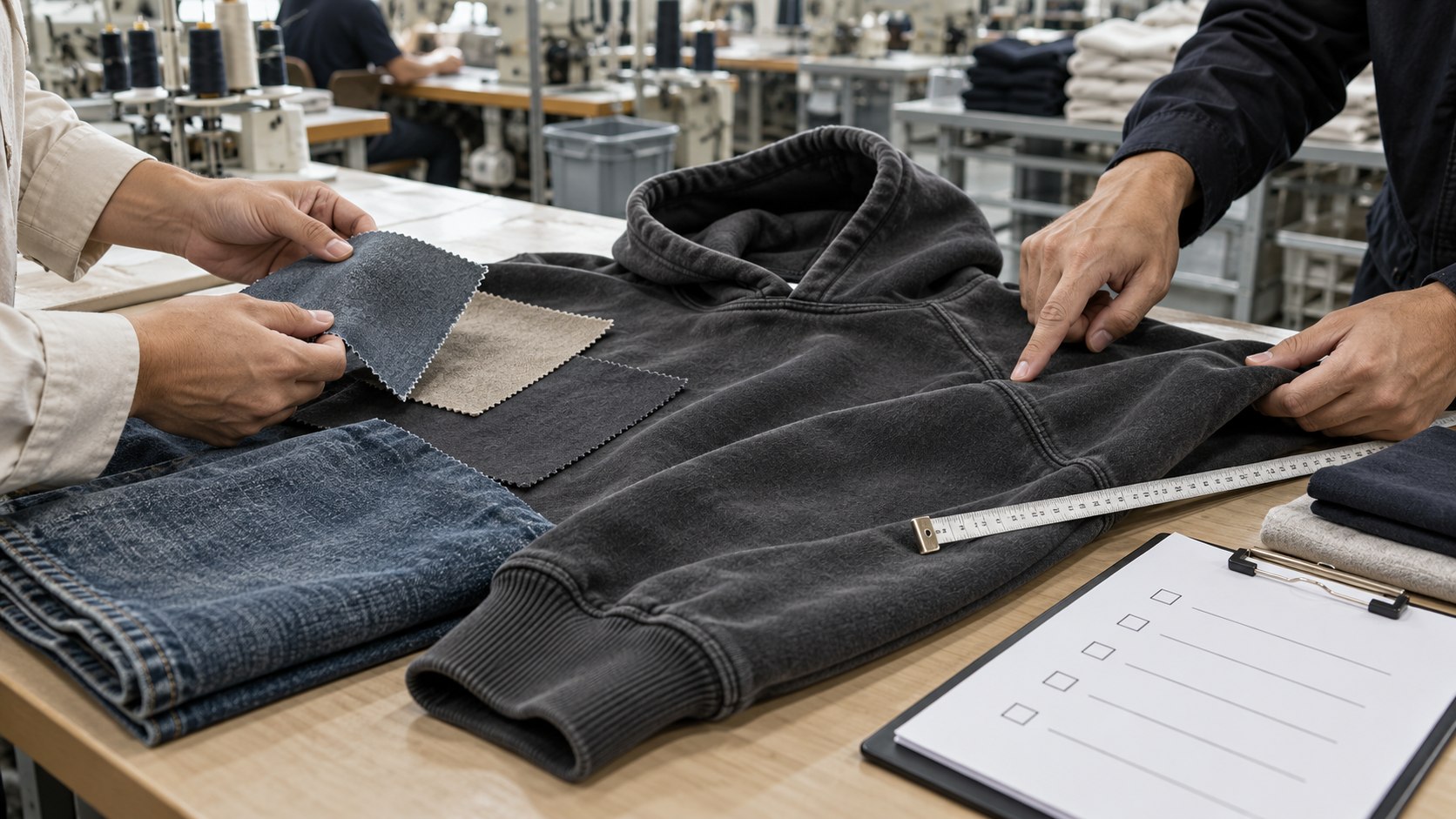
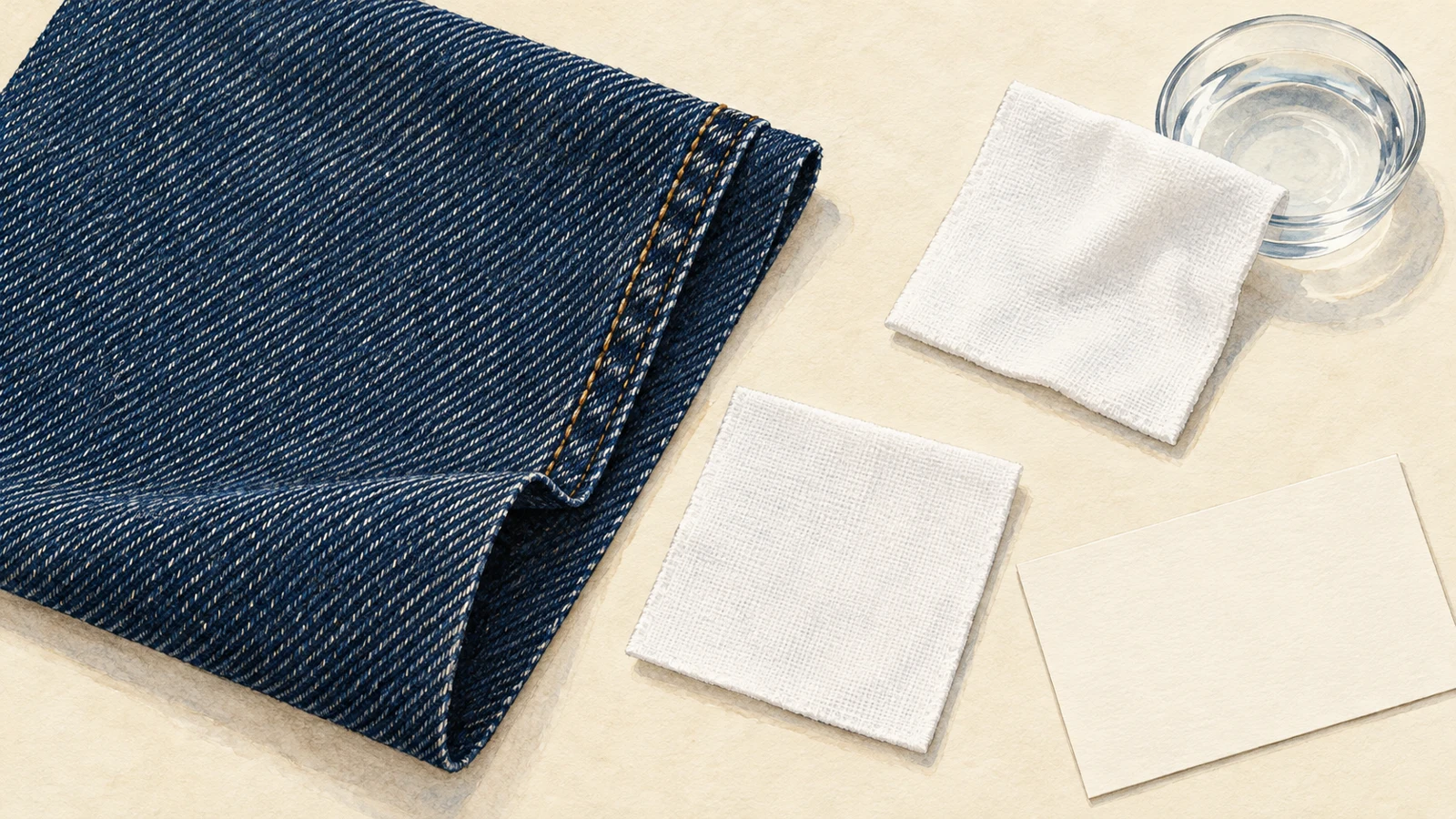
A denim crocking test checks whether colour transfers from the denim surface onto another material during rubbing. Buyers should distinguish dry rubbing from wet rubbing, agree on the test method and acceptance requirement, and check the actual finished denim that will be supplied. A wash shade that looks correct in a photograph says little about its colour-transfer performance.
This article is for wholesale denim buyers and clothing brands preparing a production specification. It deals with rubbing colourfastness, not the appearance of stone wash, enzyme wash or vintage effects. If you are choosing the look of the finish, start with our types of denim washes guide.
What is crocking in denim?
Crocking means colour transfers from a dyed or printed textile surface onto another material through rubbing. Dark or heavily finished denim deserves particular attention because a buyer may approve the shade without checking how the colour behaves against light upholstery, shoes, shirts or other garments. The actual transfer risk depends on the material and finish; appearance alone cannot establish a test result.
The two basic questions are separate: how much colour transfers under dry rubbing, and how much transfers when the rubbing cloth is wet. Record both if the agreed programme requires them. A dry result must not be reported as a wet result.
Dry versus wet crocking: what the buyer needs to know
| Check | What changes | What to record |
|---|---|---|
| Dry rubbing | Contact with a dry test cloth under controlled rubbing conditions | Method, specimen ID, transfer grade and affected surface |
| Wet rubbing | Contact with a wetted test cloth under the specified method | Method, wetting conditions, transfer grade and affected surface |
| Before finishing | Assessment of the selected base fabric where relevant | Fabric lot and stage of manufacture |
| After the approved wash | Assessment of the garment or material representing the intended final finish | Wash version, shade reference and test report |
These rows describe possible checkpoints, not a universal requirement to test every item four times. A sourcing team should specify which stages are necessary for its product and market.
Which standards describe rubbing colourfastness?
ISO 105-X12:2016 specifies a method for assessing colour resistance to rubbing and staining other materials. The published scope describes both dry and wet rubbing-cloth tests. AATCC TM8 is a crockmeter method that assesses colour transfer to a white test cloth under controlled conditions. Both references are test-method sources; this article does not reproduce their full procedures.
Do not copy a pass grade from a supplier’s marketing page and present it as a global rule. The required result depends on the buyer’s specification, product use, testing method and destination requirements. Ask the laboratory to state the method and edition, test conditions, grading scale and actual outcome. If a customer has a specific standard or contract requirement, use that requirement rather than an arbitrary number.
How to read a report without confusing shade and transfer
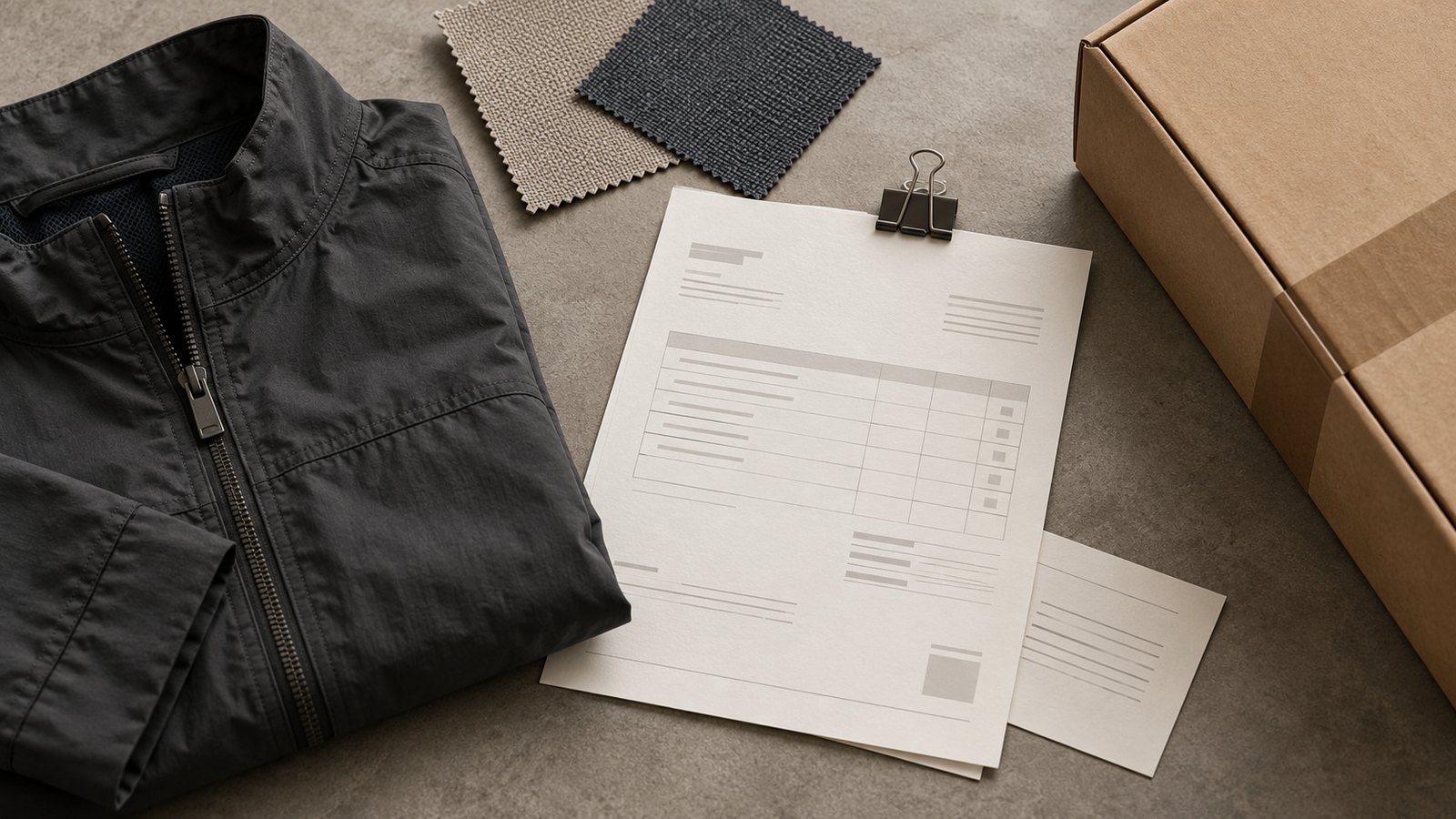
Read the report in this order. First identify the sample: style, fabric composition, colourway, finish and lot. Then check the method, whether the specimen was tested before or after the agreed garment wash, and whether the result concerns dry or wet rubbing. Finally compare the reported transfer grade with the agreed acceptance criterion.
A colour-change result and a staining result answer different questions. The first concerns how the tested material’s own appearance changes; the second concerns colour deposited onto the receiving material. For a crocking decision, the transfer or staining result is the relevant measure. Do not substitute a wash-fastness result for a rubbing-fastness result.
Where a report lists only “pass,” request the underlying grade, criterion and method. Without those details, a buyer cannot tell whether two suppliers or two production lots were judged on the same basis.
How finishing decisions affect the approval record
Denim wash names describe a visual direction, not a complete material or testing specification. A dark rinse, a pale bleach effect and a local abrasion effect can involve different finishing choices. A change to the approved wash can also change the surface that the buyer wants assessed. When the fabric or finishing route changes, decide whether the previous colourfastness result still represents the final garment.
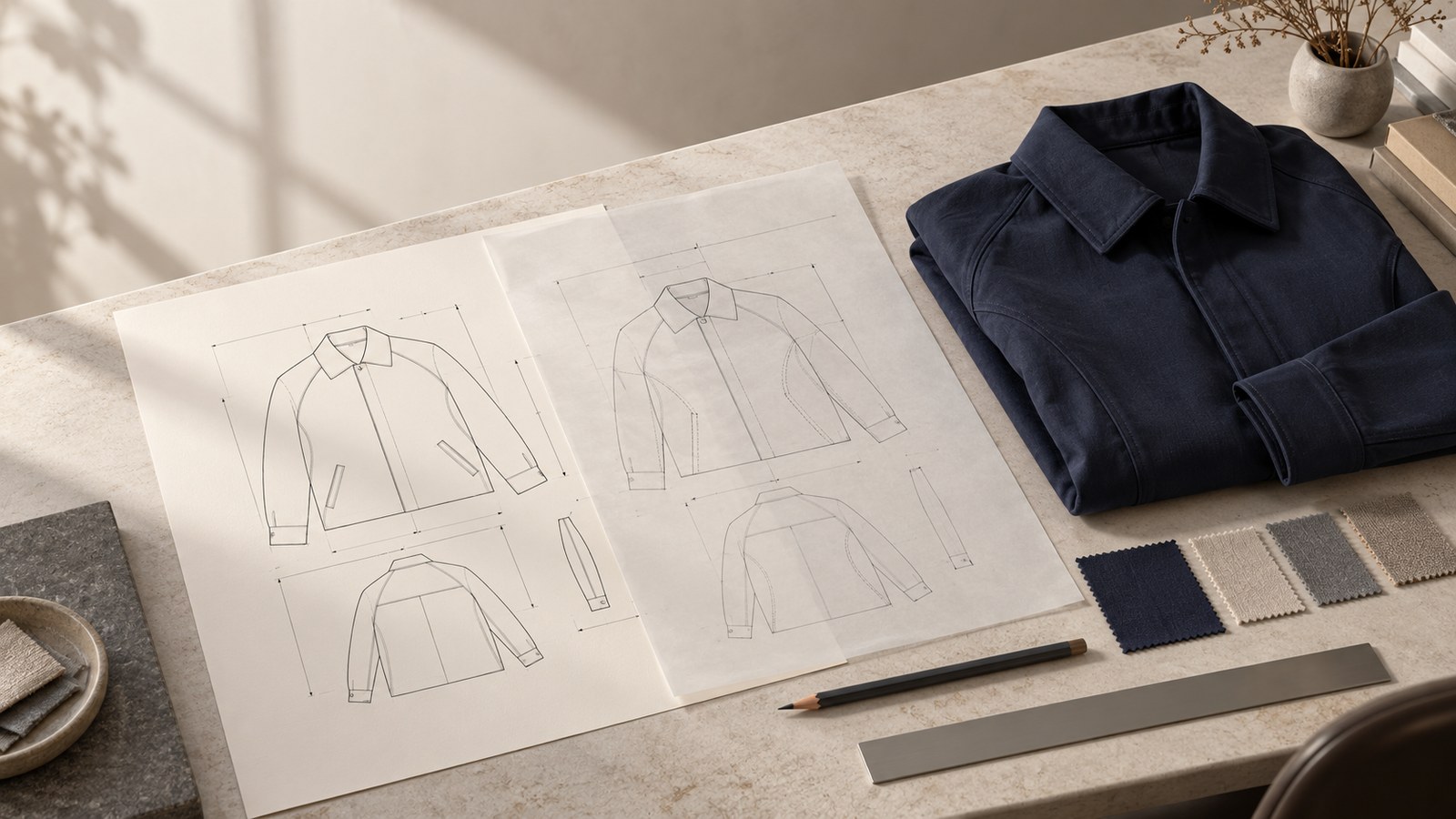
Use a physical finished-garment reference where possible. Record overall shade, local fade placement, hardware and hand feel separately from colour-transfer performance. Our custom denim manufacturing guide covers these broader pre-production approvals. The garment washing and finishing overview places these treatments in the wider apparel process.
For a specific NOVITA example, the site lists acid-splash and bleach-effect jeans with a custom finish developed against an approved reference. NOVITA’s denim manufacturing guide states that wash development and wash sampling are handled in-house at its Foshan facility. That first-party description explains where a finish reference is developed; it does not establish that any particular crocking grade has been achieved.
A compact denim colour-transfer approval record
| Field | Buyer or laboratory entry |
|---|---|
| Product identity | Style, colour, size, fabric lot and wash version |
| Approved appearance | Reference garment or controlled shade standard |
| Method | ISO 105-X12 or agreed alternative, including edition and conditions |
| Dry result | Actual grade, test date and report reference |
| Wet result | Actual grade, test date and report reference |
| Acceptance rule | Buyer-approved minimum for the specified programme |
| Disposition | Approve, investigate, revise finish or retest; responsible person and date |
This is an illustrative blank record, not a completed NOVITA test report. It is deliberately missing pass grades: those must come from the customer’s requirements and the actual test.
What if the colour-transfer result is below the agreed requirement?
Keep the failed report attached to the exact sample version. Confirm that the method and specimen were correct, then review the dyeing and finishing specification with the supplier. Any proposed change to colour depth, rinsing, finishing or fabric selection needs a new approved reference. Recheck both appearance and the relevant performance requirement rather than approving the new look on photographs alone.
A new pass on a development sample does not automatically release every bulk lot. Define whether the buyer requires production-lot verification and how the result will be recorded before shipment. Avoid claiming that a visual inspection can replace a laboratory test.
What to send with a denim testing request
- The finished style, fabric lot and intended wash reference.
- Target market and any customer-specified test requirement.
- The chosen rubbing-colourfastness method and required dry/wet checks.
- The required report format, acceptance grade and sample identification.
- The person who can approve a revised finish and the process for retesting.
For a custom men’s denim project, send these requirements with the tech pack through the NOVITA enquiry page. Confirm test scope, costs and timing for the specific order; no universal laboratory service or result is promised here.
Technical references checked 16 October 2026. This is a sourcing and quality-planning guide, not evidence of completed testing or certification for any NOVITA garment.