A pair of jeans can look right in a reference photo and still go wrong in production.
The wash comes out too clean. The leg opening is wider than expected. The fabric feels lighter than the sample. The rise changes after washing. A button that looked fine on a trim card suddenly feels cheap on the finished garment.
Most of these problems do not start on the sewing line.
They start earlier, when the buyer and manufacturer have different ideas of what the final jeans are supposed to be.
If you are developing custom denim for a brand or wholesale program, the goal before bulk production is simple: remove as much room for interpretation as possible.
Here are the details worth locking down before you approve an order.
Start With the Denim, Not the Wash
Buyers often begin with a photo and say, “We want this wash.”
That is useful, but it is not enough.
The base denim matters just as much as the wash itself.
Before sampling, confirm the fabric direction first:
- fiber composition;
- stretch or non-stretch;
- fabric weight;
- color or indigo shade;
- hand feel;
- target structure and drape.
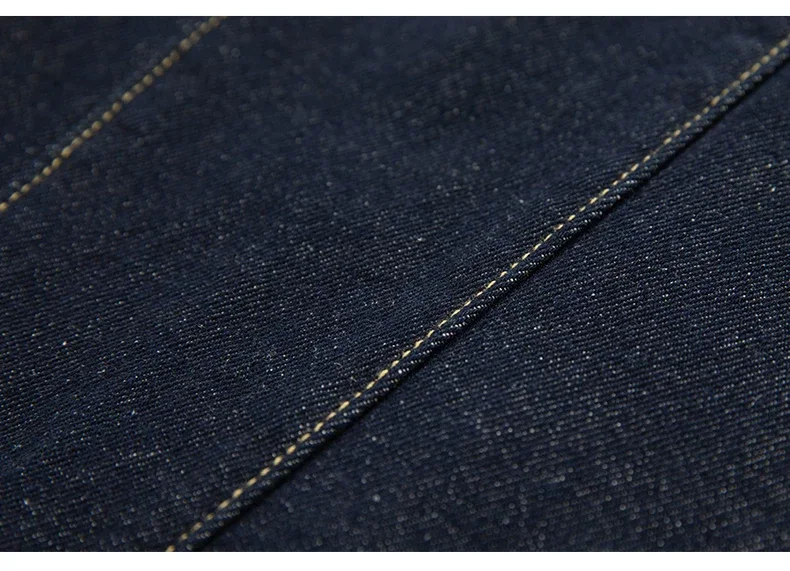
You will often see denim weight quoted in ounces per square yard, although GSM may also be used in sourcing documents — the full oz/GSM breakdown is in our denim fabric guide.
The exact number matters, but the number alone does not tell you how the jeans will feel.
Two denims at a similar weight can behave differently because of yarn, weave, fiber composition, finishing and stretch.
A rigid straight-leg jean and a soft stretch jean may therefore need very different fabrics even if the visual reference looks similar.
For a buyer, the better question is not:
“What denim weight is best?”
It is:
“What fabric gives this particular fit and wash the result we want?”
That is something worth checking on an actual swatch or sample before bulk.
A Denim Wash Changes More Than the Color
Wash development is where a basic pair of jeans starts to develop its character. For custom denim programs, wash development and wash sampling are handled in-house at our Foshan production facility.
For a style built on contrast, the acid splash and bleach effect shows how far a wash decision can carry the whole design.
Raw or minimally washed denim will look and feel very different from denim that has been heavily faded, softened or distressed.
Depending on the design, a buyer may ask for effects such as:
- rinse or garment wash;
- enzyme wash;
- stone wash;
- faded or vintage appearance;
- whiskering;
- localized abrasion;
- stronger contrast around seams and pockets;
- a cleaner, more even finish.
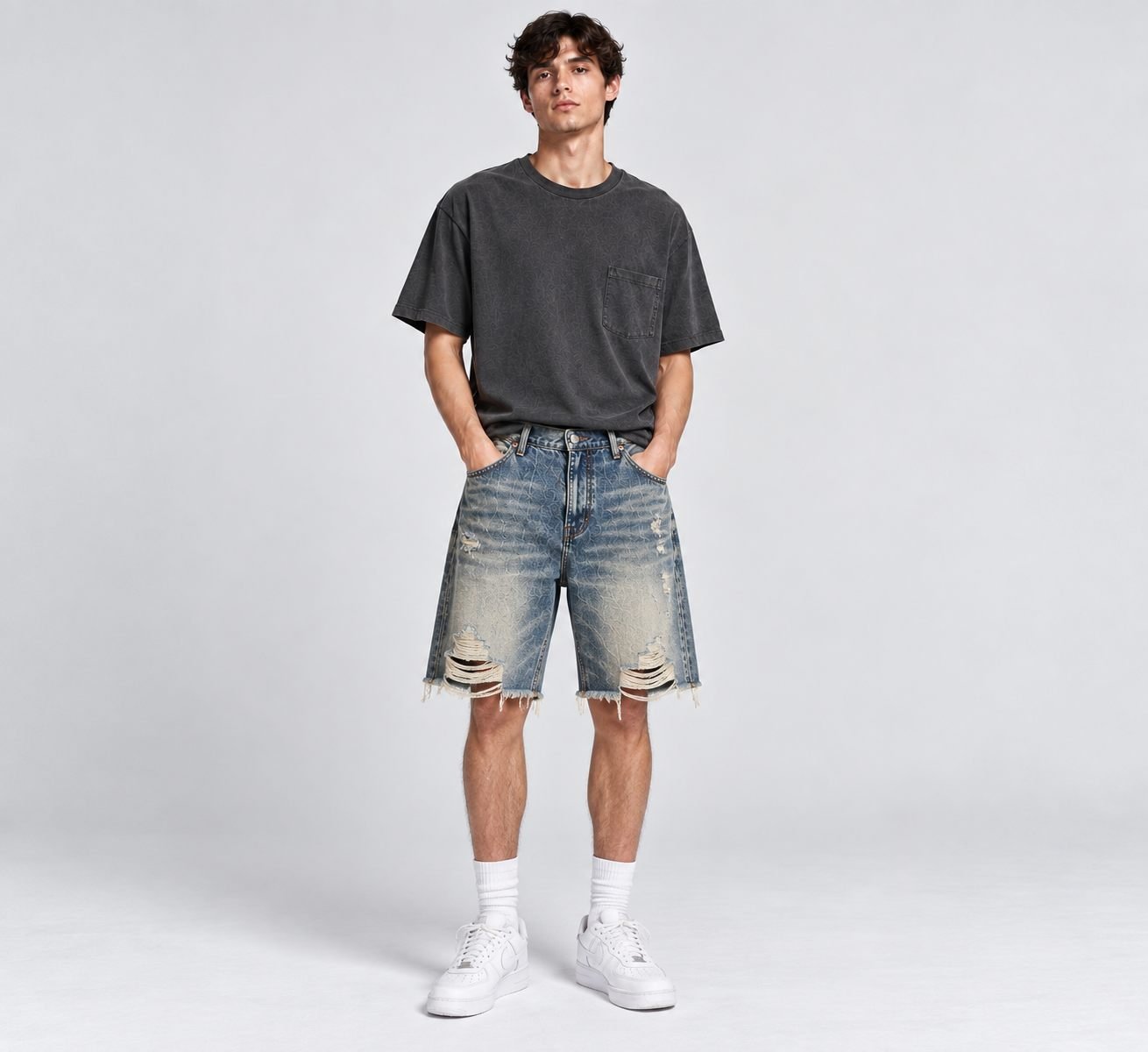
The important point is not to collect as many wash terms as possible.
It is to define what the finished garment should actually look like. If you are still choosing between options, our guide to the common types of denim washes explains what each wash name usually describes and what is worth specifying.
If you have a physical reference sample, send it.
If you only have photos, provide clear front, back and detail images and point out the parts that matter most:
Keep the thigh clean, but make the knee slightly lighter.
or:
We want a worn-in blue, but not a heavily distressed vintage look.
That kind of instruction is much more useful than simply writing “vintage wash” in a spreadsheet.
Approve the Wash on the Garment, Not Just on a Screen
Wash effects are difficult to judge accurately from digital images alone. The same applies to localized fading such as whiskering; for what to mark and what to check on a sample, see our guide to whiskering on jeans.
Lighting, phone cameras and image editing can make the same denim look significantly lighter or darker.
For a custom denim program, the approved physical sample should be the main reference for bulk production.
Pay attention to:
- overall shade;
- contrast;
- hand feel;
- abrasion placement;
- seam appearance;
- pocket area;
- waistband;
- hem;
- any distressed details.
If a specific wash effect is important to the brand, say exactly which parts are critical.
“Close enough” during sampling often becomes a much bigger problem once hundreds of pieces are produced.
Fit Specs Matter More Than a Fit Name
“Straight fit.”
A name like “baggy” means little until it is measured; our wide-leg baggy jean is specified rise to hem for exactly that reason.
“Relaxed fit.”
“Baggy jeans.”
These are useful descriptions, but they are not production specifications.
One buyer’s relaxed fit can easily be another buyer’s regular fit.
A jeans manufacturer needs measurements.
For most denim bottoms, the specification should cover points such as:
- waist;
- hip;
- front rise;
- back rise;
- thigh;
- knee;
- inseam;
- outseam;
- leg opening.
The exact measurement points depend on the design, but the principle is the same:
do not leave the silhouette to interpretation.
Rise Can Change the Whole Look
A few centimeters in the rise can completely change how a pair of jeans sits on the body.
The same is true for the thigh and leg opening.
That is why copying only the waist and inseam from an existing pair usually does not give you an accurate reproduction of the fit.
If you have a reference garment you already like, sending the physical sample can make development easier.
If you are working from a tech pack, make sure the measurement method is clear.
Measure the Jeans After the Intended Wash
This is especially important with denim.
The garment you cut and sew is not necessarily the garment you end up with after washing and finishing.
That means buyers should care about the finished measurements, not only what the garment measures before the wash process.
During sample approval, check whether the finished jeans still meet the intended:
- waist;
- rise;
- inseam;
- leg opening;
- overall silhouette.
Dimensional stability should be considered during development rather than discovered after a bulk order has already been packed.
See our apparel quality control checklist for the inspection points buyers normally confirm before shipment.
If the product requires specific washing or finishing, the approved sample needs to represent that finished condition.
Don’t Leave Trims Until the End
Fabric and wash get most of the attention during denim development, but trims can change how expensive—or inexpensive—the finished product feels.
Before bulk production, confirm details such as:
- front button;
- zipper;
- rivets;
- metal finish;
- thread color;
- pocketing fabric;
- back patch;
- woven labels;
- size labels;
- care labels;
- hangtags;
- packaging.
If you are building a private-label denim line, these details are part of the product, not an afterthought.
For example, changing from a bright metal button to an aged finish may better match a vintage wash.
For jeans with a leather waistband patch, confirm the patch material, logo method, dimensions, edge finish, and stitching allowance before approving the production sample. Aarons Leather’s guide to custom leather patches explains these component-level decisions in more detail. The chosen patch should also be checked on the actual denim garment, including compatibility with its intended washing and care requirements.
A clean dark denim style may call for a completely different trim direction.
The components should make sense together.
Pocket Shape Is Part of the Design
Back pockets deserve more attention than they usually get.
Panel placement matters beyond pockets too — the patchwork contrast-panel jean treats every seam position as a design decision.
Their size, angle, position and stitching can noticeably change the appearance of the jeans when worn.
The same applies to:
- coin pocket shape;
- front pocket opening;
- yoke shape;
- belt-loop width;
- topstitching;
- bartack placement.
If these details are important, include measurements or a clear reference rather than assuming the factory will interpret them from one front-view photo.
For branded collections, embroidery or custom labels can also be incorporated into the design.
At NOVITA, printing and embroidery are handled in-house at our Foshan garment factory, so decoration requirements can be discussed during product development rather than treated as a separate last-minute step.
What Should You Check on a Denim Sample?
When the sample arrives, resist the temptation to approve it after a quick try-on.
Go through it systematically.
First, look at the fabric.
Does it have the weight, texture and hand feel you expected?
Then check the wash.
Is the color right? Are the faded areas where you wanted them? Does the finish look natural?
Then measure the garment.
Do not rely only on how it looks on one person.
Check the important points against the specification.
After that, inspect the construction:
- waistband;
- belt loops;
- pocket placement;
- zipper or fly;
- button and rivets;
- inseam and side seam;
- topstitching;
- hem;
- labels.
Finally, look at the jeans as a complete product.
Sometimes every individual specification appears correct, but the garment still does not feel right.
That is exactly what the sampling stage is for.
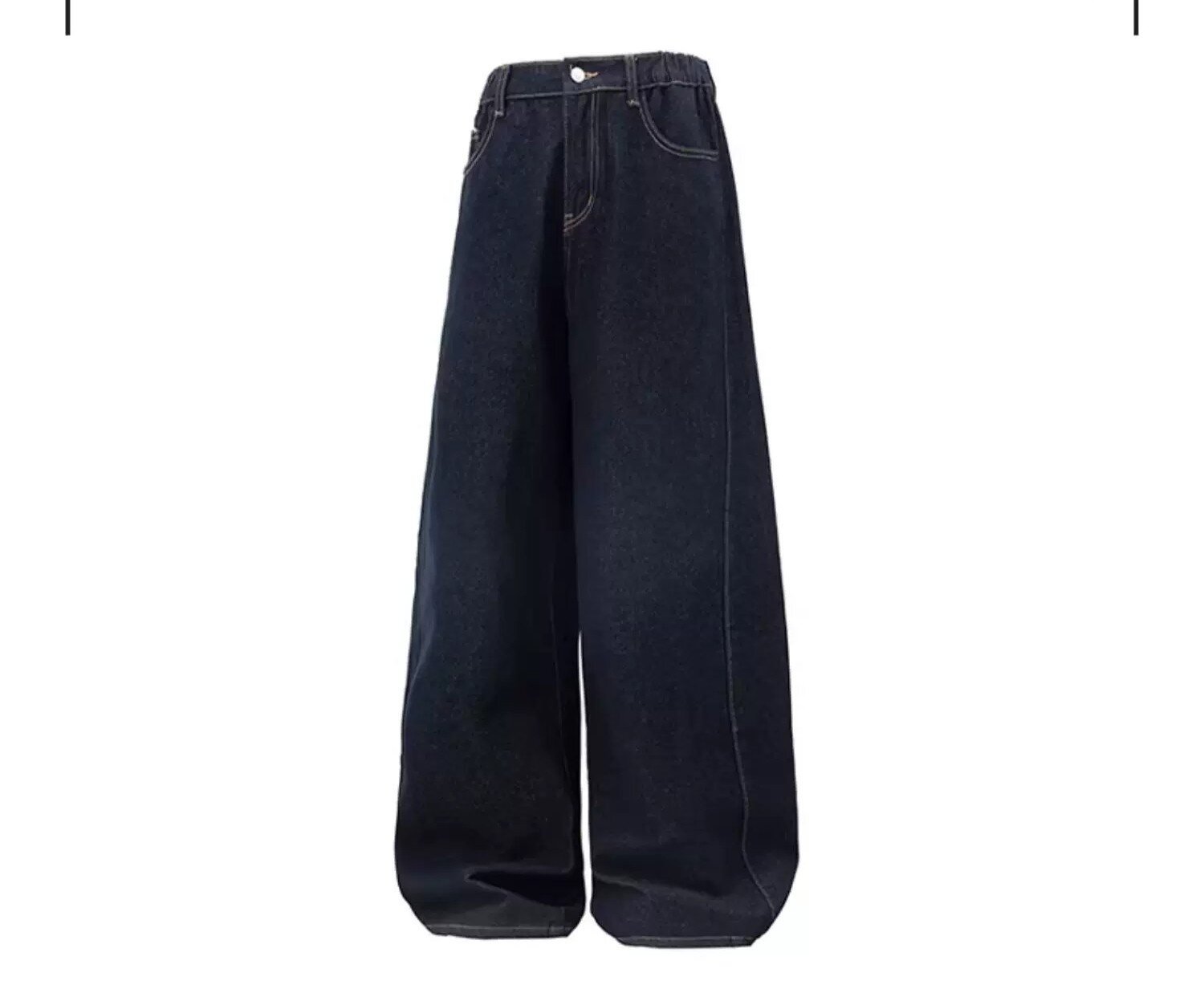
Make the adjustment there—not after bulk production has started.
A Practical Pre-Production Checklist
Before approving a custom jeans order, a buyer should be able to answer these questions.
Fabric
- What denim are we using?
- What is the composition?
- What is the fabric weight?
- Is it rigid or stretch?
Wash
- What is the target wash?
- Do we have a physical reference or approved sample?
- Which wash details must match closely?
Fit
- Which size is the base sample?
- What is the approved measurement chart?
- How should the rise, thigh and leg opening fit?
Trims
- Which button, zipper and rivets are approved?
- What labels and branding are required?
- Are the thread and metal colors confirmed?
Packaging
- How should each garment be packed?
- Are hangtags, stickers, polybags or carton markings required?
Quantity
- How many pieces are required per color?
- What is the size breakdown?
These questions may sound basic, but answering them early saves much more time than correcting them halfway through production.
What to Send a Jeans Manufacturer for a Quotation
A complete tech pack is ideal, but not every buyer has one.
If you are still developing the product, send as much useful information as you have.
A practical inquiry can include:
- Product: Men’s relaxed-fit washed jeans
- Quantity: 300 pcs
- Color: Washed blue
- Size range: S–XXL
- Fabric: Reference swatch or target weight/composition
- Fit: Relaxed straight leg
- Wash: Reference images attached
- Branding: Custom button, back patch and woven label
- Packaging: Individual polybag
- Reference: Photos or physical sample
That already gives a manufacturer much more to work with than:
“Hi, how much for custom jeans?”
If you have target measurements, estimated order quantity and reference photos ready, include them in the first inquiry.
You will usually get a more useful response.
How NOVITA Handles Custom Denim Orders
NOVITA operates its own garment factory in Foshan, Guangdong, China, while Changsha Novita International Trading Co., Ltd. handles international sales, contracts, USD payments and export coordination.
For custom production, our MOQ starts from 100 pieces per color, and sizes can be mixed within the same color.
Sample development normally takes 7–15 days, depending on the style, fabric, wash and customization requirements.
Bulk production typically takes around 60 days after sample approval. Final timing depends on order quantity, fabric availability and production requirements.
For orders that require it, AQL 2.5 pre-shipment inspection is available on request.
The exact fabric, wash, trims, measurements and finishing requirements should be confirmed during sampling before the order moves into bulk production.
Our OEM and ODM process follows the same path, from tech pack review to bulk approval.
See our denim and jeans manufacturing options or contact our team with your design, tech pack or reference sample.
Common Questions From Denim Buyers
What is a good denim weight for jeans?
There is no single weight that works for every pair of jeans.
Fabric choice depends on the intended fit, season, hand feel, stretch requirement and wash.
A lightweight fashion style and a rigid heavyweight jean need different fabric directions.
The safest approach is to confirm the fabric together with the target fit and wash during sampling.
Do I need a tech pack to order custom jeans?
A tech pack makes development more efficient, especially when exact measurements and construction details matter.
If you do not have one yet, you can still begin with a reference garment, clear photos, design sketches and your basic requirements.
The missing specifications can then be clarified during development.
Can different sizes be mixed in one order?
Yes.
For NOVITA custom production, the MOQ starts from 100 pieces per color, and different sizes can be mixed within that color.
How long does a jeans sample take?
Sample development typically takes 7–15 days, depending on the design, fabric, wash and level of customization.
More complicated developments may require additional adjustment after the first sample.
How long does bulk jeans production take?
NOVITA’s normal bulk production timeline is around 60 days after sample approval, depending on order quantity, fabric availability and production requirements.
The final delivery plan should be confirmed for each order rather than assumed from a fixed website number.
Should I approve jeans before or after washing?
If the final product includes a wash or finishing process, the buyer should evaluate the finished sample in the condition that best represents the bulk garment.
That includes checking the wash effect, hand feel, measurements and overall fit before approving production.
One Last Point: Don’t Approve Denim From a Spreadsheet
Fabric weight, measurements and wash names are necessary.
But denim is a physical product.
You need to see the shade.
You need to feel the fabric.
You need to check how the jeans sit after washing.
And you need to make sure the details—from the rise to the back-pocket position—work together as one garment.
A good specification reduces mistakes.
A good sample removes doubt.
Do both before you move into bulk.
If you are developing a custom denim or jeans collection, send NOVITA your tech pack, reference sample or design photos, together with your estimated quantity and target market.