
Buying bulk sweatshirts starts with a choice: do you need an existing garment ready for decoration, or a garment made to your own specification? A print shop filling an urgent merch order may need stock blanks. A brand developing its own fit may need factory production.
NOVITA is a B2B apparel factory in Foshan, China, not a US stock distributor. Its custom production route involves fabric selection, sampling and approval before bulk manufacturing. This guide explains what that changes for your quotation, timeline and finished sweatshirt.
Two ways to buy bulk sweatshirts
Choose US stock when an available style meets the brief. Factory production lets you develop the garment’s fabric, fit and construction as well as its decoration.
| Buying decision | US stock distributor | Factory production to your spec |
|---|---|---|
| What you select | Existing garment styles and available inventory | Fabric, measurements, construction and approved details |
| Fit and color | Choose from the supplier’s range | Develop and approve your requirements, subject to material availability |
| Decoration | Confirm what is included or arrange decoration separately | Specify decoration during development, or order undecorated garments |
| Timing | Confirm stock and dispatch availability | Allow for development, approvals and production |
| Best starting point | A style code and inventory check | A tech pack or reference garment and quantity breakdown |
Neither route is automatically better. If your customer already approves a stock sweatshirt, developing a new pattern may solve no useful problem. If you need a different body length, rib construction or fabric finish, ordering more stock pieces will not create that specification.
Searches for bulk sweatshirts wholesale often show catalogue listings. Treat those as a different purchasing model from a factory quotation. NOVITA’s hoodie and sweatshirt manufacturing options cover brushed fleece and French terry, with in-house printing, embroidery and washing. At factory level, “blank” means undecorated production to your spec. You still need to approve the garment before the factory makes the order.
Decide the fabric weight first: 280 / 330 / 400 GSM
Specify fabric weight before comparing prices. GSM means grams per square meter: it describes fabric mass over an area, not the weight of the whole sweatshirt or a quality grade.
NOVITA’s fabric-weight and bulk-approval guide publishes the conversion: 1 oz/yd² ≈ 33.9 g/m². The reference points below are rounded. Suggested uses are starting briefs for sampling, not fixed industry categories.
| Fabric weight | Approximate oz/yd² | What to sample it for |
|---|---|---|
| 280 GSM | 8.26 | Lighter-feeling everyday sweatshirts and layering pieces |
| 330 GSM | 9.73 | An everyday sweatshirt where you want more substance without committing to a heavy silhouette |
| 400 GSM | 11.8 | A deliberately substantial sweatshirt; check drape, seams and rib recovery in the sample |
Ask whether the quoted weight applies to finished fabric after the agreed processing. Compare like with like: brushed fleece and French terry can feel different at the same GSM, and composition and finishing also affect the result.
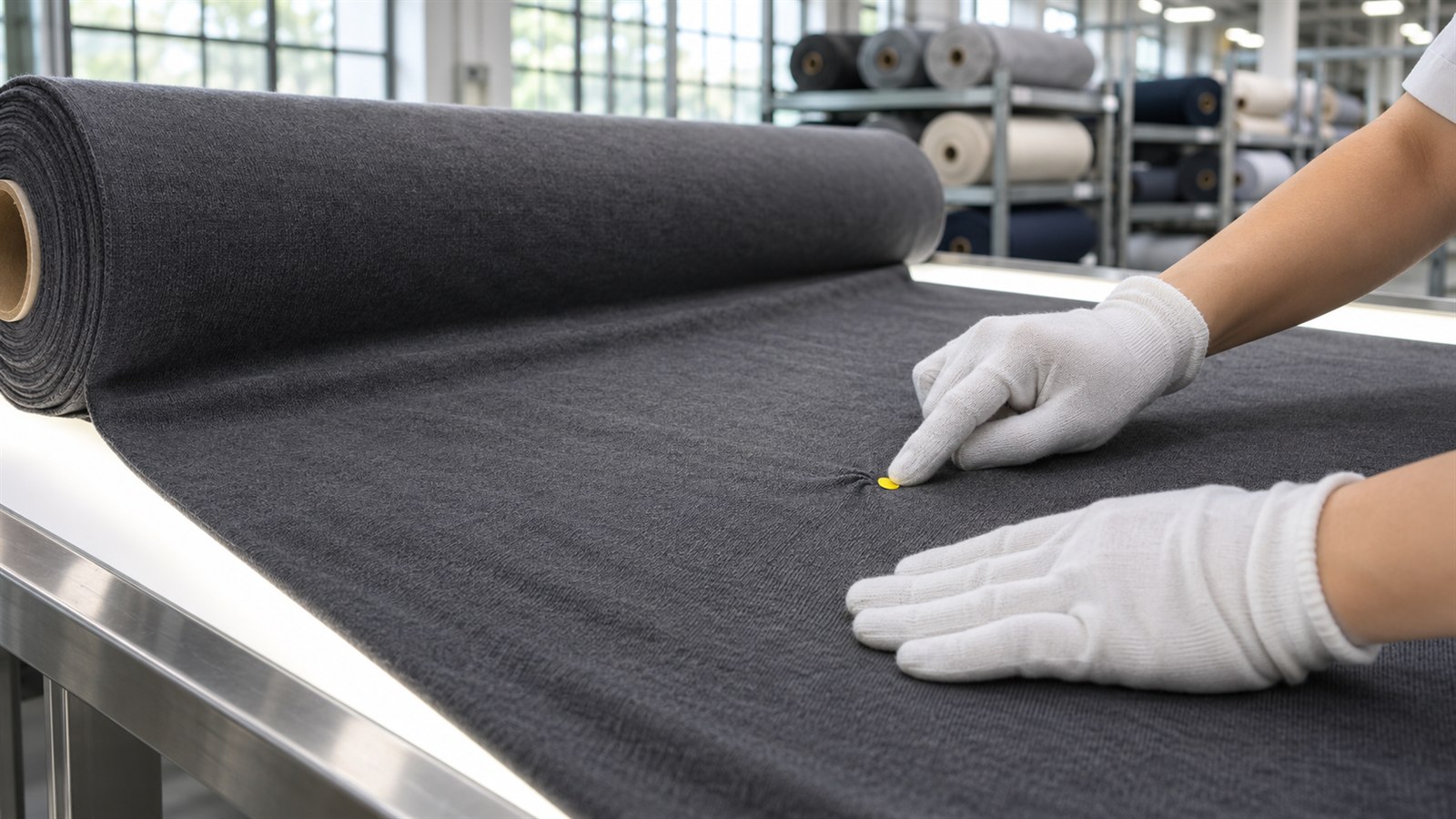
Do not approve a sweatshirt from a weight number alone. Handle the fabric, review its surface for your decoration, and try the finished sample. Heavier cloth may change how the neckline, cuffs and hem behave; it is not a substitute for a suitable pattern.
Blank does not mean cheap: the six variables that set your unit price
An undecorated garment still has material, cutting and sewing costs. Compare quotations for bulk sweatshirts against the same specification, using these cost headings:
- Fabric specification: composition, yarn, knit construction, GSM and usable width affect material cost and cutting yield. A weight change does not translate directly into an equivalent price change.
- Color and finishing: available fabric, custom dyeing, brushing and garment washing involve different sourcing and approval work. Ask what processing the quote includes.
- Pattern and construction: body shape, panels, pockets, seam details and rib specification change the material and work required. A simple-looking crewneck still needs defined construction.
- Quantity allocation: the total matters, but so does its split by style, color and size. Separate material lots and small cutting groups can make the same total a different production brief.
- Decoration: printing and embroidery need their own artwork, placement and approval requirements. For blank sweatshirts, explicitly exclude decoration rather than leaving the quotation ambiguous.
- Labels, packing and release requirements: specify private labels, hangtags, individual packing, carton assortment and inspection scope. Confirm which are included and which are separate charges.
A lower unit figure is not a useful comparison if it excludes something another quotation includes. Ask for the assumptions behind the price, including material availability and the validity of the offer. Keep freight and import costs separate until you build the landed-cost comparison.
What actually happens to a 500-piece order
Treat a 500-piece order as a planning example, not a confirmed NOVITA order or a separate MOQ rule. Unlike buying a few available blanks, factory production needs a specification that can be repeated across the order.
Sampling: define what the factory must reproduce
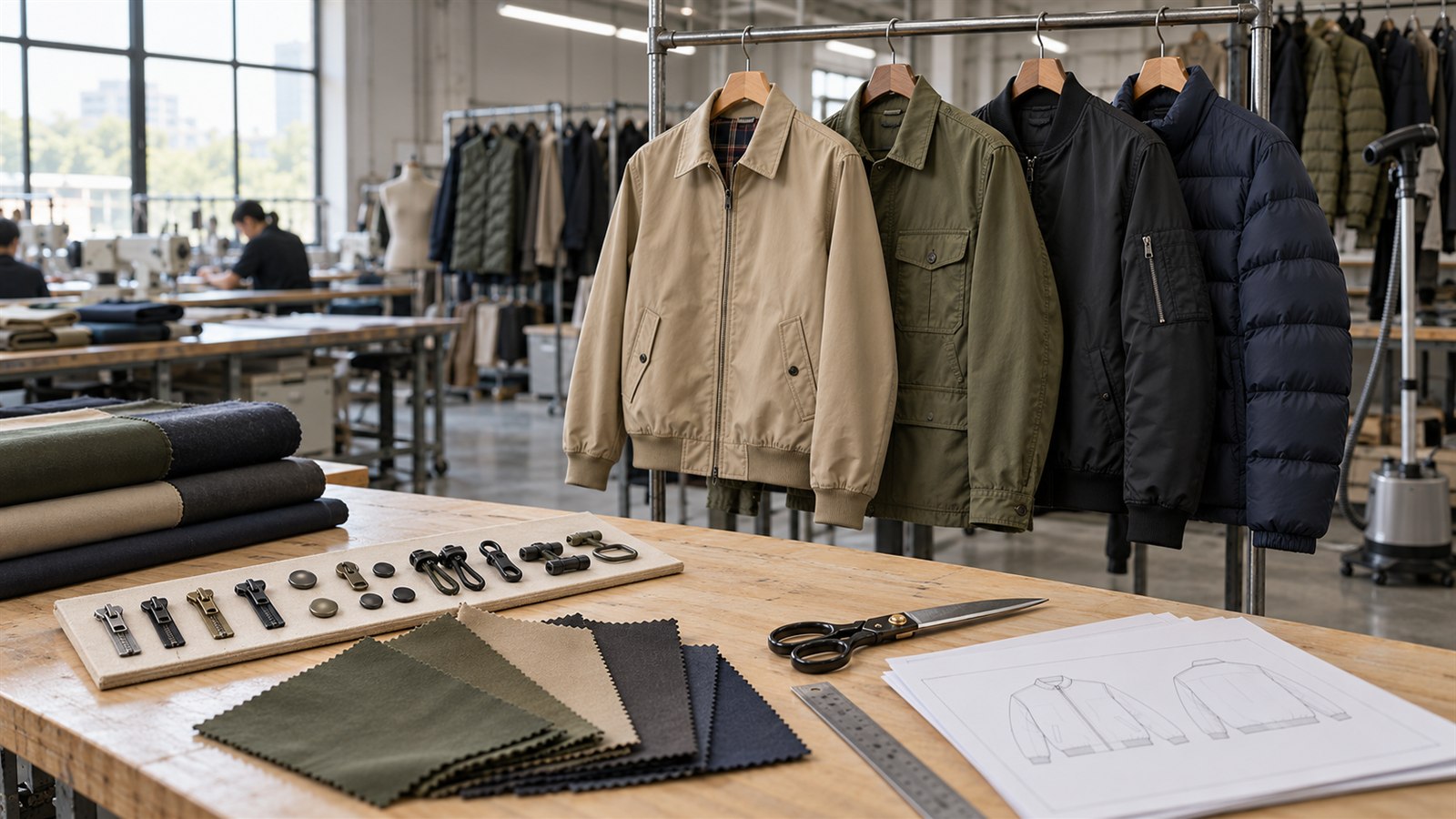
Send the tech pack or reference garment, fabric brief, color requirements, artwork, label details and quantity matrix. Resolve unclear construction before sampling begins.
NOVITA’s published sample-development window is 7 to 15 days after materials and construction are confirmed. This is development time, not a promise that sampling, revisions and delivery to your office will all fit inside that window. The clothing sample-development process explains the approval sequence.
Approval: close the specification
Review fit, measurements, fabric hand, shade, decoration and finishing. Return consolidated comments rather than scattered approvals that contradict each other. Identify the approved sample and the corresponding tech-pack version so production has a clear reference.
Confirm the size grading and color approvals as well. Approving the fit in a sample size does not establish measurements for every other size.
Bulk: cut the agreed size run
NOVITA states 60 days after sample approval for bulk production, depending on quantity and fabric availability. Confirm the production commitment for your actual order; do not treat that period as a delivered-to-door schedule.
The size run becomes a cutting plan. Graded pattern pieces are arranged into cutting markers; the fabric lays and cutting quantities must deliver the agreed size totals. It is not simply a batch of identical bodies labelled with different sizes. Lock the size matrix before cutting, and confirm how quantity variances will be handled.
Dye lots and lot splitting: why three colors can stretch your lead time
A total garment quantity does not establish fabric availability for every color. With several colors, one shade may be ready while another still needs sourcing or approval. A custom color can also face a material minimum separate from the garment MOQ.
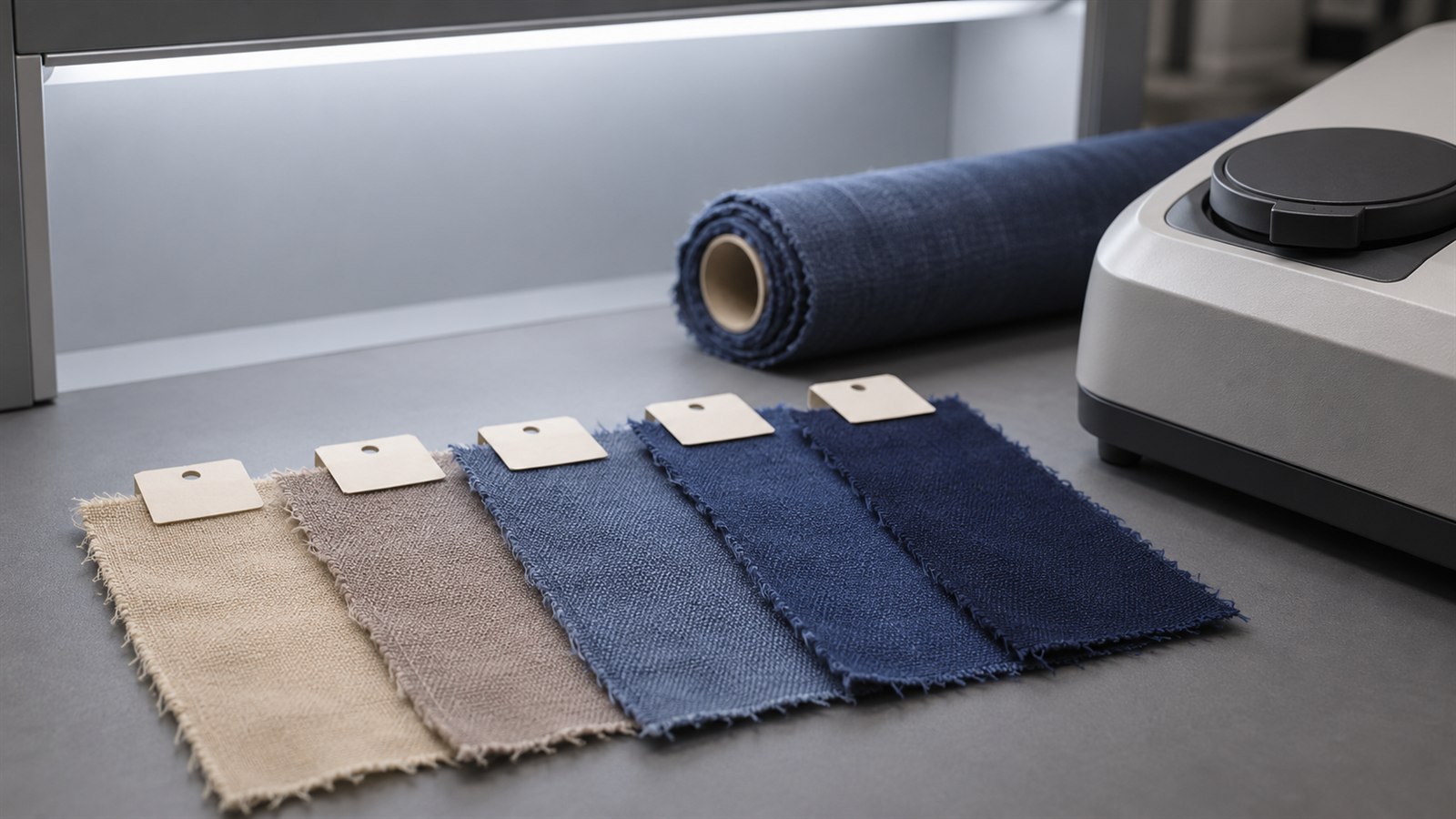
Ask how the fabric will be allocated by dye lot (the batch dyed together). The same color reference does not guarantee that separate lots will look identical. A swatch approved for color establishes a target; it does not remove the need to assess the production fabric.
Before accepting a lot split, agree how shade differences will be reviewed and how lots will be identified through cutting and packing. Keep panels for each garment within a controlled shade group, and check rib against the body fabric. Rib and body cloth can look different even when ordered under the same color name.
For a style offered in three colors, confirm material readiness by color rather than relying on a single “fabric available” statement. Ask whether shipment waits for all colors or whether a partial release is possible. Split shipments may change freight and receiving costs, so approve that choice before dispatch becomes urgent.
Shrinkage and post-wash measurements: three questions to ask before you approve fabric
Agree both the wash conditions and the acceptance criteria. “Pre-shrunk” alone does not tell you how the garment should fit after your customer’s wash routine.
What washing and drying conditions will be used?
Specify the intended care route and ask for a matching test plan. AATCC TM135 addresses dimensional changes of fabrics after home laundering. Citing the method is not evidence of a NOVITA test result, and a fabric test is not a finished-garment fit approval.
What will be measured before and after washing?
Request fabric length and width change data, then evaluate the assembled sample at the garment’s agreed measurement points. Body length, chest width and sleeve length should have clear measuring instructions. Review the neckline, cuffs and hem as well: the fabric and rib must work together after care.
Which measurements and tolerances control approval?
Separate pre-wash production measurements from post-wash acceptance measurements. Put both in the approval record, with the test conditions and agreed tolerances. Do not compensate for shrinkage by adding the same allowance everywhere without testing the resulting fit.
If the wash changes the garment beyond the agreed limits, resolve the fabric, finishing or pattern before bulk approval. Otherwise, an acceptable-looking unwashed sample can conceal a fit problem that appears after purchase.
What to check on the quotation
A quotation for bulk sweatshirts should describe what will be made, how it will be accepted and where the seller’s delivery responsibility ends.
Check these items before paying a deposit:
- MOQ and allocation: NOVITA’s standard custom MOQ is 100 pcs per style/color. Confirm the per-color and per-size breakdown in writing; a combined order total does not override it. See the clothing manufacturer MOQ guide for the distinction between garment and material requirements.
- Product specification: record composition, finished GSM, color reference, size chart, construction and the approved sample reference.
- Private label and packaging: attach label artwork, placement, packing instructions, carton assortment and marking requirements. Ask for packing dimensions and weights when available for freight planning.
- Inspection: agree measurement tolerances, workmanship checks, shade checks, responsibility for inspection and the remedy for nonconforming goods. Use an apparel quality-control checklist to define the scope rather than relying on “QC included.”
- Commercial terms: confirm payment terms, quote validity, approval dependencies, production timing and dispatch arrangements.
If a quotation says FOB, ask for the named port and applicable rule. Under the International Chamber of Commerce’s FOB rule, delivery and risk transfer occur when goods are on board the vessel at the named shipment port. FOB is for sea or inland-waterway transport; where containerized goods are handed to a carrier before loading, ICC points buyers toward FCA instead.
FOB is not landed cost. Build your receiving budget from the quoted goods and origin scope, then add freight, any cargo insurance, destination handling, customs brokerage, duties, applicable taxes and inland delivery. Check inclusions to avoid counting a charge twice. Use that total to compare wholesale sweatshirts on an equivalent cost basis.
FAQ
Can we order 100 pcs?
NOVITA’s standard custom MOQ is 100 pcs per style/color. Ask for a quotation against your fabric, construction and size breakdown. The stated garment minimum does not establish availability for every material or finishing request.
Can we mix colors to reach the MOQ?
Do not assume so. The standard custom minimum applies per style/color, not across a mixed-color total. Submit the color and size matrix and ask NOVITA to confirm the accepted allocation on the quotation before proceeding.
Is a blank sweatshirt the same as a stock blank?
Not necessarily. A stock blank is an existing product selected from inventory. A factory blank is an undecorated garment made to the buyer’s approved specification. For custom sweatshirts in bulk without decoration, state that requirement explicitly in the brief.
Can you match our existing Gildan-style fit?
Send a legally sourced reference garment and your own measurement requirements. Ask for a fit-development sample and compare it against agreed points of measure. Do not assume an identical fit from a brand name alone; any match needs review and approval rather than a blanket promise.
What decoration can you do?
NOVITA’s published sweatshirt range lists in-house printing, embroidery and washing. Send artwork, placement and the proposed fabric so suitability can be assessed. Confirm the approved technique, appearance and care requirements during development; not every artwork works equally well on every fabric.
What happens if the fabric is out of stock?
Ask for the available sourcing options and revised timing before approving a substitute. Reconfirm composition, GSM, hand, shade and wash behavior if material changes. The bulk-production timing depends on fabric availability, so the original schedule should not be assumed to survive a substitution.
Send a specification, not just a quantity
To request bulk sweatshirts from NOVITA, send a tech pack or reference garment with your fabric target, colors, size breakdown, decoration, labels and packaging requirements. Include the delivery destination and required arrival date. Ask for a quotation that confirms MOQ, sample timing, production timing and shipping scope. If available US stock already meets the brief, that may be the more practical route.