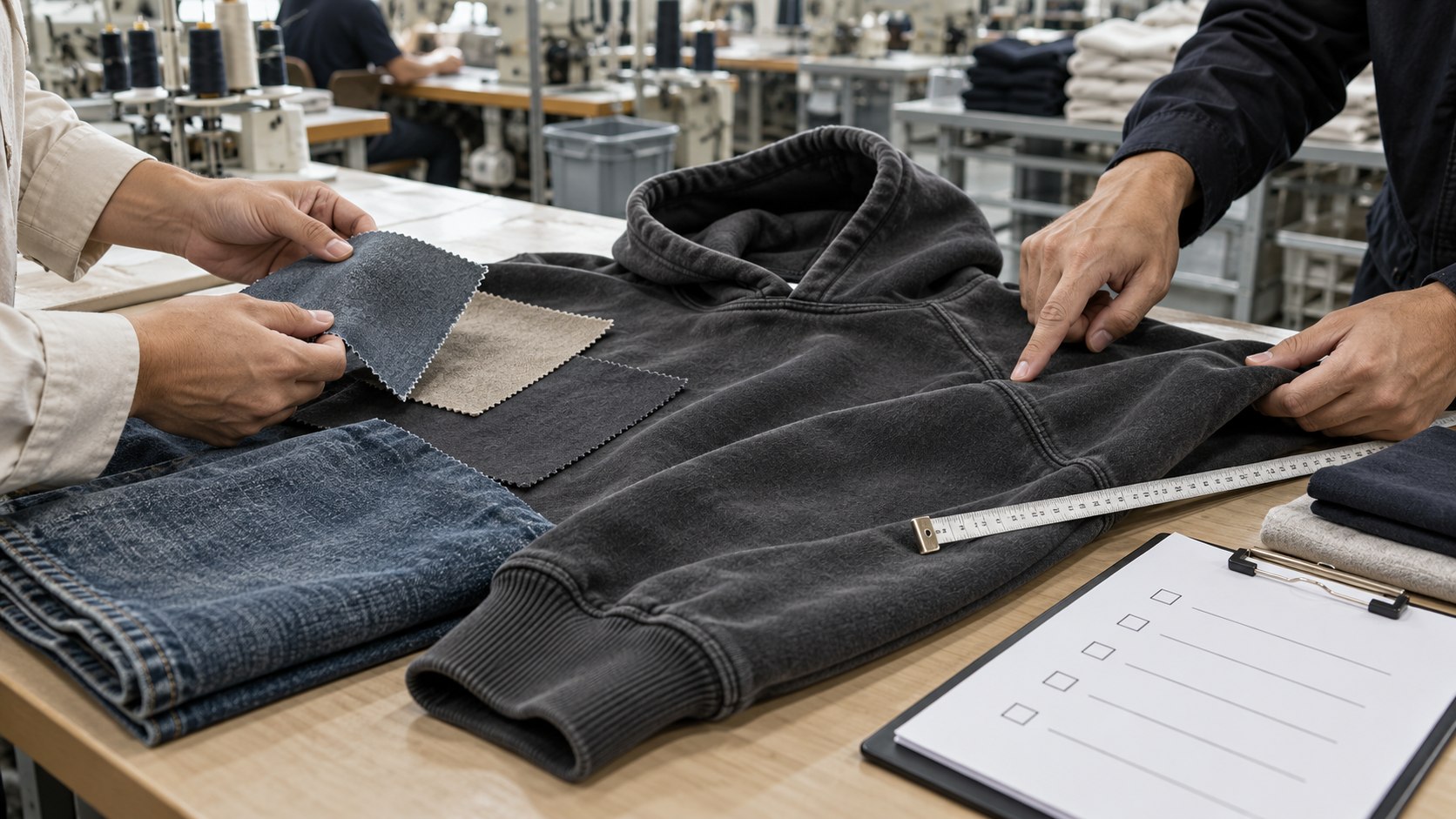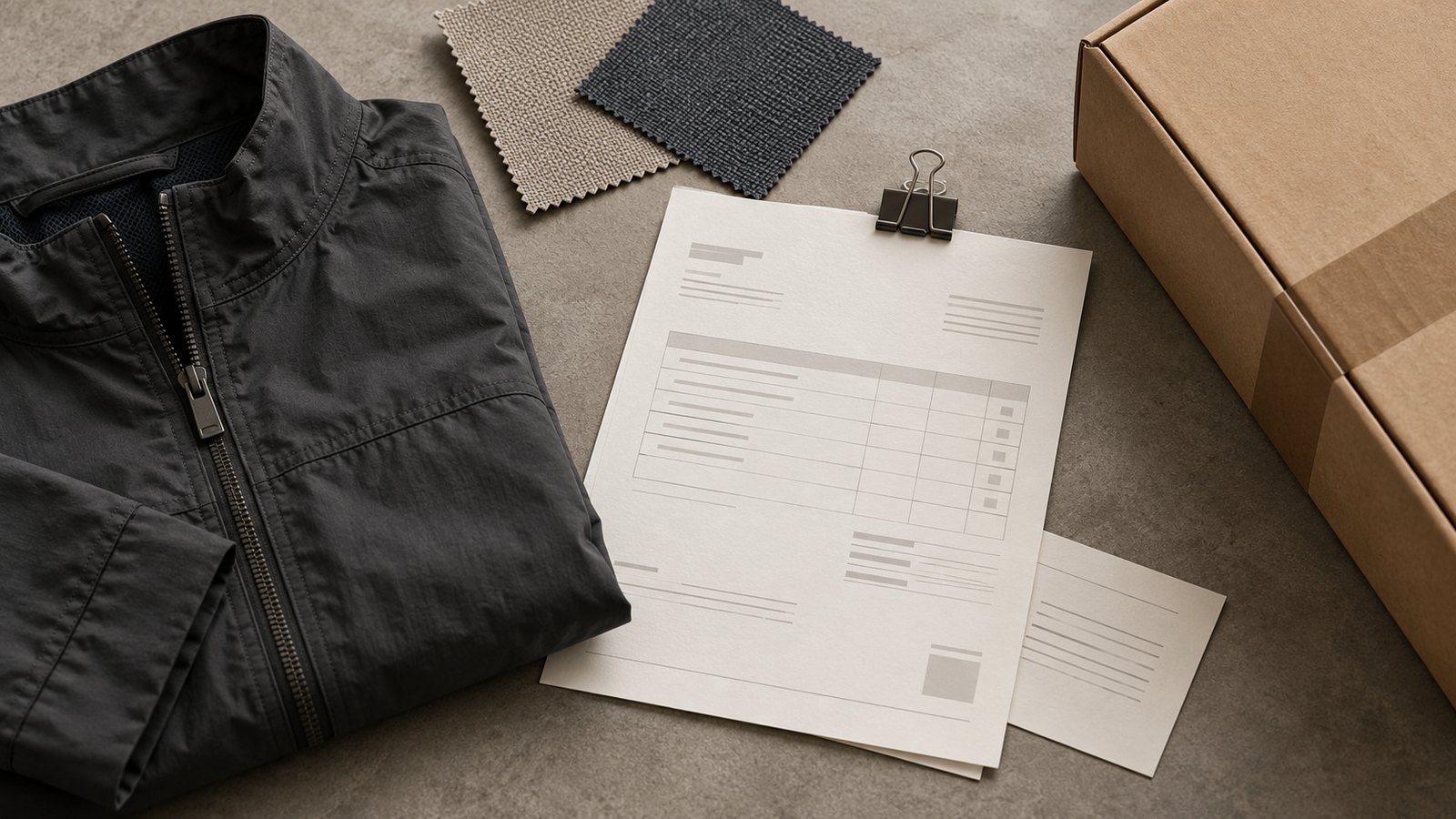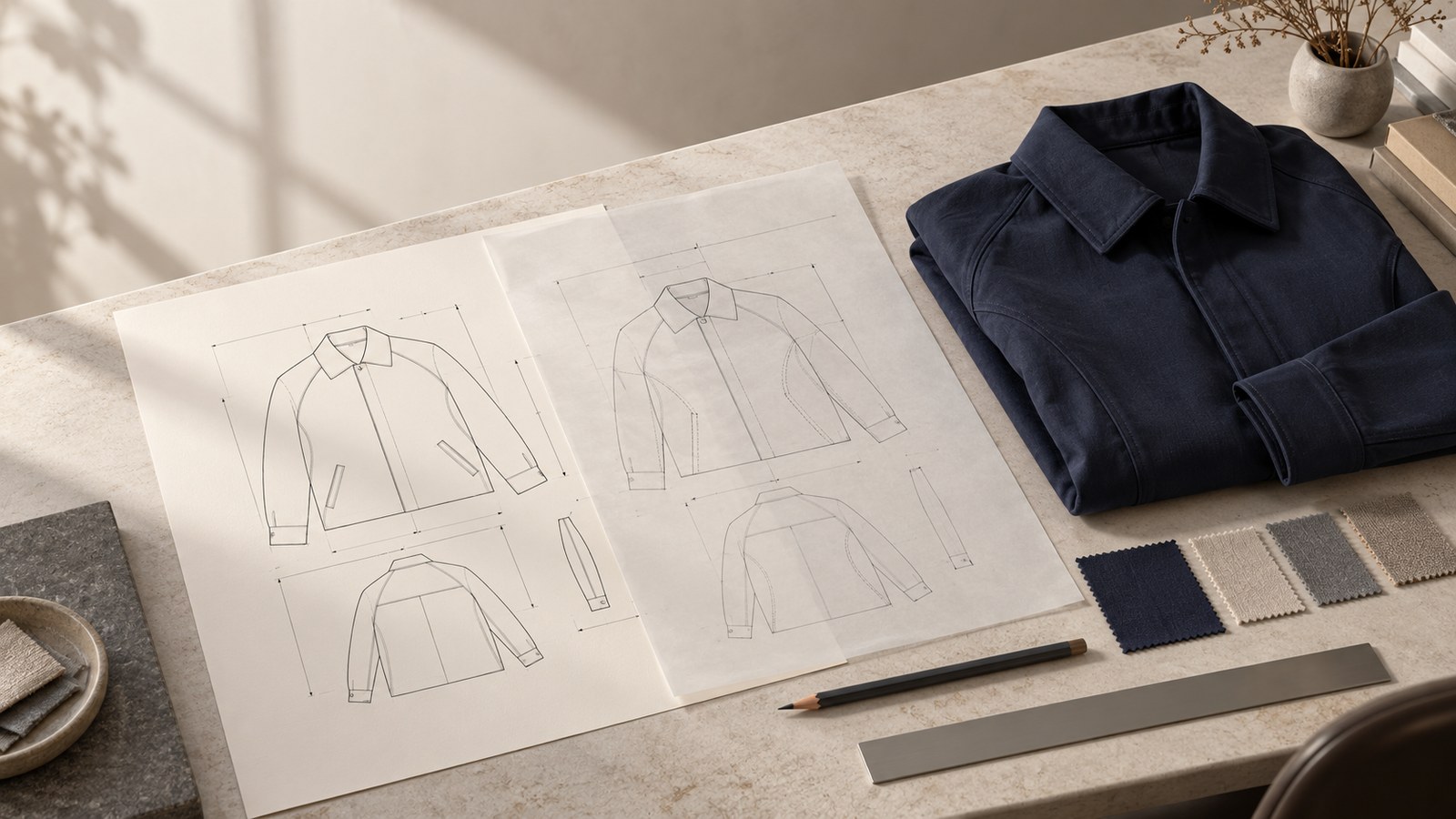
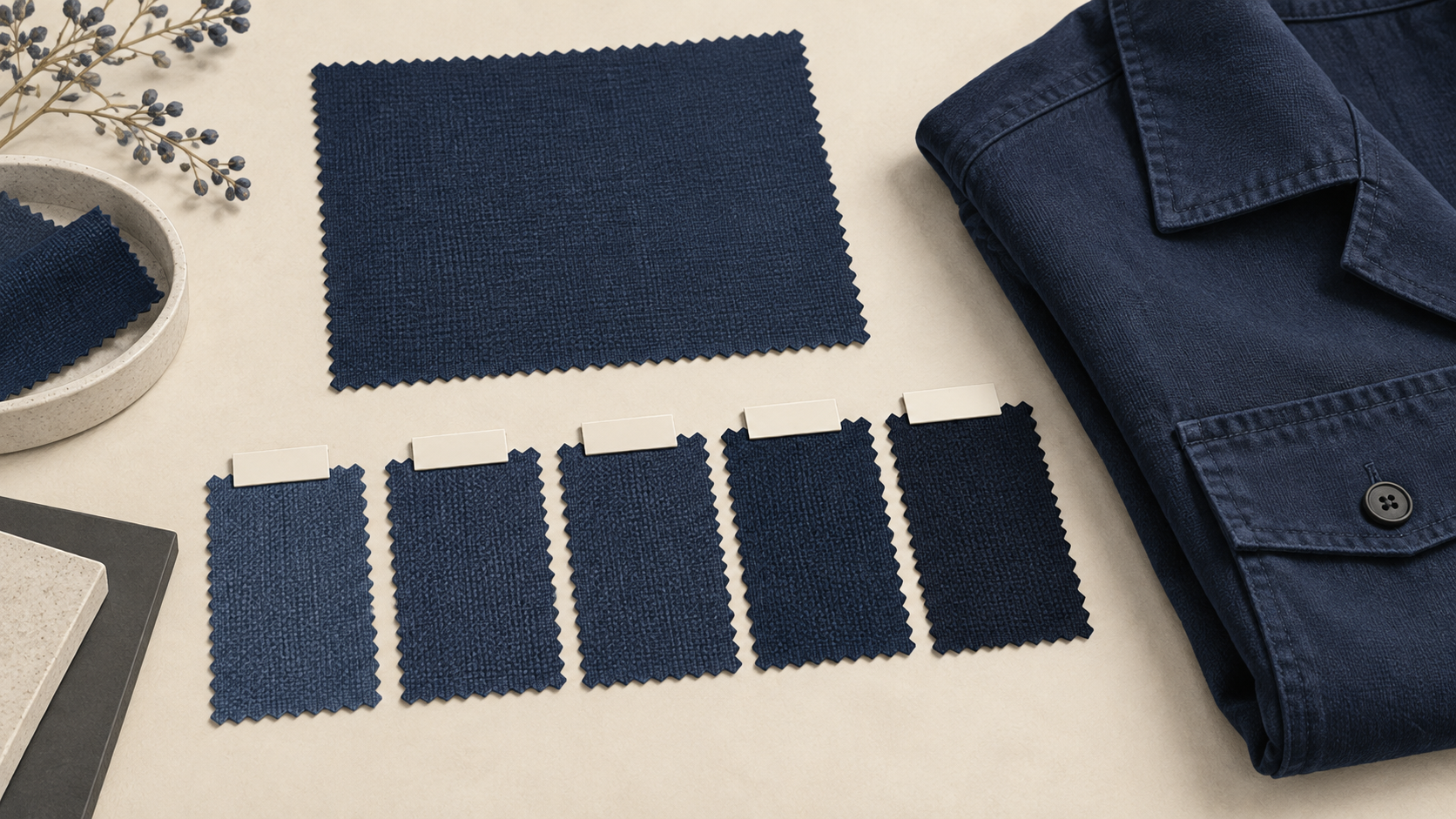
Where this fits in production: approve shade standards and eligible fabric rolls before cutting; separately verify wash or rub-fastness where required by the product specification. See the NOVITA denim program, dry/wet denim crocking test guide, custom polo manufacturing and the overall quality-control checklist. These are process recommendations, not claims that a specific shipment has passed.
Fabric shade band approval should tell the cutting team which identified bulk fabric is accepted and which rolls may be used together. A signed color swatch is incomplete if nobody can connect it to the production material it covers.
The workflow below is an editorial guide for buyers approving solid-color fabric before cutting. Adapt it to the material, finishing route and brand specification. It does not prescribe a universal color tolerance or certify a NOVITA production lot.
To see an example of pattern-guided fabric cutting as a separate production operation, browse the NOVITA Factory Tour. The footage does not document a shade-band decision or replace roll-level approval records.
Separate the color target from the bulk release
A lab dip supports color development on a named substrate. A bulk shade submission shows the appearance of actual production material. A shade band records an observed range; the approval must say which part of that range is accepted and how production may use it.
Identify the controlling physical color reference and its revision. State whether the submission represents unfinished fabric, finished fabric or finished garments. These stages answer different questions. If an order includes a later wash or dye treatment, a fabric review alone cannot settle the final garment appearance.
Keep shade approval separate from composition, fabric construction and performance approval. Material can match the color target while still needing another check. Use the fabric defects and acceptance guide for the broader material review rather than recording every defect decision under one color signature.
Request cuttings that remain traceable to the rolls
Ask the supplier to connect each submitted cutting to the fabric article, colorway, dye lot and roll identifier. Agree where samples are taken and how the selection represents the shipment. A neat set of anonymous swatches cannot support a reliable cutting instruction.
Record the face side and fabric direction where they affect comparison. Keep the labels attached through review and retain a matching identification record with the material. If the supplier resubmits after sorting or reprocessing, give the submission a new version and explain which material it replaces.
Before reviewing, reconcile the submission against the roll inventory. Mark missing lots as pending. Do not extend a decision on the submitted material to an unrepresented delivery merely because the color name and purchase order are the same.
Agree on evaluation conditions before judging shade
Specify the viewing conditions used for approval and communicate them to every reviewer. Keep the physical standard and submitted material under the same agreed conditions. Treat phone photographs as communication aids; they should not replace the controlling physical review when appearance is the acceptance criterion.
Datacolor explains that a match can change when the light source changes. Metamerism describes two samples that match under one light and differ under another. Agree the relevant sources for the product and record any mismatch instead of signing off under whichever light makes the samples look closest.
If instrumental evaluation is required, specify the measurement procedure, reference and agreed tolerance with the responsible technical team. Keep the resulting data alongside the visual decision. A single unnamed color-difference value is difficult to interpret without its method. There is no universal pass value supplied by this guide.
Write cutting permissions for the accepted groups
A useful decision names the accepted material and its permitted use. State which rolls belong in each approved shade group and how the cutting team must preserve that identity. Establish whether different groups can appear in the same garment or coordinated set before panels are allocated.
Use explicit dispositions: released within the stated group, held for review, or rejected against the stated requirement. If a group is accepted for only one colorway or order, record that restriction. Labels such as light, medium and dark need attached physical references; the labels alone do not define an acceptable range.
Keep bundle identification connected to the roll and shade group through cutting and sewing. Review component matching on assembled samples as well. Fabric panels, rib, thread and zipper tape can look different even when their color names match. Ask for a documented correction when the planned grouping cannot be maintained.
Choose the approval stage for the NOVITA reference
NOVITA’s published Harrington jacket reference pairs a shell direction with check lining. A project based on that construction needs separately identified material references. Review the chosen shell color and the relationship to the lining; approving one cutting does not establish that both materials or every subsequent lot are acceptable.
For a washed-fleece direction, an acid-wash hoodie raises a different approval question: document the final garment appearance after the proposed wash, not only the pre-wash fabric shade. Record which color variation is intentional and what the approved sample actually represents.
The mineral-wash boxy tee reference creates a different decision. When the intended finish changes appearance after garment assembly, request representative finished-garment references for that stage. Keep the pre-cut material decision and the final wash-appearance decision separate in the record.
| Reference direction | Decision before cutting | Additional appearance decision |
|---|---|---|
| Shell with separate lining | Identify each material and the accepted lots or shade groups | Review the selected material combination on the assembled sample |
| Garment with a mineral-wash direction | Identify the starting material and its permitted allocation | Approve the representative finished appearance after the intended process |
This matrix is a proposed review aid based on public product directions. It does not describe a completed NOVITA inspection. The garment-dyed and vintage-wash comparison explains the finish terminology; confirm the actual process for the selected order.
Keep a release record that production can follow
Complete a record for each reviewed submission. Our apparel quality-control checklist shows how to link material approval to later production inspection. Retain the physical references and make the release scope readable without relying on an email subject line.
| Record field | Buyer or supplier entry |
|---|---|
| Identity | Style, fabric article, colorway, submission revision and date |
| Material represented | Inventory of covered dye lots, rolls and sampling locations |
| Comparison | Physical standard, viewing conditions and any required measurement report |
| Disposition | Accepted groups, held material, rejected material and use restrictions |
| Authority | Reviewer, decision date and supplier acknowledgment |
| Follow-up | Missing submissions, corrective action and reapproval trigger |
Reopen the relevant decision if new material arrives, material is reprocessed or the finishing route changes. State whether the earlier release remains valid for any unaffected stock. A replacement submission should preserve the history of what was accepted and which material still needs a decision.
For a NOVITA material development and production project, send the style reference, color standard, proposed material and finishing route, and quantity breakdown through the contact page. Ask the team to confirm the sampling and bulk-approval evidence available for your project before authorizing cutting.