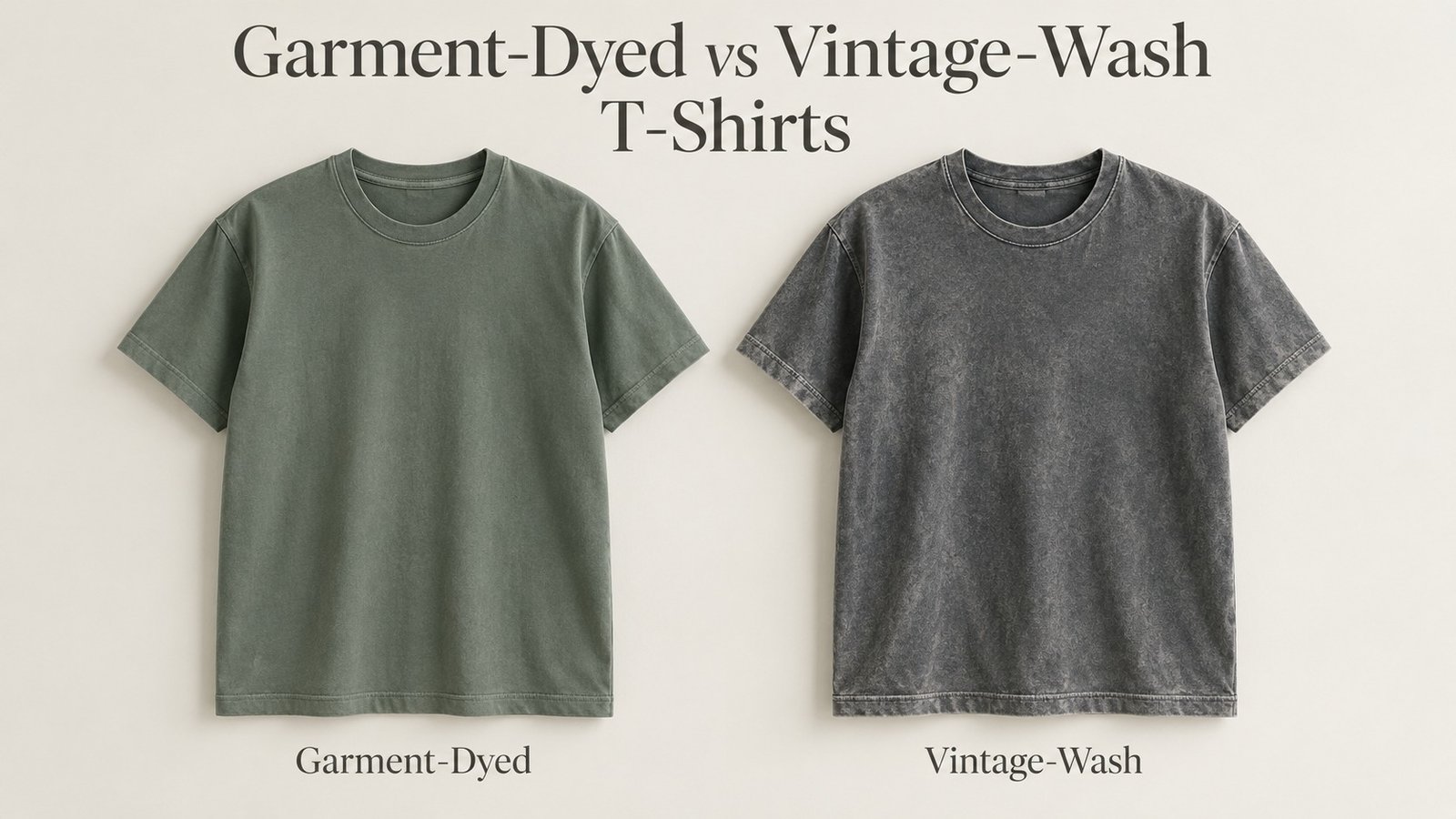
When developing a custom T-shirt collection, “garment-dyed,” “vintage wash,” “mineral wash,” and “acid wash” are often used in the same conversation.
They are related, but they do not describe exactly the same thing.
A garment-dyed T-shirt is primarily defined by when the garment receives its color: the finished or mostly finished garment is dyed after sewing.
A vintage-wash T-shirt, on the other hand, is primarily defined by the appearance and hand feel created through washing or finishing. The goal is usually a worn-in, faded, softer, or less uniform surface.
That distinction matters when you are sourcing custom T-shirts because the finishing method affects the garment’s appearance, repeatability, fabric selection, branding details and production planning.
Here is how buyers should compare the two before placing an order.
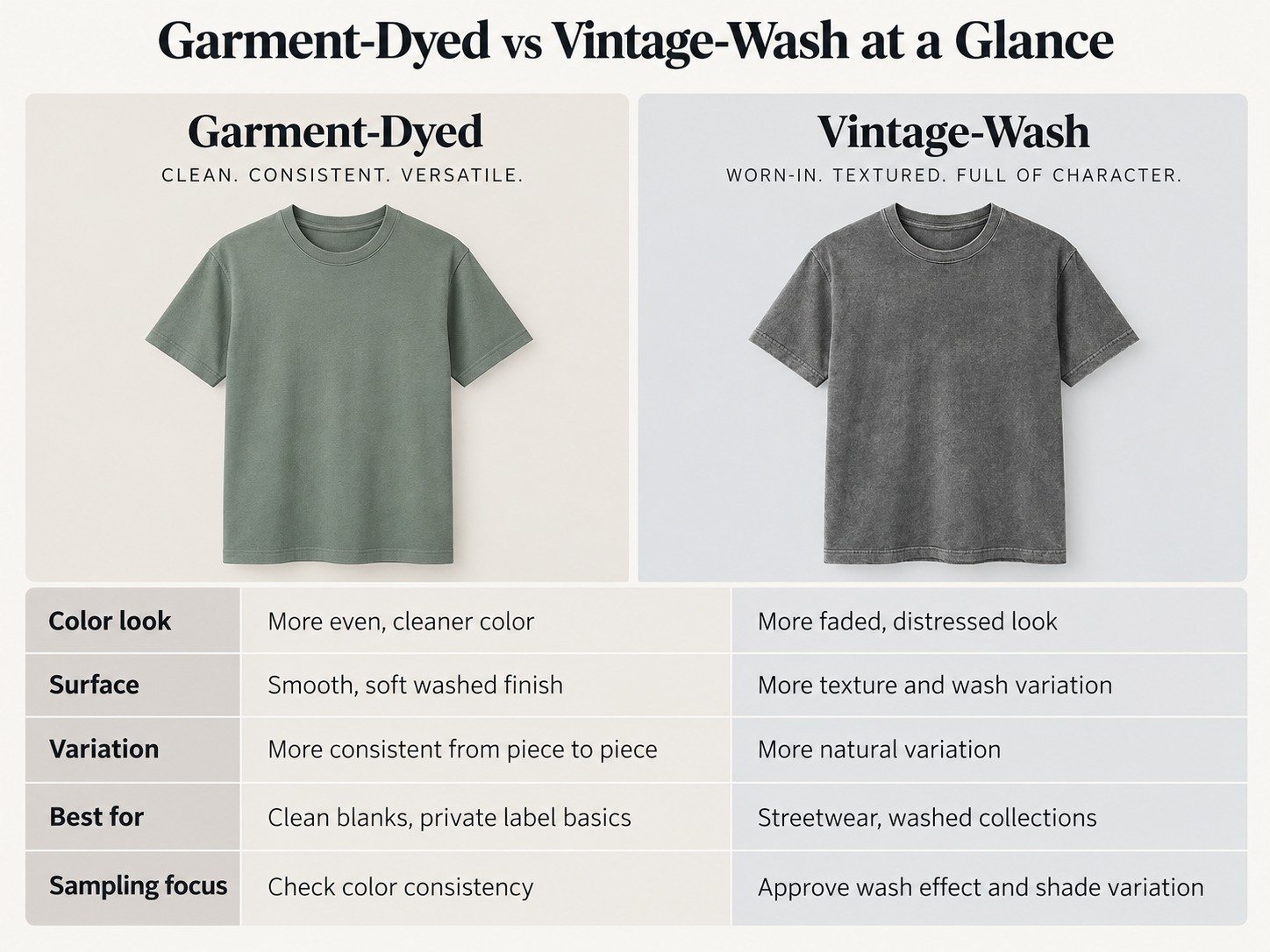
Garment-Dyed vs Vintage-Wash T-Shirts at a Glance
| Feature | Garment-Dyed T-Shirt | Vintage-Wash T-Shirt |
|---|---|---|
| Main purpose | Apply color after garment construction | Create a worn, faded or aged appearance |
| Visual result | Rich, garment-level color with natural variation | Intentionally faded or irregular finish |
| Surface character | Usually relatively clean | Usually more distressed or washed-down |
| Color consistency | Some variation can occur | Variation is often part of the design |
| Best for | Premium casualwear, basics, private-label collections | Streetwear, vintage-inspired and casual collections |
| Key development issue | Color approval | Wash effect approval |
| Sampling priority | Shade and hand feel | Fade pattern, contrast and overall character |
The important point is that these techniques are not always mutually exclusive.
A garment can be garment-dyed first and then washed again to create a more vintage appearance.
So when speaking with a factory, it is better to describe the result you want instead of relying on one finishing term alone.
What Is a Garment-Dyed T-Shirt?
Garment dyeing means the garment is dyed after much of its construction has already been completed.
Instead of dyeing the fabric first and then cutting and sewing it, a prepared garment is made and later processed through a dyeing stage.
For clothing brands, this can create several useful visual characteristics:
- softer-looking color
- natural shade variation
- a more relaxed casual appearance
- subtle variation around seams and construction points
- a less “flat” appearance than some conventional piece-dyed fabrics
Garment dyeing is especially common in casualwear, streetwear and premium basics where slight tonal variation is considered part of the design rather than a defect.
However, buyers should not assume that every garment-dyed T-shirt will automatically look heavily faded.
A garment-dyed shirt can still have a relatively clean, saturated appearance.
If you want a strongly worn or aged effect, an additional wash or finishing process may be required.
What Is a Vintage-Wash T-Shirt?
“Vintage wash” is a broader appearance term.
It normally refers to a T-shirt that has been processed to create a garment that looks softer, older, faded or already worn in.
Unlike garment dyeing, the main objective is not simply to introduce color.
The objective is to change the visual character of the finished garment.
Depending on the desired style, a vintage-wash T-shirt may show:
- faded color
- washed-down surface tones
- lighter seams or edges
- uneven tonal variation
- a softer visual texture
- more contrast between raised and recessed areas
This is why vintage washes are common in:
- streetwear
- graphic T-shirts
- oversized T-shirts
- boxy fits
- retro-inspired collections
- casual private-label brands
For buyers, the most important issue is that “vintage wash” is not one universal technical specification.
Two suppliers can use the same phrase and produce noticeably different results.
The reference sample therefore matters.
Where Do Mineral Wash and Acid Wash Fit In?
Mineral wash and acid wash are both associated with washed, faded and high-contrast garment effects. These effects come from the same laundry families used on jeans — see our types of denim washes and the denim fabric guide for how they work on heavier cotton twill.
In modern apparel sourcing, the terminology is sometimes used loosely, so buyers should focus on the target appearance rather than the name alone.
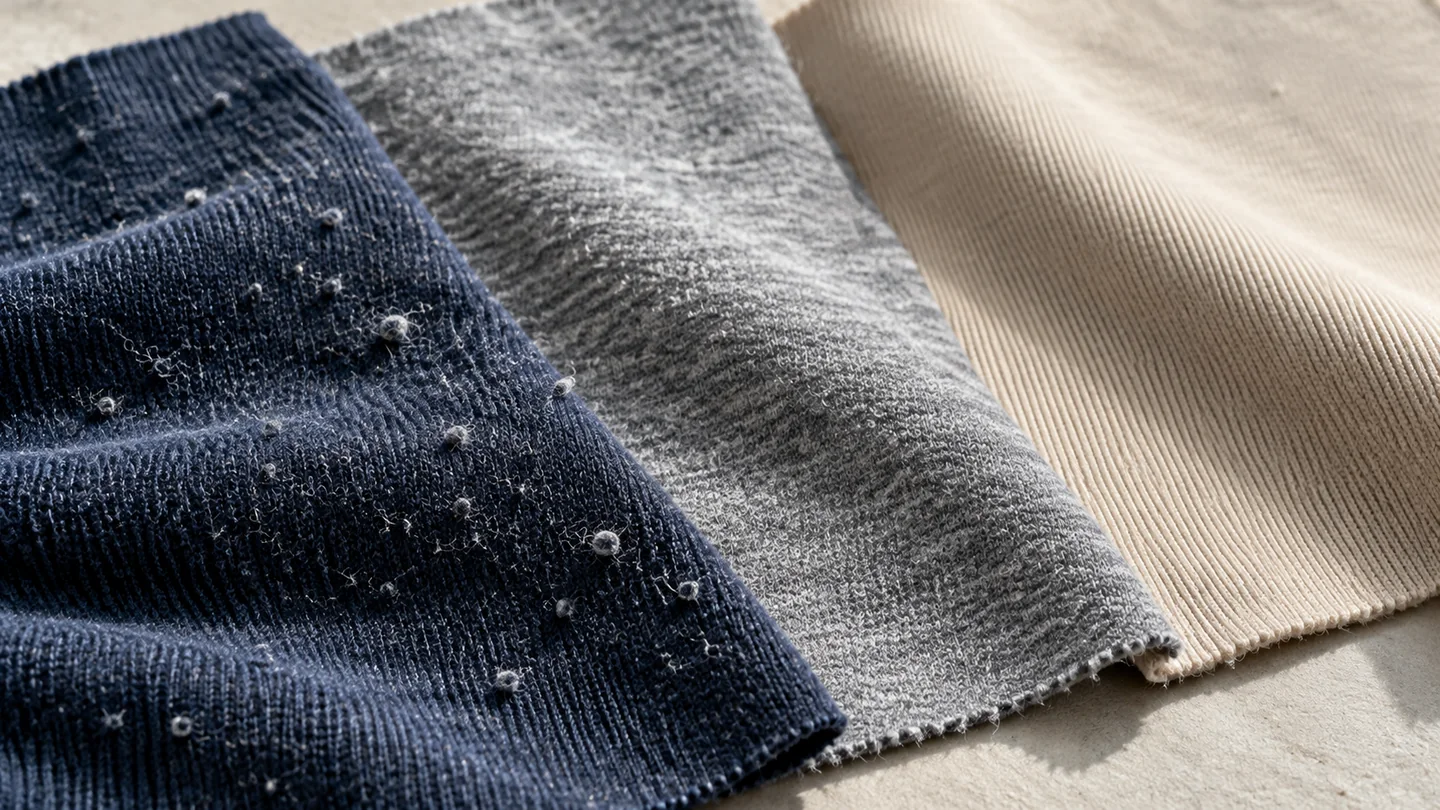
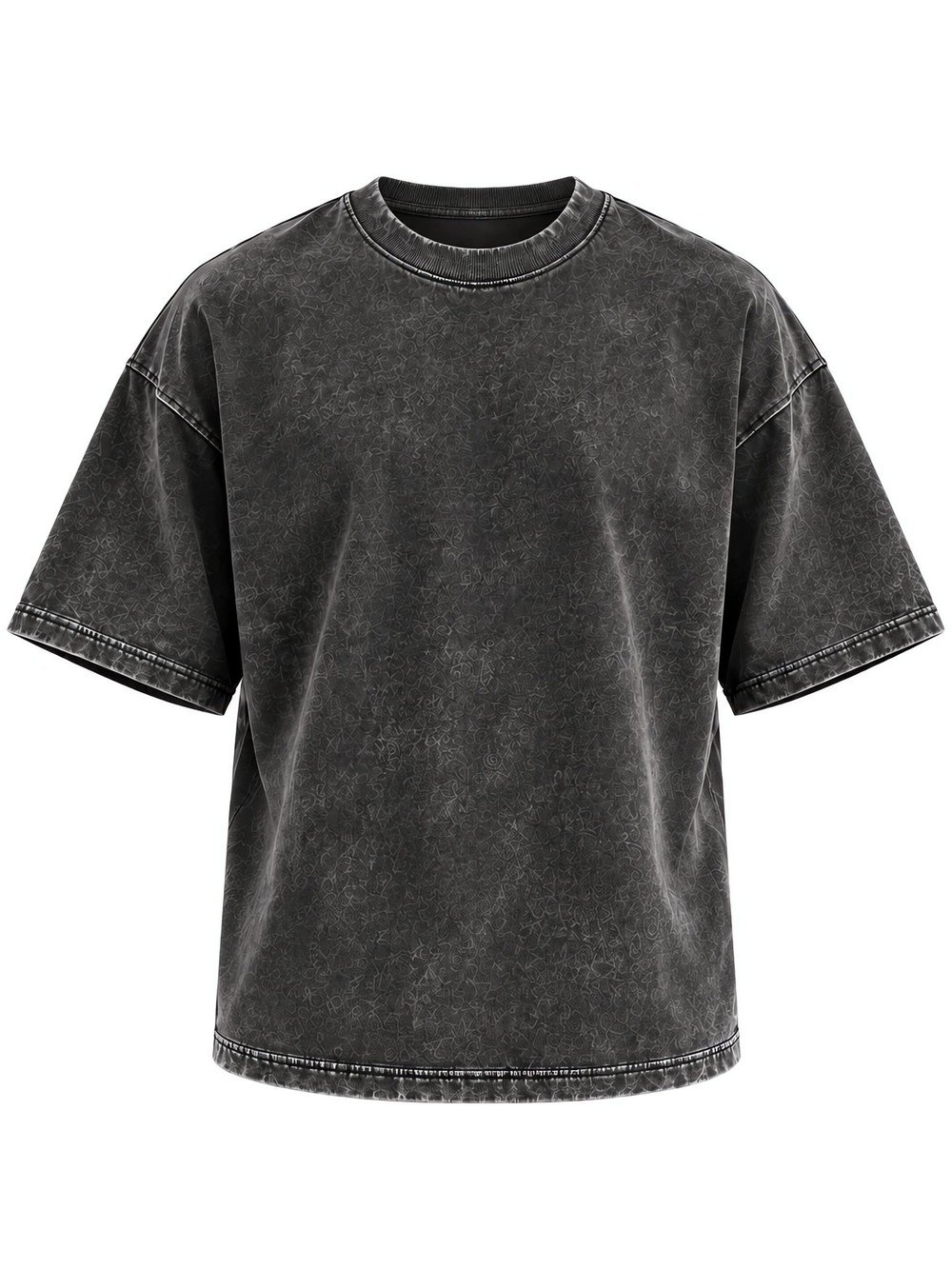
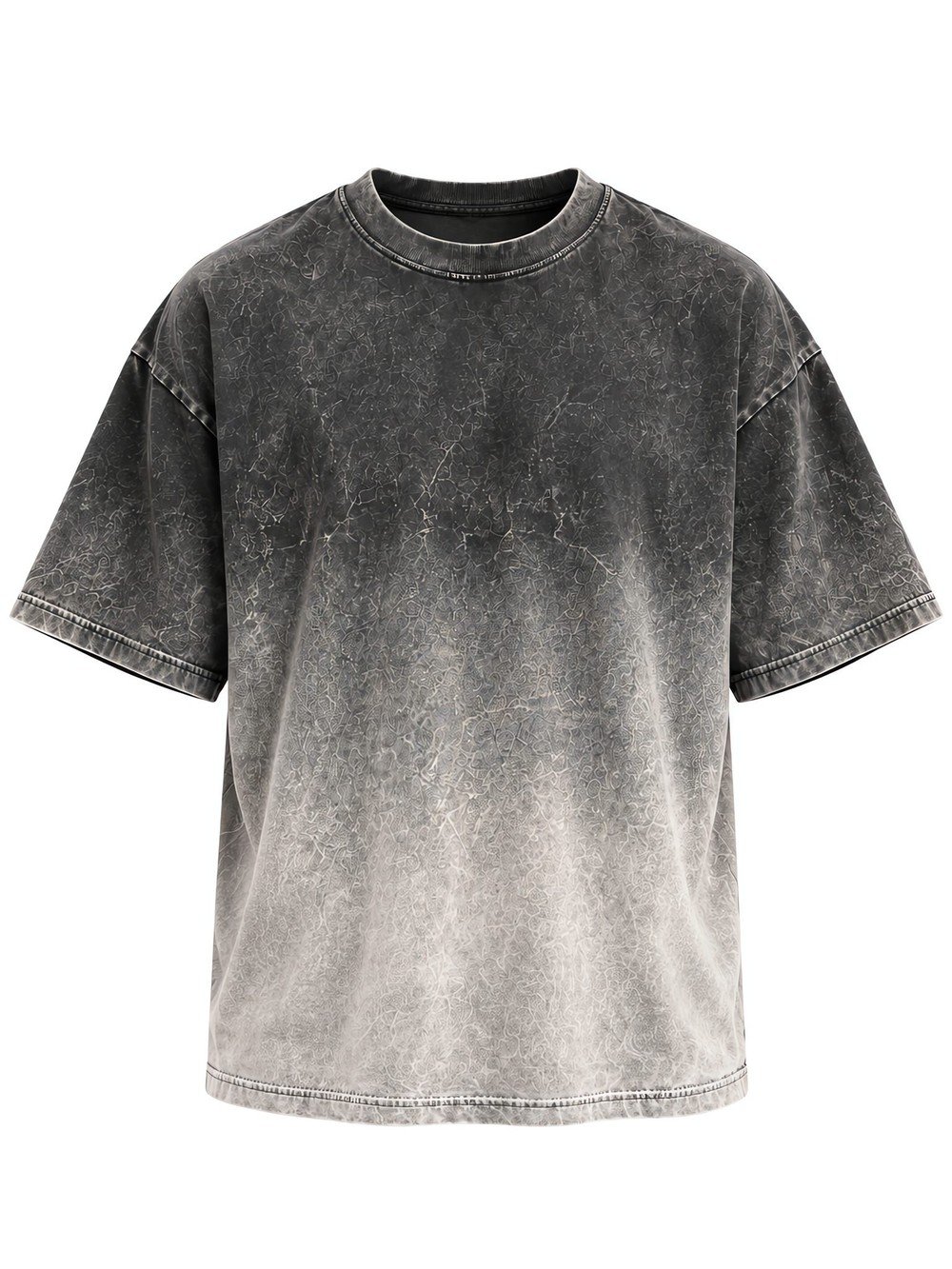
A mineral-wash T-shirt often has a cloudy, irregular or mottled surface appearance.
An acid-wash style generally creates stronger contrast between darker and lighter areas.
The exact outcome depends on factors such as:
- base color
- fabric structure
- garment construction
- finishing process
- processing time
- the desired level of contrast
This is also why one wash should not be copied blindly from a photograph without sampling.
A buyer may say “acid wash,” while what they actually want is a softer mineral-wash effect with lower contrast.
The sample should settle that question before bulk production.
Which Finish Looks More Premium?
Neither process is automatically more premium.
The result depends on the brand positioning and the garment design.
A clean garment-dyed T-shirt can work well for:
- elevated basics
- minimalist labels
- premium casualwear
- tonal collections
A stronger vintage wash can work better for:
- streetwear
- retro collections
- oversized silhouettes
- graphic tees
- distressed or heritage-inspired designs
The more useful sourcing question is:
What type of surface appearance supports the collection?
For example, a minimal private-label brand may prefer a controlled garment-dyed shade.
A streetwear collection may intentionally want more irregular tonal variation.
How Does the Finish Affect Color Consistency?
This is one of the most important practical differences for buyers.
With washed and garment-finished products, perfect piece-to-piece visual uniformity may not always be the design goal.
Some natural variation can be part of the finish.
That means a buyer should establish an acceptable range during development.
Instead of approving only a color name such as “charcoal,” consider approving:
- a physical sample
- a target color reference
- the acceptable level of fading
- seam contrast
- overall wash intensity
- the amount of garment-to-garment variation
If your brand requires extremely tight visual uniformity, say that before sampling.
If natural variation is part of the desired vintage aesthetic, that should also be clear.
Does Fabric Weight Matter?
Yes, but fabric weight and wash type should be treated as separate decisions.
The same wash concept can look different on a lightweight jersey and a heavier, more structured jersey.
Weight influences:
- drape
- body
- silhouette
- hand feel
- how substantial the garment feels
- how the finished wash is visually perceived
For example, a structured boxy T-shirt may need a different fabric specification from a soft regular-fit tee even if both use a vintage finish.
Buyers should therefore avoid choosing a wash before deciding how the finished garment should fit and feel.
For a more detailed explanation of fabric weight, see NOVITA’s T-Shirt Fabric Weight & GSM Guide.
Does the Wash Change the Fit?
The finishing stage can affect the final garment dimensions, which is why fit evaluation should be based on the finished sample, not only on an unfinished sewing sample.
For production development, buyers should confirm:
- intended silhouette
- fabric
- construction
- finishing method
- final measurements after finishing
This is particularly important for:
- oversized T-shirts
- boxy T-shirts
- cropped shapes
- fitted silhouettes
- garments with ribbed hems or cuffs
The final approved sample should represent the garment as closely as possible after the planned finishing process.
Garment Dye vs Vintage Wash for Graphic T-Shirts
If a T-shirt includes screen printing, embroidery, appliqué or other branding, the sequence of finishing and decoration needs to be considered during development.
A washed T-shirt may intentionally use graphics that also look aged or distressed.
A cleaner garment-dyed basic may instead use a sharper logo application.
Buyers should send the factory:
- artwork
- placement dimensions
- required decoration technique
- wash reference
- color reference
- intended final appearance
Do not assume the printing and washing stages can be decided independently.
The full garment should be developed as one system.
Which Finish Is Better for Streetwear?
For many streetwear collections, vintage and mineral-wash effects are attractive because they create more visible texture and variation.
They pair naturally with:
- oversized fits
- drop shoulders
- boxy silhouettes
- graphic prints
- embroidery
- appliqué
- heavy visual branding
However, stronger washing is not automatically better.
If every garment element is visually aggressive—heavy wash, large graphic, oversized fit, contrast stitching and multiple trims—the product can become difficult to balance.
Often, one or two strong features are enough.
For example:
Boxy fit + textured wash + minimal embroidery
can feel more intentional than adding every possible customization option.
Which Finish Is Better for Private Label Basics?
For private-label basics, garment dyeing can be useful when the brand wants subtle variation without an obviously distressed appearance.
A basic T-shirt collection might focus on:
- consistent fit
- carefully selected fabric
- controlled garment color
- neck label
- woven label
- hangtag
- packaging
The wash becomes part of the product identity without overpowering the garment.
This makes garment-dyed basics suitable for brands that want differentiation while keeping the design relatively simple.
What Should Buyers Send to a Manufacturer?
For custom washed T-shirts, reference material is much more useful than vague terms.
A practical development package should include:
1. Reference image or sample
Show the target wash intensity.
2. Target color
Provide a physical reference or clear color direction where possible.
3. Fit reference
Specify regular, oversized, boxy or another intended silhouette.
4. Fabric direction
Specify the desired hand feel, structure and weight range if already known.
5. Artwork files
If the garment includes printing, embroidery or appliqué.
6. Branding requirements
Such as:
- neck labels
- woven labels
- hangtags
- packaging
7. Measurement specification
A tech pack is ideal, but a clear reference sample can also help begin development.
How NOVITA Develops Custom Washed T-Shirts
At NOVITA, custom T-shirt projects can be developed through OEM, ODM or private-label production.
For custom orders, the confirmed business terms are:
- MOQ: 100 pieces per color
- Mixed sizes: allowed
- Sample development: generally 7–15 days
- Bulk production: generally around 60 days after sample approval, depending on quantity, fabric availability and customization
A buyer can start with a tech pack, reference garment or visual direction.
For washed products, the sample stage is especially important because the target should be approved based on the actual finished appearance rather than terminology alone.

Buyer Checklist: Garment-Dyed or Vintage Wash?
Before confirming production, ask these questions:
- Do I want clean color or visibly aged color?
- Should every garment look highly consistent?
- How much fading is acceptable?
- Do I want strong seam contrast?
- Is the silhouette regular, oversized or boxy?
- What fabric structure do I want?
- Will printing or embroidery be added?
- Should the graphic also look vintage?
- Do I have a reference sample?
- Has the finished sample been approved?
If those answers are clear, the factory has a much better chance of reproducing the intended result in bulk.
Frequently Asked Questions
Is garment dyed the same as vintage wash?
No. Garment dyeing mainly describes when and how color is applied to the garment. Vintage washing describes the visual effect created through washing or finishing. A garment can use both processes.
What is a mineral-wash T-shirt?
A mineral-wash T-shirt usually has an irregular, cloudy or faded surface appearance. The exact look varies according to fabric, base color and finishing process.
Are vintage-wash T-shirts supposed to look identical?
Not necessarily. Some visual variation is often part of the intended finish. Buyers should approve an acceptable range during sampling.
Is garment dye good for oversized T-shirts?
It can be. Garment dyeing and oversized fit are separate decisions. The important point is to approve the final garment after finishing because the wash process can affect the finished look and measurements.
Can I add custom labels and packaging to washed T-shirts?
Yes. Private-label projects can include custom labels, hangtags and packaging, depending on the order specification.
How long does custom T-shirt sampling take?
NOVITA’s typical sample development time is 7–15 days.
Final Thoughts
The difference between garment-dyed and vintage-wash T-shirts is less about choosing the “better” technique and more about choosing the right visual result for the collection.
Use garment dyeing when color depth and subtle garment-level variation are the priority.
Use a vintage or mineral wash when the goal is a visibly worn, faded or textured appearance.
For custom production, the safest approach is to approve the actual finished sample—including fit, color, wash and decoration—before moving into bulk production.
NOVITA supports custom T-shirt development for brands, wholesalers and private-label buyers, including fabric selection, garment finishing, branding and sampling.
Request a quote or send your reference design to discuss your next T-shirt project.