Ordering custom jackets can mean decorating an existing garment or developing the garment itself. The route determines how much control you have over fit, materials and construction.
A logo approved on screen still needs a garment trial: embroidery can pucker the shell, a transfer can mark it, and a zipper can restrict placement. Settle these issues before approving bulk production.
First choose the supply route, then develop the specification. NOVITA is a B2B apparel OEM/ODM factory in Foshan, China, with in-house printing, embroidery and garment washing. Its jacket range provides starting points; material and decoration combinations need order-specific confirmation.
POD, promotional decorator or cut-and-sew factory?
Choose POD for demand testing without a bulk inventory commitment, a promotional decorator when an existing wholesale blank fits the brief, or an OEM/ODM factory when the garment itself needs development.
| Buying decision | Print-on-demand (POD) | Promotional decorator: wholesale blanks | OEM/ODM cut-and-sew factory |
|---|---|---|---|
| MOQ | Single-item ordering is available; check the product | Supplier- and process-specific; some offer no minimum | Factory- and material-specific; NOVITA’s standard is 100 pcs per style/color |
| Unit economics: 100 pcs | Check bulk discounts; per-order fulfillment may still matter | Compare blank cost, setup and decoration; no new garment pattern needed | Development costs spread across a small run; material minimums can dominate |
| Unit economics: 500 pcs | Request a batch quote rather than multiplying retail prices | Setup spreads across more units; confirm blank stock and size availability | Development cost per unit falls if the specification stays unchanged; verify material purchases |
| Unit economics: 2,000 pcs | Compare batch pricing, fulfillment and inventory alternatives | Volume can help purchasing; catalog fit and construction remain fixed | More units share development costs; no guaranteed saving without matched quotes |
| Fit and construction | Choose from provider templates or catalog styles | Choose the blank; alterations are a separate negotiation | Develop fit, pattern, lining, panels and construction within agreed capabilities |
| Decoration access | Product-dependent; all-over print and finished-blank decoration have different workflows | Usually post-assembly; embroidery hooping may catch the lining unless access is provided | Can plan pre-assembly panel decoration, then assemble the lining; approve the finished result |
| Lead time shape | Order processing, fulfillment and shipping for each order | Stock availability, artwork approval, decoration and shipping | Material sourcing, development, approval, bulk production and shipping |
| Pattern ownership | Provider controls the base garment; do not assume pattern access | Blank manufacturer controls the base pattern | Agree ownership and release in writing; OEM files and ODM base patterns need separate terms |
These are cost drivers, not price quotes or universal break-even quantities. Printful offers no-minimum jacket ordering and bulk discounts; Custom Ink lists no-minimum options among its decorated jackets. Terms vary by product. A domestic decorator is the right answer when catalog fit works and you need a logoed garment without developing a new shell. A larger order alone does not justify a factory.
Three layers of a custom jacket decision
Settle silhouette and shell first, decoration next, then quantity and color. These decisions affect each other, but starting with the garment prevents an artwork choice from dictating an unsuitable construction.
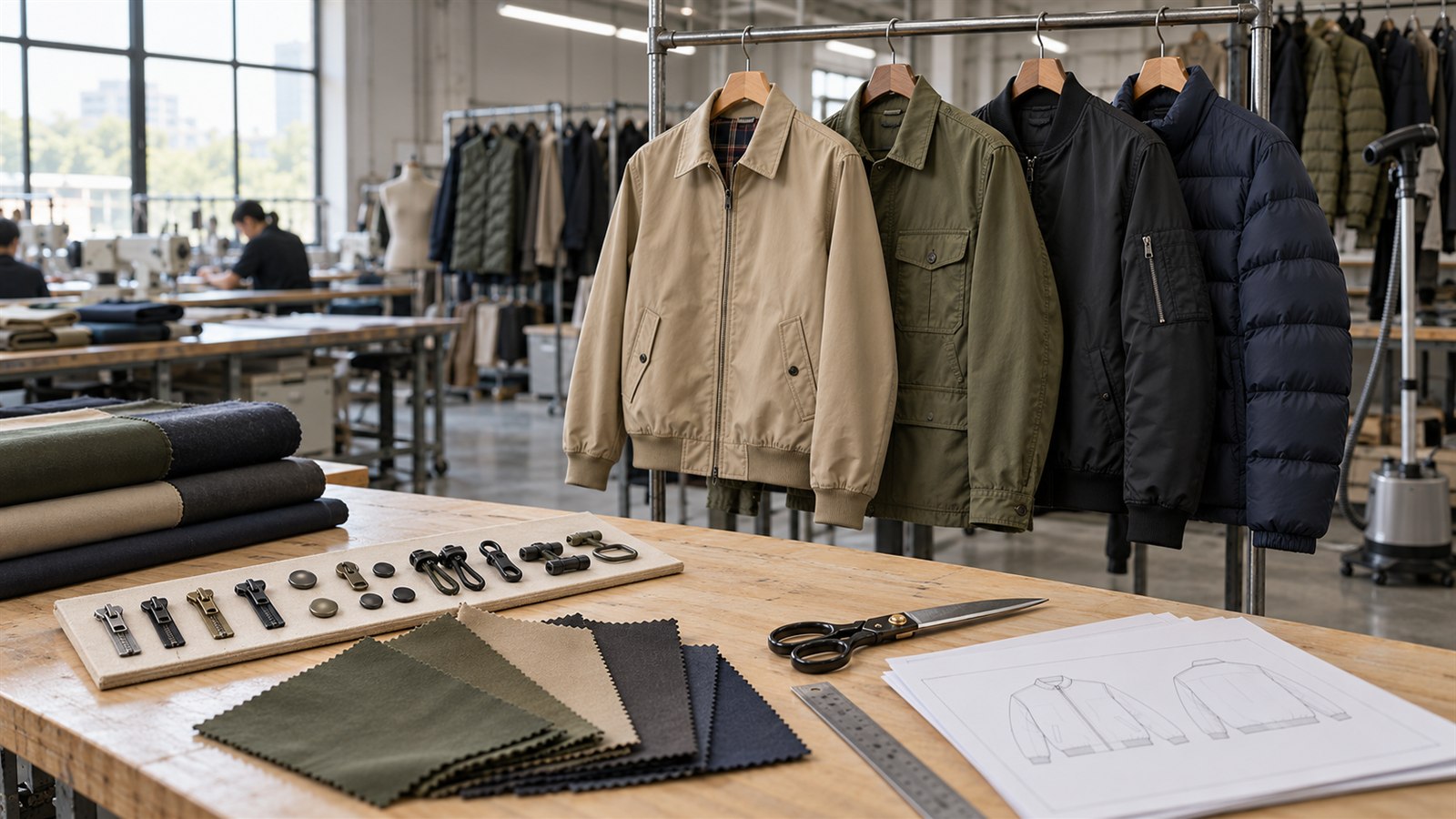
Start with the intended wearer, fit and layer underneath. A bomber intended to close over a hoodie needs a different fit review from a lightweight jacket worn over a T-shirt. Specify the shell, body lining, sleeve lining and any fill separately. Rib, collar support, zipper and puller also belong in this brief. The jacket manufacturer guide explains these construction checkpoints.
Next, identify the decoration process, artwork size and location. Decide whether the logo should appear only on the shell or whether its reverse can remain visible inside. This affects backing, lining access and the assembly sequence.
Submit a colorway breakdown with sizes so the factory can assess quantities. Identify contrast sleeves, collars and panels as material requirements as well as design choices.
For custom jackets, the useful starting document is a tech pack that connects these decisions. A reference image can communicate the look; it cannot tell the factory which lining, coating or decoration method you intend.
Choosing the decoration for the shell and placement
Choose the process against the actual shell, its finish and the available working area. Fiber composition alone is not enough: a coating, stretch, surface texture or padded construction can change the result. Treat the options below as candidates to sample, not blanket compatibility approvals.
| Process | Shell or construction to assess | Placement and main check |
|---|---|---|
| Embroidery | Stable cotton twill or similar woven shells; lightweight nylon and stretch shells need particular care | Chest, sleeve or back; check support, puckering and reverse-side access |
| Screen print | Smooth cotton or synthetic panels compatible with the selected ink system | Flat chest or back areas; check adhesion, curing and seam clearance |
| Patches | Twill, varsity-style or other shells that can support the patch and its attachment | Chest, sleeve or back; check stiffness, attachment and edge lift |
| Heat transfer | Polyester, nylon or other shells only after adhesive and pressing compatibility checks | Accessible flat panels; check bonding, surface marks and dye migration |
| Contrast panels and paneling | Shell materials compatible with the planned seams and finish | Sleeves, yokes or body sections; check seam bulk, color joins and balance |
Embroidery and patches
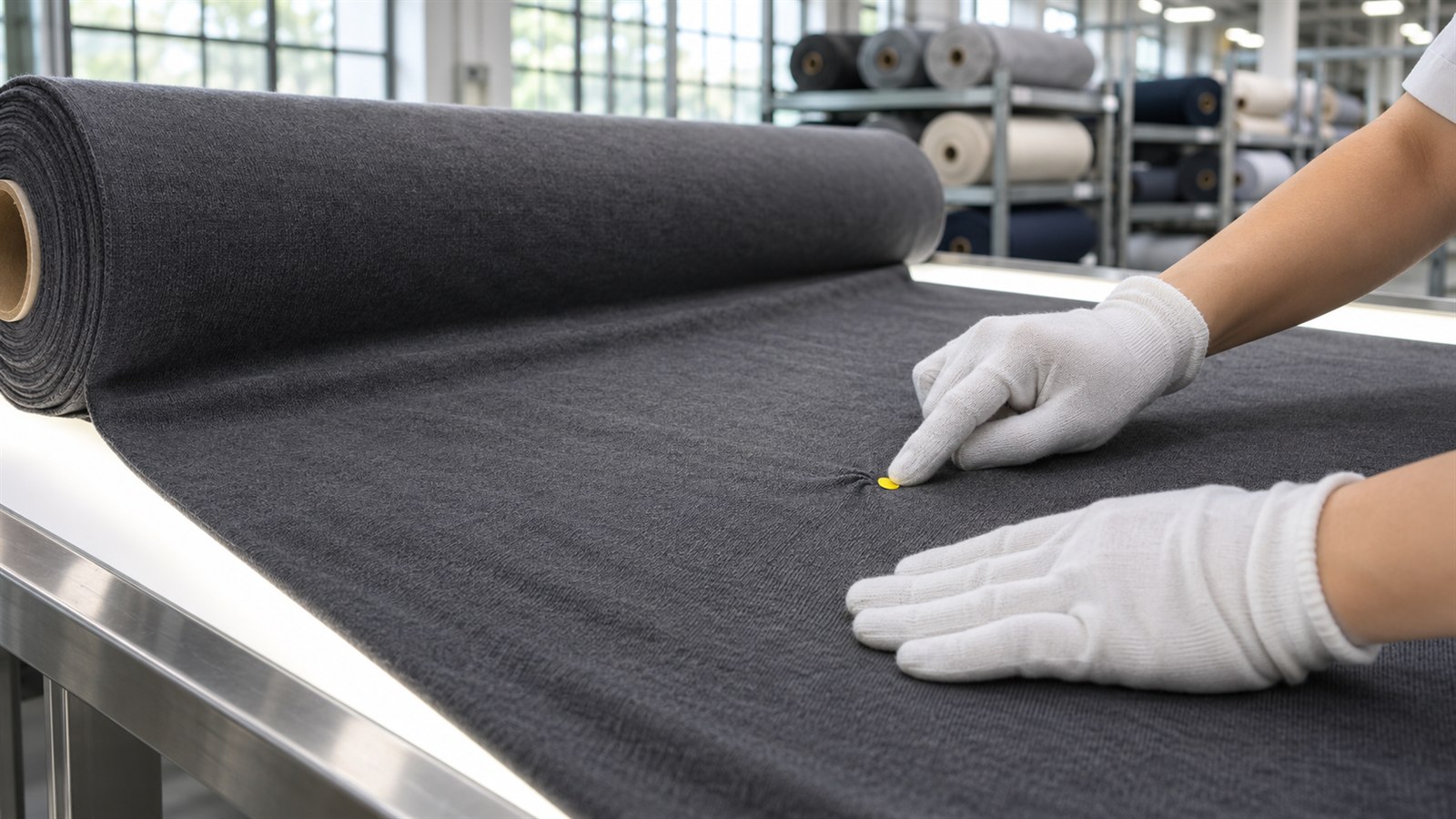
Embroidery is worth considering when the shell can support the stitched design. Dense artwork can distort a light fabric; reducing density or changing the construction may work better than adding more backing. Needle penetration also matters on a shell intended to resist water. A neat logo does not establish weather performance.
A patch moves the artwork onto a separate component, but its attachment still needs approval. Sewing penetrates the shell; heat bonding needs a compatible adhesive and surface. Review the patch edge, flexibility and how it behaves when the garment bends. Use NOVITA’s embroidery guide to check lettering, design detail and digitizing on a comparable garment before a jacket-shell sew-out.
Printing, transfers and panel construction
Screen print may suit a broad, accessible area when the ink and curing process work with the shell. Heat transfer may suit detailed artwork, but heat sensitivity, coatings and dye migration need checking on the selected material. Nylon and polyester should not be treated as interchangeable substrates. The printing process guide covers ink systems, curing and substrate questions worth raising before outerwear trials.
Contrast paneling is different: it changes the cut-and-sew construction. A color block crossing a pocket or seam needs pattern and assembly decisions, not a late instruction to the decoration supplier.
Placement and tolerance: why “9 cm (about 3.5 in) from the placket” needs a drawing
A spec reading “9 cm (about 3.5 in) from the placket” leaves both reference points undefined: does “placket” mean the finished edge, stitching line or closure center? Is the artwork reference its center, nearest edge or backing edge?
Show those reference points on a placement drawing. Include artwork width and height, horizontal and vertical position, orientation, and clearance from pockets, seams and hardware. State whether the jacket is measured flat, relaxed and fastened. Use the same method when reviewing the sample and checking production.
The target is the intended location; tolerance is the acceptable variation. Agree that allowance for the specific shell, process and placement instead of borrowing one from another garment.
Check placement across sizes. A pocket logo may need a different rule from a back graphic. Record whether the position stays fixed or changes with size.
Sewing can shift artwork relative to a nearby seam, so approve placement on the assembled jacket even when decoration happens at the cut-panel stage.
The sample has to carry the decoration
A clean sample can establish fit and construction. It cannot approve decoration that is absent. If custom jackets are released against an undecorated sample, the buyer has left artwork execution, placement and its effect on the shell unresolved.
Use a staged approval if necessary. A strike-off, embroidery sew-out or patch sample on the intended material can help settle color, detail and process suitability. It does not replace a decorated garment: the assembled jacket is needed to check the relationship with pockets, lining, seams and closures.
Ask the decorated sample to prove:
- The correct shell, artwork revision, process and color references were used.
- The logo dimensions and position match the placement drawing.
- The shell lies acceptably around the decoration, without unwanted puckering or press marks.
- Backing, stitching and attachments are acceptable inside the garment.
- The decoration remains acceptable after the agreed care or finishing checks.
- Fit, collar stand, zipper operation and hem recovery still meet the specification.
Record measurements after the agreed finish, not only before it. Keep any substitute components or untested requirements explicitly open. The jacket sample approval checklist provides a broader release record for fit, materials, trims and artwork.
Approval should identify the physical sample, tech-pack revision and outstanding corrections. “Looks good” in a message is not a clear production instruction.
What MOQ really means: 100 pcs per style/color
NOVITA’s published standard custom MOQ is 100 pcs per style/color. Treat this as a term to confirm on the quotation, not a guarantee that every material combination is available at that quantity.
List navy and black custom jackets separately and confirm the minimum for each. Combining their quantities does not satisfy a per-color requirement. The clothing manufacturer MOQ guide explains how these minimums affect an order.
A navy body with cream sleeves is one garment colorway. Each panel does not automatically carry a separate garment MOQ, but sleeve fabric, contrast lining and custom rib may have purchasing minimums. More colorways can multiply material commitments even with an unchanged pattern.
Request a matrix showing body, sleeves, collar, lining, rib and artwork. Ask the manufacturer to flag shared materials, separate minimums and unused-material liability. Sharing a lining across colorways may simplify sourcing without changing the garment MOQ.
Where the money goes
Compare quotations for custom jackets against matching specifications. A lower unit quote may describe a different shell, simpler lining or less decoration rather than a more efficient version of the same product.
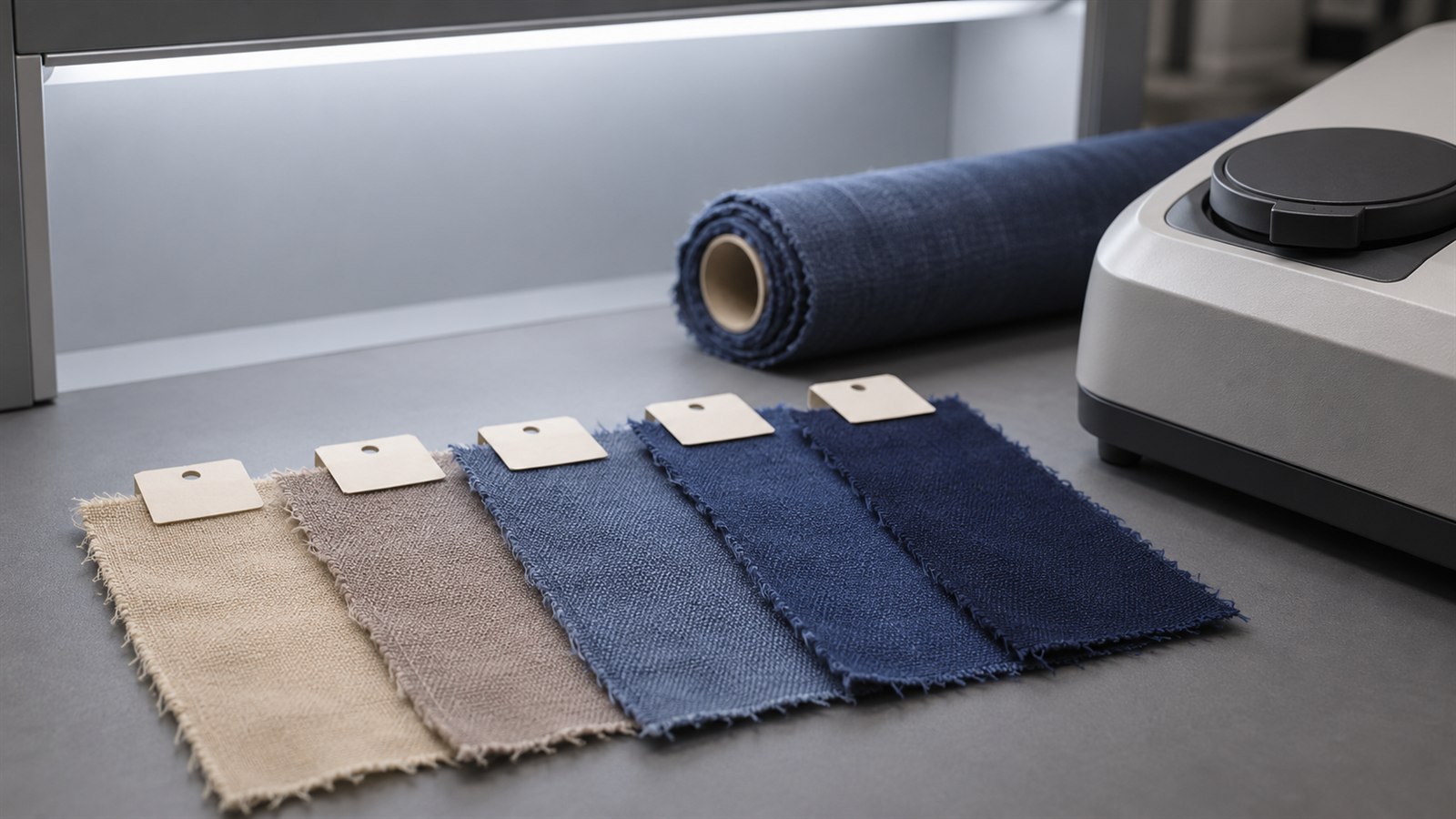
Shell and lining costs depend on composition, finish, usable width and cutting yield. Name body and sleeve linings separately. Contrast panels can add cutting and joining work; their effect depends on the pattern and material allocation.
For insulated styles, define the fill, distribution and quilt layout. These affect materials and assembly. A puffer and an unpadded windbreaker are not comparable costing references.
Specify the zipper, puller, snaps, toggles and finishes. A substitute that looks similar in a photograph may not match the approved operation or appearance.
Embroidery cost depends on the digitized stitch count, design size, density, thread changes and placements. Thread color count alone cannot establish the cost. For screen printing, colors can affect separation and screen preparation. Transfers and patches have different setup, component and application costs. Ask which development charges are separate from the unit price.
The size mix affects fabric consumption and cutting plans. Packing needs its own specification: confirm labels, folding, individual packing, carton requirements and any destination-specific instructions. Both parties need to agree what “standard packing” includes.
Confirm the quotation currency (USD or RMB), payment milestones and the period the price stays valid, since exchange rates and raw-material costs can move between quotation and order. Align Incoterms before comparing a domestic decorator with an overseas factory. Compare EXW at the named factory, FOB (Foshan/Shenzhen) with the actual loading port confirmed, or DDP landed at the named destination. Under International Chamber of Commerce rules, FOB is for sea or inland waterway transport. DDP bundles freight and import duty that an FOB quote excludes; add those costs before comparing an FOB price with a delivered domestic quote.
How the timeline stacks: 7 to 15 days sampling, then 60 days bulk
NOVITA publishes sample development of 7 to 15 days after materials and construction are confirmed, followed by bulk production of 60 days after sample approval, depending on quantity and fabric availability. Confirm both terms, their scope and their start conditions on the quotation. They are not guaranteed delivery dates.
Decoration belongs inside the development plan for custom jackets. Before sampling, confirm the artwork, process, shell reference and placement drawing. Ask whether digitizing, screen preparation, patch development or transfer trials are included in the quoted sample schedule.
Panel decoration approval must fit the cutting and sewing sequence. Post-assembly work needs access without trapping the lining or obstructing the working area. Choose the route before locking construction.
Changes to artwork, substrate or location may require another trial and completion date. Confirm when the decorated reference will be ready and who authorizes bulk production. Schedule inspection, shipping and transit separately from production if you need an arrival deadline.
FAQ
Can you make 50 pieces?
For custom production, that quantity is below NOVITA’s published standard MOQ of 100 pcs per style/color. Ask whether an exception is feasible for the specification. Do not plan around an exception until it appears in the quotation.
Can we mix colors to reach MOQ?
Do not assume so. The published custom minimum is per style/color, not a pooled total. Submit the quantity for each colorway and ask the factory to confirm the structure, including any separate material minimums.
Can decoration be added later?
Sometimes, if the shell, access and process allow it. Embroidery may need access behind the shell; printing or pressing needs a workable surface. Decide the sequence during development and approve the decorated result before authorizing that operation in bulk.
Can we supply our own fabric?
Confirm in writing whether the factory accepts COM (Customer’s Own Material) under CMT (Cut, Make, Trim) or CM (Cut & Make) terms, and who supplies trims. Do not ship before acceptance. Provide composition, finish, usable width, quantity and a fabric sample. Agree responsibility for testing, shortages, defects and replacement. At a 100-piece MOQ, consider the cost of freight and import duty into China when supplying your own material; buyer-supplied fabric does not remove development checks.
Do you make insulated jackets?
NOVITA’s published range includes puffer, or quilted, jackets. Send the intended fill, lining, quilt layout and fit requirements for confirmation. The listed style does not establish a thermal performance claim or approval of your proposed materials.
How do we approve decoration without flying to the factory?
Request annotated photographs showing the placement reference points, scale, close-up finish and inside construction. Use a video review for handling and access questions, and arrange a physical decorated sample where needed. Record the sample identity, artwork revision and written decision; photographs alone cannot establish hand feel or durability.
Does a clean fit sample approve the decorated order?
No. It can approve only the features it represents. Keep decoration approval open until the artwork, material interaction and finished-garment placement have been reviewed against the specification.
Send a brief the factory can quote
To develop custom jackets, send NOVITA your tech pack or reference garment, shell and lining requirements, artwork, placement drawing, colorway quantities, size breakdown and required delivery date. Request a quotation that confirms material availability, MOQ, decoration trials, sample approval stages and lead-time conditions.