
How to Request an Accurate Clothing Manufacturing Quote: RFQ Checklist
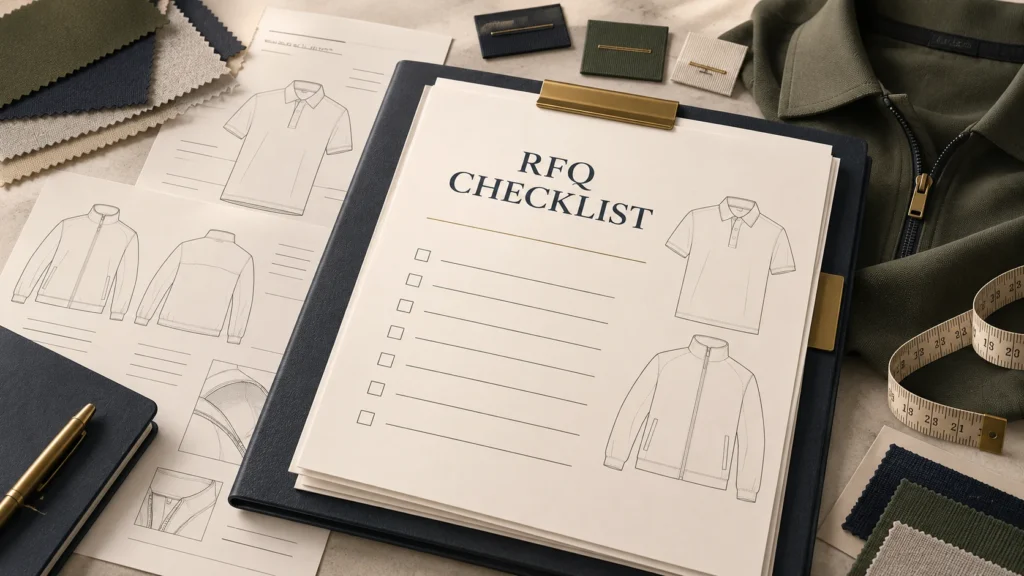
Prepare a clothing manufacturing RFQ with product specifications, quantities, open decisions and supplier response requirements for comparable quotations.
Types of Seams: Which Construction Suits Knitwear, Denim and Outerwear
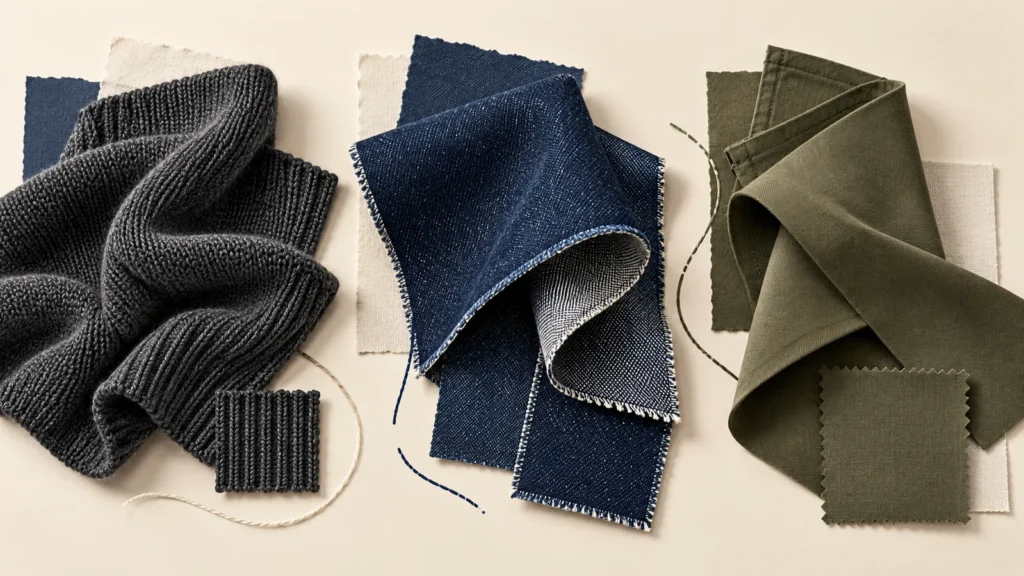
Compare seam types for knitwear, denim and outerwear, then specify material arrangement, edge finishes and sample checks in your tech pack.
Fabric Pilling Explained for Buyers: Causes, Tests and What to Check Before Bulk Production
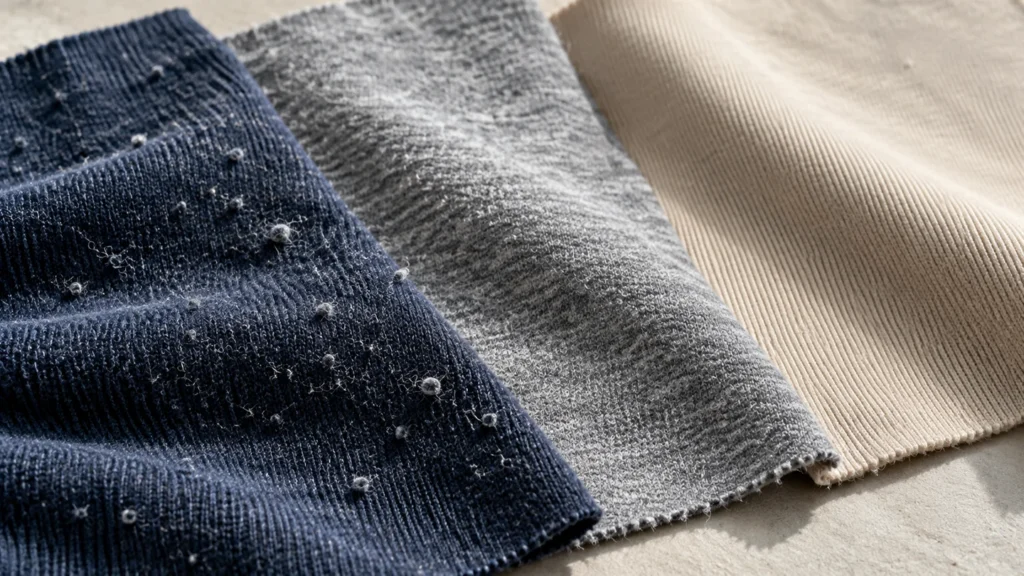
Fabric pilling is the formation of small, attached fiber balls on a fabric surface. Check pilling resistance during sample confirmation so the material, finishing state and performance requirements can be reviewed before bulk production. A smooth new sample alone does not establish resistance to later rubbing or laundering. An “anti-pill” description, fiber composition and GSM […]
Seam Allowance in Garment Manufacturing: A Buyer’s Guide
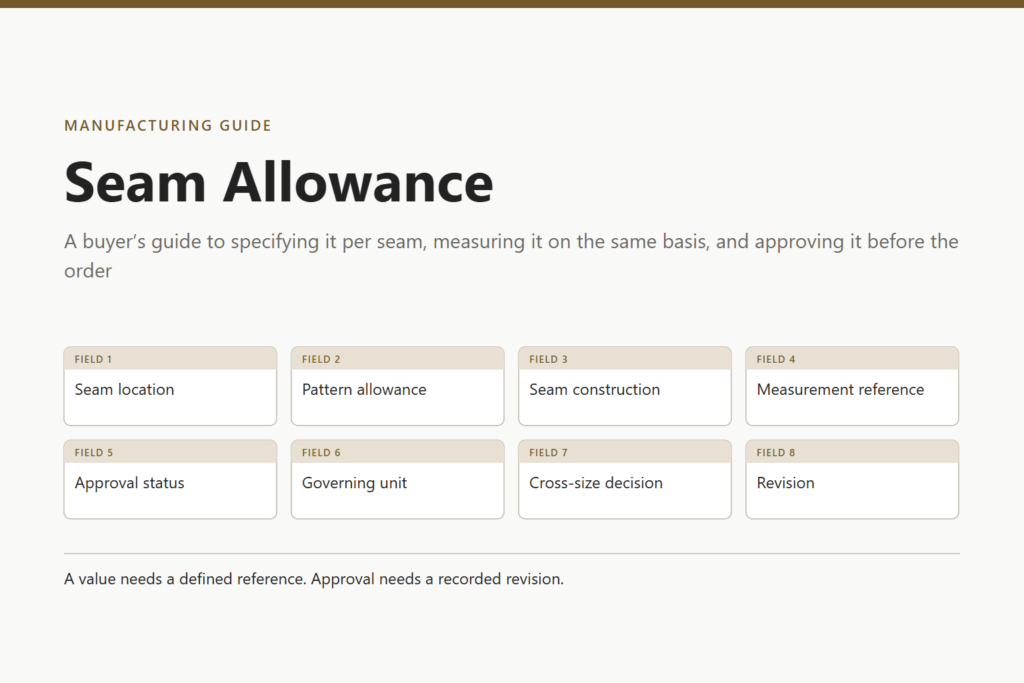
How to specify seam allowance before ordering: the difference between a pattern dimension and a sewn-seam measurement, writing the requirement per seam location, choosing one governing unit, and what to confirm before sample approval.
Fabric Defects: A Buyer’s Guide to Grading and Acceptance
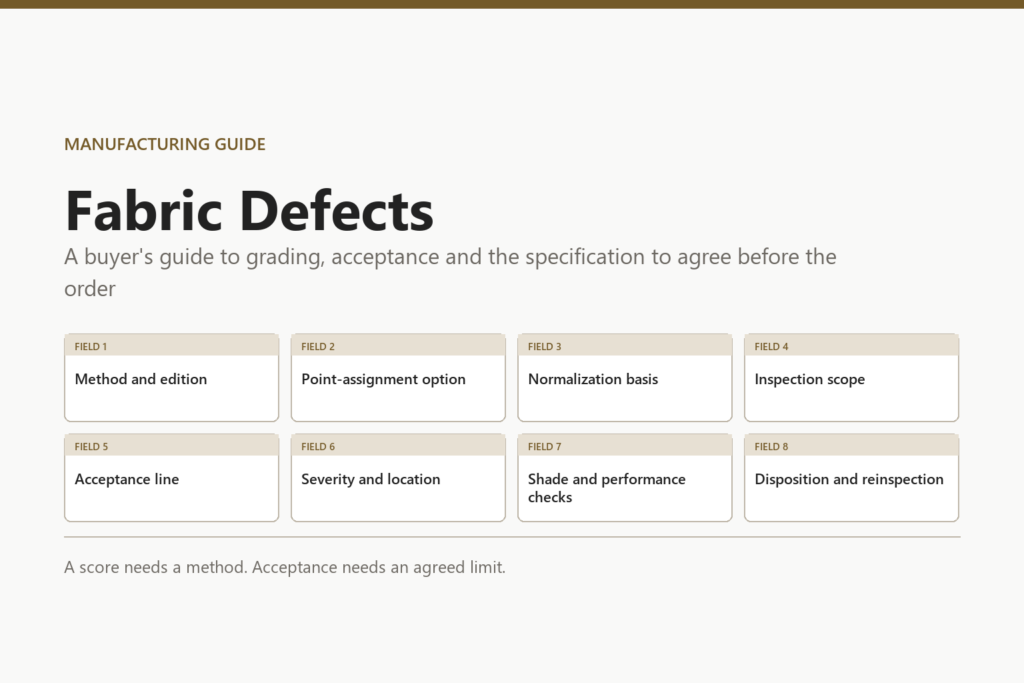
How to specify fabric acceptance before ordering: point-assignment option, normalization basis, inspection scope, acceptance limits, severity by location, separate shade and performance checks, and what to record when defects appear at cutting.
Stitch Types in Garment Manufacturing: A Buyer’s Guide
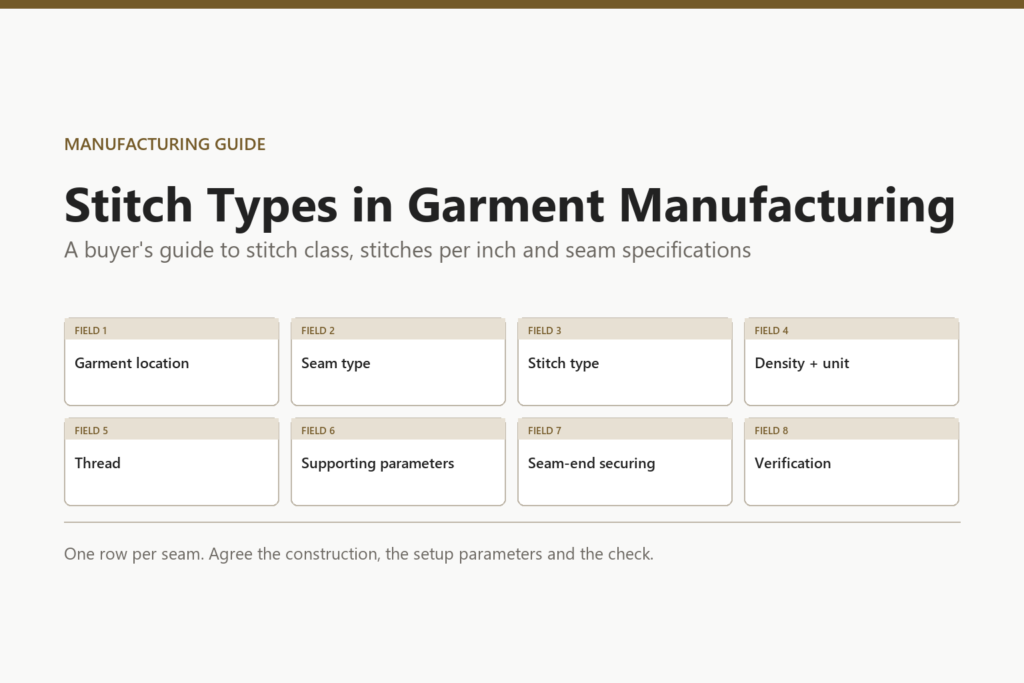
How to specify stitching so a factory can follow it: stitch class, seam type, stitches per inch for each seam, thread specification, and the checks that verify a sample and bulk production.
USA vs China Clothing Manufacturing: Landed Cost, Lead Time and Product Fit

Compare USA vs China clothing manufacturing by landed cost, material readiness, lead time and product fit, with a hypothetical 500-garment cost example.
How to Turn a Reference Garment into a Clothing Production Specification
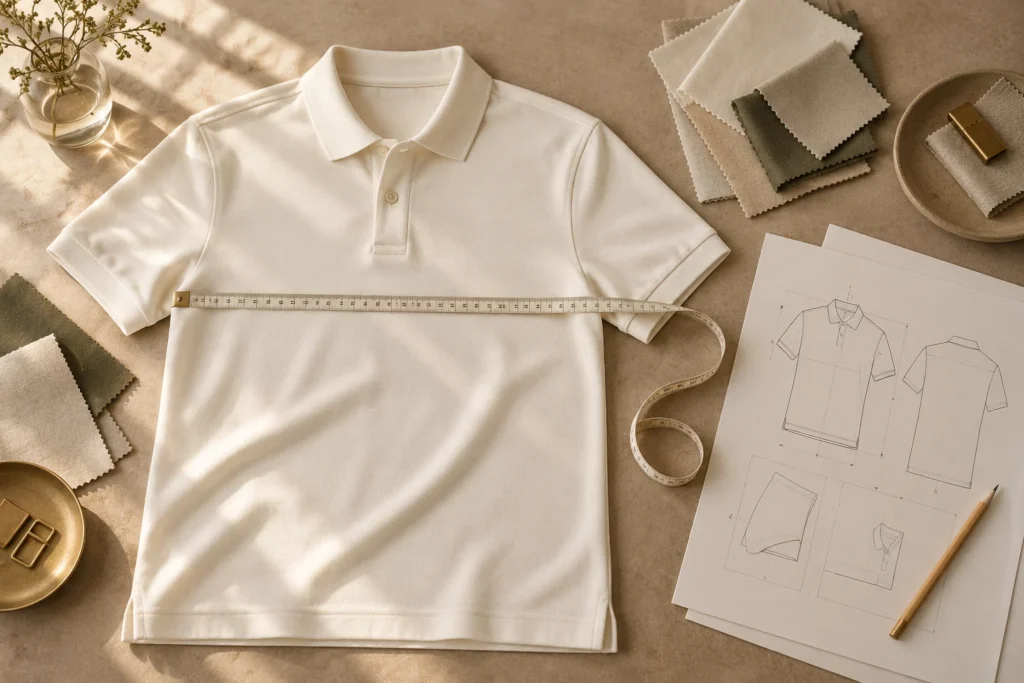
Turn a reference garment into a clothing production specification with a reference audit, Keep / Change / Confirm register, measurements and version control.
How Are T-Shirts Made? From Yarn to a Finished Garment
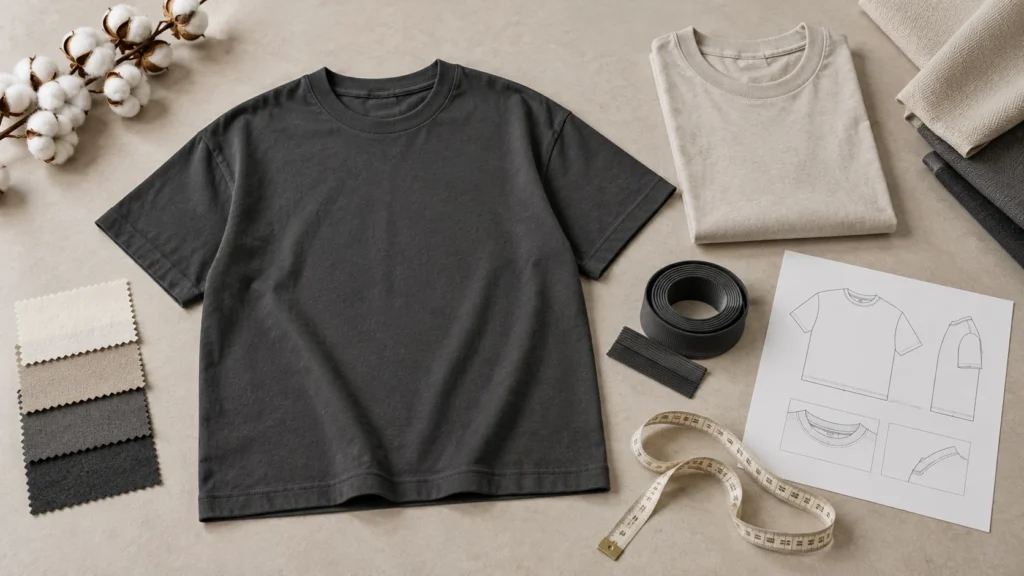
A T-shirt looks simple once it is folded and packed. Before that, it has passed through several different kinds of work: making the fabric, defining the shape, cutting the pieces, joining them and finishing the garment. Most everyday T-shirts are made from knitted fabric. For a typical cut-and-sew style, yarn is knitted into fabric, the […]
Private Label Clothing Manufacturers: What to Compare Before You Order
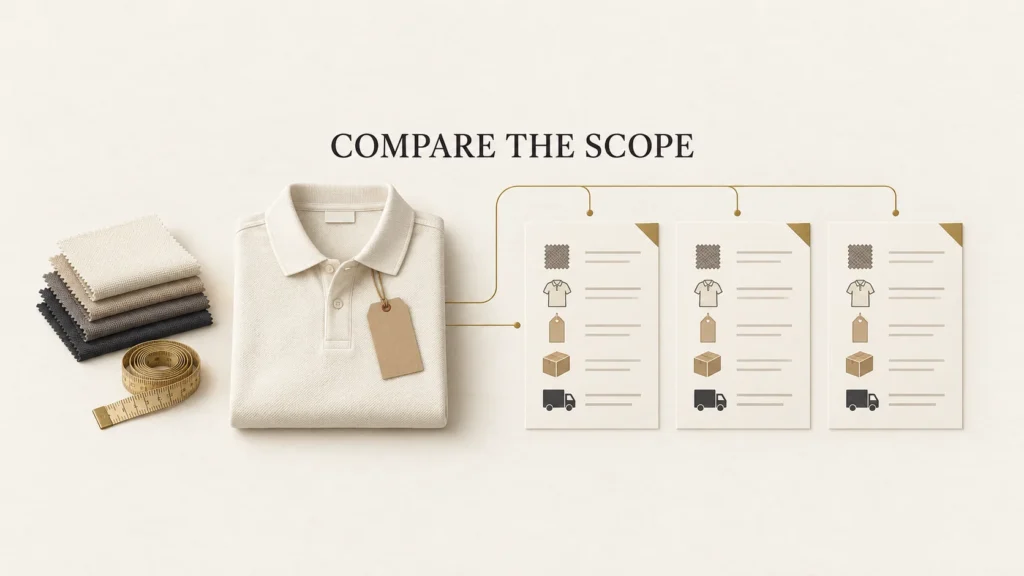
How Do You Choose a Private Label Clothing Manufacturer in China? Short answer: decide whether you are branding a ready-made style or developing a custom product, then compare factories against the same tech pack, fabric, fit, trims, quality checkpoints, quantity and delivery terms. A lower quote is not comparable if it excludes sampling, labels or […]