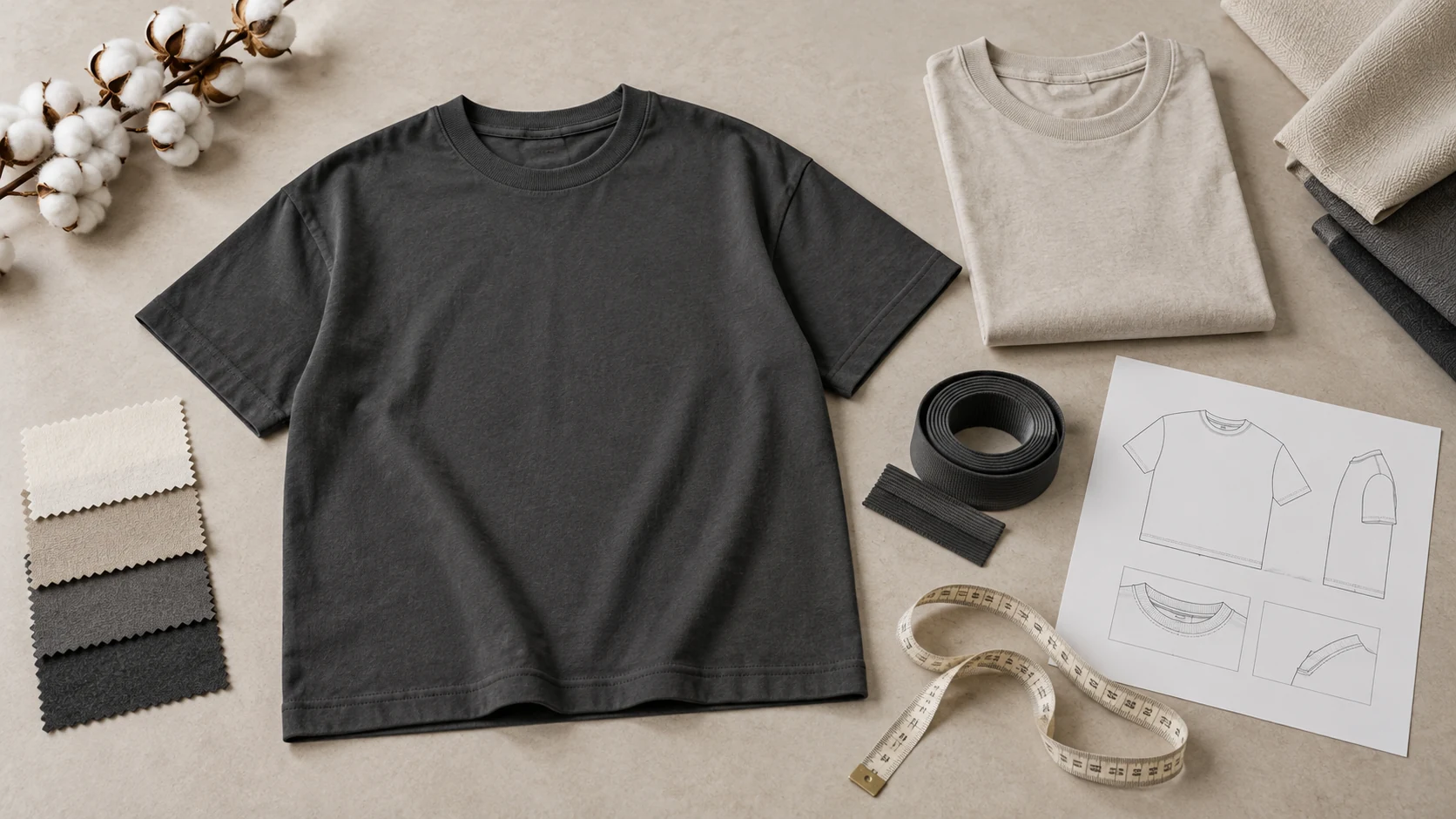
A T-shirt looks simple once it is folded and packed. Before that, it has passed through several different kinds of work: making the fabric, defining the shape, cutting the pieces, joining them and finishing the garment.
Most everyday T-shirts are made from knitted fabric. For a typical cut-and-sew style, yarn is knitted into fabric, the fabric is prepared and cut to a pattern, and the body, sleeves and neckline are sewn together. Decoration, finishing, inspection and packing complete the process.
The exact order can change. A fabric-dyed plain tee does not follow precisely the same route as a garment-dyed or all-over printed style.
This guide follows a typical short-sleeve jersey T-shirt and explains what happens at each stage. It also separates textile production from garment manufacturing: a clothing factory may purchase fabric from a mill rather than spin the yarn or knit the cloth itself.
In This Guide
- Production overview
- Steps 1–4: yarn, fabric and sample development
- Step 5: fabric relaxation and cutting
- Step 6: sewing and neckline construction
- Step 7: printing, dyeing and washing
- Step 8: inspection and packing
- Choosing printing or garment manufacturing support
- A NOVITA T-shirt project
- Frequently asked questions
- T-shirt specifications and manufacturing cost
The T-Shirt Manufacturing Process at a Glance
A common production route is:
Fiber preparation → yarn spinning → fabric knitting → fabric preparation and finishing → pattern and sample approval → fabric relaxation and cutting → sewing → decoration or garment finishing → inspection → packing.
That line describes the material’s journey, not a rule that every activity happens consecutively in one factory. Product development can run alongside fabric sourcing. Printing may take place before sewing, while garment dyeing happens after the garment has been assembled.
| Stage | What it produces | What a buyer can check |
|---|---|---|
| Yarn and fabric production | Knitted cloth with the specified composition and structure | Material specification and relevant sample or test information |
| Pattern and sampling | An agreed garment shape and construction | Measurements, fit and construction details |
| Cutting | Body, sleeve and trim pieces ready for assembly | Cutting accuracy and material consistency |
| Sewing | An assembled T-shirt | Seam quality, neckline shape and measurements |
| Decoration and finishing | The approved appearance and finish | Artwork, placement, color and garment dimensions after treatment |
| Inspection and packing | Checked garments organized for delivery | Workmanship, labels, size/color breakdown and packing requirements |
1. Fibers Become Yarn
For a cotton T-shirt, the textile process begins upstream with cotton fibers. After harvesting, ginning separates the fibers from the seeds. Further preparation cleans and organizes the fibers before they are spun into yarn.
Carding helps separate and align fibers. Combing, where used, removes some shorter fibers and provides additional alignment. The prepared fibers are then spun into a continuous yarn that can be knitted.
Cotton is not the only starting material. Polyester, cotton-polyester blends and other fibers can also be used. The composition and yarn characteristics influence the fabric that follows, but the composition alone does not describe the finished T-shirt.
Two cotton tees can feel different because of their yarn, knit construction, weight and finishing. If you are deciding between materials rather than studying the production steps, our T-shirt fabric types guide covers those choices separately.
For a garment buyer, the important distinction is who is doing this work. Yarn spinning belongs to the textile supply chain. It should not be assumed to be part of a garment factory’s own operations.
2. Yarn Is Knitted Into Fabric
Many basic T-shirts use single jersey, a knit formed from interlocking loops of yarn. Circular knitting is commonly used to produce this fabric. Depending on the equipment and product, the fabric may be supplied in tubular form or opened into a flat width.
This is different from cutting and sewing the T-shirt. At the knitting stage, there are no sleeves or neck opening yet—only fabric.
The neckband may use a different material, such as rib, rather than the same jersey used for the body. That small component matters because it needs to stretch when the garment is put on and sit correctly around the neckline afterward.
Fabric weight is another part of the specification. GSM means grams per square meter; it measures weight per unit area, not thickness or quality by itself. A production brief needs more than “heavy cotton.” It should identify the composition, knit, target weight and required finish. Our T-shirt GSM guide explains that measurement in more detail.
3. The Fabric Is Prepared for Garment Production
Freshly knitted cloth is not necessarily ready to cut immediately. Depending on the material and intended finish, it may need processes such as washing or scouring, dyeing and finishing.
Finishing can influence hand feel, width and dimensional stability. For some knitted fabrics, mechanical processes such as compaction are used as part of shrinkage control. The correct treatment depends on the fabric; it is not one identical recipe for every tee.
For a fabric-dyed T-shirt, the cloth is colored before cutting. For a garment-dyed style, the garment is assembled from suitable prepared fabric and dyed later. These routes require different planning and approval references.
The fabric should be assessed against the agreed requirements before bulk cutting. Relevant checks can include appearance, shade, usable width, weight and performance such as dimensional change after washing. Tests and acceptance limits should be agreed for the project rather than assumed from a generic checklist.
For example, matching a fabric swatch before production does not answer whether the finished tee will retain its approved measurements after the specified wash treatment. That question needs its own check.
4. The Design Becomes a Pattern and an Approved Sample
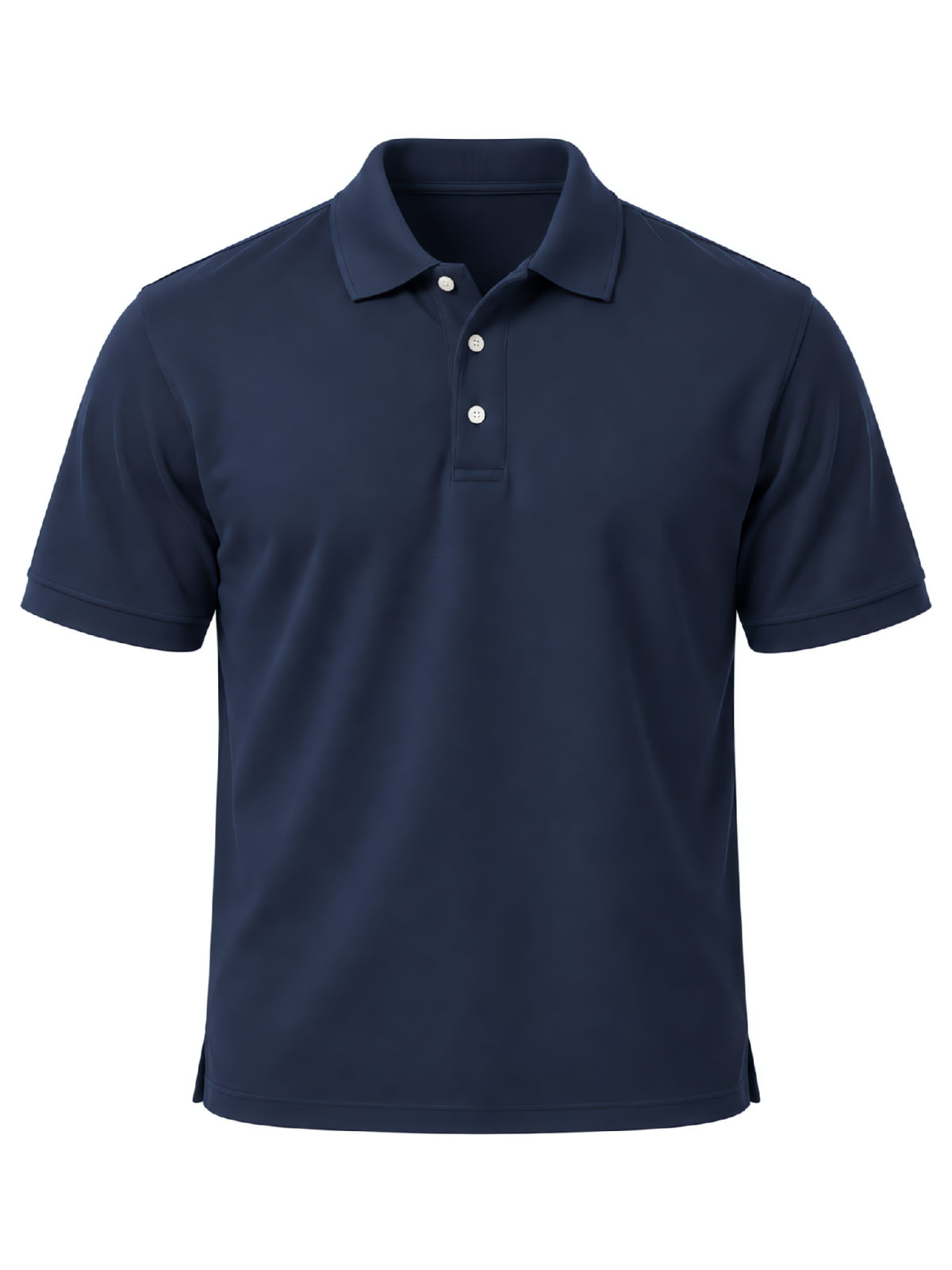
The pattern turns the product’s shape into pieces that can be cut and joined. For a typical set-in-sleeve T-shirt, those pieces include the front, back, sleeves and neckband, with any additional parts such as a pocket or neck tape.
A reference photograph can show the look a brand wants. It rarely establishes every measurement, seam allowance or construction detail.
During development, the sample gives the buyer a way to evaluate the actual garment:
- Does the body have the intended width and length?
- Is the sleeve shape and opening correct?
- Does the neckline sit as expected?
- Are the seam and hem constructions suitable?
- Does the selected fabric behave as expected in this fit?
Patterns for other sizes are developed through grading. That means changing defined measurements across the size range, not simply enlarging the whole garment uniformly.
Once the fit and construction are approved, the production team needs a clear specification and sample reference. The sample development guide explains the approval stages; bulk cutting should follow the approved specification and sample version.
5. Fabric Is Relaxed, Laid Out and Cut
Knitted fabric can be under tension when it is rolled, moved or spread. Allowing it to relax under appropriate conditions helps the cutting team work with its dimensions more consistently. The required handling depends on the fabric and should not be reduced to a universal number of hours.
A marker arranges the pattern pieces within the usable fabric width. It helps plan cutting and material use while respecting the relevant requirements for fabric direction, prints and matching.
The cloth is then laid out and cut using a method suitable for the order and equipment. The objective is to produce the correct shapes accurately, not simply to cut as quickly as possible.
Cut pieces need to remain identifiable by style, size and, where relevant, material batch or shade group. Mixing otherwise similar pieces can create problems later—for example, a body and sleeve that do not match in shade.
Some tees use a tubular body construction without side seams. Others have separate front and back pieces joined at the sides. Neither route should be assumed for an order unless it is part of the specification.
6. The Pieces Are Sewn Into a T-Shirt
At this point, the fabric pieces begin to look like the final garment. A common assembly sequence joins the shoulders, attaches the neckband, sets the sleeves, closes the sides and underarm seams, and finishes the hems. The order can vary with the construction and factory method.
Overlock stitches are commonly used to join and finish seams in knitted garments. Coverstitch is commonly used for hems and some finishing operations. The suitable stitch, thread, seam allowance and settings depend on the garment and fabric.
Why the neckline deserves its own check
The neckband and body opening need to work together. If their dimensions or the sewing tension are unsuitable, the neckline may ripple, gape or pull out of shape.
A buyer should assess the sewn neckline rather than judge the rib in isolation. Look at its shape on the garment, the seam appearance and its behavior after the agreed care or finishing process.
Hems deserve similar attention. A neat line of stitching is useful, but it should not conceal skipped stitches, excessive tension or a finish that behaves poorly when the garment stretches.
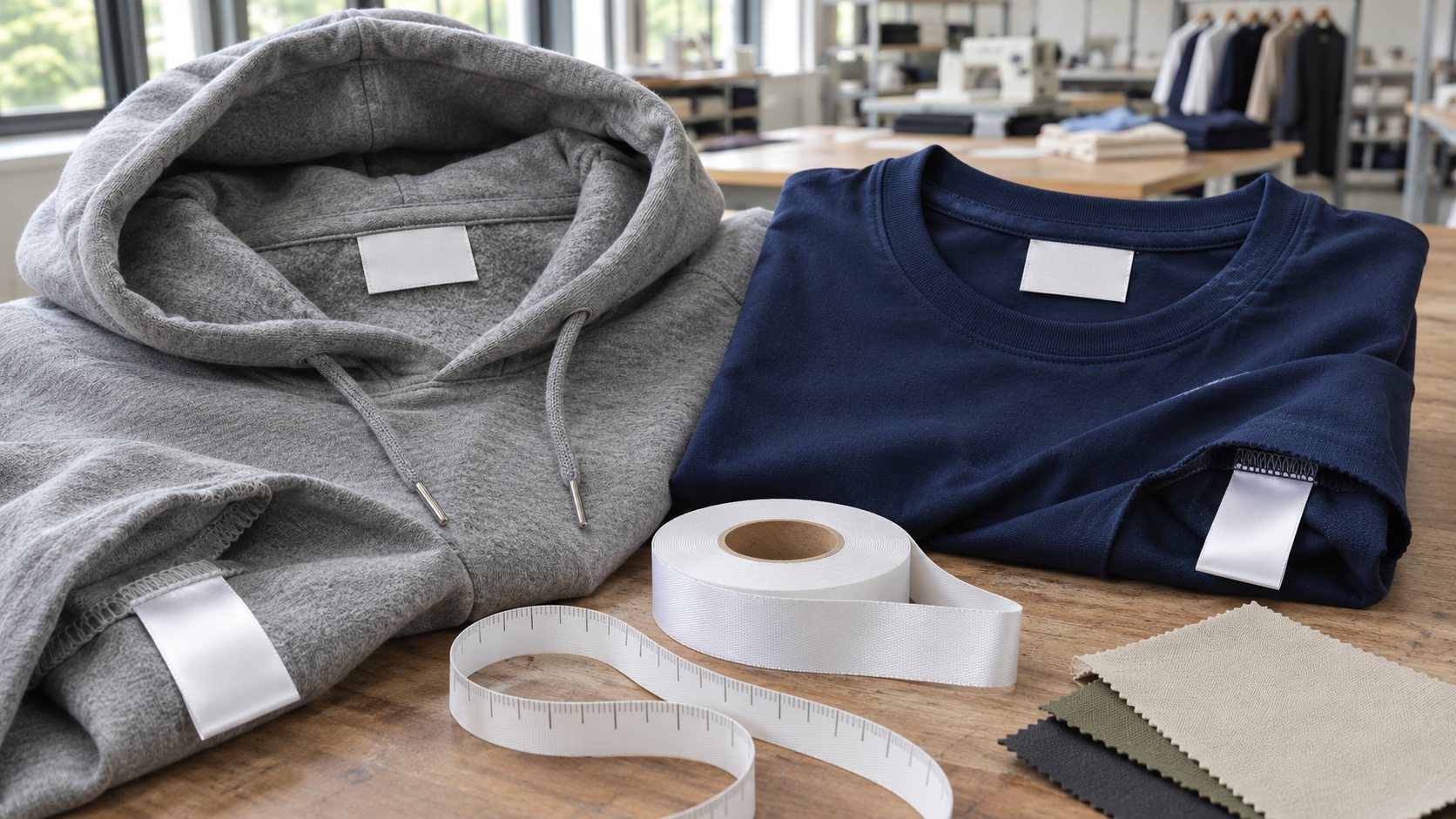
Labels are attached at the appropriate stage for the approved construction. A label caught into a seam needs to be planned before that seam is closed; it is not always a final operation after the T-shirt is complete.
7. Printing, Embroidery, Dyeing and Washing Are Scheduled Around the Product
There is no single finishing sequence for every T-shirt.
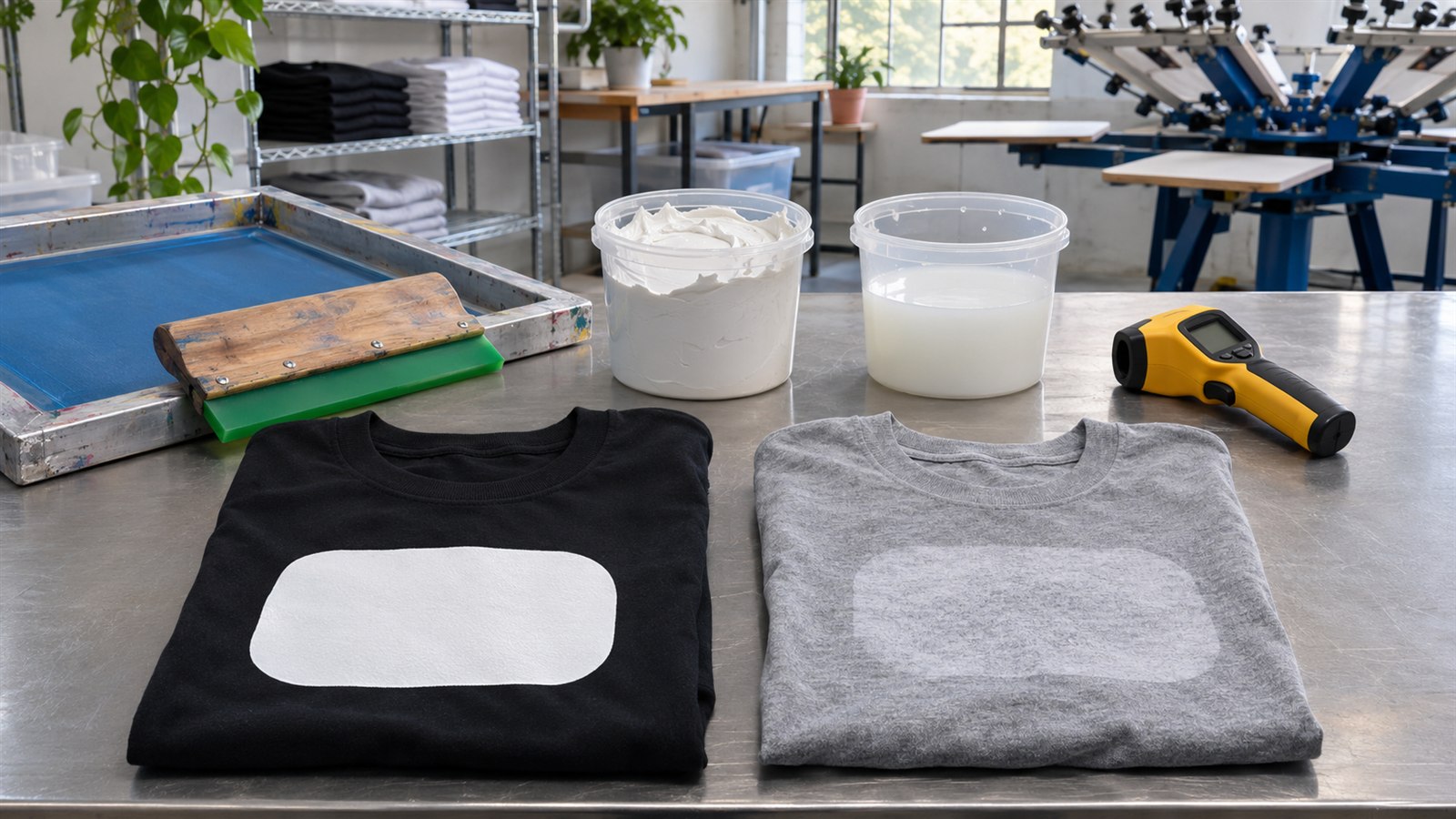
A simple chest print may be applied to an assembled blank garment. An all-over pattern may need to be printed on fabric or cut panels before sewing. Some embroidery placements are also easier to handle before a section is closed.
Garment dyeing, by definition, takes place after the garment has been assembled. It can affect the fabric, thread, trims, color and measurements, so those choices need to be compatible with the planned treatment. Garment washing may also change appearance and dimensions.
These examples explain why two shirts with similar silhouettes can follow different routes:
| Product | Typical planning difference |
|---|---|
| Plain fabric-dyed tee | Cloth is colored before cutting; the sewn garment may need only the specified finishing |
| Chest-print tee | The approved print can often be applied after garment assembly |
| All-over printed tee | Artwork alignment and panel or fabric printing may need to be planned before sewing |
| Garment-dyed tee | Suitable materials and trims are selected for dyeing after assembly |
The route should be confirmed against the product. A generic process chart cannot decide it for you.
We keep printing-method comparisons in the separate shirt printing guide. If your brief calls for a dyed or worn-in appearance, the garment-dyed versus vintage-wash article explains those finishing choices.
8. Finished Garments Are Checked and Packed
Inspection needs to evaluate the garment in the state that will be supplied. When an order includes dyeing or washing, checking measurements only before that treatment leaves an important gap.
The inspection scope may cover measurements, workmanship, seams, color, fabric defects, decoration, labels and packing. Relevant tests and tolerances should be defined before production, with findings assessed against the approved specification.
For a T-shirt, practical checks include the neckline, shoulder seams, sleeve and bottom hems, print placement and overall dimensions. A twist or distortion that appears after washing may need investigation into the fabric, finishing and construction rather than an immediate assumption that sewing alone caused it.
For measurements, wash conditions and sample approval records specific to dimensional change, use our T-shirt shrinkage testing checklist.
After the agreed checks, garments are folded and packed according to the order requirements. Size and color identification matter here: correctly manufactured tees still need to reach the buyer in the right quantity breakdown.
Our apparel quality-control checklist covers the wider inspection questions without repeating them all here.
Do You Need Printing Services or Garment Manufacturing?
If an existing blank T-shirt already has the fabric, fit and construction you want, a printing supplier may be the right starting point. Your main task is to specify the artwork, placement and decoration requirements.
If you need to change the garment itself—its fabric, measurements, neckline or sleeve shape—confirm that the supplier can support garment development and manufacturing as well. Some printing businesses offer those services or coordinate them through partners; the company label alone does not establish its scope.
For example, adding a chest graphic to an available tee is a different project from developing a shorter body and wider sleeve in a different jersey. Resolve the garment requirements before treating those quotations as comparable.
Our private label clothing manufacturers comparison guide explains how to compare production routes, branding and quotation scope once you know which support you need.
T-Shirt Manufacturing Cost: Which Specifications Change the Quote?
The production stages above become costing decisions once the garment specification is set. Fabric, pattern dimensions, decoration and finishing determine which materials and operations the supplier needs to price. Compare quotations using the same garment revision and order split.
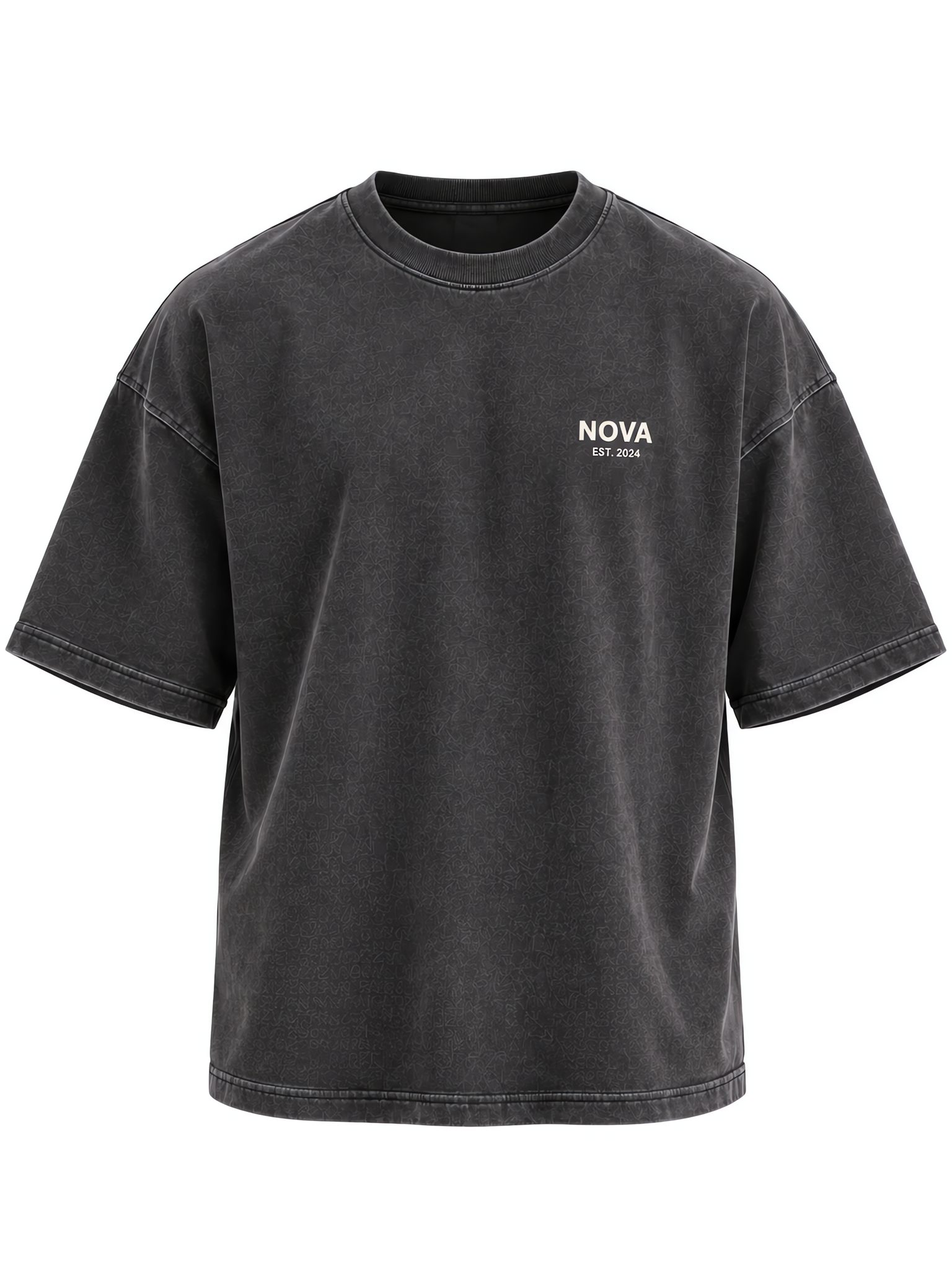
NOVITA’s 260 GSM boxy T-shirt reference lists a drop-shoulder shape, a back puff print and a standard custom MOQ of 100 pieces; confirm the style, colour and size breakdown for the project. Those published details give a concrete brief to discuss. The listing supplies no unit price, and a different weight, block or decoration needs its own review.
For fabric, state the composition, construction, target finished weight and finish alongside the measurement chart. A wider or longer body can change material consumption at the same GSM. Ask whether the supplier has priced an available fabric or a new material order. The selected size distribution and cutting requirements also belong in that calculation.
For decoration, send the actual artwork, finished dimensions and position. A back graphic and a small chest logo leave different work to price. If the method is undecided, request separately identified options and review the proposed result. Keep development and setup charges visible, including what would be charged again on a reorder.
Washing or dyeing adds requirements for materials, trims and the approval sample. Confirm which treatment the quote includes and which dimensions describe the finished garment. A price based on a plain body cannot be compared with a washed and decorated version until those differences are identified.
Check quantities by style and colour before asking for a volume alternative. A total of 200 pieces divided equally between two colours gives 100 per colour; divided equally between four colours it gives 50. This arithmetic example shows why the order total alone cannot establish that each colour meets the applicable minimum.
Compare the Garment Specification With One Alternative
Choose the details your brand can change, then request a separate alternative while keeping the rest of the brief fixed. Use the record below to check the product differences before selecting an option. It is an illustrative worksheet, with no customer order or quoted price.
| Decision | Keep in the base specification | Review if it changes |
|---|---|---|
| Fabric | Swatch, composition, weight and finish | Hand feel, appearance and any fit effects on the sample |
| Body and sleeves | Measurements, base size and grading requirements | Silhouette and measurements on the intended wearer |
| Decoration | Artwork revision, method, size and position | The actual decoration sample and required care performance |
| Finish | Specified wash or dye treatment and approval reference | Colour, appearance and finished dimensions |
| Order split | Units by style, colour and size | Applicable minimums, total spend and inventory commitment |
Ask the supplier to identify each departure from the base specification and return the price and included work for that version. If several details change together, record them together; do not assign a saving to one change without the supplier’s breakdown.
Before accepting the alternative, update the specification and identify any new swatch, fit sample or decoration approval. Confirm that the quotation still applies to that approved version. Keep sample fees, revision work, packing and delivery exclusions separate from the garment price so your purchase budget covers the scope you need.
For the full order request and commercial fields, use the garment RFQ checklist. This section supports the product and process decisions; the RFQ guide holds the general inquiry template.
How This Process Applies to a NOVITA T-Shirt Project
NOVITA develops and manufactures men’s casualwear through its factory in Foshan, Guangdong, China. For a custom T-shirt project, our role is to connect the buyer’s product reference with the materials, fit, construction and finishing required for garment production.
The earlier yarn and fabric stages belong to the upstream textile supply chain; our focus here is garment development and manufacturing.
A project can start from a tech pack, reference sample or clear product images. We discuss the unresolved specifications, develop the sample and confirm the production requirements before bulk manufacturing. You can review the T-shirt product range for examples of the styles and details to include in your brief.
Our standard custom MOQ is normally 100 pieces; confirm the style, colour and size breakdown for each project. Sampling typically takes 7–15 days. Bulk production is 60 days after sample approval, depending on quantity, fabric and customization. These are project-planning guidelines, not a promise that every style follows the same schedule.
Have a T-shirt you want to develop? Whether you have a finished tech pack, a reference T-shirt or an initial idea, we can discuss what needs to be defined for production. Send any images or specifications you have, your proposed quantity by style and color, and any fabric, printing or washing requirements.
If a detail is undecided, include the question. Measurements, materials and construction still need to be resolved before the sample and quotation can accurately reflect the product you want.
Send NOVITA your T-shirt reference and production requirements.
Frequently Asked Questions
Are T-shirts knitted or woven?
Most everyday tees use knitted fabric, often single jersey. The fabric is knitted first and, for a typical cut-and-sew tee, then cut and sewn into the garment. Other constructions exist, so confirm the fabric and garment route for the actual style.
How are cotton T-shirts made?
Cotton fibers are prepared and spun into yarn, the yarn is knitted into fabric, and the fabric is prepared for cutting. Pattern pieces are then cut and sewn into the T-shirt. Dyeing, decoration and finishing follow the route agreed for that product, with final checks and packing before delivery. NOVITA’s Factory Tour shows selected fabric cutting and sewing operations; the clips are not a step-by-step record of a particular T-shirt order.
Are T-shirts always dyed before they are sewn?
No. Fabric-dyed tees use cloth colored before cutting, while garment-dyed tees are dyed after assembly. The selected route affects material, thread, trim and sample planning.
Is printing the same as manufacturing a T-shirt?
No. A printing business may decorate an already-made blank garment. Custom T-shirt manufacturing also involves the garment’s fabric, pattern, cutting and sewing. Printing is one possible part of that process. Compare available decoration methods in our T-shirt printing guide.
Do all T-shirts have side seams?
No. Some use tubular body construction, while others have separate front and back pieces joined with side seams. The intended construction should be stated in the specification.
Why should a buyer check measurements after washing or dyeing?
Those treatments can change garment dimensions and appearance. Assessing the finished state against the agreed specification helps determine whether the supplied garment meets the approved requirements.
How long does it take to manufacture a custom T-shirt order?
For NOVITA custom projects, sampling typically takes 7–15 days. Bulk production is 60 days after sample approval, depending on quantity, fabric and customization. Initial specification work, sample revisions and transport to the buyer add time outside those stages. Confirm the full project schedule rather than counting from the first inquiry or treating the bulk estimate as a delivered-by date.