
A carton can be ready for collection while the garments inside are not ready for sale. A pre shipment inspection gives apparel buyers evidence to make that distinction before dispatch. Its usefulness depends on what happens before the inspector arrives: clear approvals, traceable stock and a factory self-check that has already identified unresolved problems.
For brand owners and sourcing teams buying cut-and-sew garments in China, the report needs to identify which goods were inspected and which approved requirements were checked. The order also needs a named decision-maker with authority to hold or release the shipment.
What a pre shipment inspection actually checks
A pre-shipment inspection compares finished goods with the purchase order, approved sample and current specifications. QIMA’s procedure guide describes checks covering quantity, workmanship, packaging, product specifications and relevant safety or functional checks.
For apparel, the inspection brief should translate that scope into specific questions:
- Identity and quantity: Are the styles, colours, sizes and assortments consistent with the order and packing list?
- Workmanship: Are seams secure, panels consistent, decoration correctly placed and garments free from unacceptable stains or damage?
- Measurements: Do recorded measurements meet the agreed points of measure and tolerances?
- Trims and operation: Are buttons, zippers and other components the approved items, correctly attached and functional?
- Labels and packing: Do garment labels, barcodes, hangtags, folding and carton marks match the approved files?
Use the apparel quality control checklist to turn these categories into a product-specific brief. A jacket closure and a polo placket need different checks; “workmanship satisfactory” does not explain either result.
A sampled inspection does not establish that every garment is defect-free. It also does not replace laboratory evidence for requirements outside the agreed on-site scope. Ask which checks were performed, which documents were reviewed and which requirements remain untested.
For sample selection and acceptance/rejection limits, use NOVITA’s AQL sampling guide for clothing buyers. Agree the sampling plan before inspection rather than negotiating it after defects appear.
When should a shipment be inspected for quality?
Schedule the final check while there is still time to correct problems, but late enough that the stock represents what will actually ship.
QIMA’s published procedure says 80% of the order must be finished and packed for its quantity-verification stage. Treat this as the provider’s stated readiness condition, not a universal booking rule. Confirm the required completion and packing status with the inspector and buyer before fixing the appointment. Source: QIMA.
For a pre shipment inspection in China, ask the factory for a readiness statement broken down by style, colour and size. “Production nearly finished” can hide an unfinished colourway, missing labels or cartons waiting for final assortment checks. Record what is finished, what is packed and what remains outside the available stock.
Book around the corrective-action window, not just the vessel cutoff. Sewing repair may require opening a lining; shade sorting may change garment allocation; repacking can change carton quantities. Leave room for verification and updated shipping documents if these actions become necessary.
Do not let the final inspection become the first meaningful check on fabric shade or garment construction. Those decisions belong earlier in production. PSI verifies the resulting shipment; it is a poor place to discover that the approved standard was never settled.
Critical, major and minor defects on garments
Classify defects by their consequences, not by how easy they are to repair. QIMA distinguishes unsafe or non-compliant defects from significant functional or appearance defects and smaller cosmetic issues. The examples below apply that framework to apparel; they are suggested classification decisions, not universal rules imposed by a sampling standard.
| Defect class | Apparel examples | What the inspection brief should establish |
|---|---|---|
| Critical | A broken needle fragment or exposed sharp component that could injure the wearer; a confirmed safety-related nonconformity | The safety requirement, escalation route and shipment-hold instruction; do not treat a known hazard as an ordinary cosmetic allowance |
| Major | Broken stitching that leaves a seam open; skipped stitches that compromise seam security; a garment outside agreed size tolerances; the wrong zipper or trim that changes function; conspicuous panel-to-panel shade variation | The affected function, measurement tolerance, approved component or appearance reference |
| Minor | An isolated untrimmed thread end or small cosmetic irregularity that does not weaken the seam, change fit or breach the agreed appearance standard | The agreed visibility, location and appearance criteria; an issue is not automatically minor because it is small |
Broken and skipped stitches need context. A broken stitch at a stressed seam can affect wearability. An isolated skipped stitch in a decorative area may have a different consequence, provided it does not undermine the construction. Photograph the location and explain the effect rather than reporting only “stitch defect.”
Shade variation needs a reference. Compare the garment with the accepted shade standard and check consistency between its panels. Intended wash variation should be judged against the approved finished appearance, not an expectation of perfectly uniform colour introduced at inspection.
Wrong size and wrong trim need separate findings. A size label can be incorrect even when the garment measures correctly. A zipper can operate smoothly yet still be the wrong approved component. Record identity, measurement and function separately.
NOVITA’s garment zipper inspection checklist makes this distinction explicit: component identity, operation after sewing and performance evidence answer different questions. None should be inferred from the others.
What the factory must prepare before the inspector arrives
A useful pre shipment inspection starts with a factory readiness file, not a specially selected display of good garments. Ask the factory to complete its own check against the same requirements the external inspector will use. The internal record supports readiness; it does not replace independent selection and inspection.
| Readiness item | What the factory should have available | What the buyer should confirm |
|---|---|---|
| Internal self-check record | Dated findings by style or production lot, measurement results, repairs and unresolved issues | The record covers the stock being offered for inspection, not an earlier sample |
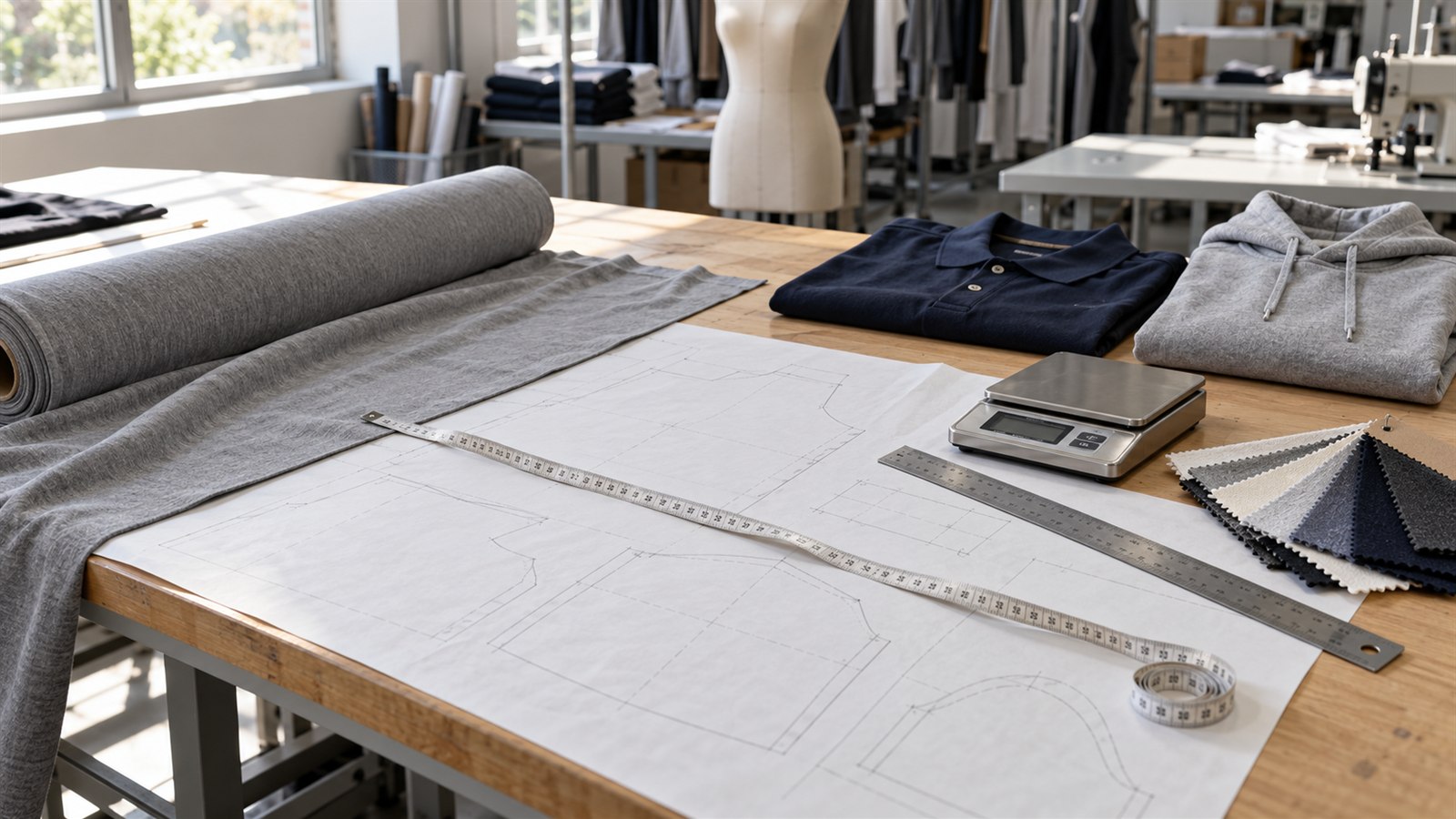
| Approved sample and specification | Identified production sample, current tech pack, measurement method and approved exceptions | Sample and document versions agree; superseded comments are clearly marked |
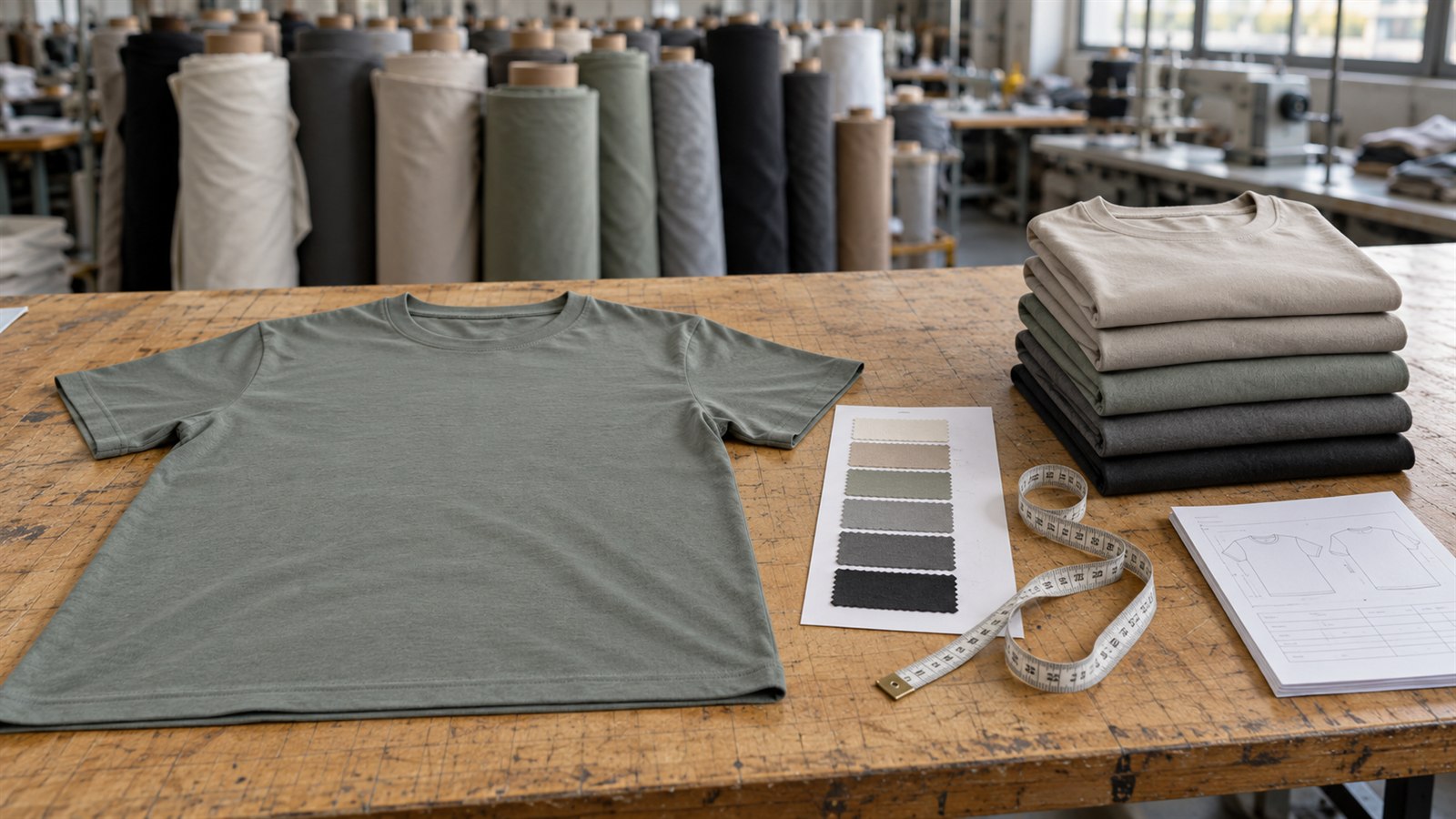
| Colour cards and shade standards | Approved colour references and accepted shade-band submissions | References identify the material and approval stage being assessed |
| Dye-lot and roll records | Links between fabric lots, rolls, cutting allocation and affected garment groups where maintained | The factory can investigate a shade issue without guessing which stock is affected |
| Trim and label approvals | Component cards, label artwork and placement instructions | Hardware, size identification and branding match the approved versions |
| Packing confirmation | Available quantities by style, colour and size; carton list and outstanding packing work | The inspector can identify and access the stock included in the inspection lot |
| Inspection access and support | Accessible cartons, suitable working space, measuring equipment and a responsible factory contact | The inspector selects samples independently and can record findings without obstruction |
Make document ownership clear. If the buyer changes a label file, the factory needs an identifiable replacement rather than conflicting attachments in a message thread. If a sample approval excludes an unresolved feature, keep that exclusion visible.
NOVITA’s fabric shade-band approval guide separates approval of material before cutting from approval of appearance after a garment-finishing process. Apply that distinction to the readiness file: a pre-wash swatch cannot by itself establish acceptance of the final washed garment. Retain the relevant references for both stages.
For polos, the published collar and placket checklist recommends recording approvals by sample version and marking partial approvals separately. That matters at shipment inspection: an approved placket does not resolve a collar comment that was left open.
Failed PSI: rework, re-inspection and who pays
A failed result should trigger a controlled hold and corrective-action decision. It should not become an informal agreement to remove the photographed garments and ship everything else.
Pro QC’s guidance on failed inspections describes containment, sorting, rework and verification. Ask the factory to investigate the affected stock beyond the garments found defective in the sample.
Contain the affected goods and define the repair
Ask the factory to identify the potentially affected lot, separate it from released stock and investigate the cause. A sewing issue may follow an operation or production run; a shade issue may follow a fabric lot. Do not assume either affects only the garments selected by the inspector.
Agree the correction before work begins. Seam repair must restore the approved construction without introducing needle damage or distortion. Trim replacement may disturb surrounding stitching. Shade mismatch may require sorting, panel replacement or garment replacement rather than a cosmetic repair.
Require a corrective-action record showing the defect, affected stock, responsible person, repair or replacement method and revised readiness date. Reconcile quantities after any goods are removed or replaced. Carton labels and packing lists must describe the shipment that remains.
Verify the result before release
The inspector should check whether corrections worked and whether rework introduced other problems. Pro QC also recommends reviewing quantities, packaging and labelling during re-inspection. Agree the scope with the inspection provider. Where re-inspection is required, factory repair photographs are supporting records and cannot replace that verification.
The buyer should issue written release or a clearly bounded concession. A concession needs to identify the accepted deviation and affected stock. It should not silently change the specification for future orders.
Set cost responsibility in the purchase order
Do not assume an inspection failure automatically determines who pays. Put responsibility for sorting, rework, replacement, repeat inspection and resulting logistics changes into the commercial agreement. Specify how responsibility is handled if the cause is a supplier nonconformity, a buyer revision or an ambiguous approval.
Request an itemised inspection quote and agree any repeat-visit charges before booking. Use that quotation and the signed order terms to budget for inspection and allocate the costs of a failed result.
The evidence pack buyers should receive
A pre shipment inspection report should let the buyer trace the pass/fail decision to the checks performed. Request the detailed findings and supporting records with the cover sheet.
QIMA describes an illustrated report with defect counts, photographs and findings. Ask for the following detail in the inspection brief, and distinguish inspector-issued evidence from factory supporting records:
- Order and lot identity: Purchase order, style references, inspection location and date, available quantities, packing status and any stock excluded from the inspection.
- The requirements used: Specification and sample versions, approved exceptions, defect classifications and the agreed sampling and acceptance criteria.
- Selection and coverage: Sample quantities and relevant style, colour and size coverage; explain any limitation that could affect the decision.
- Measured and functional results: Actual measurements against tolerances and recorded closure or other agreed functional checks. “OK” without a requirement or result is weak evidence.
- Defect evidence: Counts by class, garment identification, defect location, contextual images and close-ups. Where findings repeat, show how the affected stock was identified.
- Packing evidence: Carton marks, garment labels, assortment findings and relevant barcode checks against the approved data.
- Open issues and disposition: Incomplete checks, missing test evidence, failed findings, corrective actions, re-inspection references and the buyer’s release decision.
Keep evidence that allows a later reviewer to connect the report to the actual goods. A close-up of a seam may explain the defect but not identify its style or size. A carton photograph may show a mark but not prove the contents match it. Request both context and detail where they affect a decision.
For colour disputes, photographs support identification but should not be the sole acceptance reference. Retain the labelled physical standard and record the comparison conditions. Keep the original failed report alongside the corrective-action and re-inspection records rather than replacing it with the final pass.
FAQ
Is a pre shipment inspection the same as checking every garment?
No. A sampled inspection assesses selected goods under an agreed plan; it does not document the condition of every garment. If the buyer requires full screening for a particular risk, specify that work separately and agree how its results will be verified.
Can the factory choose the samples for the inspector?
The factory should identify the stock and make it accessible, not present a hand-picked set as independent random samples. Specify who selects the samples in the inspection brief. Ask the report to record any access restriction or unavailable stock that limits that selection.
Does a passed inspection prove the garments meet every legal requirement?
No. Read the scope and exclusions. On-site visual and functional checks do not establish compliance with requirements that need other evidence. Request relevant test reports or documentation separately and check that they apply to the product, materials and destination concerned. Do not confuse a shipment-quality decision with complete regulatory clearance.
What should buyers agree before booking a pre shipment inspection?
Agree the inspected lot, readiness condition, approved references, defect classifications, sampling plan, reporting requirements and release authority. Include the failed-inspection process and cost responsibilities in the order terms. The factory should know what it must prepare, while the buyer should know what evidence will support the shipping decision.
Before booking, send the factory the readiness checklist and ask it to identify missing approvals or records. Resolve those gaps before confirming that the shipment is ready for inspection.
Sources: QIMA — the pre-shipment inspection procedure and Pro QC — what happens after a failed pre-shipment inspection.