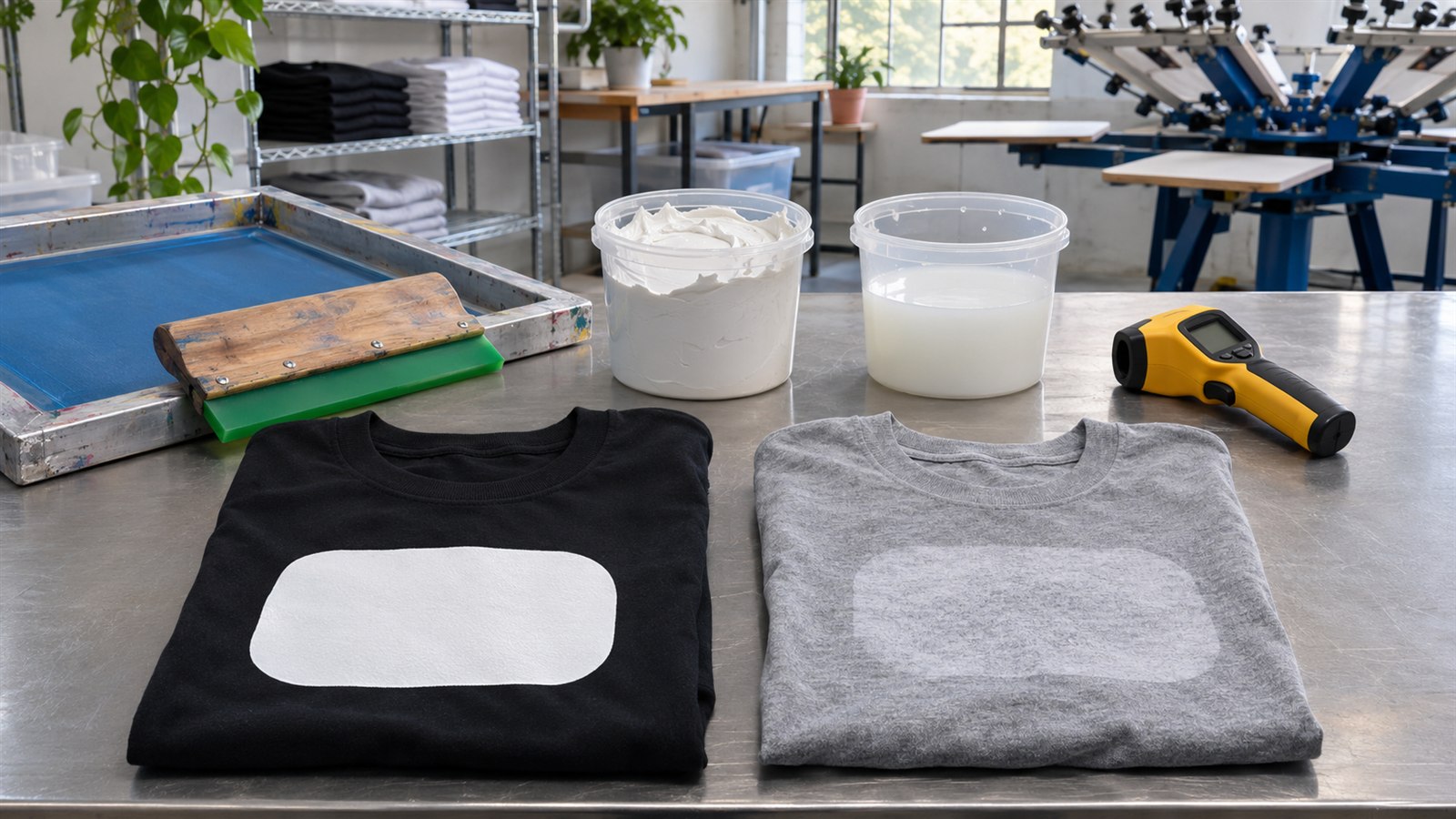
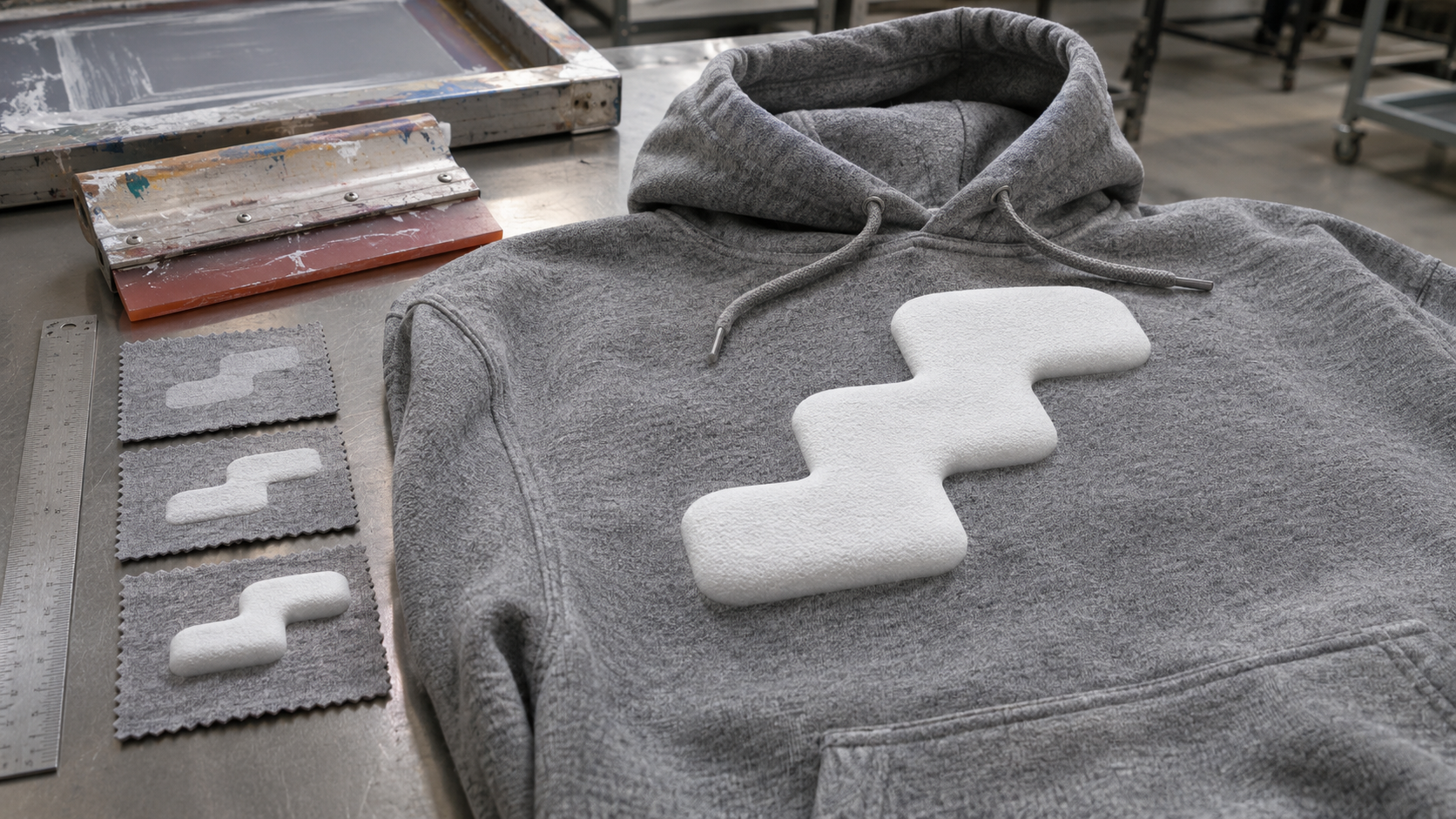
Puff print is a screen print made with plastisol ink mixed with a puff additive, so the ink rises into a raised, soft 3D surface when it is cured. For a bulk hoodie or T-shirt order, specify the ink system, artwork limits, print size and position, puff height, and a wash test, then approve a physical strike-off before production.
This guide is for brand owners and sourcing teams ordering puff-printed hoodies, sweatshirts or T-shirts from a factory. Ink data below comes from manufacturer bulletins checked in November 2026; treat any number as a starting point to test on your own fabric, not a universal setting.
What is puff print, and how is it different from other raised logos?
Puff print differs from other raised decorations in how the height is made: an additive in the ink expands under heat, instead of thread, foam, a pressed transfer or extra ink layers. That choice changes the surface feel, the detail you can hold and the way the logo is approved, so settle the method before you write the spec.
| Method | How the raised effect is made | Surface feel | Best fit | Watch for |
|---|---|---|---|---|
| Puff screen print | Puff additive in plastisol ink expands when cured | Soft, rounded, slightly matte | Bold logos and lettering on hoodies and tees | Fine lines blur as the ink expands |
| High-density screen print | Thick ink deposit built up through a thick stencil | Sharp, flat-topped edges | Crisp graphics that need straight walls | Needs a dedicated stencil setup and its own sample |
| 3D puff embroidery | Satin stitches sewn over a foam layer | Stitched, firm | Caps and small chest logos | Small or detailed shapes are hard to cover cleanly |
| Puff heat transfer | Pre-printed puff transfer pressed onto the garment | Similar to puff print | Small runs or many artwork versions | Adhesion depends on press settings and fabric |
| Embossing or debossing | Fabric pressed into a shape with a heated die | Raised or sunken fabric, no added ink | Tonal, ink-free logos | Needs a die; result depends on fabric |
If the logo is mostly bold shapes and you want a soft streetwear hand feel, puff screen print is usually the right method. If the artwork has thin outlines or small type, consider high-density print or flat print with a puff accent on the main shape. For a comparison of thread and ink on the same logo, see our guide to embroidery vs screen printing.
What should a puff print spec include?
A puff print spec should name the ink and additive, the artwork file and size, the exact position measured from a fixed point, the target puff height as an approved physical reference, the colour standard, and the wash test the print must pass. Writing “3D puff logo” alone leaves every one of those decisions to the factory.
| Spec field | What to write | Why it matters |
|---|---|---|
| Print method | Screen print, plastisol ink with puff additive | Stops a switch to puff vinyl or a transfer without approval |
| Ink and additive | Ink series and additive the factory will use; mix ratio recorded on the approved strike-off | Additive ratios differ by ink maker |
| Artwork | Vector file name and revision, size in mm, all text outlined | Fixes the shape that will expand |
| Position | Distance from high point shoulder (HPS) or center front, on a named reference size | “Center chest” is read differently on every size |
| Print size across sizes | One size for all, or a graded size per size group | Decide before sampling, not after |
| Puff height | Chosen from low, medium and high strike-offs; keep the approved piece as the standard | Height is easier to agree on a physical sample than in words |
| Colour | Pantone reference plus an approved printed swatch | Puff colours can look lighter after curing |
| Wash test | Test method and number of cycles agreed with the factory | Shows cracking or flattening before bulk |
| Change control | No change to ink, additive, stencil or cure settings without written approval | Protects the approved look |
Additive ratios show why the spec should record the approved mix rather than a number copied from the internet. International Coatings gives a maximum of 10% to 15% by weight for its 220 Puff Additive, while Avient’s bulletin for its 2982 Flexipuff additive says up to 30% by weight. Both are correct for their own inks. Ask the factory which ink and additive it will use, and write the ratio from the approved strike-off into the spec.
Avient’s bulletin also notes that puff colours lighten, and suggests choosing a Pantone colour two shades darker than the target. Approve colour on a printed and cured swatch, not on the ink in the tub. If you already specify ink types for flat prints, our guide to plastisol vs water-based ink covers how those choices are written.
Which artwork works for puff print, and which fails?
Puff print works best with bold shapes, thick strokes and open space between letters, because the ink grows outward as well as upward when it expands. Thin outlines, small type, fine halftones and letters set close together are the usual failures: they fill in, round off or disappear after curing.
Review the artwork against these points before it goes to the factory:
- Strokes and type: keep lines and letters bold. Ask the factory to mark any element it thinks is too thin to hold after expansion.
- Spacing: leave clear space inside letters such as “e” and “a” and between letters, so expanded ink does not join them.
- Large solid areas: Avient warns that a large puff area on lightweight fabric may pucker, and suggests printing it as a mezzotint or dot pattern at about 80% solid instead of a full solid.
- Mixed effects: if puff sits next to flat colours, say which parts puff and which stay flat. Avient’s bulletin says to flash the puff before overprinting in multi-colour work.
- Detail you must keep: if a small element has to stay sharp, print it flat and puff only the main shape.
A simple test is to print the artwork at actual size on paper and look at it from arm’s length. Anything that is hard to read there will be harder to read once it puffs.
Where can puff print go on a hoodie or T-shirt?
Puff print gives the most even result on a flat, single layer of fabric, which is why the bulletin from Avient says results are best when printed directly onto fabric. On a hoodie, that means placing the print clear of seams, the kangaroo pocket edge, zippers, rib and the hood seam, and confirming the position on the actual garment, not only on a flat sketch.
| Garment area | Typical concern | What to confirm |
|---|---|---|
| Front chest on a pullover hoodie | Pocket opening or pocket top seam close below the print | Distance from print bottom to pocket edge on every size |
| Front of a zip hoodie | Zipper and placket split the print area | Left-chest print, or artwork designed in two parts |
| Back | Large print area; possible puckering on lighter fabric | Print size per size group and the solid-versus-dot decision |
| Sleeve | Curved, narrow surface; sleeve seam | Print width that stays clear of the seam |
| Hood | Seam at the center; double layer | Whether the hood is printed before or after sewing |
| T-shirt front or back | Lighter fabric than fleece | Puckering on the strike-off; print size against body width |
Fabric matters too. Avient lists its puff additive for 100% cotton, cotton blends and some synthetics, so confirm the strike-off on the production fabric, not a sample fabric that happens to be in stock. For heavier fleece, our hoodie fabric weight guide explains how GSM is approved.
If the garment is garment-dyed or washed, decide whether the print goes on before or after the wash, and approve a sample made in that same order. A print approved on an unwashed blank does not show how it will look after the wash process.
How should you approve a puff print sample before bulk?
Puff print approval works best in five steps: agree the artwork and spec, approve a strike-off on production fabric, approve a full garment sample, check the print after an agreed wash test, then sign off a reference for bulk. Splitting approval this way lets you trace a later problem back to the step where it was decided.
- Artwork and spec sign-off. Confirm the file revision, size, position, colour reference and which elements puff.
- Strike-off on production fabric. Ask for low, medium and high puff versions of the logo. Choose one and keep it as the physical height standard. Ask the factory to record the ink, additive, mix ratio, stencil and cure settings used for that piece.
- Full garment sample. Check position against the spec on the sample size, edge definition, coverage without pinholes, colour against the swatch, and puckering around the print.
- Wash check. Wash a printed piece using the method and number of cycles agreed with the factory, for example a procedure from ISO 6330:2021, the ISO standard for domestic washing and drying procedures used in textile testing. Look for cracking, peeling, flattening and colour change.
- Bulk reference. Sign and date the approved sample or strike-off, and state that bulk must match it.
Cure settings belong to the ink maker’s data sheet, not to a general rule. Avient’s bulletin for its 2982 Flexipuff additive, for example, lists a flash of 220°F (105°C) and a cure of 320°F (160°C), while the International Coatings data sheet says to always test ink and fabric before any production run. Ask the factory to follow the data sheet for the ink it actually uses, and to keep the record from the approved strike-off.
During bulk, compare early production pieces with the signed reference for height, position and colour. If you also need colour test reports for the garment fabric, our guide to colorfastness testing explains how those are specified.
What changes the cost and timeline of a puff print order?
The cost of a puff printing order depends mainly on how many screens and print positions the design needs, how large the print is, whether puff is combined with flat colours, and how many strike-off rounds it takes to agree height and colour. Each extra colour or position adds setup and approval work.
- Colours and positions: every colour and every print position needs its own screen and its own check. A one-colour chest logo is the simplest case.
- Print size by size group: one print size across all sizes is simpler to set up; graded sizes add screens or setups.
- Strike-off rounds: changing the artwork or height after the first strike-off adds a round before the garment sample.
- Wash sequence: a garment-dyed or washed body that is printed after the wash adds a step to the route and to the sample.
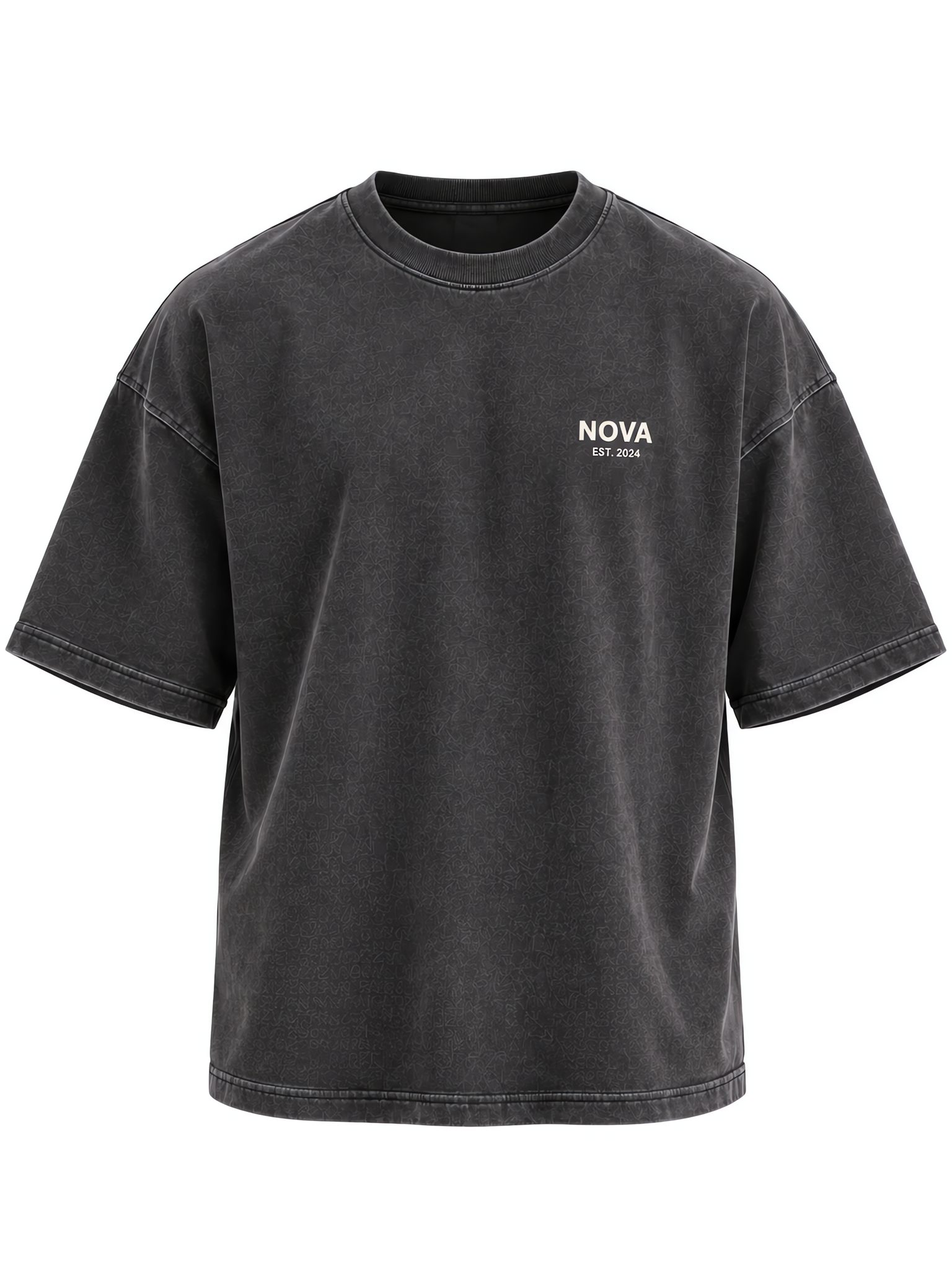
At NOVITA, decoration options include screen printing with water-based, plastisol and puff inks, and 3D puff print, arranged together with cut and sew production at NOVITA’s own garment factory and long-term partner factories in Foshan. Our 260 GSM oversized boxy T-shirt is one reference style with a back puff print. The standard custom MOQ is 100 pieces per style and per colour, with mixed sizes within each colour. Sampling normally takes 7–15 days from confirmation of fabric, measurements, construction and workmanship requirements, and bulk production is generally 60 days after sample approval.
FAQ
What is puff print?
Puff print is a screen-printing technique in which a puff additive is mixed into plastisol ink. When the print is cured with heat, the additive expands and the ink rises into a raised, soft, slightly rounded surface. It is used mainly for bold logos and lettering on hoodies, sweatshirts and T-shirts.
Is puff print good quality?
Puff print can be durable when the ink, additive and cure settings follow the ink maker’s data sheet and the print passes a wash test on the production fabric. Quality problems usually come from artwork that is too fine, prints over seams or uneven areas, or cure settings that were not tested on the actual garment.
Is puff print more expensive than a flat screen print?
Puff print usually needs more setup and approval work than a flat print of the same design. The factory adds the puff additive, prints strike-offs to agree height and checks the cured result, and puff combined with flat colours adds steps. The final price still depends on colours, positions, print size and order quantity.
Can puff print be washed?
Yes. A correctly cured puff print can be washed, but the result depends on the ink system, cure and fabric. Agree a wash method and number of cycles with the factory, wash a printed sample before bulk approval, and check it for cracking, peeling, flattening and colour change. Washing inside out is a common care instruction.
Next step
Send your artwork file, the garment style or tech pack, the print positions and sizes, and the quantity per colour. We will confirm whether the artwork suits puff print, which elements should stay flat, and how the strike-off and sample will be approved. Browse hoodies and sweatshirts, read how clothing sample development is run, or contact our team with your puff print project.
Sources checked November 2026: Avient 2982 Flexipuff Additive bulletin, International Coatings 220 Puff Additive data sheet and ISO 6330:2021.