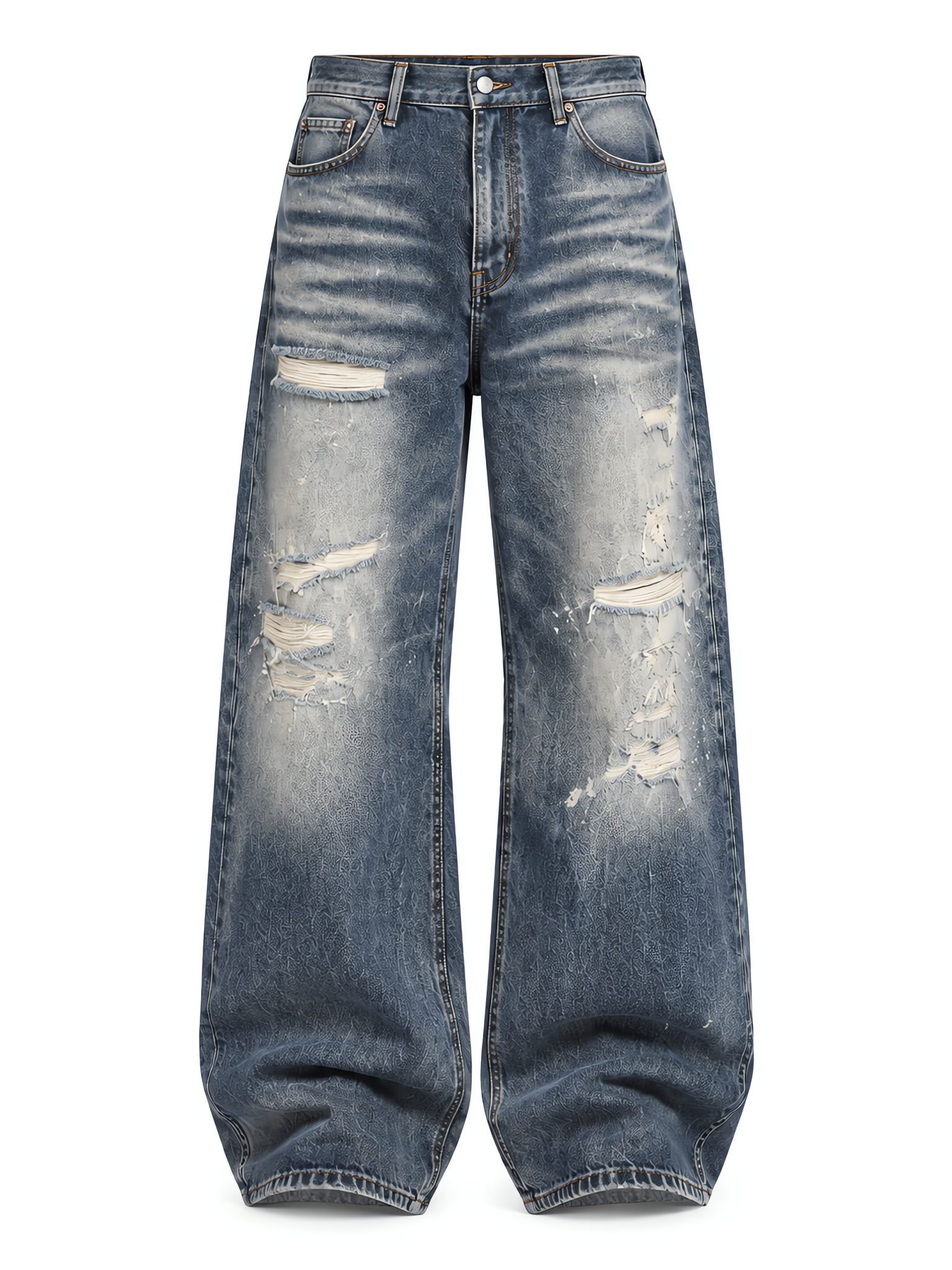
Whiskering on jeans means the faded, crease-like lines often seen across the upper front of the garment. The lines resemble marks that develop as someone sits and moves in denim. They can form through wear or be created during finishing.
For a brand developing jeans, “add whiskers” leaves too much open to interpretation. The position, shape and contrast of the lines decide whether the jeans look gently worn or heavily treated. This guide explains what to show a manufacturer and what to check on a sample.
What do whiskers look like?
Whiskers usually spread outward from the fly across the upper thigh. The lines tend to be irregular, with softer edges than a printed pattern. They may be only slightly lighter than the surrounding denim.
The right effect depends on the jeans. A relaxed style with a vintage finish may suit broad, soft fading. A clean dark style may need only a few restrained lines—or none. The same pattern can look different when the rise, thigh width or base denim changes. Fabric weight and construction change how far a wash can go, so it is worth settling the denim fabric before fixing the finishing target.
Whiskering, hand scraping and distressing
These terms are related, but they mean different things.
| Term | Meaning | What to specify |
|---|---|---|
| Whiskering | Faded lines that resemble creases, usually on the upper front of jeans | Where the lines sit, how far they extend and how visible they should be |
| Hand scraping | A method of rubbing selected areas of denim to create fading | Which areas should be treated and how strong the effect should be |
| Distressing | A wider worn look that may include abrasion, frayed edges or damaged details | Which effects are wanted and which areas should remain intact |
Whiskering describes the result you see. Hand scraping is one way to create local fading, including whiskers. Other methods can create similar lines. A product photo alone cannot tell you which method was used.
Whiskering can also be combined with an overall wash. NOVITA’s guide to types of denim washes explains how broader treatments change the garment’s shade and feel.
Why placement matters
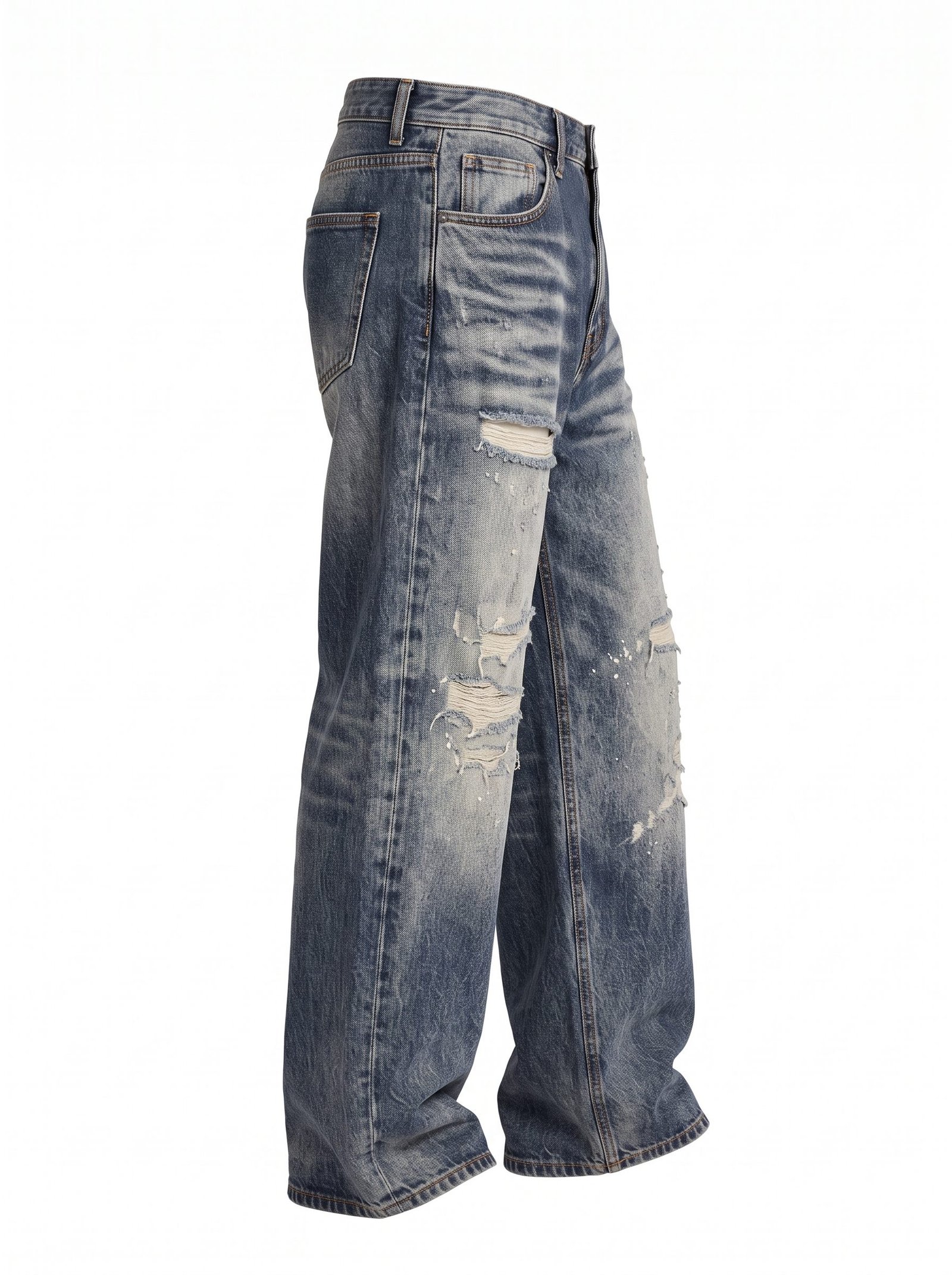
Whiskers need to work with the shape of the finished jeans. Lines that sit naturally across the upper thigh on one fit may look too low or extend too far on another. On wide-leg baggy jeans, whisker placement should be checked against the actual upper-thigh panel and fit rather than copied unchanged from another silhouette.
Wash development and wash sampling are handled in-house at our Foshan production facility. Before sampling, mark a front-view image of the intended style. Show:
- Where the first lines should appear
- How far they should reach across the thigh
- Whether they should angle up, angle down or stay nearly horizontal
- How many lines should be visible
- Whether their edges should be soft or defined
- Which areas should stay dark and clean
These notes give “natural whiskering” a clear meaning for your design. They also help the sample team see which details matter most.
Choose the right amount of contrast
Whiskering should fit the overall wash, not compete with it. For acid-splash and bleach-wash jeans, assess any proposed whiskering alongside the existing wash contrast rather than as a separate effect.
Subtle whiskering adds a small shift in shade. It can give dark or medium denim some depth without drawing immediate attention.
Moderate whiskering is easy to see but still feels connected to the rest of the fading.
Strong whiskering becomes a prominent design detail. Review it closely: a change in brightness, length or position can alter the look of the whole garment.
Words such as “light” and “heavy” help start a conversation, but people may interpret them differently. Show the contrast you want with a reference garment, a close-up photo or an approved sample.
How to brief a whisker effect
Start with the garment itself: the denim, color, fit and overall wash direction. Then add a marked front-view image and a close-up that shows the line shape and contrast.
A useful instruction might read:
Create soft whiskering across the upper front, starting beside the fly and fading out before the side seam. Keep the lines irregular and low contrast. Leave the waistband and back pockets clean. Use the attached garment as the shade reference.
If you send several images, label their purpose. One may show the fit, another the overall shade and a third the whisker detail. This prevents the manufacturer from treating every feature in a single photo as part of the target design.
If you require a particular finishing method, state that separately and ask the manufacturer to confirm whether it can be used for your project.
What to check on the sample
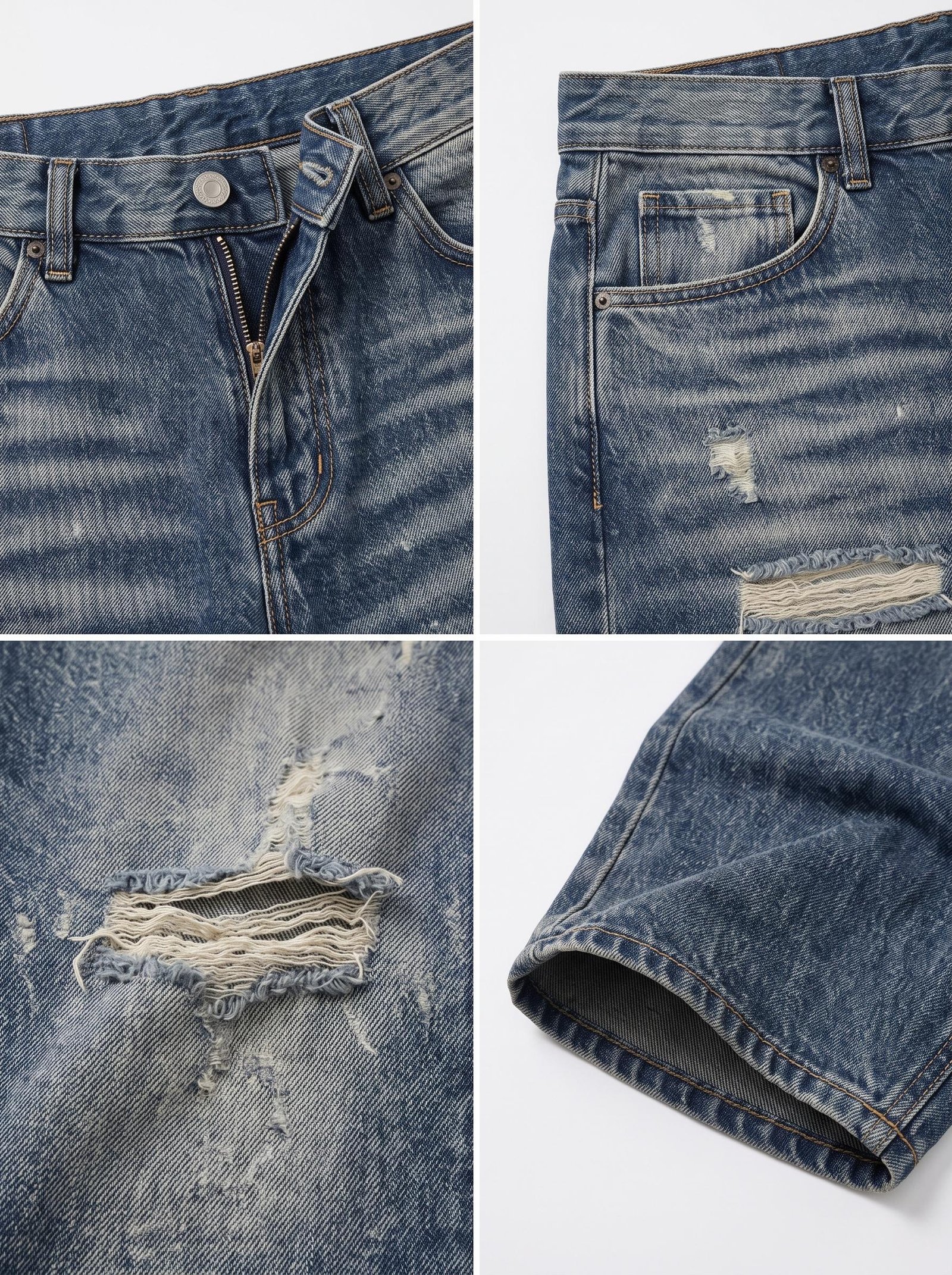
A close-up shows the quality of the lines. You also need to see how they look on the whole pair of jeans. Review the sample flat and, where possible, on a person or fit form.
- Placement: Do the lines sit in the intended area when the jeans are worn?
- Contrast: Do they suit the garment’s overall shade and other faded areas?
- Balance: Do the left and right sides look intentionally related? They do not need to match exactly.
- Edges: Are the lines as soft or defined as the reference?
- Clean areas: Have the pockets, waistband, seams and other protected areas stayed as specified?
Describe revisions against a photo of the sample. “Shorten the outer lines and soften the fading near the fly” gives clearer direction than “make the whiskers more natural.”
For the wider sample review—including fit, finished measurements and trims—see NOVITA’s custom denim and jeans manufacturing guide.
Four mistakes to avoid
Sending only one product photo. Lighting and editing can change how fading appears. Add close-ups and notes about the details you want to match.
Checking the effect only while the jeans are flat. The lines should also make sense on the intended fit.
Using “whiskering” to describe all the fading. Specify the overall wash and other worn areas separately.
Naming a method without describing the result. Show the target appearance first. If the method itself is a requirement, confirm it with the manufacturer.
Frequently asked questions
What is the whiskering effect on denim?
Whiskering is a set of faded lines across the upper front of a pair of jeans, shaped like the creases that form naturally when denim is worn. It is produced during finishing — usually by hand scraping, sometimes with laser or resin — so a new pair shows a worn look. The effect is defined by where the lines sit, how far they extend, and how much contrast they have against the surrounding denim.
Are whiskers on jeans always made in a factory?
No. Crease-like fades can develop as denim is worn. A manufacturer can also create the appearance so a new pair of jeans has a worn look.
Is whiskering the same as hand scraping?
No. Whiskering is the faded line pattern. Hand scraping is one method that can create local fading, including whiskers.
Where should whiskers sit?
They commonly appear across the upper front, near the fly and thigh. The best position depends on the jeans’ rise, fit and design. Mark it on the image used for sampling.
Can dark jeans have whiskering?
Yes. The effect can be subtle on dark denim. Agree on the amount of contrast so a clean dark style does not look more worn than intended.
Give the manufacturer a clear visual target
Whiskering is a small detail with a noticeable effect on the finished jeans. Mark where the lines should sit, show how visible they should be and review them on a sample in the intended fit.
If you are developing a denim style, explore NOVITA’s custom jeans manufacturing service. Send your garment references, target fabric, fit and finishing details so the team can review the look you want to achieve.