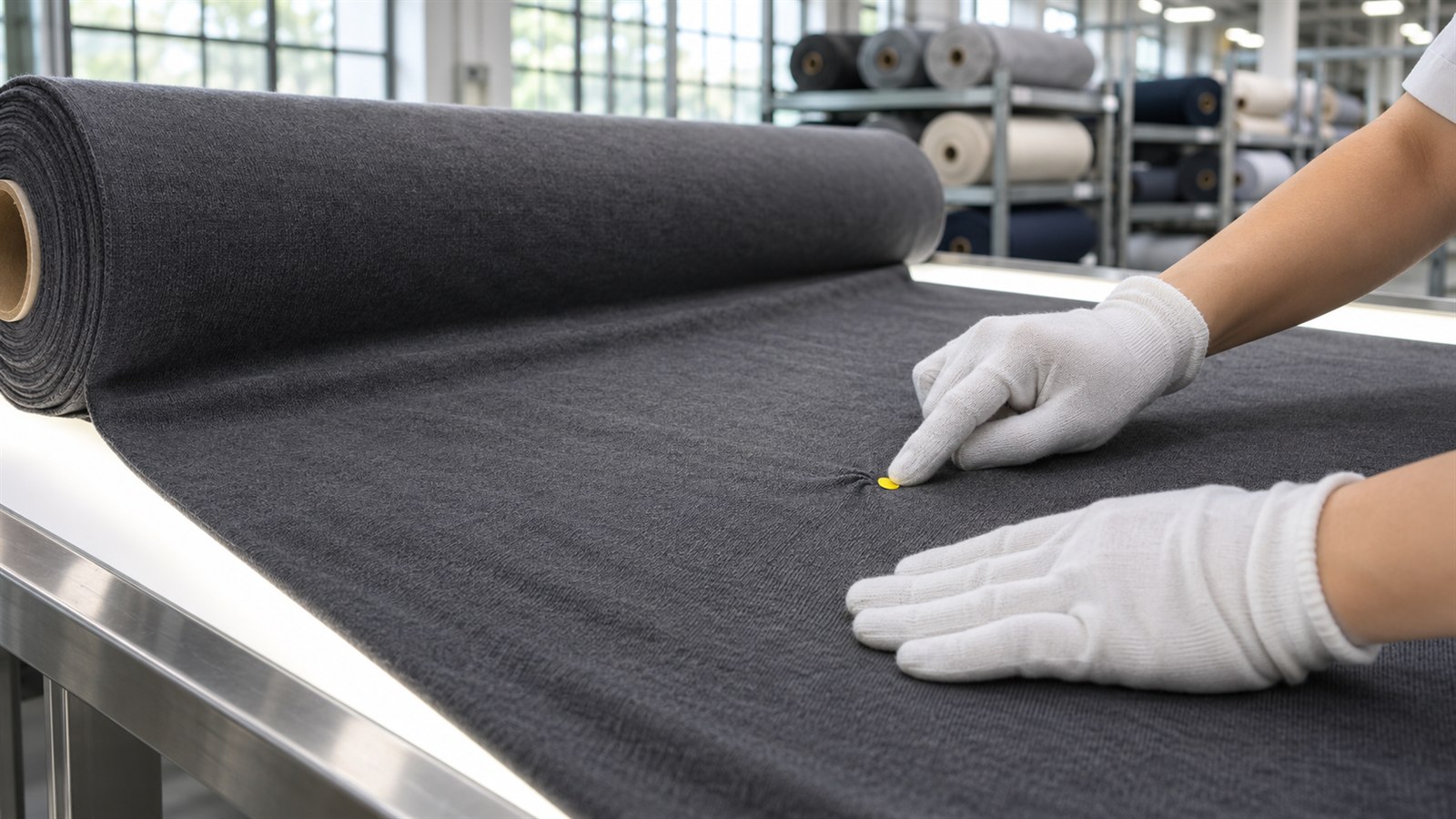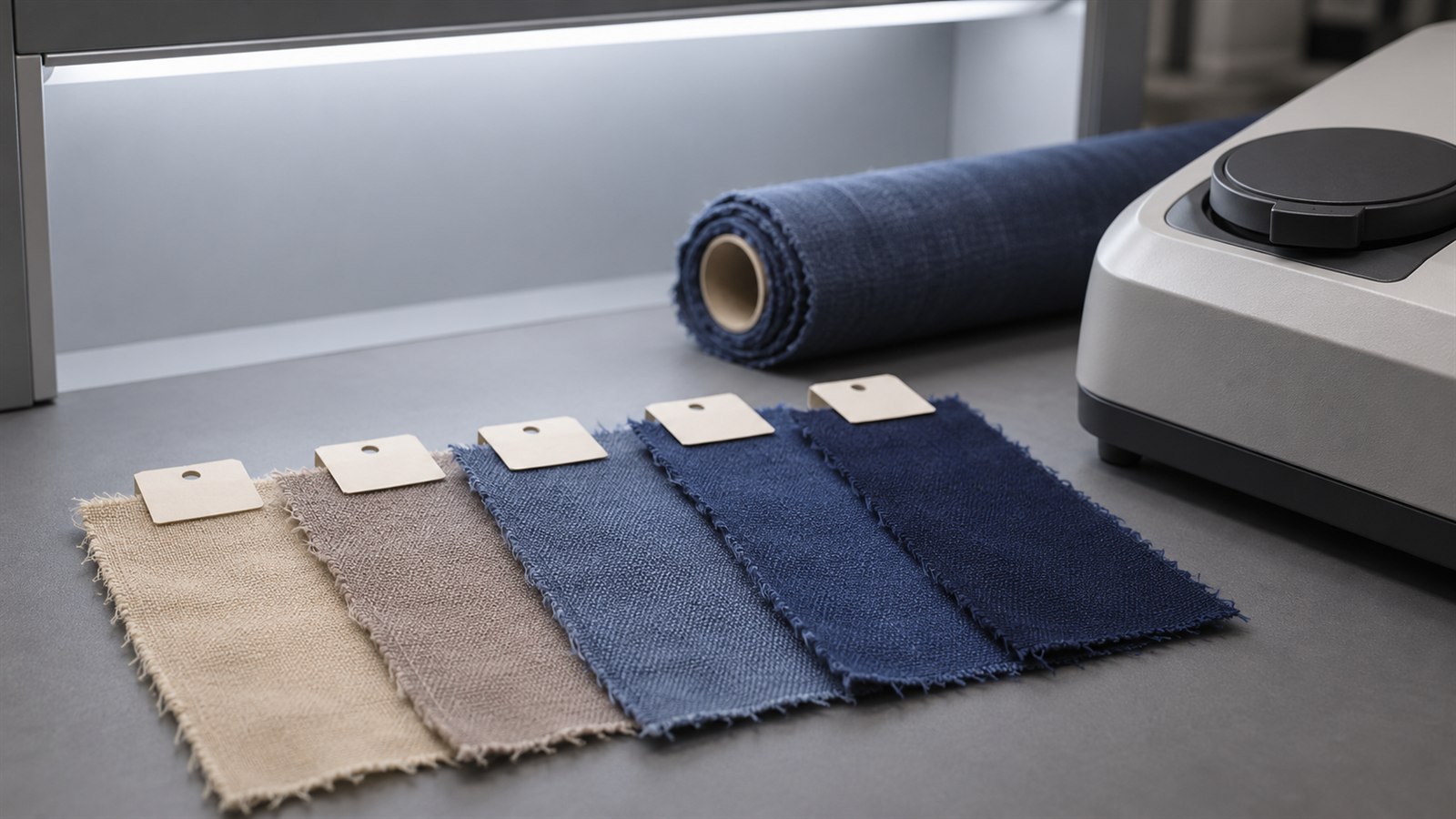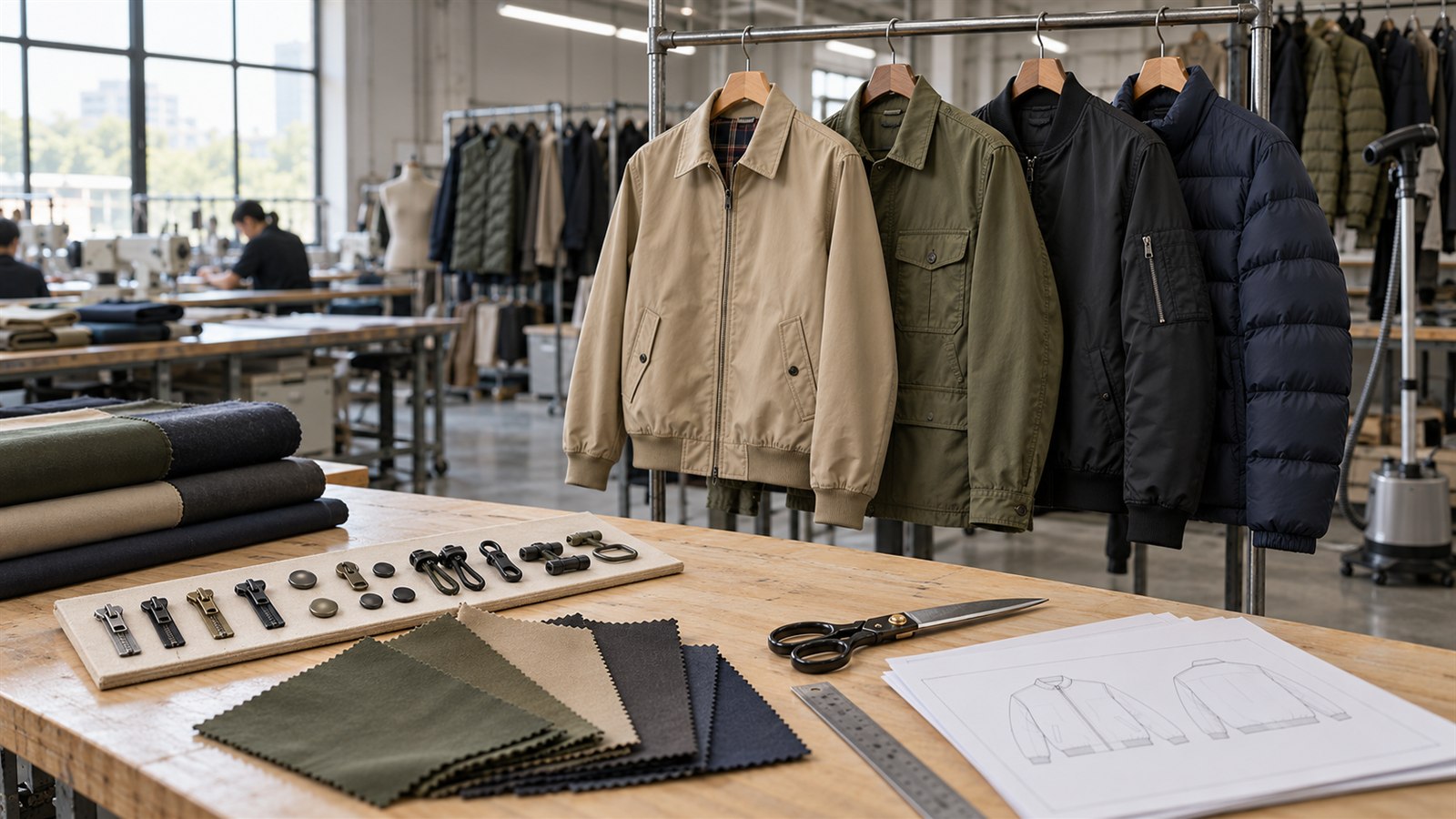

A sportswear manufacturer should explain how your garment behaves during stretching, sweating, and washing. Compare suppliers by who specifies the fabric, develops the pattern, validates construction, and controls bulk production. A quotation for applying a logo covers a different job.
For US and EU brand owners and sourcing managers developing men’s activewear (sport polos, training tees, joggers, shorts and performance hoodies), these checks help make competing quotations comparable before an order is placed.
Identify what the supplier actually manufactures
A sportswear manufacturer develops and produces garments for their intended activity. Production may include outsourced processes. Ask who performs each process and who answers for the result.
A decorator applies branding to existing garments. A blank-garment reseller supplies finished stock. A general cut-and-sew shop may assemble your pattern accurately without developing stretch performance or selecting suitable materials. Each model can fit a brief, but their quotations cover different work.
Look at the RFQ response. Does it identify knit construction, material substitutions, stretch direction, seam construction, testing responsibility, and unresolved fit questions? Or does it only offer colors, sizes, and a logo position?
When comparing sportswear clothing manufacturers, request an annotated reply to your tech pack. NOVITA’s manufacturing RFQ checklist separates confirmed specifications from supplier proposals. Keep that distinction: an estimate based on substitute fabric is not approval of your production material.
Specify fabric by end use, not GSM alone
Fabric weight does not establish stretch, breathability, opacity, or recovery. Those depend on construction, yarn, composition, finishing, and garment fit together.
Instead of quoting a single GSM, write down what each garment has to do and ask the supplier to propose a fabric against it, with swatches and test results. The questions below are RFQ prompts, not NOVITA specifications or industry standards.
| Men’s activewear item | What the fabric has to do | Question for the RFQ | Evidence to request |
|---|---|---|---|
| Training T-shirt | Stay light, dry quickly and keep its neckline after washing | Which knit and weight do you propose, and is elastane needed for this fit? | Swatch, the test basis for any quick-dry claim, neckline recovery after the agreed wash |
| Sport / golf polo | Move through the shoulder and swing while keeping a clean, structured collar | Piqué, mesh or jersey: which construction suits the end use, and how is the collar stabilised? | Collar and placket after laundering, shrinkage in length and width, colorfastness on the approved shade |
| Joggers and training shorts | Allow squatting and stride without seam strain or a baggy knee | What stretch and recovery does the proposed fabric give, and where is a gusset needed? | Stretch/recovery results in both directions, seam extension check at crotch and seat |
| Performance hoodie or quarter-zip | Give warmth without bulk and keep its shape at cuffs and hem | Which fleece or brushed back do you propose, and how does it behave after washing? | Pilling result, dimensional change after laundering, rib recovery at cuffs and hem |
For mass per unit area, specify ASTM D3776. ISO 3801 concerns woven fabrics, so do not automatically apply it to knitted activewear; its official scope also does not prescribe these product ranges.
Ask your sportswear manufacturer to name the stretch method, applied load, directions, and recovery interval. Intertek lists several stretch/recovery methods; “four-way stretch” alone supplies none of those conditions.
Engineer the seam around movement
Flatlock, coverstitch, and bonding are not interchangeable finishes. Request a seam map showing which construction goes where and how the assembled seam stretches.
Flatlock/flatseam constructions can reduce the raised seam allowance at skin-contact areas. Confirm the actual stitch and assembly: factories sometimes use “flatlock” loosely. Coverstitch commonly finishes stretch hems and can secure seam allowances, but a coverstitched hem does not prove that the joining seams are suitable.
Bonded seams use an adhesive system rather than a conventional sewn join. Ask for trials on the specified face fabric and finish, with the adhesive, bonding conditions, wash procedure, and required stretch recorded. Inspect for edge lifting and bond delamination after washing and extension. A clean-looking new seam still needs these checks.
Stitches per inch (SPI), thread elongation, stitch geometry, tension, needle selection, and feeding work together. Increasing SPI without considering the fabric can add needle penetrations; reducing it can leave inadequate thread in the seam. Textured polyester or nylon looper threads may suit soft, extensible constructions, but ask for the actual thread specification rather than “stretch thread.”
Coats’ guidance connects seam elasticity with thread elongation, stitch density, and seam type. Its sportswear sewing guidance stresses sufficient thread allowance for seam extension.
Have the sportswear manufacturer stretch a sample seam and check for seam grin (the join opening under crosswise tension), skipped stitches, and thread cracking. Ask the technician to investigate needle and loop formation when stitches skip, then submit a corrected seam trial. Set SPI from that trial.
Check the fit through movement, not standing still
A standing fit photograph says little about training wear. Ask the manufacturer to fit samples on a model who moves through the intended activity: arm swings and reaches for polos and tees, squats and lunges for joggers and shorts, overhead reaches for hoodies.
For polos and tees, watch the shoulder seam, underarm and hem: does the body ride up, does the collar or neckline pull, does the side seam twist? For joggers and shorts, check the gusset placement, seat seam tension and whether the waistband rolls or drops when a pocket is loaded with a phone.
Pale training tees need an agreed see-through check: approved fabric and colour, intended size, recorded lighting and a stretched-state observation, repeated after the agreed laundering procedure.
Treat this as a buyer-defined check, not a standard certification. Pale shades, different size grading, and substitute fabrics need their own approval; a passing dark sample does not release the whole range.
Separate dye-lot, sewing, and color minimums
The minimum that controls your order may belong to the mill, not the sewing room. Ask for separate figures for fabric purchasing/dyeing, cut-and-sew setup, and each color. Do not assume size mixing also permits color mixing.
The following hypothetical example shows how the constraints interact. It is not NOVITA’s MOQ or a market benchmark. Suppose the supplier confirms these assumptions for a single-color style:
| Constraint or calculation | Assumed figure | Consequence |
|---|---|---|
| Requested order and cut-and-sew minimum | 100 pieces | Sewing alone permits the requested quantity |
| Custom dye-lot minimum, separately per color | 90 kg | Fabric purchasing becomes the constraint |
| Fabric consumption, including agreed cutting allowance | 0.30 kg per garment | 100 pieces consume 30 kg |
| Dye-lot equivalent | 90 ÷ 0.30 = 300 pieces | Converting the entire dye lot means 300 garments |
The garment order does not automatically have to triple. Could you make the original quantity and purchase the remaining fabric? Could an approved stock color remove the dye-lot constraint? Confirm residual fabric ownership, storage, and later cutting charges.
NOVITA’s MOQ breakdown guide treats fabric, color, and production requirements separately. Apply that logic before comparing headline minimums from activewear clothing manufacturers.
Put the test protocol and acceptance limits in writing
Approve the test matrix before ordering production material. A report needs a traceable substrate: composition, construction, color, finish, lot reference, and whether it concerns fabric, a seam assembly, or a complete garment.
The numerical limits below are negotiation questions, not requirements imposed by the named standards. Replace them with approved brand specifications and laboratory advice before issuing the purchase order.
| Check | Substrate and method | Acceptance question to resolve before release | Cost allocation to agree |
|---|---|---|---|
| Mass per unit area | Production-intent finished fabric; ASTM D3776 | Would ±5% of approved GSM be suitable? | Who pays initial testing and replacement-lot checks? |
| Dimensional change | Fabric: AATCC TM135; garment: TM150. ISO route: ISO 6330 laundering plus ISO 5077 measurement | Would ±3% in each measured direction after 3 agreed cycles be appropriate? | Who pays development testing and failure retesting? |
| Stretch and recovery | Fabric and seam assemblies; lab-selected method and defined loading | What extension and maximum residual growth will the brand accept? | Who funds seam trials and outsourced testing? |
| Colorfastness | Finished fabric in each approved color; AATCC 61 (wash), 8 (rubbing), and 15 (perspiration), with procedures agreed | Would grade 4 for wash/perspiration and grade 3–4 for wet rubbing suit this product? | Who pays each color’s tests and corrective retests? |
| Appearance and construction | Complete garment; agreed fit, opacity, seam-extension, and laundering checks | Will release require no visible seam opening, skipped stitches, or delamination under the agreed protocol? | Who funds revised samples? |
AATCC TM135 covers fabrics; TM150 covers garments. ISO 6330 supplies washing/drying procedures, not a universal shrinkage limit.
Keep final inspection separate from laboratory validation. AQL 2.5 is a commonly requested apparel acceptance-quality-limit parameter within a sampling plan. It is distinct from the inspection level. Specify the inspection level, defect classes, sampling scheme, and accept/reject rules separately, using NOVITA’s AQL sampling guide. AQL is sampling, not a quality guarantee or permission to ship a fixed defective percentage.
Price sample development and map the critical path
A sportswear manufacturer should quote development separately from bulk. Ask whether the sample fee is credited toward production, and under which conditions, so that competing quotations are compared on the same basis.
Ask what the fee buys: pattern creation, fabric sourcing, fit samples, included revisions, courier charges, and testing. Write down the credit-back trigger and exclusions. Who owns the paid pattern and grading files, and can you obtain usable copies if production moves elsewhere?
For timing, separate fabric knitting/dyeing/finishing and approval from cutting, sewing, garment finishing, final inspection, and transit. Ask which stages overlap and which depend on approval. The critical path may be material approval rather than sewing capacity; a late color decision can delay cutting even if a sewing slot is available.
At NOVITA, sample development usually takes 7–15 days once the tech pack and materials are confirmed; bulk timing is confirmed for each order after sample approval, because it depends on quantity, fabric availability and customization. NOVITA’s sample-development process uses approval milestones; obtain a project-specific calendar with buyer-review and freight time shown separately.
Verify certification scope, not a row of logos
Ask the sportswear manufacturer for the legal entity, production address, document identifier, scope, issue date, and validity or audit date. Match the evidence to the site and product in your order, including subcontracted processes.
BSCI and SMETA are social-audit frameworks, not product certificates. Request the relevant audit report, findings, and corrective-action status. Intertek explains BSCI’s non-certification status; Sedex describes SMETA’s audit coverage. Ask whether the audit’s age and coverage meet your customer’s sourcing policy rather than assuming a universal expiry rule.
For WRAP, check that the facility certification belongs to the actual production site and remains valid. It does not establish the stretch performance of your fabric.
For OEKO-TEX STANDARD 100, verify the certificate and covered articles through the official program and label-check route. A certificate for a material supplier is not automatically a certificate for every finished garment.
For GRS, ask which organization, materials, and processes the scope certificate covers, whether it is current, and what transaction documentation will accompany your order. Can the certification body authenticate both the supplier and your claimed material flow?
No certification or audit status is claimed for NOVITA here.
Copy this supplier-vetting checklist
Before approving the production deposit, confirm:
- Supplier identifies the production site, subcontracted operations, and responsibility for technical decisions.
- Fabric reference includes construction, composition, GSM tolerance, stretch/recovery conditions, and approved color.
- Seam map, movement checks, and laboratory acceptance criteria are agreed, with testing costs allocated.
- Quote separates dye-lot, cut-and-sew, and per-color constraints, including unused-material ownership.
- Sample fee, revision allowance, pattern rights, critical-path dates, and approval authority are written down.
- Audit/certificate scope is checked; the production release links the current tech pack to the retained sample.
NOVITA focuses on men’s casualwear and activewear basics such as sport polos, training tees, joggers and hoodies. If your brief calls for compression garments or other highly technical performance wear, ask any supplier to show the development route and testing support for that specific product before assuming specialist capability.
Send NOVITA the tech pack and this checklist for a project-fit discussion. When choosing a sportswear manufacturer, use sample-to-bulk approval controls to prevent substitutions and carry the agreed requirements into an apparel quality-control checklist.
Frequently asked questions
How do I compare a sportswear manufacturer with a decorator?
Ask who controls fabric selection, patterns, construction, testing, and production changes. A decorator may suit a logo-on-stock project; technical garment development needs a different scope of responsibility.
Is a heavier fabric always better for training wear?
No. A heavier knit can feel warmer and dry more slowly. Judge the actual knit, color, fit and end use, and approve the fabric on a moving fit sample rather than on GSM alone.
What should an activewear manufacturer provide for sampling?
Request a measured sample, material identities, a revision log, and a list of unresolved items. Approval should state what is accepted and what still blocks bulk release.
Does custom dyeing mean I must order more garments?
Not necessarily. You may be able to buy surplus fabric without cutting it immediately. Ask for the material commitment and garment commitment separately, including storage and later-use terms.
Does AQL 2.5 replace performance testing?
No. Lot sampling checks defined nonconformities; it does not establish stretch recovery, wash stability, or adhesive durability. Keep laboratory validation and shipment inspection as separate approval steps.
Can one approved sample release every color and size?
Only within an explicitly agreed approval scope. Ask which colors, materials, sizes, and construction changes need further evidence. Do not extend an approval to substitutions that were never evaluated.