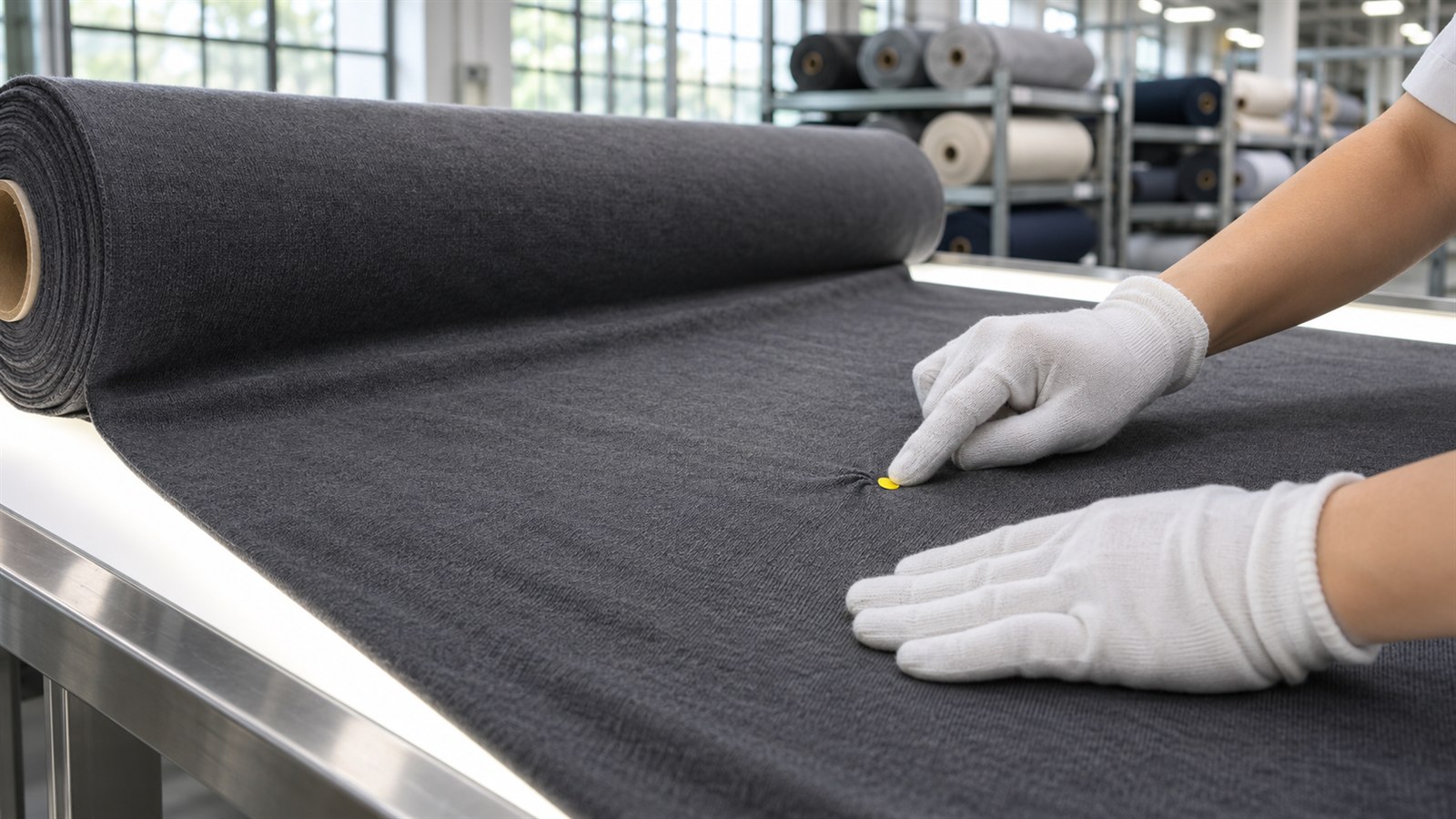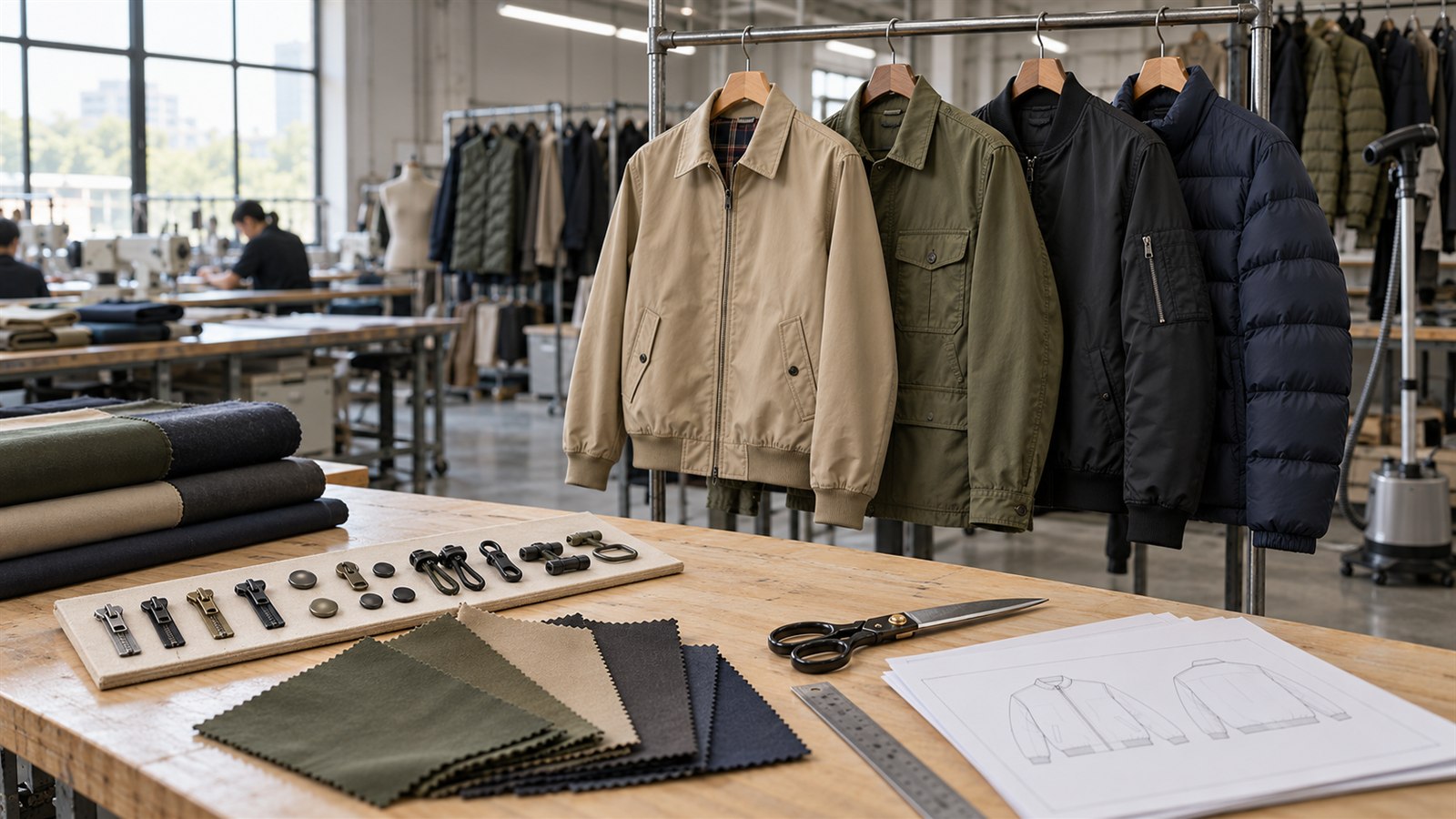
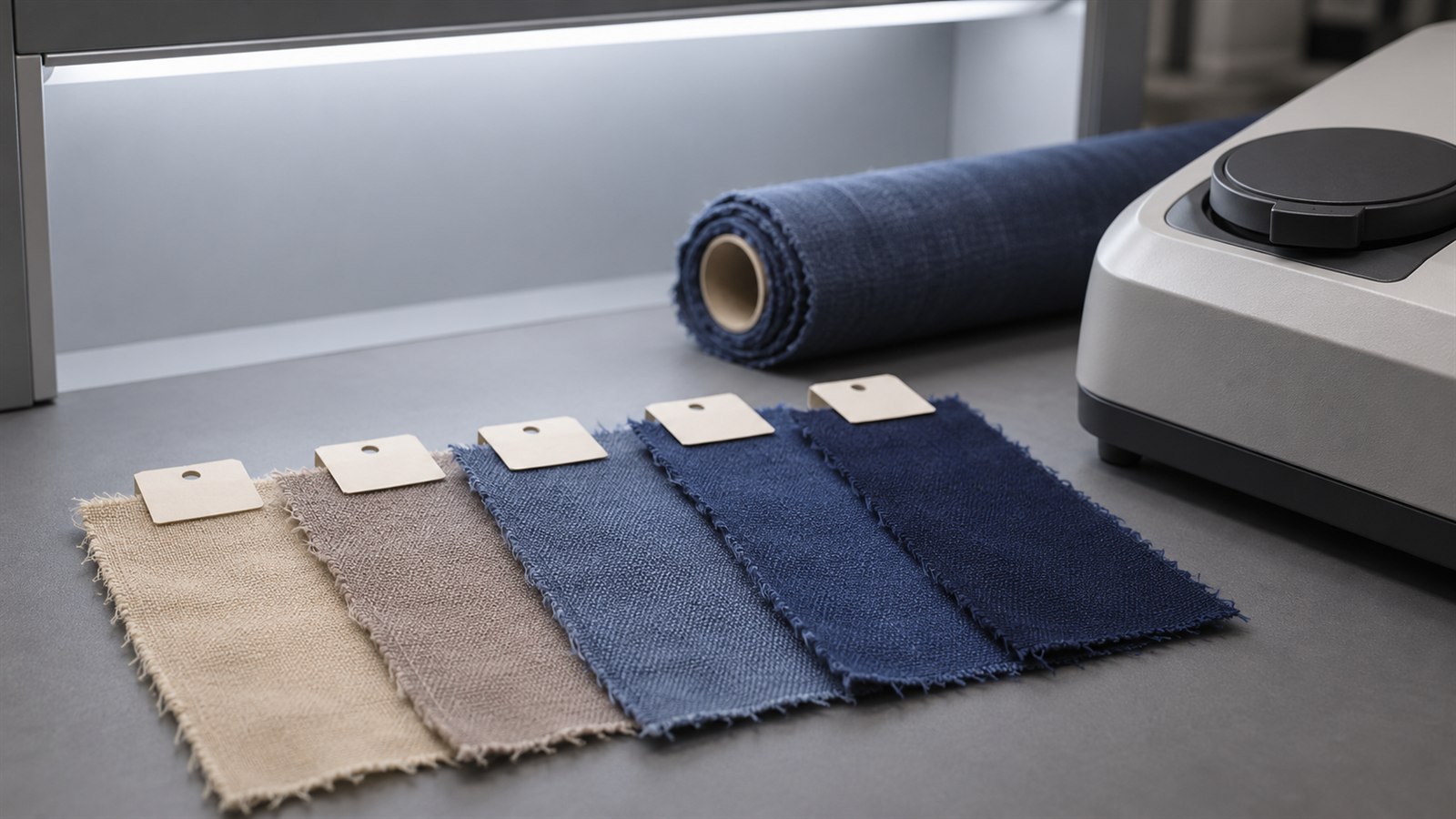
A lab dip is a dyed fabric or yarn specimen prepared for color approval before production dyeing. Record the accepted option, material, viewing conditions and tolerance. A comment such as “navy approved” leaves the mill to interpret what the buyer accepted.
Keep that color-development decision separate from permission to use actual bulk fabric.
1. Know what each sample proves
Approve the right evidence for the production stage. A small laboratory match cannot demonstrate that every production roll will match it.
| Submission | What it establishes | What it does not establish |
|---|---|---|
| lab dip | Proposed solid-color match on the identified substrate | Finished-garment performance or conformity of future dye lots |
| Print strike-off | Printed color, scale, repeat and registration on the submitted fabric | Acceptance of the full print run or unrelated solid-dyed materials |
| Bulk dye-lot submission | Shade of the production material represented by identified cuttings | Acceptance of unsubmitted lots, rolls or repeat orders |
ApparelX’s material guidance warns that a match on a different composition, construction or finish may only serve as a color reference. Request development on the intended production substrate and record its identity.
Color approval does not validate shrinkage, fastness or sewability. Washing, rubbing and perspiration require separate tests; sewing suitability needs appropriate material or garment trials. Use a separate colorfastness test plan rather than adding “fastness approved” to a shade comment.
2. Send a standard the mill can reproduce
Send a physical fabric standard, a Pantone TCX cotton swatch, or both. Include the TCX code and state which physical reference controls if they disagree. A screen image or an unqualified Pantone number leaves too much open; identify the reference system, code and sample version.
Include fabric article, fiber blend, construction, weight and intended finish. For matching shell, lining or rib, submit each substrate separately and explain whether they must also match when assembled.
Swatch-size advice describes different submission formats. Online Clothing Study describes laboratory cuttings commonly measuring 6 in × 6 in; The Fashion Business Coach describes tiny buyer-facing samples around 2 cm × 2 cm. Larger mill cuttings and small mounted buyer cards can both exist in the same workflow. Confirm the required size; request more material if the card cannot support the agreed measurement or visual comparison.
Keep matching, dated copies with the buyer and mill. Store the approved standard in a dark, cool location. Replace a faded, stained or damaged reference through documented reapproval so both sides continue using the same target.
3. Run one documented submission loop
The sequence is: color standard → test dyeing → mill submits options → buyer comments → revision → written approval → bulk dyeing. Keep one authorized buyer approver so conflicting design and sourcing comments do not become competing instructions.
Online Clothing Study describes suppliers selecting the three closest options from a larger trial. Three options are not three revision rounds: A, B and C can belong to the same submission.
Give every option a unique reference and revision date. Mark the selected cutting physically, retain its measurement report, and send the same decision to the mill, merchandiser and factory QA. Link it to the current sample and production specification.
Copy this approval record so the mill receives one instruction, not a thread of opinions:
| Field in the approval record | What to write |
|---|---|
| Color / fabric article / standard version | State both; say which physical reference controls if they disagree |
| Submission date / round / option ID | One reference per option, plus its revision date |
| Primary and secondary lights reviewed | Name each source actually used for this review |
| Visual result under each light | One line per light, not a single verdict |
| Direction of mismatch | Too red / green / yellow / blue; lighter / darker; duller / brighter |
| Measurement method / ΔE result / agreed limit | Formula and parameters, instrument result, the band agreed for this shade |
| Decision | Revise / approved for color development / hold |
| Required correction and resubmission date | Specific instruction, not “make it bluer” |
| Authorized approver / date / attached reference | One named approver; attach the selected cutting record |
Bulk dye-lot release stays a separate decision: this record approves color development, not production fabric.
4. Describe the mismatch precisely
Read hue, value and chroma separately. Hue describes the color direction: a navy may lean too red or too green. Value, or lightness, tells you whether it is lighter or darker. Chroma describes saturation; a match may have acceptable lightness but still look too dull.
Use the same fabric face, orientation, backing and number of layers for both samples. Avoid comparing a folded opaque standard with a single translucent cutting. Texture and sheen can change the visual judgment when you rotate the fabric.
If a visual panel reviews the submission, record reviewer names, light source, option ID and a separate result under each light. Where the brand uses a grading scale, identify that scale and record individual grades and the final decision. A photograph documents the review; it does not replace controlled viewing.
5. Choose lights for the destination market
A lab dip needs more than a daylight-only pass. Agree a primary source and the secondary retail or use-condition sources before the mill develops its recipe.
| Source | Approximate color temperature | What it represents |
|---|---|---|
| D65 | 6,500 K | Standard daylight; customary primary comparison in many buyer procedures |
| TL84 / F11 | 4,100 K | Fluorescent retail lighting, historically associated with European and Asian programs |
| CWF / F2 | 4,150 K | Cool-white fluorescent lighting, historically common in US retail specifications |
| U30 | 3,000 K | Warm-white fluorescent lighting in some North American retail programs |
| Incandescent / CIE A | 2,856 K | Warm tungsten reference for domestic or other specified indoor conditions |
Temperatures follow Datacolor’s lighting guidance, Pantone’s daylight description and VI-TEX’s illuminant comparison. Market associations are historical shortcuts, not compliance rules. The retailer’s manual controls, including any specified LED source; matching Kelvin values do not guarantee matching spectra.
Metamerism occurs when two samples match under one light but separate under another. Different dye recipes can produce different spectral reflectance curves. D65 weights those wavelength differences one way; TL84’s different spectral output can expose them as a visible mismatch.
Screen the standard and each option together under every required source. Reject or reformulate a recipe that fails the secondary-light requirement even if it passes under D65. Include coordinating trims and fabrics in the screen.
A small brand can use a shared or rented booth, or commission the mill or an independent lab. When access is limited, use controlled daylight plus one relevant retail source for a minimum preliminary screen. Retail compliance approval still requires the specified, maintained light booth.
6. Set ΔE and the measurement method together
ΔE expresses calculated color difference, not a universal pass mark. AATCC TM 173 covers CMC small-color-difference calculation for acceptability; ISO 105-J03 addresses textile color-difference calculation. Identify the formula and its parameters; a bare “ΔE 1.0” is incomplete.
For a lab dip, the brand sets the acceptance band by substrate, shade sensitivity and product tier. Weaverine’s RFQ guidance gives ΔE ≤1.0 as one vendor’s example, not an industry standard. Supplier-published proposals span roughly 0.8 to 2.0, including commercial-textile examples; this is an observation of proposed brand tolerances, not a verified cross-brand rule. Do not transfer a number between formulas or products without validation.
Name who measures: mill colorist, buyer’s lab or nominated third party, and who resolves disagreements. Following Datacolor’s measurement guidance, align instrument geometry, aperture, specular setting, UV included/excluded, calibration, conditioning, backing, layers and reading positions. Record the illuminant/observer settings used in calculation.
UV settings matter especially for fluorescent or optically brightened materials. Different geometries or preparation methods can produce noncomparable readings. Retain the instrument result alongside the visual record; specify whether both must pass and who can authorize an exception.
7. Agree rounds, turnaround and fees in writing
For lab dip development, confirm how many options the mill submits and how many revision cycles the fee covers. There is no universal included-round count or per-round price. The following three-round escalation plan is a proposed purchasing arrangement.
| Stage | Timing to confirm | Fee and responsibility to agree |
|---|---|---|
| Round 1 | Due date after usable standard and substrate arrive | Quoted development fee; whether options, reports and courier are included |
| Round 2 | Revision date after consolidated buyer comments | Included correction or paid revision; who pays if the brief changes |
| Round 3 | Escalation meeting and resubmission deadline | Written authorization for further cost; technical stop/go decision |
| After approval | Bulk slot and material reservation | Any development credit against the order, confirmed in writing |
Weaverine publishes 5 to 7 business days for laboratory development in its polyester home-textile program. Ask NOVITA for its own lab-dip timing; the figure above applies to Weaverine’s program. Request an end-to-end schedule that accounts for shipping and buyer review as well as development.
Require a currency and amount for each chargeable round, payer, payment trigger and any order-credit conditions. Distinguish supplier correction against an unchanged brief from a buyer’s new shade, substrate or finish request.
If round 3 fails, hold bulk dyeing. Review the standard, substrate, recipe feasibility, light requirements and measurement alignment before authorizing another paid cycle. Any change to the acceptance limit needs the buyer’s written authorization.
8. Release identified bulk lots before cutting
The approved lab dip remains the color-development reference, but production material needs its own acceptance decision. Compare bulk cuttings against that reference under the same agreed conditions, with separate limits for target deviation and variation within the order.
A laboratory recipe does not scale by volume alone. Beck or dyeing-machine size, loading, liquor circulation and process conditions can affect dye uptake. Splitting an order across baths creates separate runs, each of which can produce a slightly different shade. This lot-to-lot shade variation is often called 缸差 (gang cha, a shade difference between dye baths) in Chinese mills.
Request a single dye lot where technically feasible. Otherwise, reserve sufficient material from accepted lots and require dye-lot tagging on rolls. Check selvage-to-center, roll-to-roll and repeat-order shade, not just one convenient cutting.
NOVITA’s shade-band approval workflow connects cuttings to lot and roll IDs, then names which groups may be cut together. Carry those identities into cutting bundles; do not mix visibly incompatible panels within a garment.
For a NOVITA jacket project, approve shell and lining separately, then review them together on the assembled sample. Denim needs another appearance decision after washing: the denim-wash guide calls for shade and localized-effect references. Keep the base-fabric release and finished-wash approval as separate records.
9. FAQ
Why is one lab dip large and another tiny?
A mill’s working cutting may be 6 in × 6 in, while a buyer card carries roughly 2 cm × 2 cm pieces. Neither is a universal requirement. Ask for the size needed for repeatable viewing, instrument readings and retained references.
Must a small brand buy a light box?
No, ownership is not the requirement; access to the specified controlled viewing conditions is. Share, rent or commission a compliant booth assessment. Daylight and a retail lamp can screen candidates, but cannot replace required retail approval conditions.
How many rounds should the buyer allow?
Agree the included count before development. A lab dip submission with three options is only one round. Use a third-round failure as a technical escalation point, not automatic permission to start bulk or accept a new bill.
Is ΔE below 1.0 always acceptable?
No. The formula, parameters, material, measurement setup and brand limits govern. A numerical pass under one illuminant does not cancel a failed visual or secondary-light requirement.
Does approval cover fastness or future bulk orders?
Neither. Performance needs separate tests, and future lots need traceable shade checks. Keep the original approved reference, then identify which actual production lots and rolls have been accepted against it.
What should I send before requesting a quote?
Send the physical standard and any TCX reference, fabric and finish specification, destination lighting requirements, proposed acceptance method and approval owner. Include quantities and the required decision date. Use NOVITA’s apparel RFQ checklist to request written revision fees, timing and bulk-release responsibilities together.