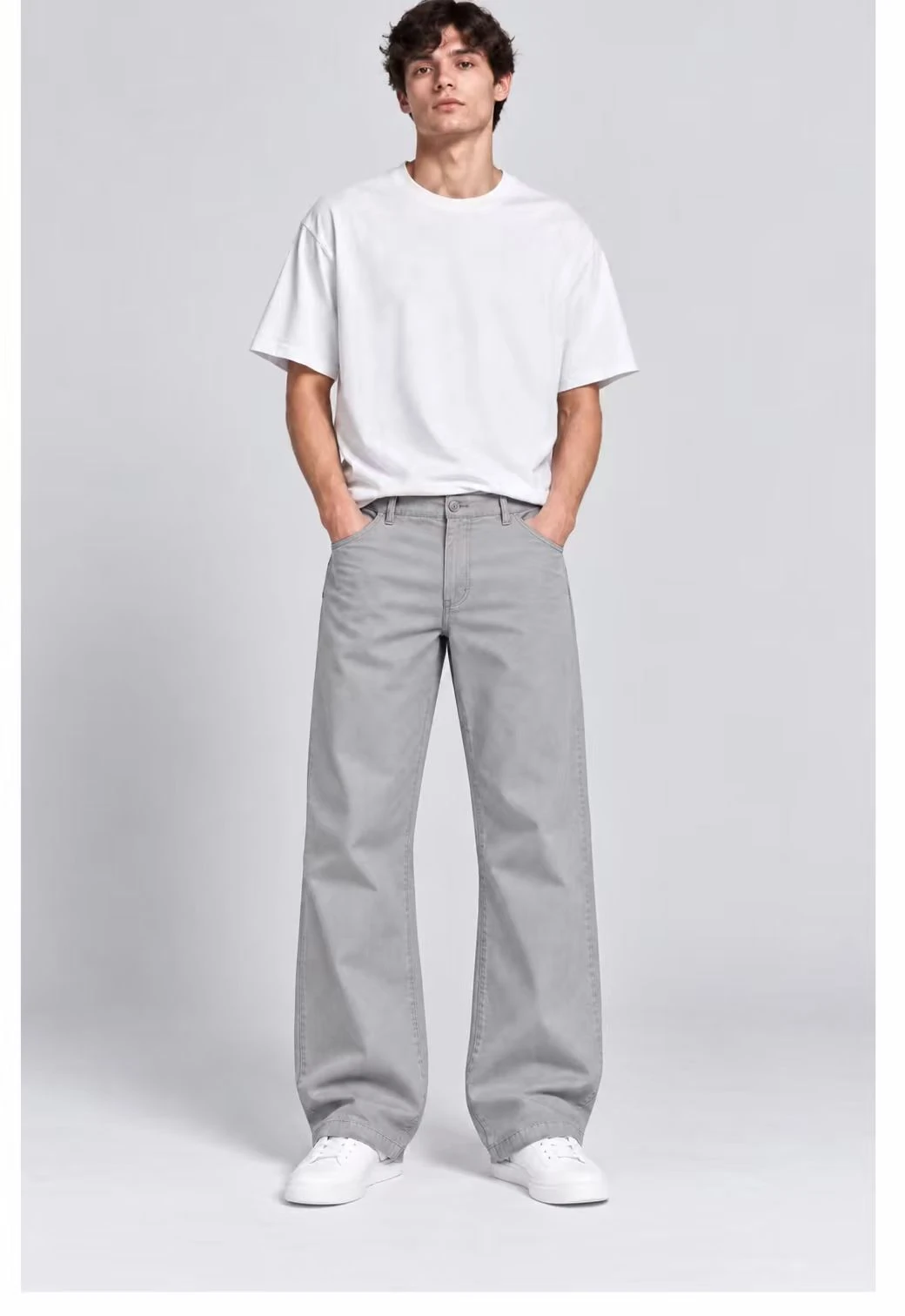
Chino fabric usually refers to a woven twill used for chinos. The term describes the fabric family. Ask the supplier for the fiber composition, weight, stretch direction if relevant, and finish of the actual swatch. Compare those details with how the cloth drapes, creases, and behaves at pocket and waist seams on the sewn sample. Carry those fabric choices into the custom chino specification guide for fit and sample approval.
Identify the weave and verify the fiber label
Look for a diagonal on the face of the fabric. That line comes from the way the yarns interlace. A fabric can use a twill weave with different yarns and finishes. A description such as “chino twill” alone leaves composition, shade, and stretch terms open, so ask for a sample card with a fabric reference. See CottonWorks' guide to basic woven structures.
Place the card beside the intended style reference. NOVITA’s relaxed-fit twill pants pair a roomier hip and thigh with a straight leg. The development page asks buyers to approve fabric drape with rise and pocket access. A relaxed outline gives the buyer a reason to check whether the cloth hangs as intended from the hip rather than judging it as a flat swatch alone.
Compare candidate fabrics on the same pattern
Use the same base size and pocketing when possible. If you change the pocketing or sewing build, make a note of the difference so you can trace changes in the way the front hangs. Compare the folded edge and a seam with multiple layers. For a stretch option, record the direction of stretch, how you checked recovery, and which sample condition the factory should match. Enter values only when both sides have a test method and an approved target.
| Record | What to compare |
|---|---|
| Body fabric | Swatch ID, composition, mass per unit area, finish, shade |
| Waist and pocketing | Layer bulk, pocket opening behavior, edge distortion |
| Fabric recovery | Direction, checking method, and condition at remeasurement |
| Sewn fit | Front appearance, rise, and ease at the thigh and knee |
The casual pants references show how body fabric works with several different fits.
Set the wash check before approving fabric
Mark sample ID, care stage and the exact measuring landmarks on the garment before the first reading. Waist, inseam and leg opening answer different fit questions. Add rise if it changes the position of the waist or pocket. Hold the garment in the same measuring condition both times. A closed flat waist and an extended elastic waist need separate fields. Photograph the tape path so the next reviewer can find it.
| Point | Before care | After the same agreed care | Decision to record |
|---|---|---|---|
| Waist at the agreed state | Enter baseline and unit | Remeasure from the same landmarks | Compare with the buyer’s limit |
| Inseam on the marked leg | Use the selected inside-seam path | Repeat on the same leg and path | Identify whether finished length changed |
| Leg opening | State flat width or circumference | Keep the same convention | Flag changes to the hem and balance |
The method and the acceptance limit serve different purposes. As of November 2026, ISO 3759:2011 describes preparation, marking and measurement, and ISO 5077:2007 covers dimensional change after specified washing and drying. Document what you actually used. If a reading is outside the agreed range, confirm the measurement first and hold the affected sample or proposed fabric. Compare another sample from the same lot, agree whether to change the fabric finish or revisit the pattern, and repeat the agreed check before approving the revision.
Make the approval traceable to a chino style
Place the approved face and back photo, fabric card, and fit notes together. On the straight-leg chino reference, use the button waist and slanted front pockets to decide which positions to assess first. Capture any shine, seam puckering, or gaping at the pocket mouth before deciding whether it warrants a fabric or pattern revision.
Take the confirmed fabric ID and unresolved checks into your custom chino specification. The reference photo can help your supplier understand the look. The signed swatch and garment notes show the material and fit you approved.
File the signed fabric card and wash check using the tech pack preparation checklist.
Send NOVITA your chino fabric brief with the selected swatch and agreed care check.