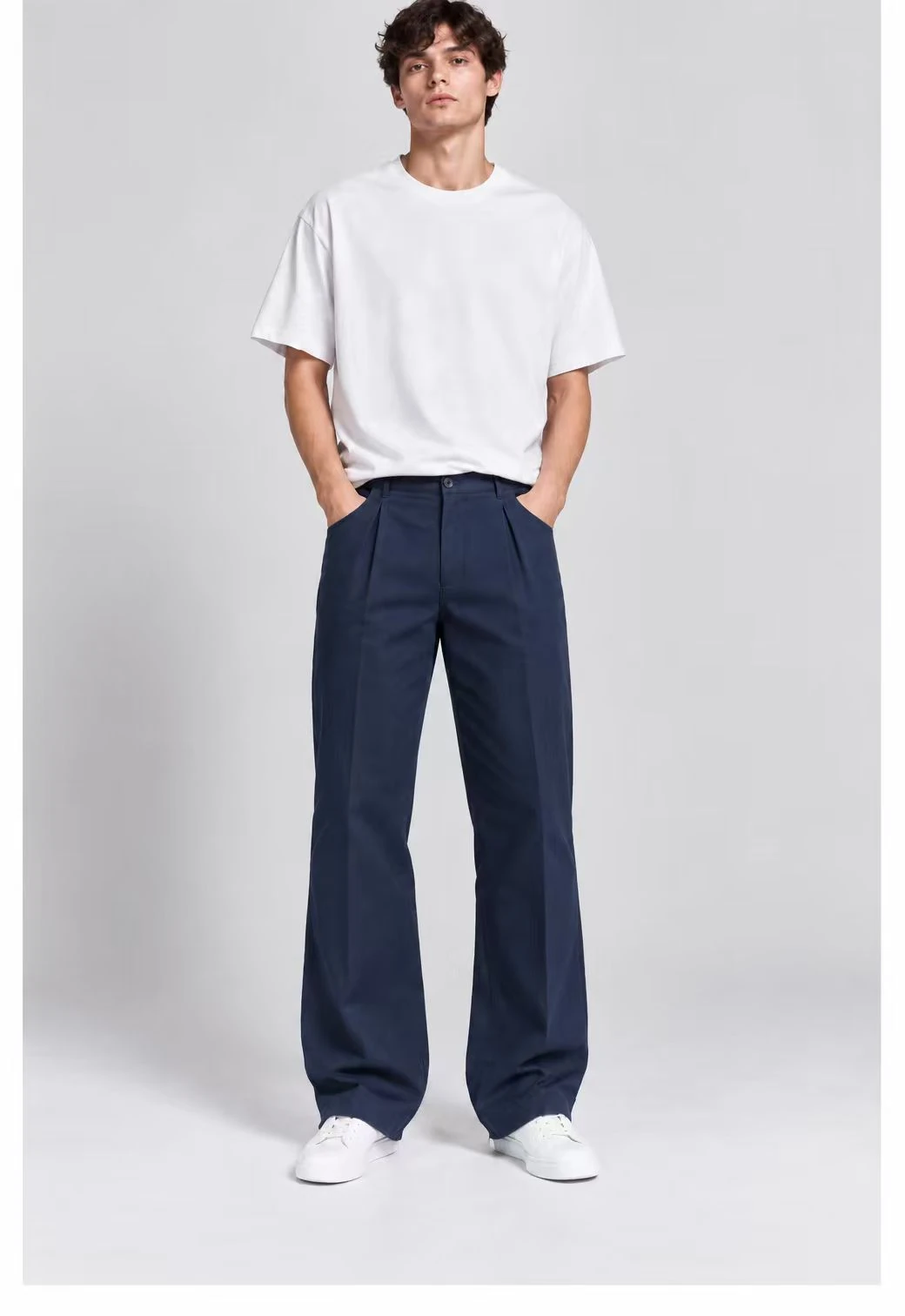
To choose pleated or flat-front trousers, compare how the front sits at the waist and upper thigh on the same base size. A pleat introduces a fold whose amount, direction, and release affect the front. A flat front gives a continuous surface you can fit through the pattern. Check both with the intended fabric and pockets. Put the selected front and pocket details in the custom chino specification guide with the complete style.
Decide what the front needs to do
Start from the waist position, pocket access, and the amount of room the wearer needs through the thigh. A pleat can open when the wearer moves depending on the pattern, fabric and pressing. A flat front can also allow more room if the pattern has enough ease. Ask the factory to show the two versions from front and side with hands out of pockets, then repeat with the intended movement.
The NOVITA pleated casual pants reference offers a front pleat with a button-fastened waistband, and calls for checking pleat depth, waist position and appearance on the fit sample. A clean-front tapered reference offers a way to compare the look without a front fold, while keeping a button-waist reference.
Mark how the pleat is built
Draw the fold line and the view from the wearer’s front. Identify the direction using that view, the position in relation to the fly and pocket, and how much fabric is taken into the fold at the top. Mark where you want it to release or remain secured. If a pressed line continues below the fold, tell the factory how far it should be visible in the proposed style.
| Front choice | Important information | Inspection point |
|---|---|---|
| Pleated | Fold direction, position, take-up, release | Front fold at rest and while sitting |
| Flat front | Front rise, waist position, pocket angle | Smoothness at fly and proportion at upper thigh |
| Both | Fabric, pocket bag and intended care | Whether the pocket gapes or pulls with movement |
Look at the pockets and waist of the casual pants references before choosing the front treatment.
Check the pocket and fold together
Try the sample with a hand in the pocket, then stand normally without loading it. Check where the opening meets the pleat and whether the pocket bag draws on the front when the wearer sits. Photograph the pleat both open in movement and closed at rest.
Set the sample size, reference positions, and acceptance conditions in the custom chino brief. ISO 18890:2018 covers garment measurement points, as of November 2026. Define any pleat-specific measure on your own annotated drawing.
Mark where the fold should open
A pleat’s visible fold direction is easiest to specify from the wearer’s front. Use a detail arrow to show where the fold points and a separate mark for the unstitched release area. Ask for a sample in the intended fabric because crisp and fluid cloth can give the same pattern different front surfaces. Where a pressed crease continues below the release, include a reference photo that shows its path.
Compare the fronts standing and sitting. When pocket access matters, try opening the pockets while seated and observe whether the intended shape returns at rest. A uniform fold, smooth stitches and appropriate pressing are established workmanship checks. New Mexico State University garment construction standards.
Confirm pressing and care on the chosen sample
Decide whether the pressed appearance needs to hold after the agreed home care procedure. Mark the areas to compare and identify the reference sample and fabric lot. AATCC TM143 is a method for evaluating fabric, seam and pressed-crease appearance after home laundering, as of November 2026. Use the method only when the project calls for it and agree the visual target separately.
Sign off the preferred front with the sample photos and drawing. If the pocket opening or fabric changes after approval, revisit the front because the new combination can change how it hangs.
Include the pleat drawing and pressing notes in the files covered by the tech pack preparation checklist.
Show NOVITA your intended pleat and pocket position using the base-size drawing and fabric reference.