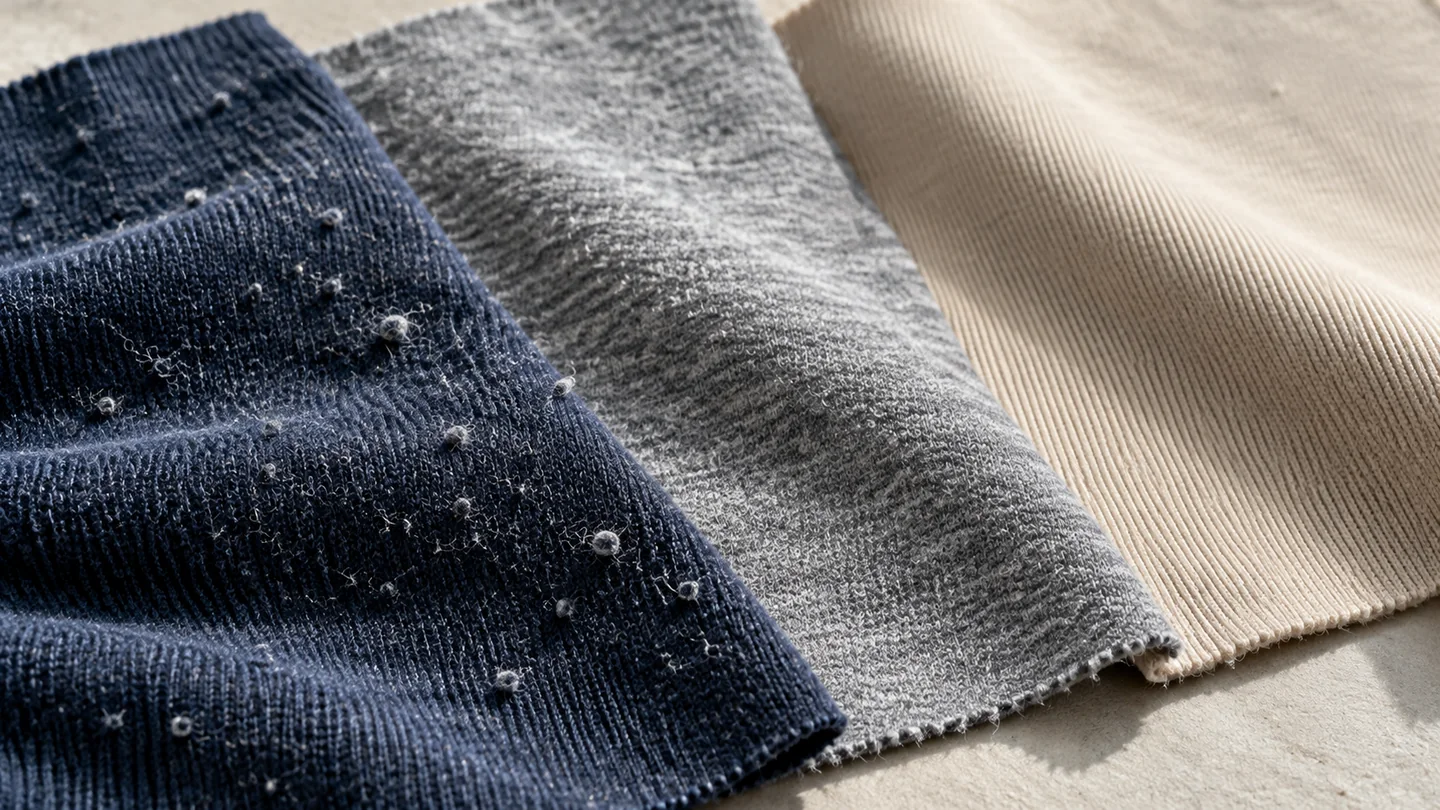
Choosing a T-shirt fabric is not simply a question of cotton versus polyester.
For clothing brands, wholesalers and private-label buyers, the fabric affects almost every part of the finished garment: hand feel, weight, drape, print result, shrinkage, durability, cost and even the way a T-shirt fits after washing.
A heavyweight streetwear tee, a promotional T-shirt and a moisture-management sports tee may all use completely different materials even when the garment shape looks similar.
This guide explains the main T-shirt fabric types from a sourcing and product-development perspective, including 100% cotton, CVC, TC blends, polyester and stretch blends.
If you are also deciding how heavy the fabric should be, read our T-Shirt Fabric Weight (GSM) Guide after choosing your preferred fiber composition.
Quick Answer: What Is the Best Fabric for T-Shirts?
There is no single best fabric for every T-shirt.
For most projects:
- 100% cotton works well when softness, natural hand feel and printability are priorities.
- CVC is useful when a brand wants a cotton-rich feel with improved durability and dimensional stability.
- TC cotton-polyester blends are often selected when durability, cost control and easy care matter more than a pure-cotton feel.
- 100% polyester is suitable for performance garments and applications such as sublimation printing.
- Cotton-spandex blends work well when the design needs more stretch and shape recovery.
The correct choice depends on your target customer, garment fit, GSM, printing method, expected retail price and care requirements.
Main T-Shirt Fabric Types Compared
| Fabric | Typical Characteristics | Good For | Things to Consider |
|---|---|---|---|
| 100% Cotton | Soft, natural hand feel, breathable | Premium basics, heavyweight tees, streetwear, screen printing | Shrinkage and twisting need to be controlled |
| CVC | Cotton-rich blend, balanced comfort and durability | Everyday branded tees, uniforms, private label | Exact cotton/polyester ratio should be specified |
| TC Blend | Usually polyester-rich, durable and easy-care | Uniforms, promotional garments, value programs | Less natural hand feel than cotton-rich fabrics |
| 100% Polyester | Lightweight, quick drying, durable | Sportswear, performance tees, sublimation | Hand feel differs greatly by yarn and finish |
| Cotton-Spandex | Soft with added stretch and recovery | Slim fits, fitted tees, fashion basics | Stretch percentage affects fit and stability |
| Tri-Blend | Soft, lightweight, often fluid drape | Vintage-look and lifestyle tees | Composition and consistency vary by supplier |
The fiber content alone does not tell you everything. Yarn type, knit construction, GSM and finishing can make two fabrics with the same composition feel very different.
1. 100% Cotton T-Shirt Fabric
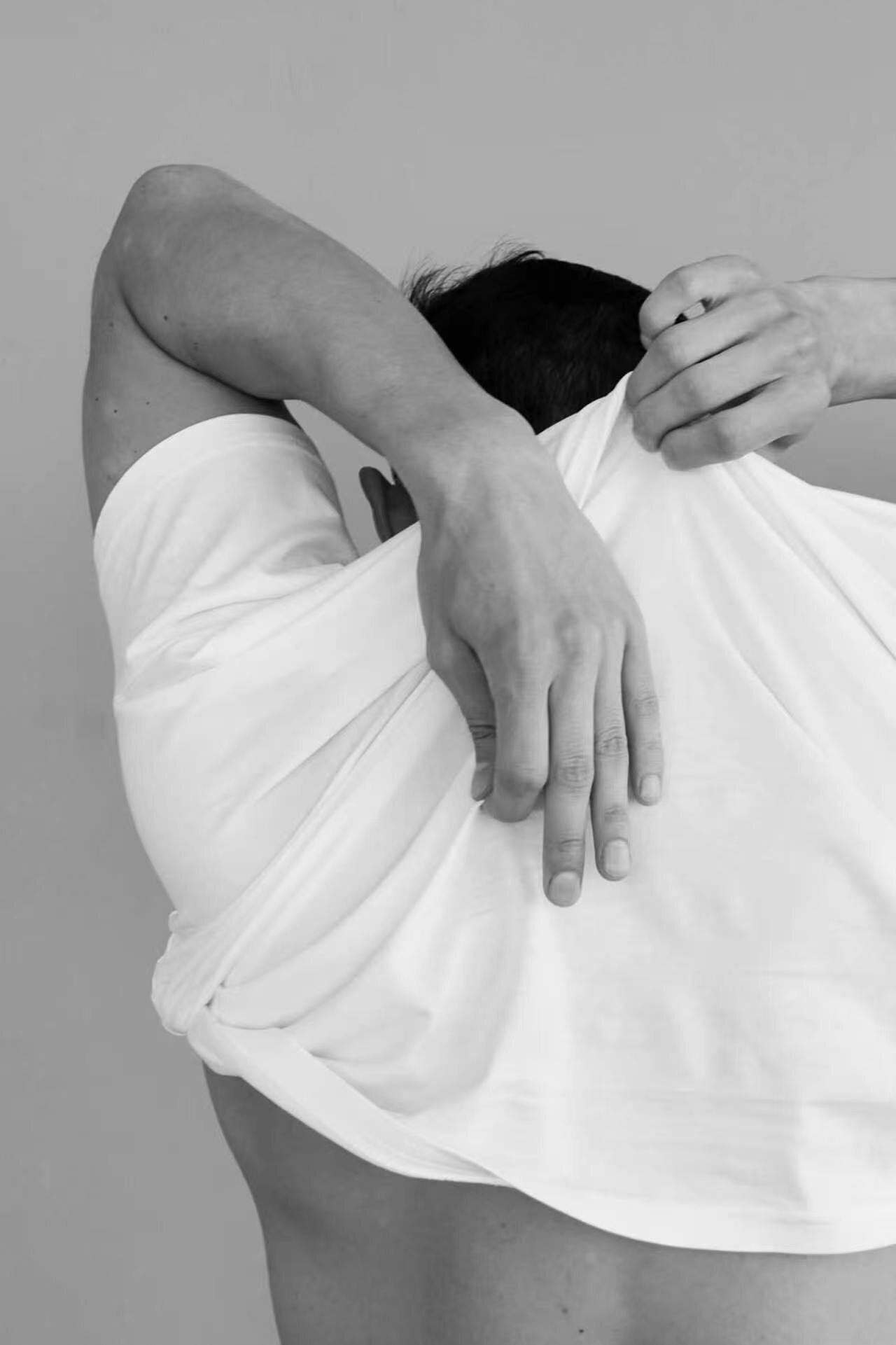
Cotton remains one of the most common choices for branded T-shirts because it provides a familiar natural hand feel and works with a wide range of garment styles.
It is particularly common in:
- Classic crew-neck T-shirts
- Heavyweight streetwear tees
- Oversized T-shirts
- Vintage-wash styles
- Private-label basics
- Printed merchandise
For a brand developing a premium heavyweight tee, cotton jersey is often a logical starting point. Heavyweight programmes are where the fabric choice is most visible — our custom 260gsm oversized boxy T-shirt is built around exactly that weight.
However, specifying only “100% cotton” is not enough for production.
A sourcing brief should also define:
- Fabric GSM
- Yarn and knit direction where relevant
- Required hand feel
- Color
- Washing or garment finish
- Shrinkage expectations
- Fit
- Printing or embroidery method
For example, a 180 GSM cotton jersey and a 280 GSM cotton jersey may both be 100% cotton but produce completely different garments.
You can compare those weights in our T-Shirt GSM Guide.
Is 100% Cotton Good for Printing?
In many cases, yes.
Cotton is commonly used for:
- Screen printing
- Puff printing
- Water-based printing
- Pigment printing
- DTG
- Embroidery
But the correct decoration method depends on the artwork, fabric surface, color and garment finish.
A heavily washed or textured T-shirt, for example, may need a different print setup from a smooth blank jersey. For a vintage acid-wash gradient tee, print trials should use the intended washed surface rather than an untreated jersey swatch.
NOVITA’s garment decoration and craftsmanship guide shows different printing, embroidery and finishing options that can be considered during product development.
2. What Is CVC Fabric?
CVC generally means Chief Value Cotton.
In practical apparel sourcing, it refers to a cotton-rich blend in which cotton represents the larger portion of the fiber composition. When sourcing through a blank T-shirt programme, specify the cotton percentage rather than treating every blend option as CVC.
One common example is:
60% cotton / 40% polyester
But CVC is not one fixed formula. A supplier may offer different cotton/polyester ratios, so the actual composition should always be written clearly in the tech pack or quotation.
Why Do Brands Use CVC for T-Shirts?
CVC is popular because it can combine some of the advantages of cotton and polyester.
Compared with a similar 100% cotton fabric, a CVC fabric may offer:
- Cotton-rich hand feel
- Good everyday durability
- Better shape retention
- Reduced sensitivity to shrinkage
- Easier care
- Competitive cost depending on specification
This makes CVC useful for products such as:
- Branded everyday T-shirts
- Corporate apparel
- Uniform programs
- Private-label basics
- Promotional apparel
- Repeat wholesale programs
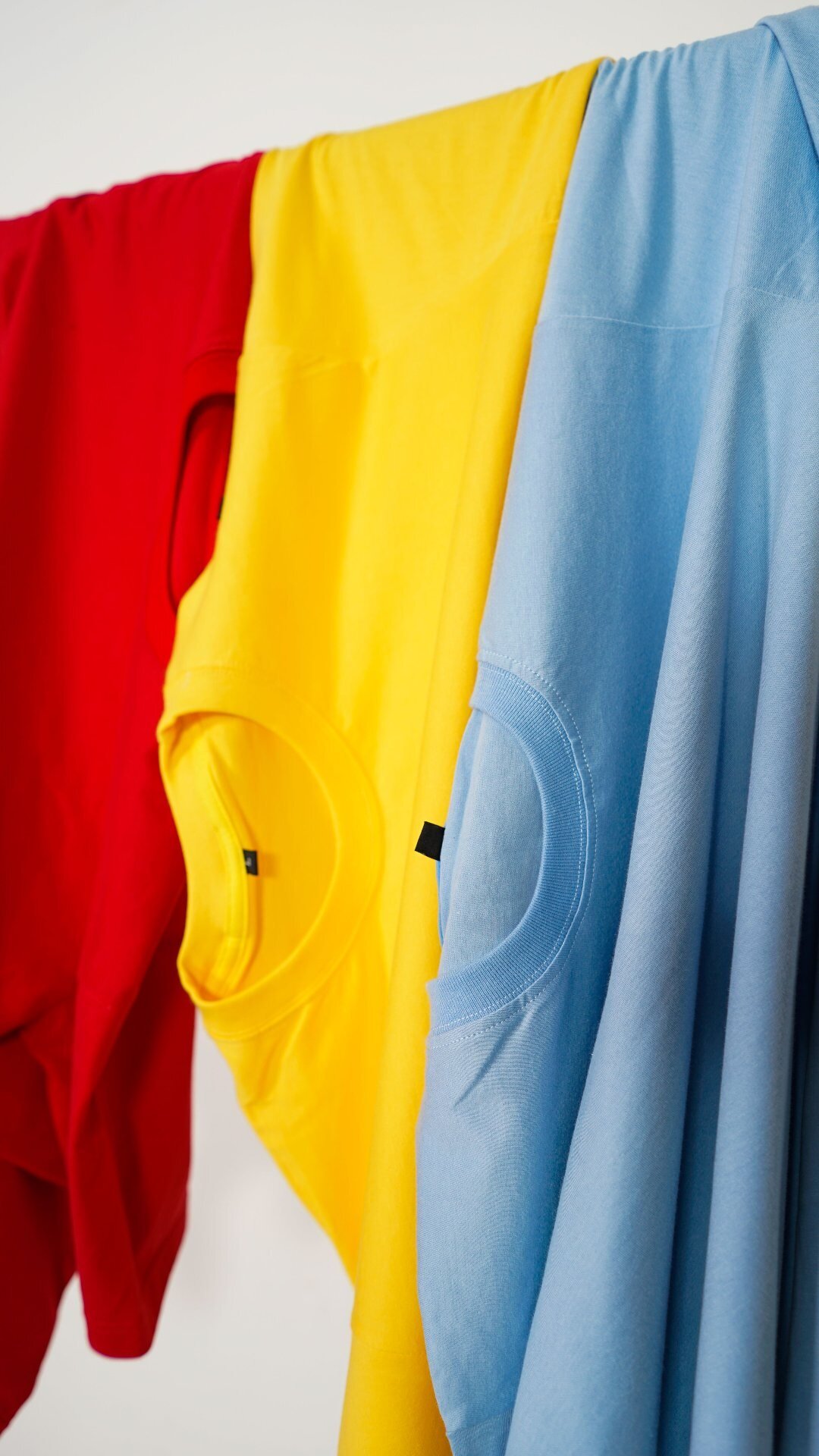
Cotton vs CVC T-Shirt
The decision normally comes down to the product positioning.
If your brand is selling a heavyweight premium basic and wants a distinctly natural cotton feel, 100% cotton may make more sense.
If you need a comfortable everyday T-shirt that will be washed frequently and you want a balance between cotton feel and durability, CVC may be worth sampling.
The key word is sampling.
Do not choose a blend only from a composition line on a quotation sheet. Feel the actual fabric and test it in the intended garment.
Our clothing sample development guide explains what brands should confirm before approving a garment for bulk production.
3. TC Cotton-Polyester Blends
TC fabrics also combine polyester and cotton, but they are commonly polyester-dominant rather than cotton-dominant.
For example:
65% polyester / 35% cotton
Again, the ratio is not universal.
TC fabrics may be considered when buyers prioritize:
- Durability
- Easy care
- Shape retention
- Frequent washing
- Competitive pricing
- Uniform or promotional use
Compared with cotton-rich CVC, a polyester-rich TC fabric usually feels less like a traditional cotton tee.
That is not automatically a disadvantage.
For a workwear program or high-volume promotional project, durability and easy maintenance may matter more than achieving a premium cotton hand feel.
For a fashion brand selling a soft, heavyweight lifestyle tee, the priorities may be completely different.
That difference is not limited to apparel. The same cotton-polyester family is used in automotive textiles, where the priorities shift: a T-shirt is normally judged on hand feel, drape, shrinkage and how it takes decoration, while car seat cover materials are judged mainly on abrasion resistance, ease of cleaning and how the fabric holds up to friction, temperature change and repeated use. In both industries, yarn, density, weave and backing influence the result more than the fiber ratio on its own.
4. 100% Polyester T-Shirt Fabric
Polyester is widely used for performance and technical T-shirts.
Its properties make it suitable for garments where moisture handling, fast drying or lightweight construction is important.
Common applications include:
- Sports T-shirts
- Teamwear
- Running tops
- Performance uniforms
- Sublimated garments
- Lightweight promotional apparel
Polyester and Sublimation Printing
One major reason brands choose polyester is sublimation printing.
Instead of placing a conventional ink layer on the surface of the garment, sublimation is designed to work with polyester-based materials, making it suitable for detailed all-over graphics and sportswear applications.
If your collection requires:
- Full-garment graphics
- Repeated logos
- Team designs
- Complex color artwork
polyester should be evaluated during development.
The exact polyester fabric still matters. Mesh, interlock, jersey and other constructions can create very different performance and visual results.
5. Cotton-Spandex T-Shirt Fabric
Adding a small percentage of elastane or spandex changes the behavior of a cotton T-shirt.
A fabric might, for example, use cotton with a small percentage of spandex to provide additional stretch and recovery.
This can work particularly well for:
- Slim-fit T-shirts
- Fitted fashion basics
- Stretch crewnecks
- Body-conscious silhouettes
- Styles that need better shape recovery
However, more stretch is not always better.
For an oversized heavyweight streetwear tee, extra stretch may work against the structured silhouette the designer wants.
For a close-fitting fashion tee, the same stretch may improve comfort considerably.
This is why fabric selection should follow the intended fit and silhouette, rather than being treated as a separate decision.
6. What About Tri-Blend T-Shirts?
Tri-blend fabrics commonly combine three fibers, often some combination of:
- Cotton
- Polyester
- Rayon or viscose-type fiber
These fabrics are frequently used to create a softer, lighter or more fluid hand feel.
They can suit:
- Lifestyle brands
- Vintage-inspired tees
- Soft promotional garments
- Lightweight fashion T-shirts
But “tri-blend” tells a buyer even less than “cotton blend.”
The exact composition should be confirmed.
Do not approve:
Tri-blend fabric
Approve something closer to:
Confirmed fiber composition + GSM + color + approved swatch + required finish.
That makes the requirement reproducible when production moves from development to bulk.
How Fabric Composition and GSM Work Together
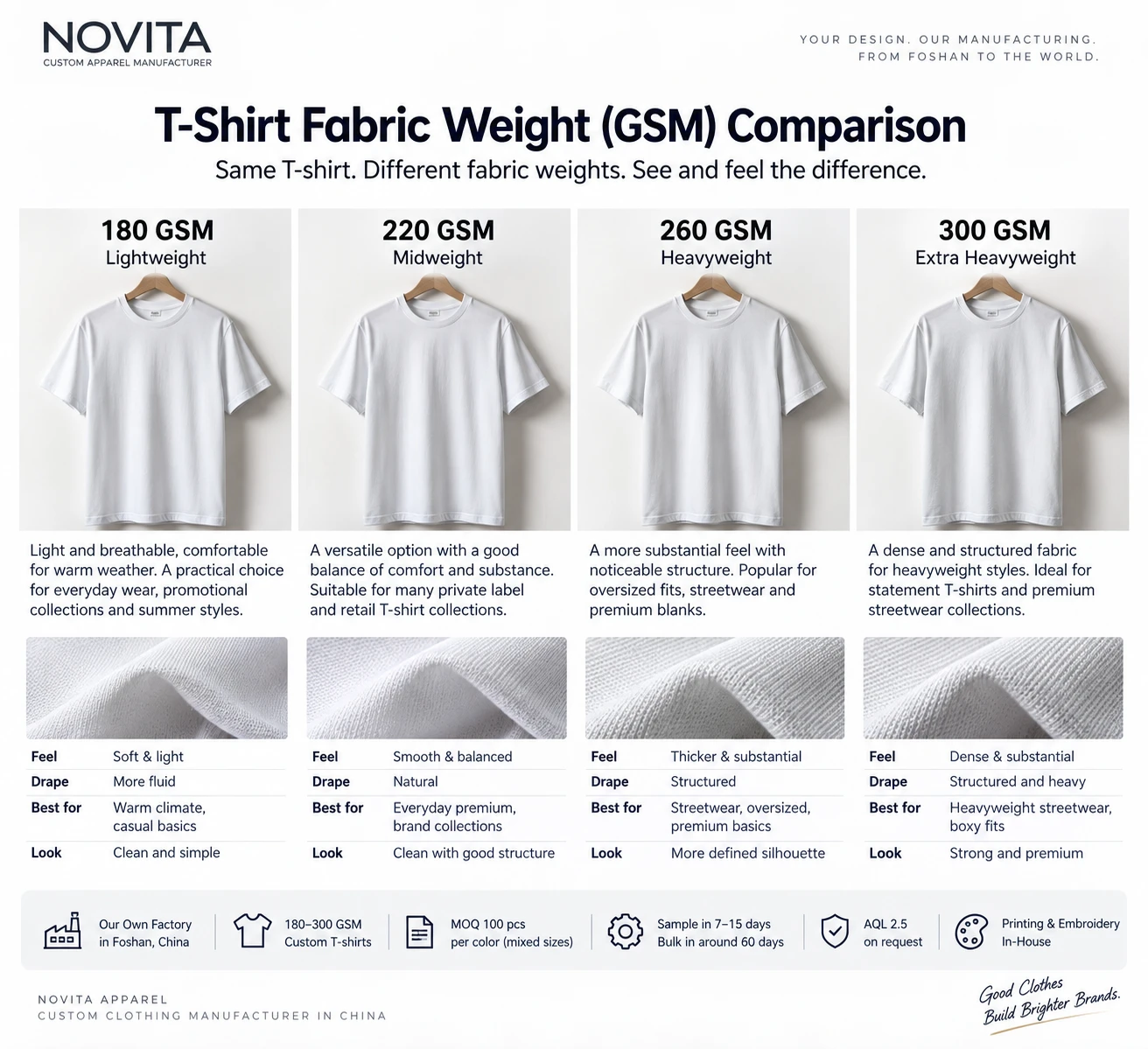
One of the most common sourcing mistakes is selecting composition without considering weight.
A buyer might request:
100% cotton T-shirt
but that specification still leaves a large number of possibilities.
A lightweight cotton jersey might suit a warm-weather basic.
A 220–260 GSM fabric might create a more substantial premium tee.
A 280 GSM or heavier jersey may be appropriate for certain structured streetwear silhouettes.
The composition tells you what the fabric is made from.
GSM tells you how much the fabric weighs per square metre.
Neither specification replaces the other.
For more detail, see our complete T-Shirt Fabric Weight and GSM Guide.
Which Fabric Is Best for Heavyweight T-Shirts?
For many heavyweight fashion and streetwear projects, cotton-rich jersey is a common starting point.
But the final result depends on more than fiber content.
Buyers should consider:
- GSM
- Yarn structure
- Knit density
- Surface finish
- Garment wash
- Pattern and fit
- Collar rib structure
- Shrinkage after washing
A 260 GSM tee can still feel soft and relaxed, while another fabric at a similar weight can feel dense and structured.
If you are developing an oversized or boxy garment, the sample should be evaluated as a complete garment rather than judging the fabric swatch alone.
You can see NOVITA’s current custom T-shirt capabilities on our Custom T-Shirt Manufacturing page.
Which T-Shirt Fabric Is Best for Screen Printing?
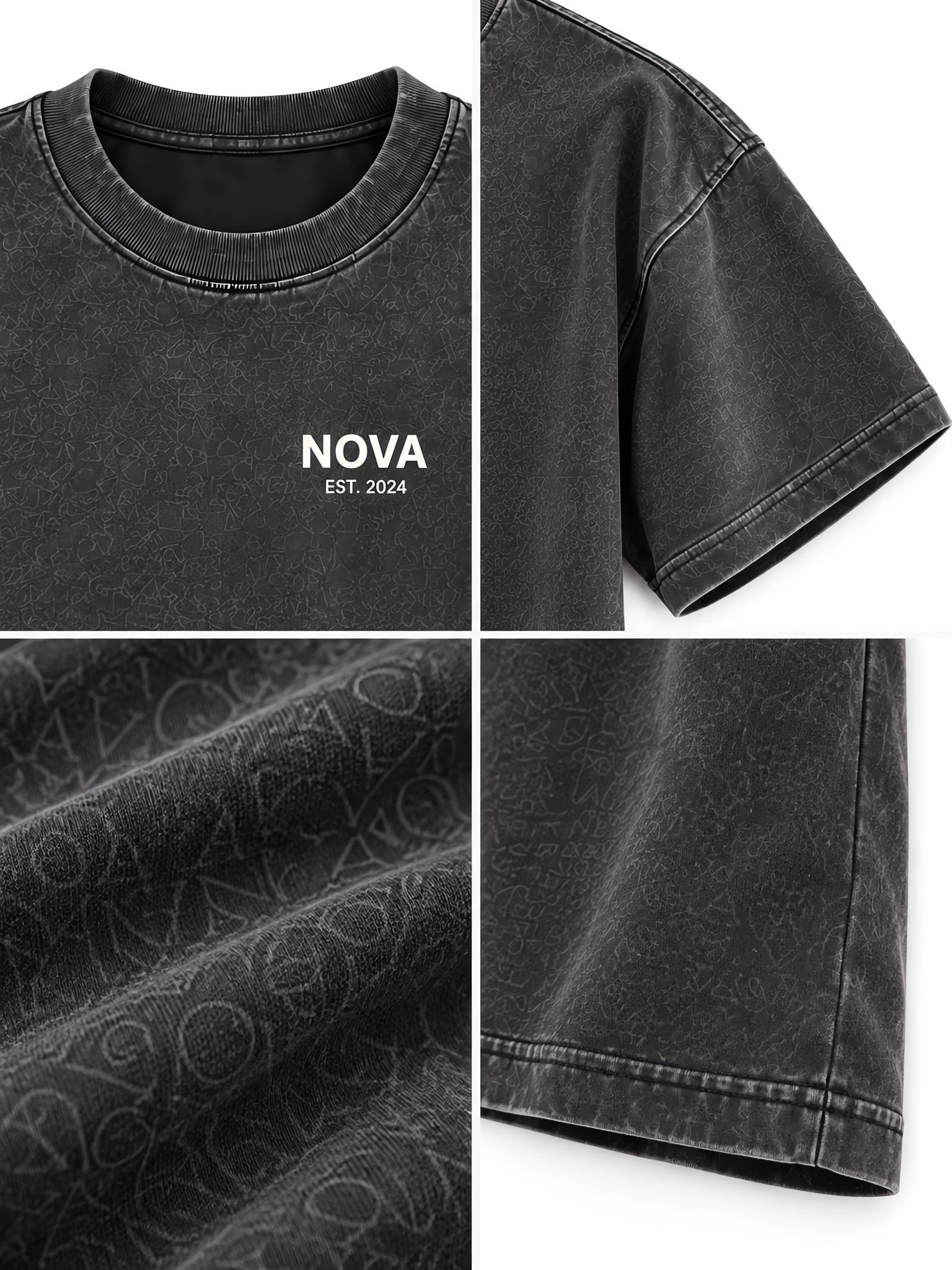
Cotton and cotton-rich fabrics are commonly selected for screen-printed fashion T-shirts, but the correct fabric depends on the artwork and desired finish.
Before production, provide the manufacturer with:
- Artwork file
- Print dimensions
- Print location
- Color references
- Number of colors
- Desired surface effect
- Wash requirement
- Target garment color
For specialty finishes such as puff, raised prints, foil, reflective effects or other decoration, the print technique should ideally be tested on the actual fabric selected for the garment.
Do not approve a decoration only from a digital mock-up.
Approve a physical result whenever the print or embroidery is important to the final product.
Which T-Shirt Fabric Is Best for DTG?
DTG is often associated with cotton-rich T-shirts because the printing process and pretreatment need to work with the selected fabric.
The final result can vary depending on:
- Fiber content
- Fabric color
- Knit surface
- Pretreatment
- Artwork
- Print settings
If DTG is central to your product, tell the manufacturer before fabric approval rather than choosing the fabric first and introducing the print process later.
Decoration should be part of the development specification.
For a side-by-side comparison of the two digital routes, see our DTG vs DTF printing guide.
Which Fabric Is Best for Sublimation?
For standard dye-sublimation applications, polyester-rich or polyester fabrics are normally the relevant starting point.
This makes them common for:
- Sportswear
- Team jerseys
- Performance T-shirts
- All-over printed products
A cotton heavyweight T-shirt and a polyester sublimation tee are therefore not competing versions of the same product.
They serve different product strategies.
How Clothing Brands Should Choose T-Shirt Fabric
Instead of asking:
What is the best T-shirt fabric?
start with these seven questions.
1. Who will wear the garment?
A streetwear buyer, sports team and corporate uniform customer have different requirements.
2. What should the T-shirt feel like?
Define the intended hand feel:
- Soft
- Dry
- Smooth
- Dense
- Structured
- Lightweight
- Stretchy
3. What should it look like?
Consider:
- Classic fit
- Oversized
- Boxy
- Slim
- Cropped
- Performance fit
4. What GSM do you want?
If you do not know yet, describe the intended garment and provide a reference sample.
5. How will it be decorated?
Printing and embroidery can influence the fabric choice.
6. How will the garment be washed?
Garment dye, acid wash, mineral wash and other finishing processes can change both appearance and fabric behavior.
7. What is your target cost?
A fabric specification should work commercially as well as technically.
The most expensive fabric is not automatically the best choice.
The best specification is the one that supports the product your customer is actually buying.
What Information Should You Send a T-Shirt Manufacturer?
A good RFQ should include more than a reference picture.
Send as much of the following as possible:
| Requirement | Example |
|---|---|
| Product | Men’s oversized T-shirt |
| Composition | 100% cotton |
| GSM | 240 GSM |
| Fit | Boxy / drop shoulder |
| Color | Pantone or reference |
| Sizes | S–XXL |
| Quantity | 300 pcs/color |
| Decoration | Front embroidery + back screen print |
| Labels | Main label + size label |
| Packaging | Individual polybag |
| Reference | Tech pack / sample / photos |
| Destination | Country and required delivery window |
If some details are not decided yet, say so.
A manufacturer can then distinguish between confirmed specifications and recommendations that still require approval.
This is the same principle used throughout our OEM & ODM manufacturing process.
Fabric Selection for Private Label T-Shirts
Private-label buyers often focus first on the logo, label and packaging.
Fabric deserves just as much attention.
Two brands can use nearly identical artwork but create very different products by changing:
- Fiber composition
- GSM
- Fit
- Collar construction
- Washing
- Printing
- Labels
- Packaging
If you are still deciding how your manufacturing relationship should work, read our guide to private label clothing manufacturing.
For custom NOVITA projects, the standard custom MOQ is from 100 pieces per color, with mixed sizes allowed.
Sample development generally takes 7–15 days, depending on the fabric, style and customization required.
Bulk production generally takes around 60 days after sample approval, with the final schedule depending on order quantity, fabric availability, customization requirements and product complexity.
Do Not Skip Fabric Approval Before Bulk Production
Fabric approval should happen before bulk cutting.
Depending on the project, buyers may need to confirm:
- Fiber composition
- GSM
- Fabric color
- Hand feel
- Stretch
- Surface appearance
- Shrinkage requirement
- Wash result
- Printing compatibility
- Approved swatch or sample
The approved garment then becomes an important reference during production and inspection.
Our Apparel Quality Control Checklist explains what buyers should review when checking fabric, workmanship, measurements, decoration, labels and packing.
T-Shirt Fabric Selection Checklist
Before approving your final fabric, confirm:
- Fiber composition
- GSM
- Fabric construction
- Color
- Hand feel
- Stretch requirement
- Shrinkage requirement
- Garment wash
- Print or embroidery method
- Fit
- Label requirements
- Packaging
- Approved physical sample
A clear fabric specification reduces uncertainty during sampling, costing and bulk production.
Work With NOVITA on Your Next T-Shirt Collection
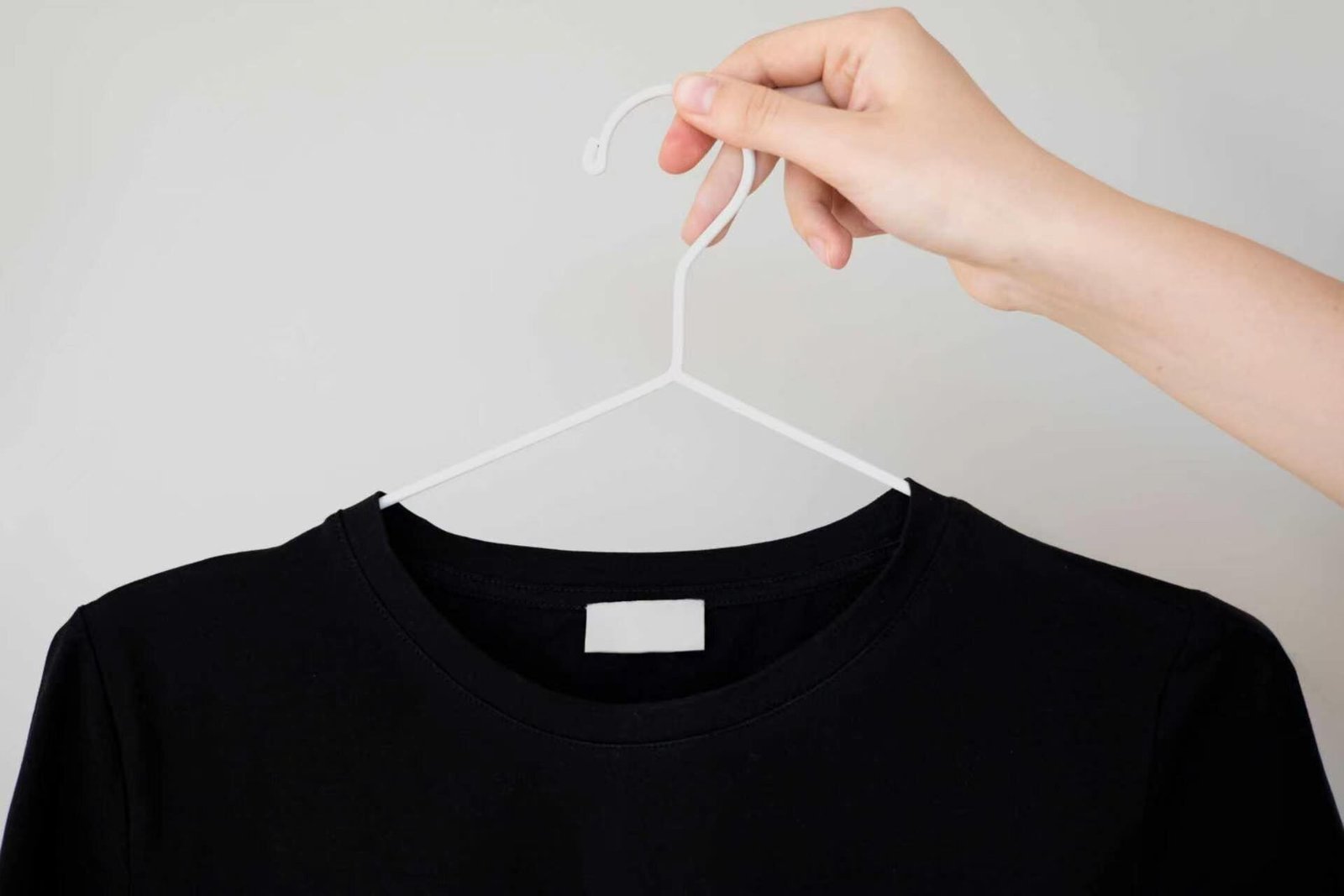
NOVITA supports custom T-shirt development for brands, wholesalers and private-label buyers from our apparel production base in Foshan, China.
Projects can begin with a:
- Tech pack
- Reference garment
- Product photo
- Fabric swatch
- Sketch
- Concept brief
We can then work through fabric and GSM selection, sampling, branding, printing or embroidery, bulk production and final inspection.
Explore our custom T-shirt manufacturing options or contact NOVITA for a quotation.
When requesting a quote, include your style, quantity, fabric preference, target GSM, customization requirements and destination. That gives the production team a much better basis for recommending a workable fabric and developing your first sample.
Frequently Asked Questions
What is the best fabric for a T-shirt?
There is no universal best fabric. Cotton is popular for natural hand feel and fashion T-shirts, CVC balances cotton feel with polyester durability, polyester suits many performance applications, and stretch blends work well for fitted garments. The best choice depends on fit, GSM, printing method, use case and target cost.
What does CVC mean in T-shirt fabric?
CVC generally means Chief Value Cotton. It describes a cotton-rich cotton/polyester blend in which cotton represents the larger share of the composition. The exact ratio varies, so buyers should confirm the actual fiber percentages before approving the fabric.
Is CVC better than 100% cotton?
Neither is automatically better. 100% cotton may be preferred when natural hand feel and cotton positioning are priorities. CVC can be useful when a buyer wants a cotton-rich feel together with improved durability, shape retention or easy-care performance.
What GSM is best for a T-shirt?
It depends on the product. Lightweight basics, standard everyday tees and heavyweight streetwear T-shirts require different fabric weights. GSM should be selected together with the composition, knit structure, fit and desired hand feel.
What fabric is best for heavyweight T-shirts?
Cotton and cotton-rich jersey fabrics are commonly used for heavyweight fashion T-shirts. However, GSM, yarn, knit density, finishing and garment construction all affect the final structure and hand feel.
What fabric is best for sublimation T-shirts?
Polyester-rich fabrics are normally the relevant choice for dye-sublimation because the process is designed to work with polyester fibers. Fabric construction and performance requirements should still be confirmed during sampling.
Can I customize the fabric for a private-label T-shirt?
Yes. Depending on the project and sourcing requirements, brands can specify composition, GSM, color, hand feel, fit, labels, printing, embroidery and packaging. Custom fabric requirements may affect MOQ, cost and lead time.
What is NOVITA’s MOQ for custom T-shirts?
Custom production generally starts from 100 pieces per color, with mixed sizes allowed. The workable MOQ may vary when special fabrics, colors, trims or decoration methods require higher supplier minimums.