
A workwear manufacturer should be able to connect the garment you order to the hazard it addresses, the evidence supporting it, and the business legally responsible for it. A heavy fabric and a safety-looking label cannot do that.
For US and European buyers comparing industrial workwear OEM suppliers, the document pack belongs beside the quotation. Use the questions below to check product standards and legal duties before comparing prices.
What counts as workwear
Workwear describes clothing worn for work, but not all workwear is personal protective equipment. Corporate uniforms identify staff; industrial uniforms support practical tasks; fashion utility clothing borrows the appearance. Hi-vis and flame-resistant garments become a different purchasing problem when specified to protect against identified hazards. [S1–S4]
This article concentrates on that standards-constrained category. An ordinary maintenance shirt and a protective shirt may share pockets and seams without sharing a compliance route. Your specification must therefore begin with intended use, exposure, destination market and required protection.
Keep non-protective staff clothing in a separate uniform sourcing brief. Mixing the categories invites suppliers to quote ordinary uniforms against a PPE requirement, making the cheaper proposal look comparable when it is not.
US and EN standards, side by side
Use the table to match hazards to relevant standards. Entries on the same row are not equivalent certifications. Ask your workwear manufacturer to identify the applicable edition, performance classification and finished-garment evidence. A fabric report cannot answer every question about a completed jacket, coverall or trouser.
| Hazard or use | US reference | EU/international reference | Evidence to request |
|---|---|---|---|
| Flash fire | NFPA 2112 | EN ISO 11612 addresses heat/flame, but is not an equivalent certification | Product certification, relevant thermal results and tested construction [S4, S7, S12] |
| Electric arc | NFPA 70E for workplace safety; ASTM F1506 for protective clothing | Separate arc-specific assessment; EN ISO 11612 alone does not establish arc protection | Arc rating, supporting test reports and selection against the workplace assessment [S5–S7] |
| Visibility around vehicles/equipment | ANSI/ISEA 107 | EN ISO 20471 | Finished-garment class, material areas, layout, colour and retroreflection results [S2, S3] |
| Rain | Buyer-selected rainwear specification; no equivalence claimed here | EN 343 legacy reference; check successor EN ISO 24232 | Water penetration, water-vapour resistance and seam evidence for the applicable specification [S8] |
| Kneeling | Task-specific specification; no equivalence claimed here | EN 14404 series | Evidence for the specified pad/pocket combination, not trousers alone [S9] |
| Industrial laundering | Contractually selected test programme | ISO 15797 | Named washing/drying procedures, agreed cycles and post-wash results [S10] |
ANSI/ISEA 107 and NFPA 2112 address entirely different hazards. Visibility around moving equipment is not flash-fire protection. Neither standard substitutes for the other. NFPA 70E is also not a garment certification badge. [S2, S4, S5]
As of November 2026, ANSI lists the 2026 edition of its visibility standard. ELOT lists EN 343:2019 as withdrawn and replaced by EN ISO 24232:2025. Agree applicable editions and check EU harmonised-standard references with the notified body; catalogue replacement alone does not decide certificate validity. [S2, S8]
Who is legally the manufacturer under PPE Regulation (EU) 2016/425
The legal manufacturer is the business that makes PPE, or has it designed or manufactured, and markets it under its own name or trademark. The sewing location does not decide this role. An EU brand commissioning own-brand PPE from China normally assumes the manufacturer’s obligations. [S1]
In that arrangement, the EU brand is identified as manufacturer on the EU Declaration of Conformity (DoC). An authorised signatory signs for and on its behalf. The factory does not replace the brand on the declaration simply because it cut and sewed the product. The brand remains responsible for conformity, technical documentation and consistent series production. [S1]
Separate these responsibilities before placing an order:
- CE marking: the legal manufacturer is responsible for affixing it after the applicable conformity assessment; it is not a generic factory accreditation.
- EU type-examination: where required, a notified body evaluates the type and issues the certificate to the manufacturer. Check the applicant, product identity and approved variants.
- DoC: the legal manufacturer assumes responsibility for the identified PPE. A laboratory report is not a substitute.
- Factory controls: contractually require retained test evidence, fabric/trim traceability, approved production specifications and change control. The brand retains its statutory duties while relying on those factory controls. [S1]
Category II PPE requires type-examination plus internal production control. Category III adds supervised product checks or production-process quality assurance. Do not assume every garment follows the same route. [S1]
A useful contractual rule: no mill, finish, reflective tape, zipper or production-site substitution without written assessment and approval. Build that rule into the private-label manufacturing agreement. If the brand cannot retrieve the technical file without the factory’s permission, its compliance arrangement needs fixing before shipment.
Fabric specification: what to put in numbers
Fabric weight is a purchasing variable, not proof of protection. Specify composition, construction, finished weight, finish identity, colour and supporting performance evidence together. These common industry starting ranges require supplier confirmation. They describe neither NOVITA stock and capabilities nor safety thresholds.
| Fabric option | Weight in oz/yd² and GSM | What to put in the purchase specification |
|---|---|---|
| Cotton duck/canvas | 10 or 12 oz/yd²; approximately 339 or 407 GSM | Finished weight, weave, shrinkage target and abrasion/tear evidence |
| Polyester/cotton twill | 240–280 GSM; approximately 7.1–8.3 oz/yd² | Exact fibre percentages, weave and care route |
| Ripstop | Specify the target finished weight in oz/yd² and GSM in the tech pack; have the supplier confirm both values. | Ground weave, reinforcement grid, yarn identity and tear evidence |
| FR cotton | Specify the target finished weight in oz/yd² and GSM in the tech pack; have the supplier confirm both values. | Exact fabric/finish identity and post-laundering protective results |
| Cotton/nylon or modacrylic-containing FR blend | Specify the target finished weight in oz/yd² and GSM in the tech pack; have the supplier confirm both values. | Full fibre breakdown, product identity and hazard-specific reports |
Final selection must follow the buyer’s risk assessment, required rating and test reports, not these starting ranges.
Check blend names carefully. The familiar 88/12 example is cotton/nylon, as documented for Westex UltraSoft. It is not a cotton/modacrylic ratio. A modacrylic-containing alternative needs its own composition and performance evidence; do not transfer that ratio or another fabric’s results. [S15]
Use the fabric inspection guide for roll acceptance, and assess protective performance separately.
Construction spec for durability
Durable construction needs a location-specific seam plan. Asking for “reinforced stitching” leaves the factory to decide what that means. Give your workwear manufacturer annotated drawings, a seam schedule and an approved sample; confirm the combination through wear, seam and laundering checks appropriate to the product.
Mark bar tacks at agreed stress points such as pocket mouths and belt-loop attachments. Specify the crotch gusset’s shape and attachment in the pattern and construction pages. Check movement while kneeling and climbing, not just standing fit.
Felled describes seam construction; chain stitch describes stitch formation. They are not competing seam categories: a felled seam can use chain stitching. Record seam type, stitch type, thread, reinforcement and stitches per inch (SPI) separately. Have the supplier propose SPI for each assembly, then approve it after testing; there is no universal density that guarantees durability.
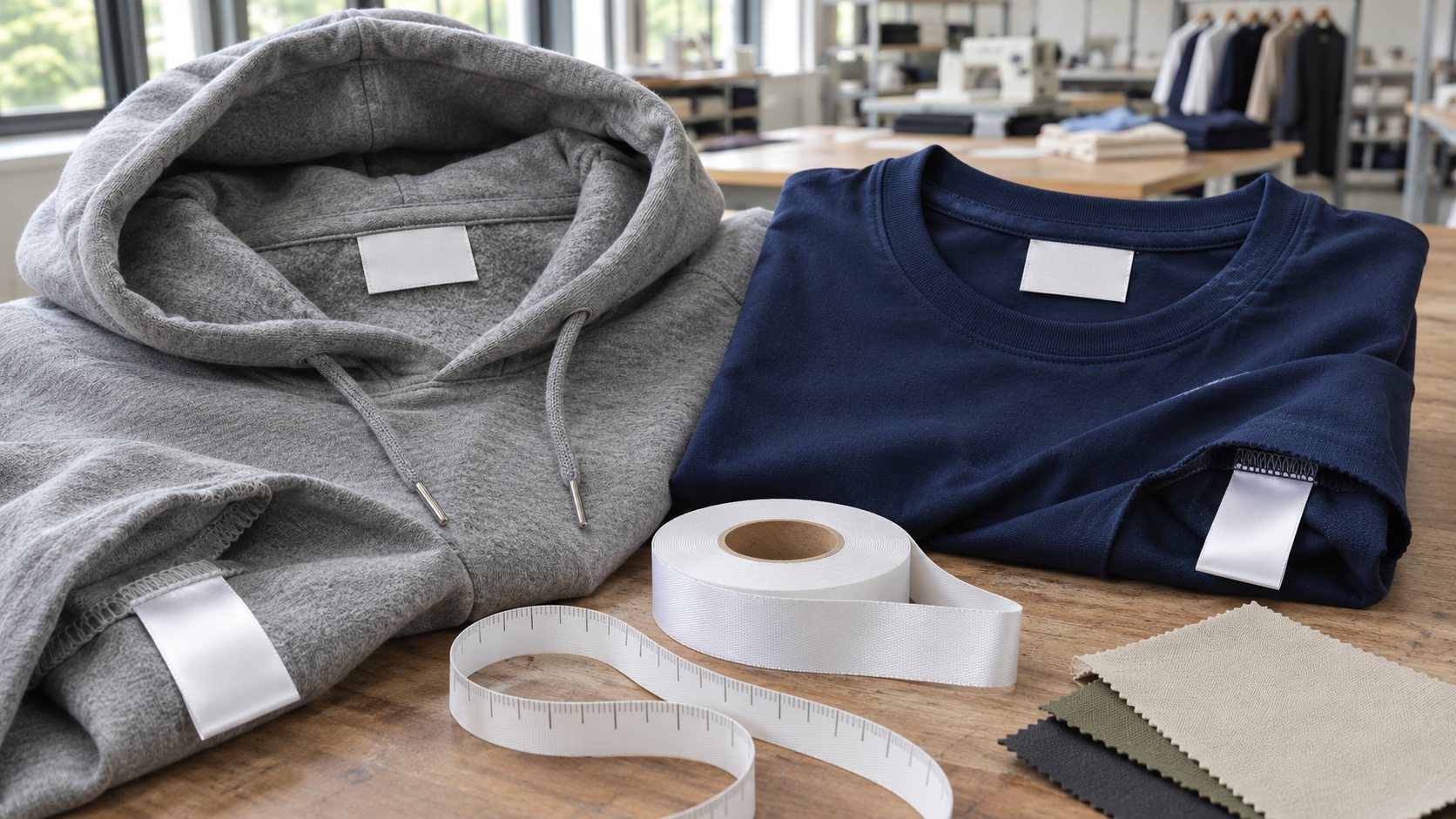
Put reinforcement callouts on front/back technical flats, cross-reference detail drawings, and list thread and hardware in the bill of materials. For FR-PPE, the approved component combination matters: UL’s evaluation covers hardware, reflective striping, labels and thread, not fabric alone. [S12]
The certification document pack to request
Request model-specific evidence before approving bulk production. A certificate bearing the supplier’s name is not enough if its scope misses your garment, fabric or protective claim. Make the following pack a deliverable in your manufacturing RFQ, with a named owner for each document.
- [ ] Test reports: laboratory identity, sample description, fabric reference, method/edition, conditioning, cleaning history and results. ASTM F1930 is the instrumented-manikin method relevant to NFPA 2112 flash-fire performance; it is not a standalone certificate of full compliance. [S4, S11, S12]
- [ ] EU type-examination certificate, where applicable: manufacturer, model, approved options, issuing notified body, annexes and restrictions. [S1]
- [ ] EU DoC: manufacturer identity, identifiable PPE, applicable legislation/standards and signature on its behalf; reconcile these with the certificate. [S1]
- [ ] Care information: EN ISO 3758 symbols where applicable, plus explicit protective-clothing instructions. ISO 3758 excludes industrial laundering, so domestic care symbols alone do not validate an industrial wash route. [S13, S14]
- [ ] FR batch traceability: mill/fabric/finish identity, batch records and links from incoming material to finished shipment.
- [ ] Validity and renewal: certificate issue/expiry dates, renewal planning and revision history. EU type-examination certificates have a maximum validity of five years; check earlier restrictions or changes too. Test reports do not share a universal expiry rule. [S1]
- [ ] UL certification, if claimed or required: verify the exact product listing and scope. NFPA 2112 requires third-party certification; UL is a possible certifier, not the name of the standard. [S12]
Hold approval until the supplier resolves differences in style codes, composition or manufacturer identity.
ISO 15797 industrial laundering as a purchase spec
ISO 15797 defines laboratory washing and finishing procedures for evaluating workwear intended for industrial laundering. It is neither a universal wash-life rating nor an operating manual for laundries. ISO also advises checking compatibility with actual industrial equipment and processes where appropriate. [S10]
Ask the supplier to name the selected procedure, drying/finishing route, detergent conditions, agreed cycle count and acceptance criteria. Request post-wash dimensions, seam condition, colour/retroreflection and protective results as applicable. “Industrially washable” without a procedure and endpoint is not a useful purchase specification.
Laundering demands influence the choice between inherent FR and treated FR, but the shortcut “treated washes out; inherent never fails” is wrong. Inherent FR comes from the fibre’s chemistry rather than an applied FR treatment. Treated FR depends on the treatment system, its durability and correct care. A non-durable or damaged treatment can lose protection; a durable treatment need not simply wash away. Westex describes its cotton Indura and cotton/nylon UltraSoft products as retaining FR properties for garment life under specified care conditions. Those are product-specific manufacturer claims, not guarantees for generic FR cotton. [S15, S16]
Neither route makes the garment immune to damage, contamination or worn reflective tape. Choose against the intended laundering service and verified retained performance, then document inspection and retirement rules. Never invent a replacement interval from the words “inherent” or “treated.”
What a China OEM workwear program actually looks like
A China OEM programme should resolve design, fit and production conformity before shipment. The sequence below is a recommended purchasing workflow, not a promised NOVITA service or lead time. PPE workwear sourcing from China requires agreement on the compliance route before treating a sample as production-ready.
1. RFQ and feasibility: disclose hazards, markets, sizes, quantity by colour and expected laundry service. Agree who owns certification and testing costs. 2. Proto: check construction, pocket function, closures and access for decoration. 3. Fit sample: assess movement, layering and grading. Recheck visible material areas when sizes or logos change. 4. PP sample: approve the actual bulk fabric, trims, labels and construction. Link it to the applicable evidence; arrange further testing where necessary. 5. Bulk and release: lock approved components, retain production records and reconcile shipment documents with the approved product.
Request MOQ brackets for available fabric, custom-dyed fabric and a new certified assembly separately. Confirm every quoted range or minimum with the supplier; this guide does not assert a market-wide MOQ. The MOQ guide helps separate garment minimums from material commitments.
Break lead time into material sourcing, sampling/revisions, testing/certification, production and transport. Ask which stages can overlap and which depend on approval. Use a sample-to-bulk consistency plan and pre-shipment inspection brief to control execution; neither replaces PPE conformity assessment. For bulk release, buyers commonly specify zero tolerance for safety-critical defects such as incorrect reflective tape placement, incorrect FR labelling or unapproved component substitution, alongside agreed AQL limits for major and minor visual defects. These are buyer-set inspection terms, not legal or standard requirements.
Why “Top N workwear manufacturers in the USA” listicles mislead you
A US-focused listicle does not establish US production. A workwear manufacturer, sourcing agent and distributor can all serve American buyers while cutting and sewing elsewhere. A ranking can help you find candidates, but you still need evidence of manufacturing origin and certification. Ask each candidate to explain its supply chain.
Verify the production address separately from the sales office. Request a live video walkthrough or independent factory audit tied to your order. Seek export declarations or shipping records where lawfully available, with commercial details redacted if needed. These can corroborate a transaction but may name a trader rather than the actual factory.
Compare the factory identity with the certificate holder, approved production sites where listed, invoices and batch records. Ask for an explanation of differences. A domain name or list heading cannot establish production country. Any allegation that a named supplier misrepresents origin needs evidence.
FAQ
Can hi-vis and FR be the same garment?
Yes, if the finished design supports both sets of claims. FR fabric does not automatically establish visibility compliance, and reflective tape does not establish flash-fire protection. Verify the complete assembly and applicable reports, including care conditions. [S2–S4, S12]
What separates EN ISO 20471 Class 1, 2 and 3?
Classification depends on minimum visible material areas and garment design, with Class 3 the highest visibility class. It is not a fabric-weight ranking. Ask for classification across the ordered size range and after intended decoration; logos can reduce qualifying visible area. [S3]
How many washes before treated FR stops working?
There is no universal number. Ask for the exact fabric’s care instructions, declared cleaning limits where specified, and retained-performance evidence. Durable treated FR can retain its properties for garment life under appropriate care; “treated” alone does not predict a wash-out date. [S15, S16]
Can a Chinese factory hold an EU type-examination certificate?
Yes, when it is the legal manufacturer for the assessed PPE; that role is not restricted to EU businesses. But its certificate does not automatically cover a different brand’s own-name manufacturing arrangement. Resolve product identity, certificate arrangements and DoC responsibility with the notified body. [S1]
What MOQ should I expect?
Ask the workwear manufacturer to quote minimums by style, colour, fabric route and certified configuration. A trial order using available materials is a different proposition from custom dyeing and new product assessment. Confirm quantities and costs rather than relying on an unsupported “typical” minimum.
Before shortlisting a workwear manufacturer, put the hazard, legal manufacturer, approved assembly, evidence and wash route on the same RFQ. If those details cannot be reconciled, the order is not ready for a price-only decision.