For a polo shirt, fabric choice affects much more than how the garment feels.
It changes the way the collar sits, how the body drapes, how embroidery looks, how breathable the finished polo feels, and whether the style appears more classic, corporate, casual or fashion-focused.
Two of the most common options are piqué and jersey.
Both can work well for custom polo shirts, but they create very different finished products. For brands, wholesalers and private-label buyers, the better choice depends on the target customer, desired appearance, fabric weight, decoration method and intended use.
This guide explains the practical differences between piqué and jersey polo shirts from a sourcing and manufacturing perspective.
Piqué vs Jersey Polo Shirts: Quick Comparison
| Factor | Piqué Polo | Jersey Polo |
|---|---|---|
| Surface | Textured | Smooth |
| Structure | More structured | Softer and more fluid |
| Traditional polo look | Strong | Moderate |
| Drape | Firmer | Softer |
| Breathability | Generally good | Depends on composition and weight |
| Embroidery | Common choice | Suitable when fabric is properly selected |
| Printing | Possible, but texture matters | Smooth surface is often easier for printing |
| Typical applications | Uniforms, classic polos, corporate wear | Casualwear, fashion polos, lifestyle brands |
| Overall appearance | Traditional and structured | Modern and relaxed |
The important point is that neither fabric is automatically “better.”
The right fabric is the one that fits the product you are trying to make.
What Is Piqué Fabric?
Piqué is a knitted fabric recognized by its textured surface.
Instead of looking completely flat and smooth, the fabric usually has a small raised pattern. This texture gives piqué polo shirts a more structured and traditional appearance. That structure is what most buyers are actually specifying when they ask for a classic custom piqué polo shirt.
It is strongly associated with the classic polo silhouette.
For buyers developing corporate polos, uniforms, golf-inspired styles or traditional menswear, piqué is often one of the first fabrics considered.
However, not every piqué fabric is the same.
A buyer still needs to confirm:
- Fiber composition
- GSM or fabric weight
- Yarn quality
- Stretch
- Hand feel
- Shrinkage requirements
- Color
- Finishing
- Intended washing method
Simply writing “cotton piqué” in an inquiry does not fully define the fabric.
What Is Jersey Fabric?
Jersey is also a knitted fabric, but its surface is usually smoother than piqué.
It tends to create a softer and more relaxed silhouette.
Because of that, jersey polos are often used when a brand wants something closer to a premium T-shirt feel while still keeping the collar and placket construction of a polo shirt.
Jersey can work especially well for:
- Casual fashion polos
- Slimmer silhouettes
- Soft-touch collections
- Minimalist private-label styles
- Lifestyle brands
- Lightweight polo programs
Just like piqué, jersey can be produced in different compositions, weights and finishes.
A heavy cotton jersey polo can behave very differently from a lightweight blended jersey polo.
1. Texture: Piqué Is Textured, Jersey Is Smooth
The most obvious difference is the surface.
Piqué fabric has visible texture.
That texture gives a polo more visual depth and makes the fabric feel less like a standard T-shirt.
Jersey fabric has a smoother surface.
It usually feels more familiar to buyers who already work with T-shirts and other basic knitwear.
This difference also affects branding.
A fine logo or detailed print may behave differently on a textured piqué surface than it does on smooth jersey. For a custom printed polo shirt, approve the artwork on the intended fabric so that its texture is accounted for before production.
So before selecting the fabric, buyers should consider not only the garment itself but also what decoration will be applied to it.

2. Structure and Drape
Piqué generally creates a more structured polo.
The garment tends to hold its shape more clearly, which is useful when the buyer wants:
- A classic collar
- A clean placket
- A corporate appearance
- A more traditional menswear silhouette
Jersey generally creates a softer drape.
That can be useful for brands looking for:
- A relaxed silhouette
- Softer hand feel
- Fashion-oriented styling
- Lightweight casualwear
- A polo that feels closer to a T-shirt
This is one reason why choosing fabric only from a photograph can be risky.
Two polos can use almost the same pattern but look noticeably different once they are made in different fabrics.
3. Which Fabric Is More Breathable?
Breathability cannot be determined only by the words “piqué” or “jersey.”
Fiber composition, knit construction, fabric weight and finishing all matter.
A lightweight fabric may feel very different from a heavier version of the same fabric type.
For hot markets, buyers should therefore specify more than just the fabric name.
A useful sourcing brief might include:
Cotton piqué + target GSM + breathable hand feel + intended climate + approved color
rather than simply:
Cotton piqué
The more clearly the intended end use is communicated, the easier it is for the factory to recommend an appropriate fabric direction.
4. Piqué vs Jersey for Embroidery
Embroidery is widely used on polo shirts because chest logos, badges and small branded details work naturally with the category.
Piqué is frequently paired with embroidery because its structured appearance suits traditional polo branding.
However, the embroidery result still depends on factors such as:
- Fabric weight
- Stitch density
- Logo size
- Backing
- Placement
- Thread type
- Fabric stretch
Jersey can also be embroidered, but lighter or softer fabrics may require more attention during development.
A dense embroidery design on a lightweight knit may distort the surrounding fabric if the artwork, backing or stitch construction is not suitable.
That is why the decoration method should ideally be considered during sampling rather than after the fabric has already been approved. For the embroidery side of that decision — digitizing, backing, stitch density and placement — see our guide to polo shirt embroidery.
NOVITA currently offers embroidery as well as multiple printing and garment-decoration techniques for custom apparel production.
5. Which Fabric Is Better for Printing?
For printed polo shirts, jersey has one obvious advantage: the smoother surface can make it easier to reproduce certain graphics cleanly.
Piqué has more surface texture, so the final appearance of a print can depend more heavily on the artwork and printing technique.
That does not mean piqué cannot be printed.
It means the buyer should test the actual combination of:
fabric + artwork + printing process
before approving bulk production.
For simple branding, embroidery may fit a classic piqué polo particularly well.
For larger fashion graphics, a smoother jersey fabric may sometimes provide a more suitable base.
The correct method depends on the design.
6. How GSM Changes the Result
Fabric structure is only one part of the decision.
GSM matters too.
Two piqué fabrics with different GSM values may produce noticeably different polos.
The same is true for jersey.
A lighter fabric may create:
- Softer drape
- Less bulk
- A lighter hand feel
A heavier fabric may create:
- More structure
- A more substantial feel
- A different silhouette
This is why wholesale buyers should avoid evaluating fabric based only on composition.
“100% cotton” does not tell you how heavy, compact, soft or structured the fabric will feel.
The tech pack or sourcing brief should ideally specify both composition and target GSM.
7. Which Is Better for Corporate Uniforms?
For many corporate and uniform applications, piqué is the more traditional starting point.
Its structured appearance works well with:
- Embroidered chest logos
- Company uniforms
- Staff polos
- School-style uniforms
- Hospitality wear
- Promotional apparel
The texture also helps distinguish the garment visually from a standard jersey T-shirt.
However, buyers supplying very hot climates or more casual workplaces may still choose jersey or lighter piqué constructions.
The end-use environment should drive the final decision.
8. Which Is Better for Fashion Brands?
For fashion-focused private-label brands, there is no single answer.
A traditional menswear brand may prefer piqué because it reinforces the familiar polo identity.
A contemporary streetwear or lifestyle brand may prefer jersey because it creates a softer and more relaxed product.
Other design decisions also matter:
- Oversized or fitted silhouette
- Sleeve length
- Collar shape
- Button or zip placket
- Contrast collar
- Rib construction
- Garment wash
- Embroidery
- Printing
- Labels and trims
Fabric should therefore be selected as part of the entire product concept rather than as an isolated specification.
9. Which Is Better for a Premium Polo Shirt?
A higher price point does not automatically require one particular fabric.
A premium polo can be made in piqué or jersey.
What matters is the overall execution:
fabric quality + appropriate GSM + fit + collar construction + stitching + trims + decoration + finishing
A heavy or expensive fabric cannot compensate for poor construction.
Likewise, a simple fabric can still produce a strong commercial product when the specifications and workmanship are well controlled.
For buyers, the more useful question is not:
“Is piqué more premium than jersey?”
It is:
“Which fabric produces the look, feel and performance my customer expects?”
10. What Should Buyers Send a Polo Shirt Manufacturer?
Before requesting a sample or quotation, prepare as much of the following information as possible:
- Reference image or tech pack
- Piqué or jersey preference
- Fiber composition
- Target GSM
- Color or Pantone reference
- Size range
- Fit
- Collar construction
- Placket style
- Button requirements
- Logo artwork
- Printing or embroidery requirements
- Label requirements
- Packaging requirements
- Estimated order quantity
- Destination market
If some specifications are not yet finalized, say so clearly.
The manufacturer can then separate fixed requirements from areas where fabric or construction recommendations are still needed.
This approach is also consistent with NOVITA’s current sample-development workflow, which asks buyers to define fabric, composition, GSM, color, trims, decoration and commercial requirements before sampling.
11. Should You Request Fabric Swatches Before Sampling?
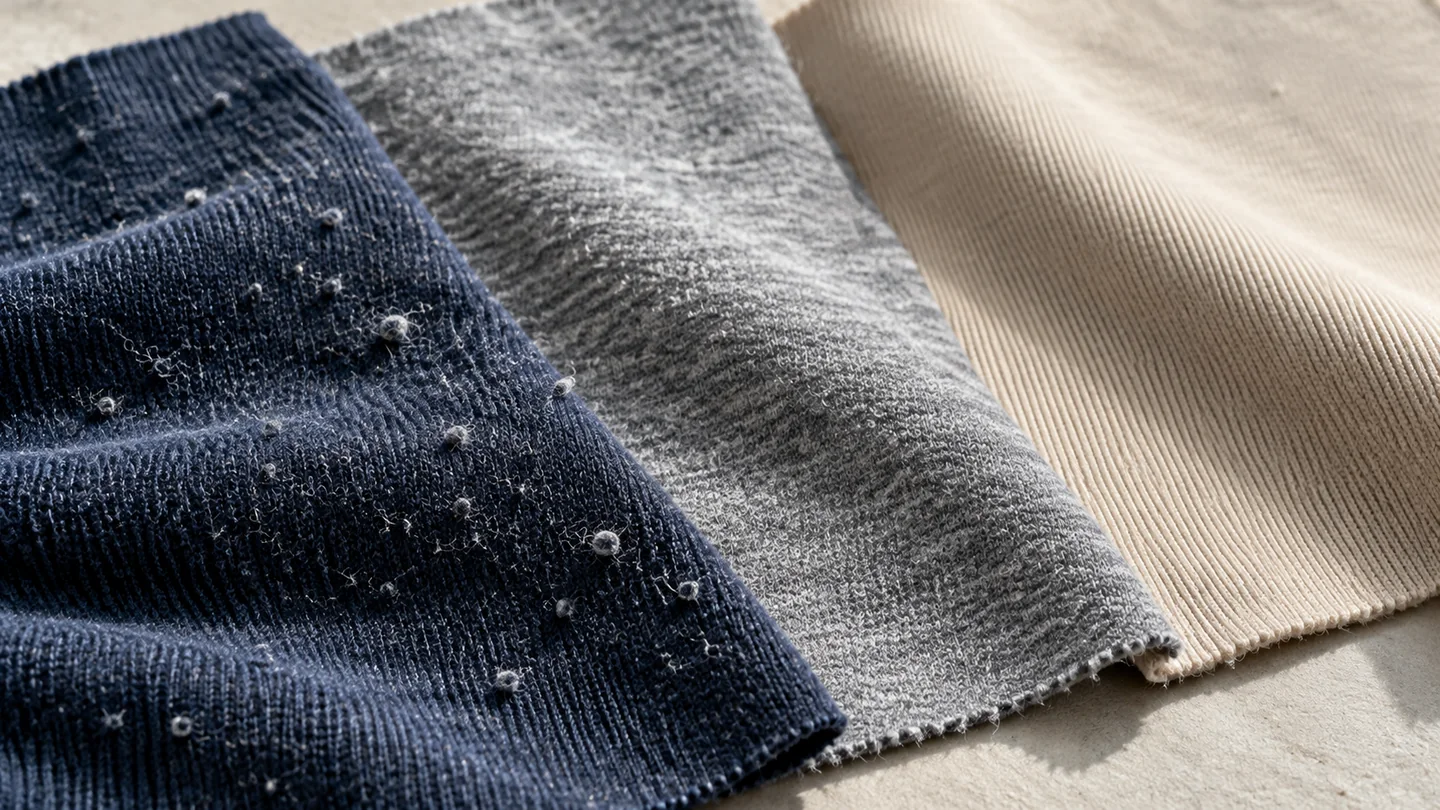
For a custom polo project, fabric swatches can be useful when hand feel, texture or color is particularly important.
A photo cannot fully communicate:
- Surface texture
- Thickness
- Softness
- Stretch
- Recovery
- Drape
- Actual color
For that reason, buyers developing a new fabric direction should consider confirming the material before relying on a finished garment sample alone.
NOVITA’s current OEM/ODM process includes fabric and material confirmation before sample development and bulk production.
12. Piqué or Jersey: How Should a Buyer Decide?
A simple way to make the first decision is:
Choose piqué when you want:
- A classic polo appearance
- More visible fabric texture
- More structured styling
- Corporate or uniform applications
- Traditional embroidered branding
Choose jersey when you want:
- A smoother surface
- Softer drape
- A more casual appearance
- Fashion-oriented styling
- A polo closer to the feel of a premium T-shirt
Then refine the decision through GSM, composition, sample fit and decoration testing.
The fabric name gives you a direction.
The approved sample determines the actual product.
Understanding fabric structure is only one part of the decision. Our guide to the custom polo production process covers the full sequence, from the first specification through to bulk delivery.
Frequently Asked Questions
Is piqué better than jersey for polo shirts?
Not automatically. Piqué generally gives a more textured and structured appearance, while jersey is usually smoother and softer. The better option depends on the target style and end use.
What fabric is commonly used for classic polo shirts?
Piqué is strongly associated with traditional polo shirts because of its textured surface and structured appearance.
Can jersey be used for polo shirts?
Yes. Jersey is commonly used when buyers want a smoother, softer or more casual polo shirt.
Is piqué good for embroidery?
Piqué is commonly used with embroidered polo logos. The result still depends on fabric weight, logo design, stitch density, backing and other technical factors.
Can you print on piqué fabric?
Yes, but the textured surface may affect the appearance of some prints. Buyers should test the intended artwork and printing method during sampling.
Does higher GSM mean better polo shirt quality?
No. GSM describes fabric weight, not overall quality. Composition, yarn, knitting, finishing, construction and workmanship also affect the finished garment.
What information should I give a polo shirt manufacturer?
Provide your design or reference, fabric preference, composition, GSM, fit, colors, size range, branding requirements, order quantity and destination. A tech pack is useful when available.
Final Thoughts
Piqué and jersey can both produce successful polo shirts, but they serve different product directions.
Piqué is a strong starting point when the goal is a traditional, textured and more structured polo.
Jersey is useful when the product needs a smoother surface, softer drape and more casual or fashion-oriented character.
For wholesale and private-label buyers, fabric selection should not stop at the words “piqué” or “jersey.”
Confirm the composition, GSM, color, hand feel, fit, collar construction and decoration method, then evaluate the actual sample before approving bulk production.
NOVITA currently develops short-sleeve, long-sleeve, zip-neck, button-placket and contrast-collar polo styles in piqué and other knit fabrics, with fabric, fit and branding details customized according to project requirements.
Send your reference, target market and branding requirements through our contact page, and we can discuss a suitable fabric direction for your polo program.