Choosing the right polo shirt manufacturer requires more than comparing unit prices. A polo is one of the most specification-sensitive garments in menswear: collar construction, placket depth, cuff rib, fabric knit structure and decoration method all change how the finished shirt reads on a shelf or in a uniform programme.
This guide walks through what buyers actually need to confirm before placing a bulk polo order — how to evaluate a supplier, which styles are worth carrying, how knit structures differ, what to lock down in the spec sheet, and how the OEM process runs from artwork to delivery.
How to Choose a Polo Shirt Manufacturer
Most sourcing problems on polos trace back to one of five gaps. Close them before you ask for a price.
Collar and placket engineering. The collar is the first thing a buyer touches and the hardest part to get right. Ask how the collar is built — self-fabric, ribbed, or fused — and whether the placket is cut as a separate piece or folded from the body. A supplier who cannot describe this in detail will not repeat your approved sample consistently.
Decoration capability in-house. Embroidery and print are where polo programmes most often slip. Confirm whether decoration is run in-house or subcontracted, because that determines who owns quality control when the chest logo puckers or a print colour drifts.
Knit structure knowledge. Piqué, jersey and performance knits behave differently under decoration and after washing. A supplier should be able to explain which structure suits your end use rather than accepting whatever is on the sample shelf.
Sampling before bulk. Insist on a physical sample and a documented approval. Digital mock-ups cannot show collar roll, placket stiffness or how a print sits against a knit face.
Reorder consistency. Ask how the approved specification is stored. A supplier who keeps your approved sample and shade standards on file will repeat the order; one who works from memory will not.
When comparing suppliers, weigh these five areas rather than the headline price. A cheaper polo that fails on collar shape or decoration quality costs more in returns and reorders than the margin you saved. You can review our own custom polo shirt manufacturing capabilities as a reference point for what a specification-led supplier should cover.
Common Polo Shirt Styles Buyers Source
Most polo ranges are built from a small number of styles that cover distinct end uses. These are the directions we produce most often.
Piqué Polos
The default business and uniform polo. A piqué knit gives a dry, structured hand and a surface that holds a chest logo cleanly. Piqué polos suit corporate uniform programmes, retail basics and private-label ranges where the shirt has to look consistent across a large run. See our Custom Piqué Polo Shirt.
Printed Polos
When the logo has to carry the design, a printed polo keeps the body clean and reserves the chest panel for artwork. Print method, colour count and placement are specified together, because how a print reads depends on the knit face underneath it. See our Custom Printed Polo Shirt.
Heathered and Melange Polos
A heathered surface gives depth that a solid colour cannot, and hides everyday wear better in retail and uniform use. Because heather is created in the yarn rather than printed on afterwards, the blend has to be fixed before knitting — which makes it a good test of whether a supplier controls their yarn supply. See our Heathered Polo Shirt.
Golf and Performance Polos
Built for movement and moisture management, usually with panel construction and technical trims. The buyer’s job is to specify the performance requirement in the tech pack rather than assume a fabric name delivers it. See our Golf Performance Polo.
Quarter-Zip and Zip Polos
A hybrid between a polo and a light layer, common in corporate casual and teamwear. The zip length, puller finish and collar stand are the details that separate a considered product from a generic one. See our Zip-Up Track Polo.
Blank Polos for Private Label
Undecorated bodies supplied to your own branding programme, usually in bulk for retailers and print houses. The specification matters more here than the design, because there is nothing to distract from a bad collar or an inconsistent dye lot. See our Blank Polo Shirts.
Two-Tone and Contrast-Collar Polos
A contrast collar and placket lift a plain body into something that reads as a designed uniform. The risk is colour matching across two dye lots, which is why both colours should be approved on the same sample. See our Two-Tone Corporate Polo.
Rugby Polos
A heavier, more structured cousin with a thicker collar and a longer placket. Used for rugby-inspired casualwear and club merchandise rather than corporate uniform. See our Rugby Long-Sleeve Polo.
Sublimation Team Polos
Full-surface printing for teamwear and event apparel, where the design covers the whole garment rather than sitting in one panel. Colour is unlimited in practice, but the fabric has to be chosen for the print process. See our All-Over Sublimation Team Polo.
Polo Shirt Fabric Options: Piqué, Jersey and Performance Knits
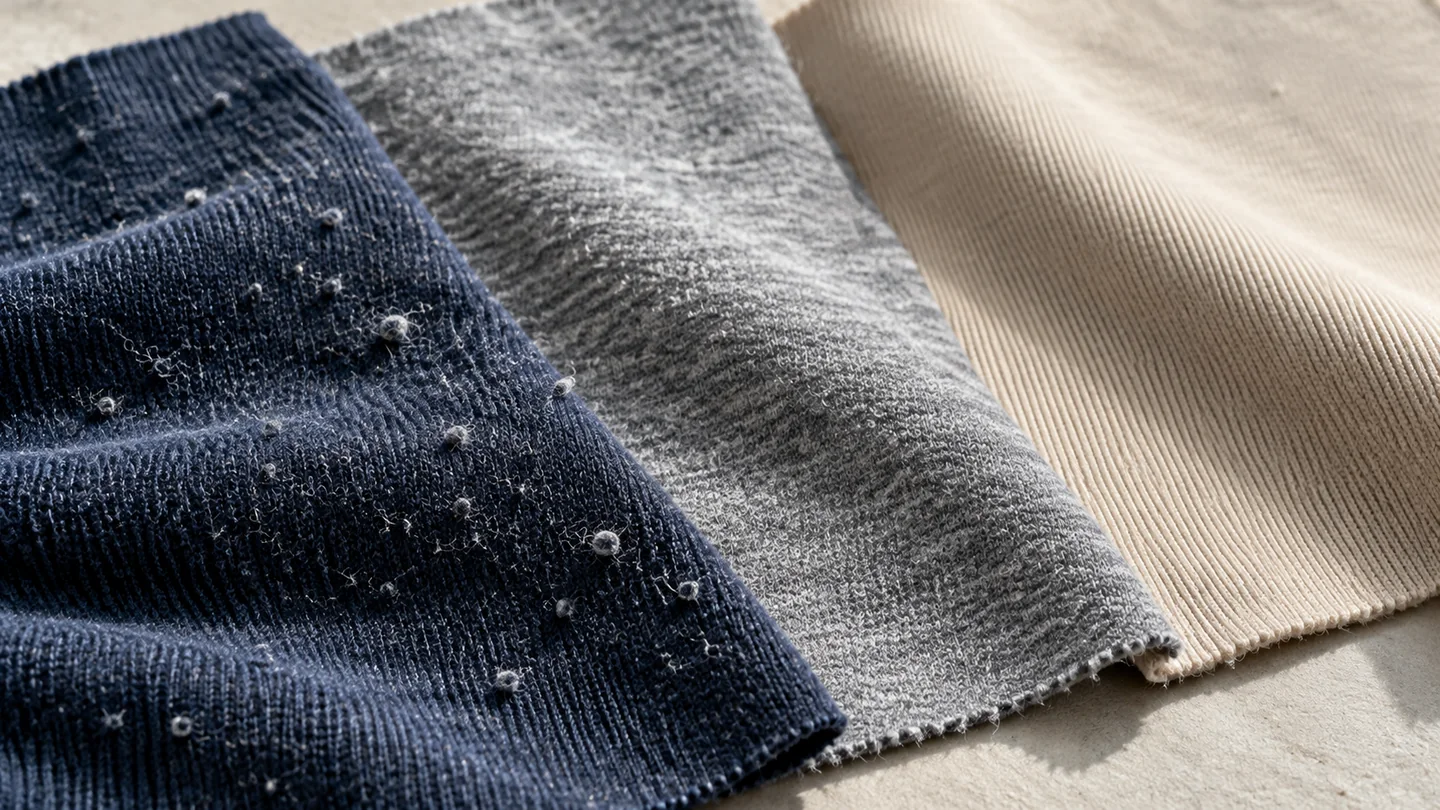
Fabric is the single decision that most changes how a polo performs, feels and takes decoration. Three knit structures cover the large majority of orders.
Piqué
A textured knit with a raised, waffle-like surface. It holds its shape, resists showing the body underneath and gives embroidery a stable base. The trade-off is that it feels drier and slightly heavier against the skin than jersey, which is why it dominates corporate and retail polos.
Jersey
A smooth, flat knit that drapes closer to the body and feels softer. Jersey polos read more casual and are common in fashion-led ranges and warm-climate uniform. It is less forgiving of a poorly stabilised embroidery, so the backing has to be specified correctly.
Performance Knits
Engineered structures built for moisture movement, stretch or breathability, often with panel construction. The performance claim has to be tied to a tested fabric rather than a marketing name, so the requirement belongs in the tech pack.
Knit structure choice also drives decoration outcomes, and the details run deeper than this overview. Our polo shirt fabric guide to knit structures covers piqué, interlock and mesh in detail, and Piqué vs Jersey polo shirts compares the two structures buyers most often weigh against each other.
Note on specifications: fibre composition and fabric weight are not fixed values we publish, because they are agreed against your target hand feel and end use and then confirmed on the approved sample. Treat any supplier who quotes a single weight for every polo with caution.
Polo Shirt Construction Details Buyers Should Check
Two polos can use the same fabric and still feel like different products. These four areas decide which one you get.
Collar and Placket
Check whether the collar is self-fabric or ribbed, how many layers it uses, and whether it is fused or unfused. Then check the placket: three buttons or two, how deep it sits, and whether the button stand is cut separately. A shallow placket on a soft knit will gape; a stiffened collar that is too heavy will stand away from the neck.
Sleeve Cuffs and Rib Height
Rib height on the sleeve cuff and hem changes the silhouette more than most buyers expect. Deeper rib reads sportier and holds shape longer; a narrow rib looks cleaner but relaxes faster. Specify the height rather than leaving it to the factory default.
Hem and Side Vents
A straight hem with side vents sits better over trousers and is the standard on business polos. Vent depth and hem finish should be recorded, because this is exactly the kind of detail that drifts between a sample and bulk.
Buttons and Trims
Button material, colour, thickness and finish are cheap to change and highly visible. Also confirm the top-button position and whether spare buttons are supplied. On reorders, a button change is often the first thing a customer notices.
Polo Shirt Customization Options
Customization is where a polo stops being a blank and becomes your product. Four areas cover almost every brief.
Embroidery
The default for corporate and club polo, and the most durable decoration. Position, size, stitch count and backing all affect the result — and on a piqué knit the backing choice is what stops the logo from distorting. Our guide to custom embroidered polo shirts covers what to confirm before production, and embroidered vs printed logos explains when each method is the better commercial choice.
Printing
Use print when the artwork has fine detail, gradients or a wide colour count that embroidery cannot reproduce cleanly. Method selection depends on the knit face, the number of colours and the production run, and it should be approved on a strike-off rather than a screen proof.
Labels and Branding
Neck labels, size labels, care labels and hem tags are specified as one package. Woven labels carry more detail; printed labels are lighter against the skin. Confirm placement and finish together with the garment spec so they arrive consistent on reorders.
Packaging
Polybag, hangtag, size sticker, folding method and carton configuration are agreed before bulk, because they affect both the delivered unit cost and how the goods arrive at your warehouse or 3PL.
OEM Polo Shirt Manufacturing Process
A production order runs through five stages. Each one exists to catch a specific class of problem before it becomes expensive.
1. Design and specification. We start from your tech pack, reference garment or artwork. Fabric direction, knit structure, collar and placket construction, cuff rib, decoration method and trims are written into a single specification before anything is cut.
2. Sample development. A physical sample is produced against that specification. This is the stage where collar roll, placket depth and decoration placement become real rather than theoretical. Sampling typically runs 7–15 days depending on the construction and the decoration involved.
3. Sample approval. You review the sample and we revise until it matches your requirement. Nothing moves to bulk until the sample and its shade and decoration standards are approved and recorded against your account.
4. Bulk production. Once approved, bulk runs to the signed specification. Fabric is cut, sewn and decorated against the approved standard, and the approved sample stays on the line as the reference piece.
5. Quality control and packing. Inline and final inspection run against the specification, with AQL 2.5 applied when required. Goods are then packed to the agreed format and prepared for shipment.
The sampling stage is where most of the value sits, and it is worth understanding properly. Our clothing sample development process explains how a sample is built and approved step by step.
MOQ, Sampling and Lead Time
These are the figures buyers ask about first, so here they are plainly.
| Minimum order quantity | 100 pcs per colour per style, mixed sizes allowed |
| Sample development | 7–15 days, depending on construction and decoration |
| Bulk production | Generally around 60 days after sample approval |
| Quality control | AQL 2.5 when required |
Bulk timing depends on quantity, fabric availability and the amount of customization in the order, so treat the figure above as the planning baseline rather than a fixed promise. Orders with heavy decoration, special yarns or multiple colourways take longer, and it is better to plan for that than to discover it late.
If your requirement sits below the standard minimum, the practical route is usually to consolidate colourways or styles into one production run rather than to place a series of very small orders. Our guide to minimum order quantity in clothing explains how real production minimums are calculated.
Polo Shirt Specification Checklist
Use this list when briefing a supplier or comparing quotations. Two quotes are only comparable when they describe the same garment.
- Style direction — piqué, printed, heathered, performance, quarter-zip, blank, two-tone, rugby or sublimation
- Fabric direction — knit structure and target hand feel agreed against end use, confirmed on sample
- Collar — self-fabric or ribbed, layer count, fused or unfused, target roll
- Placket — button count, depth, cut separately or folded from body
- Cuff and hem — rib height, hem finish, side vent depth
- Buttons — material, colour, thickness, top-button position, spare supplied
- Fit and grading — size chart, body and sleeve length, tolerance per size
- Decoration — method, placement, artwork size, colour count, strike-off or sew-out approval
- Labels — neck, size, care and hem tag specification and placement
- Packaging — polybag, hangtag, folding method, size sticker, carton configuration
- Quality standard — inspection level, AQL, and who signs off the final inspection
- Reorder record — approved sample, shade standards and decoration standard retained on file
How Brands Work With Polo Suppliers
Most successful polo programmes follow a similar shape, whether the buyer is a startup placing a first order or an established brand adding a line.
Start from the end use, not the fabric. A polo for a hotel front desk, a golf club and a streetwear drop are three different garments even if they share a silhouette. Deciding the end use first makes every later specification decision faster and cheaper.
Approve on a physical sample. Nothing about collar roll, placket stiffness or decoration quality can be judged from an image or a rendering. Budget the 7–15 days for sampling and treat it as part of the schedule rather than a delay.
Lock the specification before bulk. Every change after cutting has a cost, and the later it comes the larger that cost is. Get fabric direction, trims, decoration and packaging settled at sample stage.
Keep records for reorders. A repeating polo programme lives or dies on consistency. Approved samples and shade standards held on file are what make the second order match the first.
Plan around the calendar. Bulk runs around 60 days after approval, so a programme that needs stock on a specific date has to work backwards from that date rather than forwards from the purchase order.
If you are moving from a first sample to a repeatable line, what private label clothing manufacturing involves explains how the branding side fits together with production.
Frequently Asked Questions
What is the MOQ for custom polo shirts?
100 pcs per colour per style, with mixed sizes allowed within that quantity. This keeps the minimum workable for a first order while still allowing a proper production run.
How long does polo shirt production take?
Sampling typically runs 7–15 days. Bulk production is generally around 60 days after sample approval, depending on quantity, fabric availability and how much customization is involved.
Can you make private label polo shirts?
Yes. Neck labels, size labels, care labels, hem tags, hangtags and packaging are all specified to your branding, so the finished polo carries your identity rather than ours.
Which polo fabrics can buyers choose?
The main directions are piqué, jersey and performance knits. Fibre composition and fabric weight are agreed against your target hand feel and end use and confirmed on the approved sample rather than fixed in advance.
Can I order a smaller quantity than the minimum?
Consolidating colourways or styles into a single production run is usually more practical than splitting into very small orders. Tell us the range you need and we will suggest how to structure it.
Do you handle embroidery and printing in-house?
Decoration is specified and controlled as part of the order, which matters because it determines who owns quality control when a chest logo puckers or a print colour drifts.
Can you develop custom polo shirts from my design?
Yes. Send a tech pack, a reference garment or even a sketch, and we will work from it — proposing fabric direction, construction and decoration method, then building a sample so you can judge the garment rather than a description. Most briefs need one or two sample rounds before approval.
Develop Your Custom Polo Shirt Range With NOVITA
NOVITA is a men’s casualwear OEM and ODM manufacturer working with brands, retailers and uniform programmes from sampling through to bulk delivery. Polo shirts are one of our core categories, alongside t-shirts, hoodies, sweatshirts, jackets and denim.
If you have a polo brief — a reference garment, a tech pack, a logo to place, or just a direction — send it across. We will come back on fabric direction, construction, decoration method, MOQ and timeline, and where it helps we will build the sample first so you can judge the garment rather than a description.
Explore our polo shirt manufacturing capabilities or contact us with your specification to start a sample.