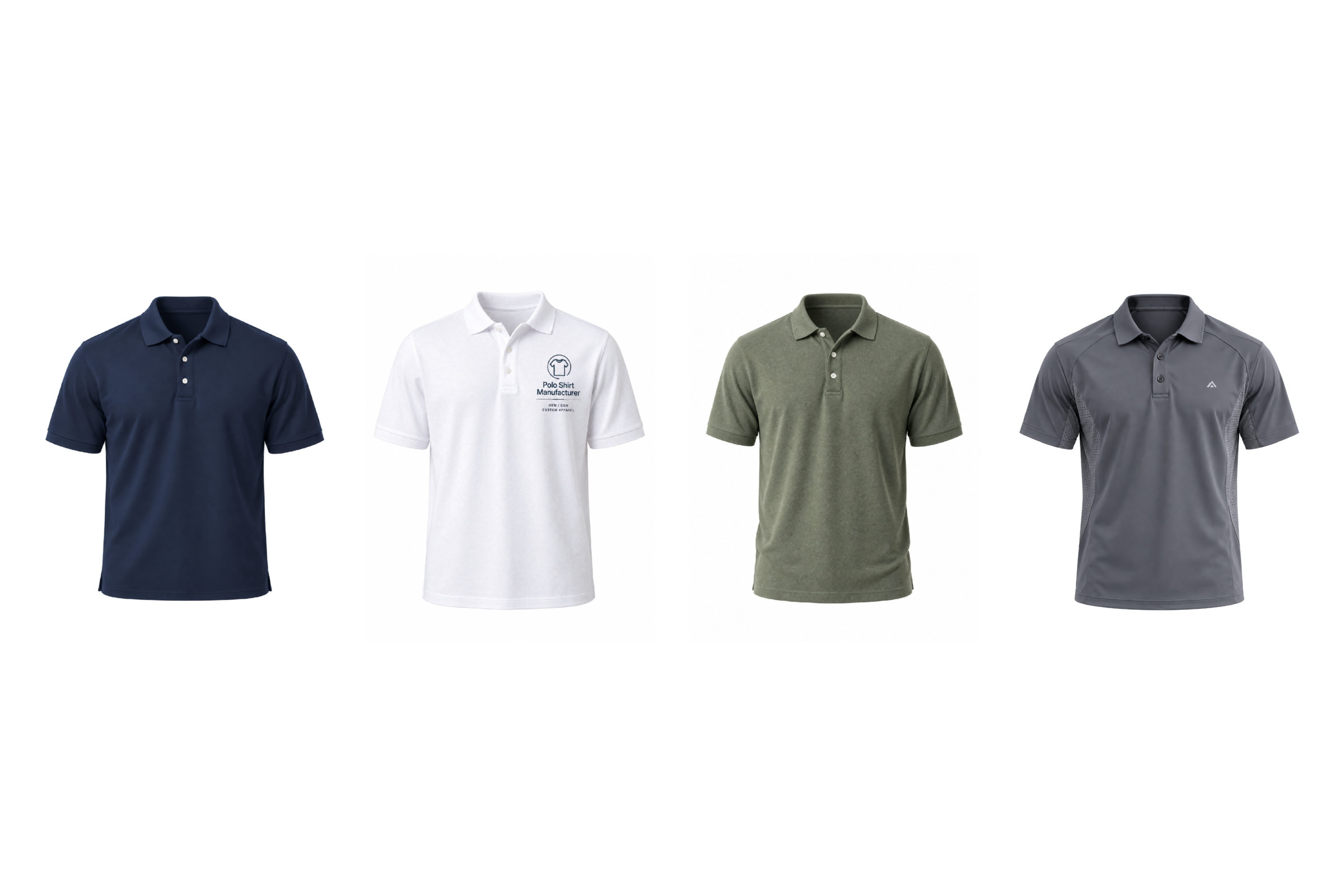
Choosing the right polo shirt manufacturer requires more than comparing unit prices. A polo requires a detailed production specification: collar construction, placket depth, cuff rib, fabric knit structure and decoration method all change how the finished shirt reads on a shelf or in a uniform programme.
This guide walks through what buyers actually need to confirm before placing a bulk polo order — how to evaluate a supplier, which styles are worth carrying, how knit structures differ, what to lock down in the spec sheet, and how the OEM process runs from artwork to delivery.
Choose a Polo Direction Before Requesting a Quote
| Buyer brief | Starting direction | Sample evidence to request |
|---|---|---|
| Uniform or branded retail basic | Custom piqué polo; composition and GSM specified separately | Collar shape, placket alignment and a logo sew-out on the selected fabric |
| Team polo with artwork across panels | Sublimation team polo; confirm fabric suitability with the proposed print process | Print color, panel alignment, opacity and appearance on the assembled garment |
| Clean, smooth retail surface | Jersey or interlock development direction | Drape, dimensional change after agreed care and collar-to-body coordination |
These are sourcing directions, not performance guarantees. Our polo knit-structure guide covers material selection; this page focuses on the complete production brief.
Plan the order by style and color: NOVITA custom MOQ is a standard 100-piece custom MOQ; confirm the style, colour and size breakdown for your project. Samples generally take 7–15 days from confirmation of fabric, measurements, construction and workmanship requirements, excluding additional revisions and shipping. Ask for a project schedule before committing to an arrival date.
For a cost breakdown and a consistent comparison method, see custom polo manufacturing costs below. Send your polo reference and quantity breakdown to discuss the specification.
How to Choose a Polo Shirt Manufacturer
Check these five areas before requesting a production quotation.
Collar and placket engineering. Collar shape and placket construction need physical review. Ask how the collar is built — self-fabric, ribbed, or fused — and whether the placket is cut as a separate piece or folded from the body. Ask the supplier to document these details so they can be checked against the approved sample.
Decoration responsibility. Confirm whether embroidery and print are run in-house or by a specialist partner, and identify who approves the decoration and handles quality issues. The production arrangement alone does not establish the quality-control responsibility.
Knit structure knowledge. Piqué, jersey and performance knits behave differently under decoration and after washing. A supplier should be able to explain which structure suits your end use rather than accepting whatever is on the sample shelf.
Sampling before bulk. Insist on a physical sample and a documented approval. Digital mock-ups cannot show collar roll, placket stiffness or how a print sits against a knit face.
Reorder consistency. Ask how the approved specification is stored. Retained samples and shade standards provide references for a repeat order; reconfirm material availability and any specification changes.
When comparing suppliers, weigh these five areas rather than the headline price. A lower garment price can be offset by returns or rework if collar shape or decoration does not meet the agreed requirements. You can review our own custom polo shirt manufacturing capabilities as a reference point for what a specification-led supplier should cover.
Common Polo Shirt Styles Buyers Source
Most polo ranges are built from a small number of styles that cover distinct end uses. The following product references illustrate available development directions; confirm the scope for your project.
Piqué Polos
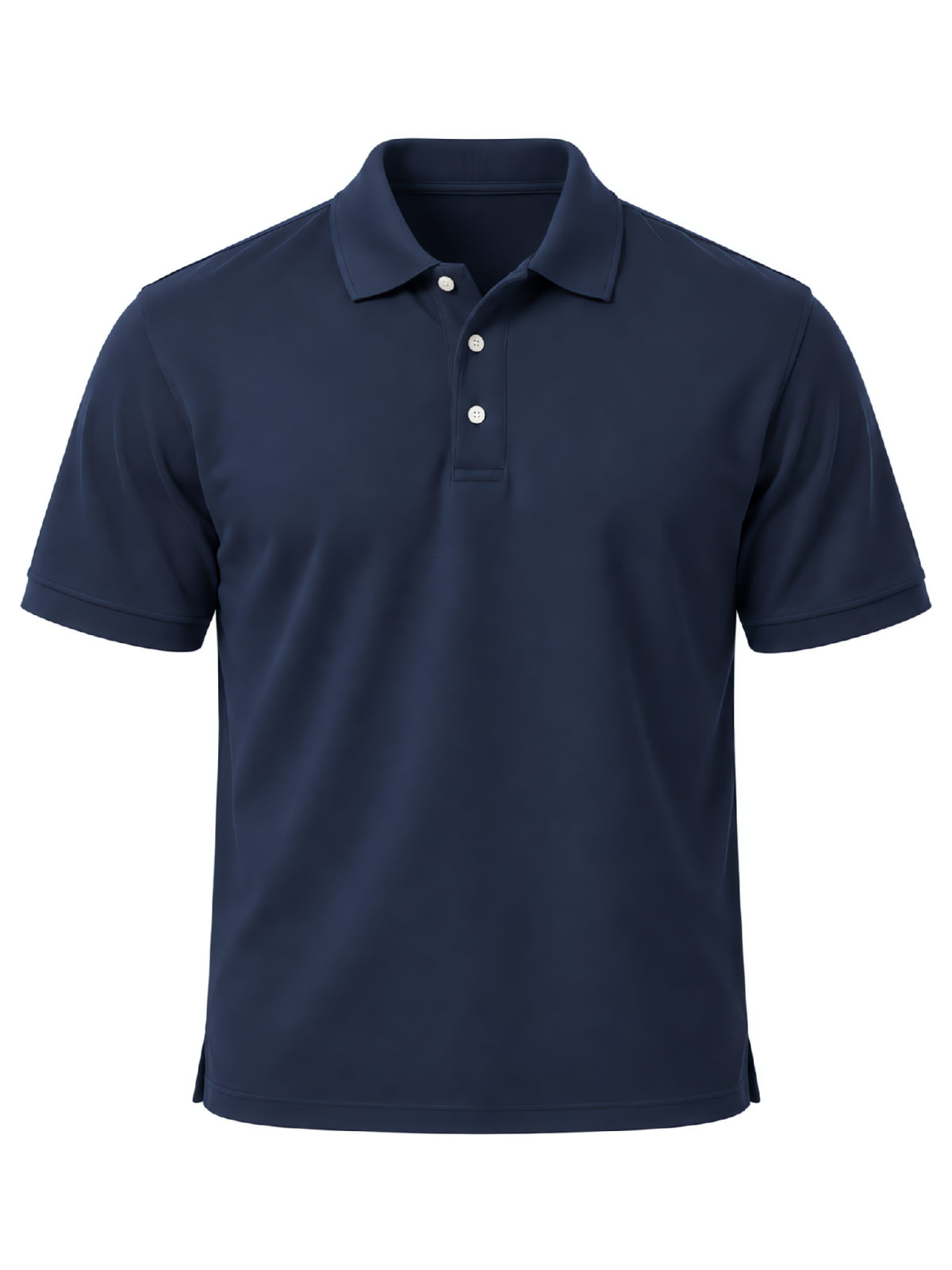
The default business and uniform polo. A piqué knit provides a textured surface; its hand feel and suitability for the chest logo should be checked on the selected fabric. Piqué polos suit corporate uniform programmes, retail basics and private-label ranges where the shirt has to look consistent across a large run. See our Custom Piqué Polo Shirt.
Printed Polos
When the logo has to carry the design, a printed polo keeps the body clean and reserves the chest panel for artwork. Print method, colour count and placement are specified together, because how a print reads depends on the knit face underneath it. See our Custom Printed Polo Shirt.
Heathered and Melange Polos
A heathered or melange surface introduces color variation in the yarn. Confirm the composition, shade reference and repeat-order sourcing basis during material selection. See our Heathered Polo Shirt.
Golf and Performance Polos
Built for movement and moisture management, usually with panel construction and technical trims. The buyer’s job is to specify the performance requirement in the tech pack rather than assume a fabric name delivers it. See our Golf Performance Polo.
Quarter-Zip and Zip Polos
A hybrid between a polo and a light layer, common in corporate casual and teamwear. The zip length, puller finish and collar stand are the details that separate a considered product from a generic one. See our Zip-Up Track Polo.
Compare that design with the half-zip polo shirt when selecting a shorter front opening. Confirm zipper length, placket reinforcement, collar shape and the approved knit sample rather than assuming all zip-neck polos share the same construction.
Blank Polos for Private Label
Undecorated bodies supplied to your own branding programme, usually in bulk for retailers and print houses. The specification matters more here than the design, because there is nothing to distract from a bad collar or an inconsistent dye lot. See our Blank Polo Shirts.
Two-Tone and Contrast-Collar Polos
A contrast collar and placket lift a plain body into something that reads as a designed uniform. The risk is colour matching across two dye lots, which is why both colours should be approved on the same sample. See our Two-Tone Corporate Polo.
Rugby Polos
A heavier, more structured cousin with a thicker collar and a longer placket. Used for rugby-inspired casualwear and club merchandise rather than corporate uniform. See our Rugby Long-Sleeve Polo.
Sublimation Team Polos
Full-surface printing for teamwear and event apparel, where the design covers the whole garment rather than sitting in one panel. Artwork colors and the fabric must be checked against the proposed print process and approved physical result. See our All-Over Sublimation Team Polo.
Polo Shirt Fabric Options: Piqué, Jersey and Performance Knits
Fabric affects hand feel, appearance and decoration. These are common development directions; confirm composition and GSM separately.
Piqué
A textured knit used for classic polo styling. Check opacity, hand feel, dimensional stability and embroidery on the actual fabric; the structure name does not guarantee those properties.
Jersey
A smooth-faced knit used for casual and fashion polos. Review drape, weight and logo stabilization on the selected fabric rather than assuming every jersey behaves alike.
Performance Knits
Engineered structures built for moisture movement, stretch or breathability, often with panel construction. The performance claim has to be tied to a tested fabric rather than a marketing name, so the requirement belongs in the tech pack.
Knit structure choice also drives decoration outcomes, and the details run deeper than this overview. Our polo shirt fabric guide to knit structures covers piqué, interlock and mesh in detail, and Piqué vs Jersey polo shirts compares the two structures buyers most often weigh against each other.
Note on specifications: fibre composition and fabric weight are not fixed values we publish, because they are agreed against your target hand feel and end use and then confirmed on the approved sample. Treat any supplier who quotes a single weight for every polo with caution.
Polo Shirt Construction Details Buyers Should Check
Two polos can use the same fabric and still feel like different products. These four areas decide which one you get.
Collar and Placket
Check whether the collar is self-fabric or ribbed, how many layers it uses, and whether it is fused or unfused. Then check the placket: three buttons or two, how deep it sits, and whether the button stand is cut separately. Check the sample for placket gaping and collar-to-body balance; these outcomes depend on the fabric and construction together.
Sleeve Cuffs and Rib Height
Rib height on the sleeve cuff and hem changes the silhouette more than most buyers expect. Rib depth affects the appearance; recovery and shape retention depend on its material and construction. Specify the height rather than leaving it to the factory default.
Hem and Side Vents
A straight hem with side vents is one option for polos worn over trousers. Confirm the silhouette on the sample. Vent depth and hem finish should be recorded, because this is exactly the kind of detail that drifts between a sample and bulk.
Buttons and Trims
Specify button material, colour, thickness and finish; confirm availability and cost for any change. Also confirm the top-button position and whether spare buttons are supplied. On reorders, a button change is often the first thing a customer notices.
Polo Shirt Customization Options
Customization is where a polo stops being a blank and becomes your product. Four areas cover almost every brief.
Embroidery
A common option for corporate and club polos. Position, size, stitch properties and backing affect the result. Approve a sew-out on the selected fabric and agree on any care or durability checks. Our guide to custom embroidered polo shirts covers what to confirm before production, and embroidered vs printed logos explains when each method is the better commercial choice.
Printing
Use print when the artwork has fine detail, gradients or a wide colour count that embroidery cannot reproduce cleanly. Method selection depends on the knit face, the number of colours and the production run, and it should be approved on a strike-off rather than a screen proof.
Labels and Branding
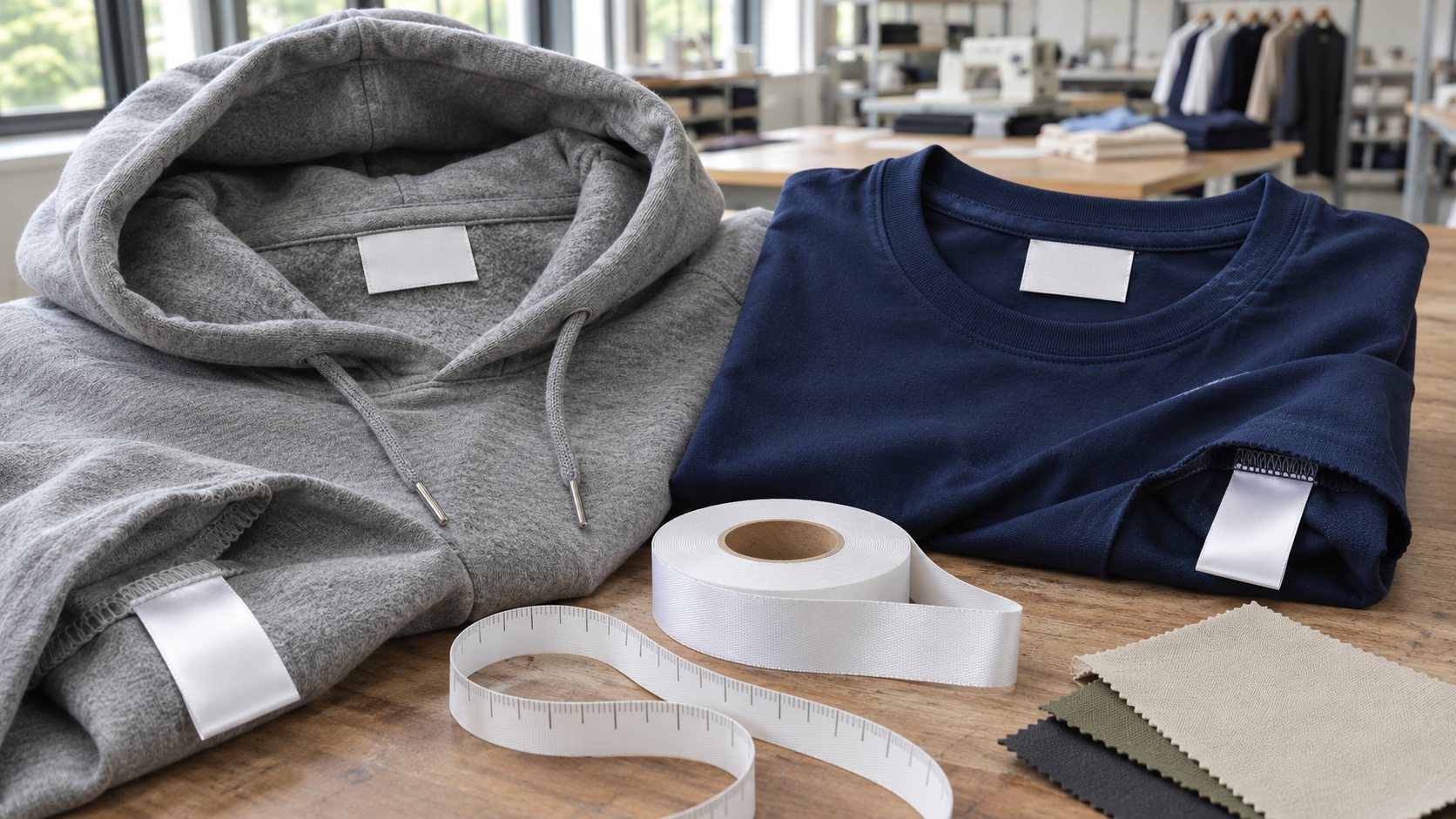
Neck labels, size labels, care labels and hem tags are specified as one package. Choose woven or printed labels by artwork readability, material, finish and comfort on the sample. Confirm placement and finish together with the garment spec so they arrive consistent on reorders.
Packaging
Polybag, hangtag, size sticker, folding method and carton configuration are agreed before bulk, because they affect both the delivered unit cost and how the goods arrive at your warehouse or 3PL.
OEM Polo Shirt Manufacturing Process
A production order runs through five stages. Each one exists to catch a specific class of problem before it becomes expensive.
1. Design and specification. We start from your tech pack, reference garment or artwork. Fabric direction, knit structure, collar and placket construction, cuff rib, decoration method and trims are written into a single specification before anything is cut.
2. Sample development. A physical sample is produced against that specification. This is the stage where collar roll, placket depth and decoration placement become real rather than theoretical. Sampling typically runs 7–15 days from confirmation of fabric, measurements, construction and workmanship requirements, excluding additional revisions and shipping depending on the construction and the decoration involved.
3. Sample approval. Review the sample against the specification and agree on the revision scope. Record approved measurements, material, shade and decoration, and resolve provisional components before authorizing bulk production.
4. Bulk production. Once approved, bulk runs to the signed specification. Fabric is cut, sewn and decorated against the approved standard, with the approved sample and files used as production references.
5. Quality control and packing. Agree on the inline and final inspection scope against the specification, including any sampling plan and acceptance limits required for the order. Goods are then packed to the agreed format and prepared for shipment.
The sampling stage is where most of the value sits, and it is worth understanding properly. Our clothing sample development process explains how a sample is built and approved step by step.
MOQ, Sampling and Lead Time
These are the figures buyers ask about first, so here they are plainly.
| Minimum order quantity | Standard custom MOQ: 100 pcs; confirm the style, colour and size breakdown for your project |
| Sample development | 7–15 days from confirmation of fabric, measurements, construction and workmanship requirements, excluding additional revisions and shipping |
| Bulk production | 60 days after sample approval |
| Quality control | Inspection scope and acceptance criteria agreed for the order |
Bulk timing depends on quantity, fabric availability and the amount of customization in the order, so treat the figure above as the planning baseline rather than a fixed promise. Heavy decoration, special yarns or multiple colourways may extend the schedule, and it is better to plan for that than to discover it late.
If your requirement sits below the standard minimum, the practical route is usually to consolidate colourways or styles into one production run rather than to place a series of very small orders. Our guide to minimum order quantity in clothing explains how real production minimums are calculated.
If you are shortlisting factories, compare polo supplier MOQ by style and colour before confirming the quantity split.
How Much Does It Cost to Manufacture Custom Polo Shirts?
A custom polo has no useful universal unit price. To budget the order, separate the recurring cost of the agreed garment from development, setup and delivery charges. Then check that every quotation uses the same fabric, construction, branding and quantity breakdown. A price for decorating an available blank does not cover the same work as developing your own fit, collar and fabric specification.
Use the following breakdown to identify what is being priced. These are quotation questions, not a NOVITA price list; a supplier may bundle several components into its garment price.
| Cost component | What to confirm in the quotation |
|---|---|
| Fabric and construction | Body fabric, collar/cuff material, buttons, measurements and finishing; identify the exact material or any proposed substitute. |
| Decoration | Method, artwork version, finished dimensions and placements; identify setup and physical approval work. |
| Labels and packing | Named label, hangtag and packing components; separate any minimum-purchase balance from components used in this order. |
| Development and samples | Pattern or fit work, sample scope, included revisions and courier charges; confirm whether anything is credited against bulk. |
| Delivery and additional checks | Quoted delivery scope and destination, freight responsibility, and any separately requested inspection or testing. |
MOQ: Count Each Style and Color Before Dividing the Cost
NOVITA’s standard custom MOQ is a standard 100-piece custom MOQ; confirm the style, colour and size breakdown for your project. For multiple colours or styles, confirm the workable breakdown with the quotation. Confirm any separate fabric, collar, label or packaging minimums for the actual specification.
If a setup charge is fixed for an unchanged design and applies to the whole run, its allocation per piece is that charge divided by the applicable quantity. Ask which units it covers before calculating: a second artwork, material or production route may require separate work. A larger collection total does not automatically reduce the cost of each style or color.
Where custom labels or packaging require a purchase larger than the garment order, ask how the unused balance is charged, stored and assigned to reorders. Distinguish the cash you must pay now from the components consumed by this run.
Fabric and Construction: GSM Is Only One Part of the Specification
Record knit structure, fiber composition and target GSM separately. Piqué, jersey, interlock and mesh describe different constructions; “cotton polo” leaves the construction and weight unresolved. A fabric with the same GSM may still have a different composition, finish or sourcing basis. There is no reliable rule that a heavier polo must cost more than every lighter one.
Ask whether the proposal uses available fabric or requires custom development or coloring, and whether its purchasing minimum changes the order cost. Include collar and cuff construction, placket, buttons, side vents and size breakdown. These details define material consumption and sewing work; the body fabric alone does not define the finished polo.
Branding: Quote the Artwork and Components, Not Just “Logo Included”
For embroidery, send the final artwork, finished dimensions and every placement. Design size and stitch properties affect the work involved; Wilcom’s estimating guidance explains how changing the design size changes estimated stitch count and production cost. Ask whether digitizing and a sew-out on the selected fabric are included. Do not infer NOVITA’s charge from a software estimate.
For printing, name the proposed method, artwork dimensions, colors and placements. Screen printing, transfers and all-over sublimation are different production scopes. Request a physical decoration approval on the intended material and ask which setup charges apply. Neither “printed” nor “embroidered” is automatically the cheaper choice for every order.
List neck and size labels, care labels, hangtags, bags, folding and variant stickers individually. Specify materials, dimensions, artwork and attachment or packing requirements. Our custom apparel services describe the development and branding areas available for project discussion; the quotation must identify the agreed scope.
Sampling and Delivery: Keep the Budget Outside the Garment Price Visible
Before sampling, confirm the sample fee, materials, decoration, revision allowance and courier responsibility. Use the approved garment and final files to check the bulk quotation again. A changed fabric, logo or packing requirement needs a revised commercial basis as well as a technical approval.
Factory completion and arrival at your warehouse are different dates. Ask what the quoted delivery basis includes, then account for freight, destination charges and any import costs applicable to your shipment without double-counting items already included. Confirm project timing after material and approval requirements are known; a standard planning period is not an arrival guarantee.
Compare Polo Quotes Without Changing the Product
Start with one complete base specification. Request cost-saving alternatives separately, changing one decision at a time. This lets you see what the saving buys: a different material, less decoration, simpler packing or a different order structure. Do not ask several suppliers to “make it cheaper” and then assume their replies describe an equivalent polo.
Illustrative comparison, not a customer order or quotation: take one polo style in one color at 100 pieces, with a fixed size breakdown. Attach the selected fabric specification, measurement chart, collar and cuff details, one chest-logo file with finished dimensions, and the exact labels and packing required. Use actual polo product references to show the design direction, then list every change from that reference.
- Base quotation: price the complete specification. Identify the garment unit price, one-time charges, component purchase balances and delivery scope.
- Quantity alternative: quote a larger run of the same style, color and specification with its own size breakdown. Ask which costs change and whether the material or trim sourcing assumptions remain the same.
- Decoration alternative: keep the garment and quantity unchanged, but request a separately identified print option instead of embroidery. Require the proposed method, approval sample and setup basis.
- Material or packing alternative: identify the substitute precisely and state what differs. Treat it as a different option until you approve the physical result and revised specification.
Compare the total payable amount and the recurring garment cost separately. Record quotation currency, validity, exclusions and the specification revision. On a repeat order, reconfirm material availability and any setup or development work; previous payment of a fee does not establish that every future charge disappears.
The clothing manufacturing RFQ checklist provides the full request template. For a polo cost discussion, send your reference or tech pack, quantity by style and color, size breakdown, material specification, logo artwork and placements, labels and packaging, destination and target arrival date to NOVITA with your quotation brief. Mark undecided details and ask for the quoted inclusions, assumptions and project schedule. Resolve those decisions before treating the quote and sample as the basis for bulk production.
Polo Shirt Specification Checklist
Use this list when briefing a supplier or comparing quotations. Two quotes are only comparable when they describe the same garment.
- Style direction — piqué, printed, heathered, performance, quarter-zip, blank, two-tone, rugby or sublimation
- Fabric direction — knit structure and target hand feel agreed against end use, confirmed on sample
- Collar — self-fabric or ribbed, layer count, fused or unfused, target roll
- Placket — button count, depth, cut separately or folded from body
- Cuff and hem — rib height, hem finish, side vent depth
- Buttons — material, colour, thickness, top-button position, spare supplied
- Fit and grading — size chart, body and sleeve length, tolerance per size
- Decoration — method, placement, artwork size, colour count, strike-off or sew-out approval
- Labels — neck, size, care and hem tag specification and placement
- Packaging — polybag, hangtag, folding method, size sticker, carton configuration
- Quality standard — inspection level, AQL sampling, and who signs off the final inspection
- Reorder record — approved sample, shade standards and decoration standard retained on file
How Brands Work With Polo Suppliers
Most successful polo programmes follow a similar shape, whether the buyer is a startup placing a first order or an established brand adding a line.
Start from the end use, not the fabric. A polo for a hotel front desk, a golf club and a streetwear drop are three different garments even if they share a silhouette. Deciding the end use first makes every later specification decision faster and cheaper.
Approve on a physical sample. Use a physical sample to assess collar roll, placket stiffness and decoration. Sampling generally takes 7–15 days from confirmation of fabric, measurements, construction and workmanship requirements, excluding additional revisions and shipping depending on the confirmed specification and materials; agree on the actual development schedule.
Lock the specification before bulk. Changes after cutting may require rework or material replacement. Ask about the cost and schedule impact before approving a change. Get fabric direction, trims, decoration and packaging settled at sample stage.
Keep records for reorders. A repeating polo programme lives or dies on consistency. Approved samples and shade standards support repeat-order comparisons; verify the new materials and production against those references.
Plan around the calendar. Bulk production is generally planned 60 days after approval, depending on the confirmed specification and material availability, so a programme that needs stock on a specific date has to work backwards from that date rather than forwards from the purchase order.
If you are moving from a first sample to a repeatable line, what private label clothing manufacturing involves explains how the branding side fits together with production.
Frequently Asked Questions
What is the MOQ for custom polo shirts?
The standard custom MOQ is 100 pcs; confirm the style, colour and size breakdown for your project. Confirm the quantity basis and any separate material or component minimums for your selected specification.
How long does polo shirt production take?
Sampling typically runs 7–15 days from confirmation of fabric, measurements, construction and workmanship requirements, excluding additional revisions and shipping. Bulk production is 60 days after sample approval, depending on quantity, fabric availability and how much customization is involved.
Can you make private label polo shirts?
Yes. Neck labels, size labels, care labels, hem tags, hangtags and packaging are all specified to your branding, so the finished polo carries your identity rather than ours. Our private-label packaging specification guide lists the label and pack details to approve.
Which polo fabrics can buyers choose?
The main directions are piqué, jersey and performance knits. Fibre composition and fabric weight are agreed against your target hand feel and end use and confirmed on the approved sample rather than fixed in advance. For differences in knit structure, fibre content and use, read our polo fabric buyer guide.
Can I order a smaller quantity than the minimum?
Consolidating colourways or styles into a single production run is usually more practical than splitting into very small orders. Tell us the range you need and we will suggest how to structure it.
Do you handle embroidery and printing in-house?
Confirm the production arrangement for your project, including any specialist partners and who approves and checks the decoration. Do not assume every operation is performed in the same facility.
Can you develop custom polo shirts from my design?
Yes. Send a tech pack, a reference garment or even a sketch, and we will work from it — proposing fabric direction, construction and decoration method, then building a sample so you can judge the garment rather than a description. The number of sample revisions depends on the brief and review results; agree on the revision scope and charges before development.
Develop Your Custom Polo Shirt Range With NOVITA
NOVITA is a men’s casualwear OEM and ODM manufacturer working with brands, retailers and uniform programmes from sampling through to bulk delivery. Polo shirts are one of our core categories, alongside t-shirts, hoodies, sweatshirts, jackets and denim.
If you have a polo brief — a reference garment, a tech pack, a logo to place, or just a direction — send it across. We will come back on fabric direction, construction, decoration method, MOQ and timeline, and where it helps we will build the sample first so you can judge the garment rather than a description.
Explore our polo shirt manufacturing capabilities or contact us with your specification to start a sample.